📣 Research Opportunity at #GoogleDeepmind 📣 Next year, I will be hosting a PhD-level student researcher again in the Control Team in London. If you are excited about working on the frontier of RL for robotics and control problems, please submit your application now. 👇
Scientific research is fundamental to advancing civilization and helping people globally to solve the most critical problems, from medicine to materials, from brain science to physics, and much beyond. This is only possible when scientists have access to the best tools of the time to conduct scientific research, including having access to AI-based tools.
I want to offer some unsolicited advice to computer vision researchers jumping into robotics. Don't focus too much on VLMs, VLAs etc. That's fine, but the real action is at the sensorimotor level. Most of the open problems in robotics are in manipulation, which is about hand-object interaction, and contacts and forces are central. Proprioception and tactile sensing are as important as vision. Don't get seduced by cherry-picked demos. You can't do robotics without doing robotics.
@natolambert@allen_ai Wow, end of an era. Thank you for championing open models and innovation ecosystems. And for sharing all your thoughts on this in your excellent blog posts. Enjoy a well-deserved break. And good luck for whatever is next.
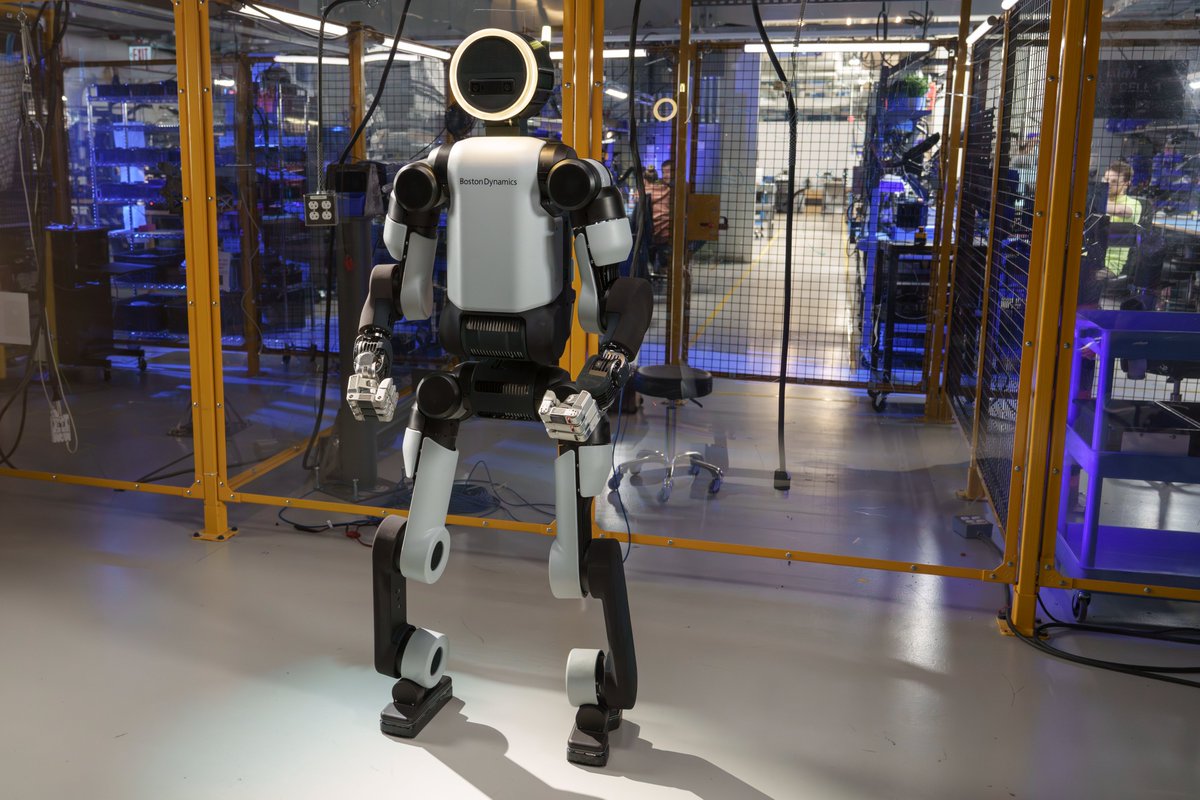
Big news from #CES2026! We at @GoogleDeepMind are partnering with @BostonDynamics to bring together our Gemini Robotics models with their new Atlas® robots.
I’m so excited to see what our teams build together 🦾🧠🚀!
Learn more → https://t.co/JfqOXfQtP8
Since my undergrad days, I have been following Boston Dynamics and was awestruck every time they’ve put out a new robot video. Being able to collaborate with them now to advance the frontier of intelligent robots together feels like a dream come true. 🤩
Google DeepMind 🤝 @BostonDynamics
Our new research partnership will bring together our advancements in Gemini Robotics’s foundational capabilities to their new Atlas® humanoids. 🦾
Find out more → https://t.co/Z4fL9ixjW3
I'm looking for two PhD students to join our team at Cambridge to work on 3D/4D modeling in various domains including generative media, robotics, and biology.
Apply to the PhD in Engineering program by December 2 ⌛️: https://t.co/SDJEz2WL9R
To celebrate five years of #AlphaFold, we’re making The Thinking Game available on YouTube. 🧬
Get a candid look at the triumphs, the challenges and the pivotal moments that led to a breakthrough on a 50-year-old grand challenge in biology.
Stream for free on @YouTube → https://t.co/sZv7r2VpQh
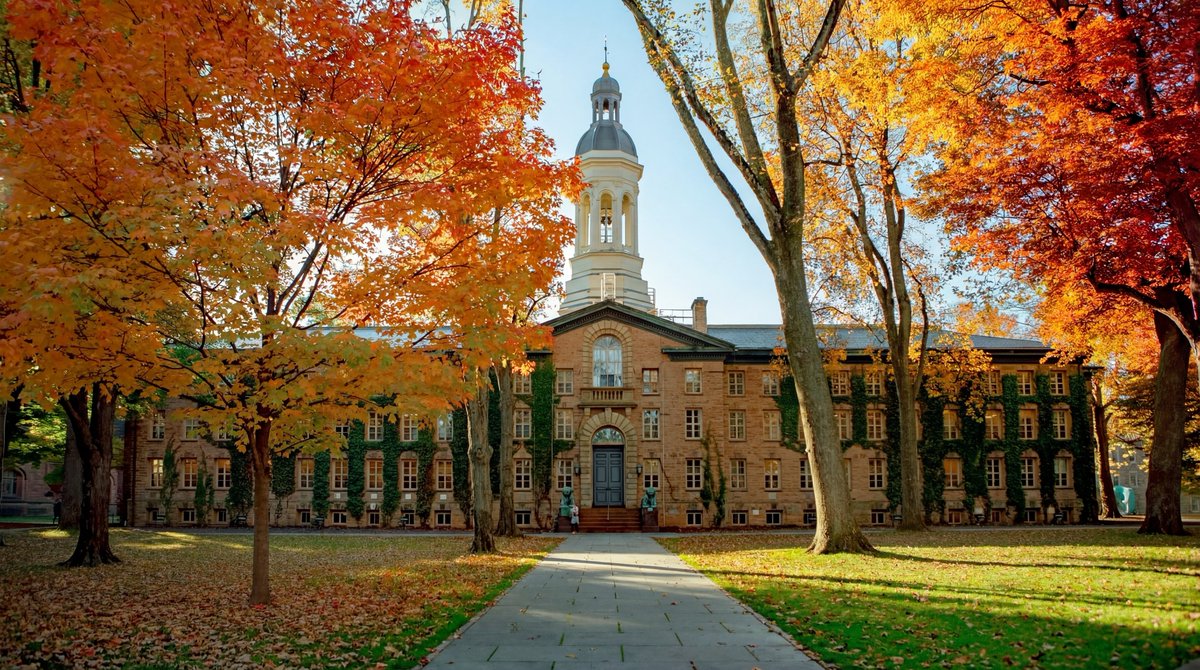
My group @Princeton is hiring!
We are looking for strong postdoc and PhD candidates to join our quest for intelligent robots in open-world environments. Read more below and get in touch 🤖🐅🧡
https://t.co/7o35pwPZCz
If you are passionate about software and model security 🔐 and robotics 🦾this is the job for you! Come join us at @GoogleDeepMind Robotics and make our robots awesomer: Software Engineer, Robotics Security https://t.co/XGwFXejlu9
Excellent take on how to better understand the “jagged frontier” of AI’s economical impact. I agree: if the outcome of a task is easily verifiable, it can (and will) be learned and done by AIs. Very neat analogy, especially when you’re working on RL. 🤓
Sharing an interesting recent conversation on AI's impact on the economy.
AI has been compared to various historical precedents: electricity, industrial revolution, etc., I think the strongest analogy is that of AI as a new computing paradigm (Software 2.0) because both are fundamentally about the automation of digital information processing.
If you were to forecast the impact of computing on the job market in ~1980s, the most predictive feature of a task/job you'd look at is to what extent the algorithm of it is fixed, i.e. are you just mechanically transforming information according to rote, easy to specify rules (e.g. typing, bookkeeping, human calculators, etc.)? Back then, this was the class of programs that the computing capability of that era allowed us to write (by hand, manually).
With AI now, we are able to write new programs that we could never hope to write by hand before. We do it by specifying objectives (e.g. classification accuracy, reward functions), and we search the program space via gradient descent to find neural networks that work well against that objective. This is my Software 2.0 blog post from a while ago. In this new programming paradigm then, the new most predictive feature to look at is verifiability. If a task/job is verifiable, then it is optimizable directly or via reinforcement learning, and a neural net can be trained to work extremely well. It's about to what extent an AI can "practice" something. The environment has to be resettable (you can start a new attempt), efficient (a lot attempts can be made), and rewardable (there is some automated process to reward any specific attempt that was made).
The more a task/job is verifiable, the more amenable it is to automation in the new programming paradigm. If it is not verifiable, it has to fall out from neural net magic of generalization fingers crossed, or via weaker means like imitation. This is what's driving the "jagged" frontier of progress in LLMs. Tasks that are verifiable progress rapidly, including possibly beyond the ability of top experts (e.g. math, code, amount of time spent watching videos, anything that looks like puzzles with correct answers), while many others lag by comparison (creative, strategic, tasks that combine real-world knowledge, state, context and common sense).
Software 1.0 easily automates what you can specify.
Software 2.0 easily automates what you can verify.
Nathan’s blog posts on RLHF have always been an absolute treasure trove for me who, as a robotics researcher, tried to stay on top of what’s happening in the RLHF space on LLMs. So great to see that bundled wisdom now in printed form, too. 🤓 Awesome cover, btw! 🍒🍰
I'm excited to announce my RLHF Book is now in pre-order for the Manning Early Access Program (MEAP), @ManningBooks, and for this milestone it's 50% off.
Excited to land in print in early 2026! Lots of improvements coming soon.
Link below & thanks for the support!
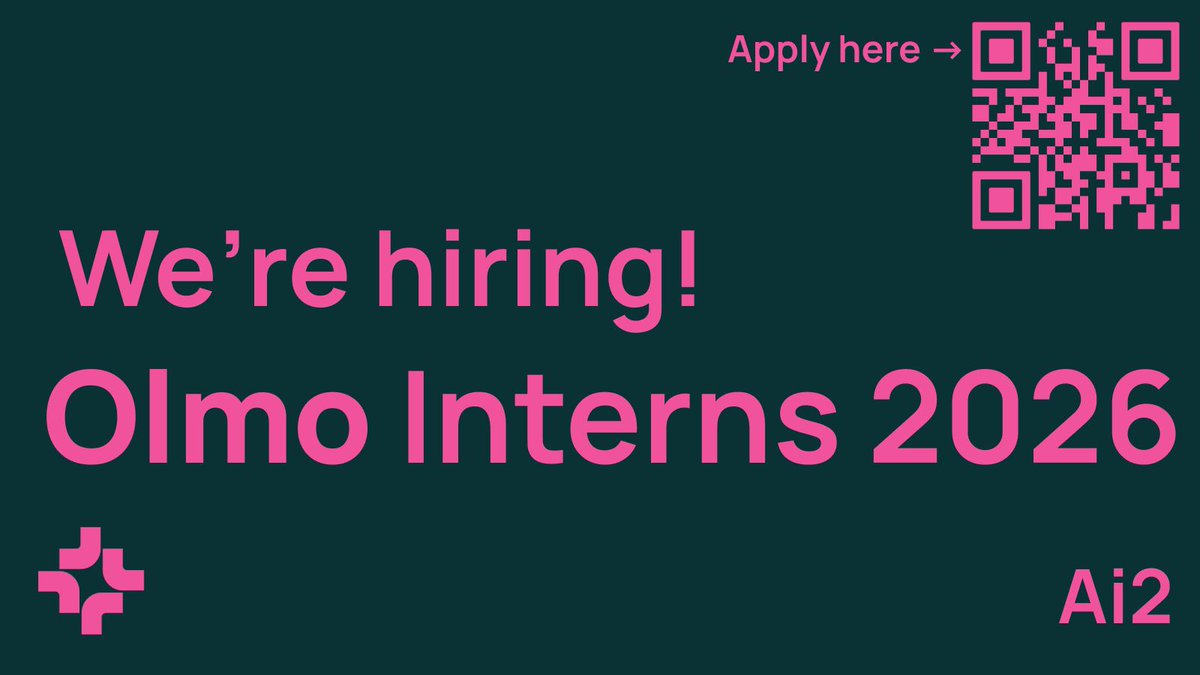
We're starting to hire for our 2026 Olmo interns! Looking for excellent students to do research to help build our best models (primarily enrolled in Ph.D. with experience or interest in any area of the language modeling pipeline).
📣 Research Opportunity at #GoogleDeepmind 📣 Next year, I will be hosting a PhD-level student researcher again in the Control Team in London. If you are excited about working on the frontier of RL for robotics and control problems, please submit your application now. 👇