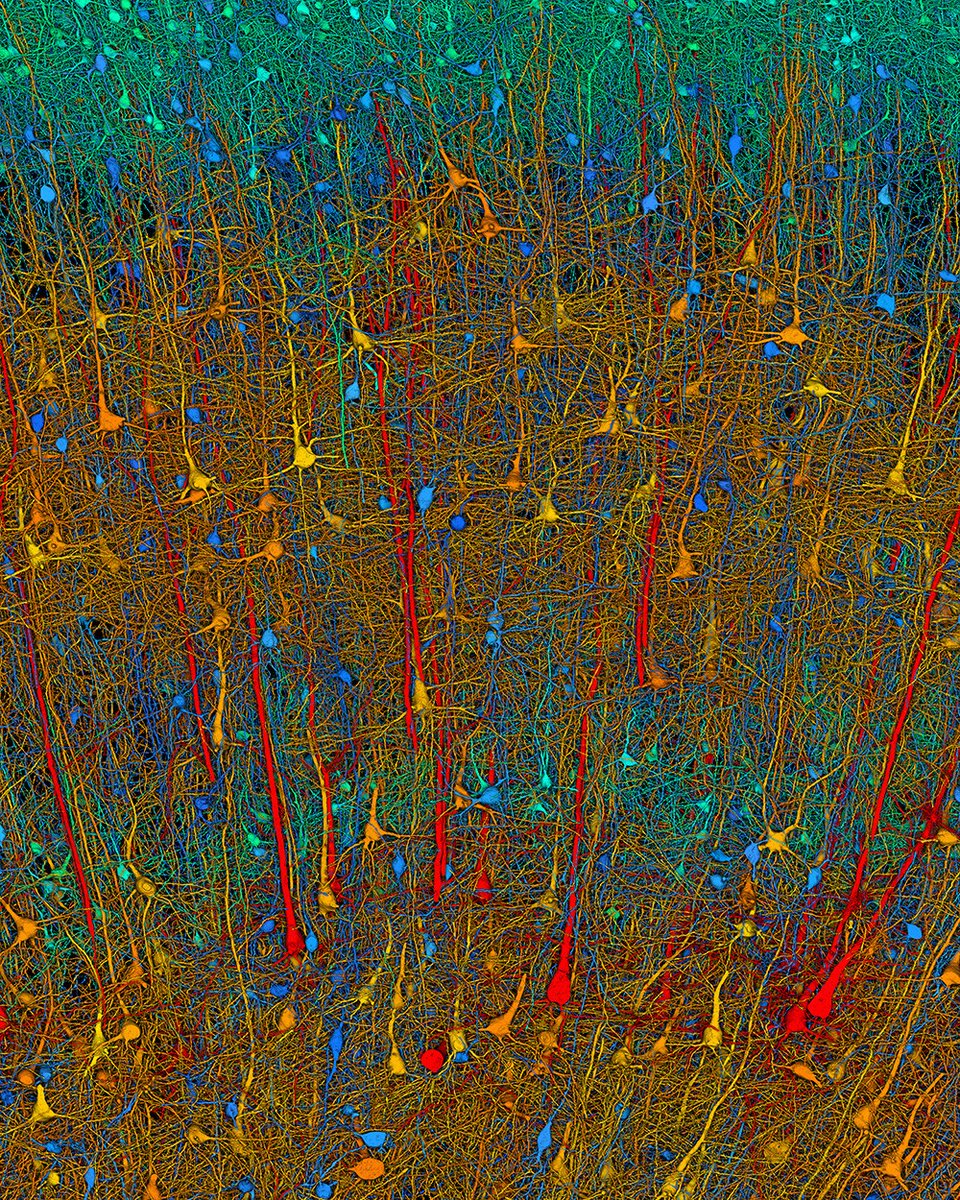
Using more than 1.4 petabytes of electron microscopy (EM) imaging data, researchers generated a nanoscale-resolution reconstruction of a millimeter-scale fragment of human cerebral cortex, providing an unprecedented view into the structural organization of brain tissue at the supracellular, cellular, and subcellular levels.
The human brain is a vastly complex organ and, to date, little is known about its cellular microstructure, including the synaptic and neural circuits it supports. Disruption of these circuits is known to play a role in myriad brain disorders. Yet studying human brain samples in such great detail comes with a host of challenges, ranging from technological limitations to the availability and preservation of tissue samples from healthy individuals.
In a 2024 Science study, researchers performed a high-resolution EM reconstruction of the ultrastructure of a cubic millimeter of human temporal cortex. According to the authors, the reconstruction contains roughly 57,000 cells, about 230 millimeters of blood vessels, and nearly 150 million synapses, comprising 1400 terabytes of data. The authors generated a three-dimensional reconstruction of nearly every cell and process in the cubic millimeter sample and developed a freely available tool for visualizing and analyzing the vast dataset.
Learn more on #WorldBrainDay: https://t.co/ye8JncNkrJ
✅ Claude Code
✅ Claude Cowork
✅ Claude Design
✅ Claude Finance
✅ Claude Science
✅ Claude Teacher
⬜ Claude HR
⬜ Claude Analytics
⬜ Claude Marketing
⬜ Claude Sales
⬜ Claude Legal
⬜ Claude R&D
⬜ Claude Procurement
⬜ Claude Accounting
⬜ Claude Engineering
Trees of New Guinea also freely available on the Kew Repository!
Book | Trees of New Guinea. | ID: 93d81c00-f215-42c8-9259-d1a15f8efaa5 | Hyku https://t.co/Z5Gptrj7gd
🦛 The Berlin Zoo announced the name of its newborn pygmy hippopotamus — a rare mammal native to West Africa: Broetchen, which is German for ‘bread roll’
Here is my most recent project: https://t.co/oSMutzh6yp
Unlike Sci-Hub and Sci-Net, where I have written all the code manually be hand, this one is pure AI generated - I decided to do this as a kind of experiment. LOVE the result! AI is 50x speedup in code writing, however creating the project is still a lot of work (human input is still needed for architectural decisions, debugging complex functionality and precise instructions)
Sci-Bot is connected to Sci-Hub database so it can read research articles and generate answers grounded in science. To pay for generated tokens, Sci-Bot supports two funding models: the first one is standard pay-as-your-go and the second one is legacy from Sci-Hub: it is donation based.
Anyone can donate: from these donations, the project will automatically calculate budget for upcoming month, and derive how much AI-generated answers it can serve to users for free.
We are releasing Carbon: a crazy fast DNA model
Carbon is 275x faster than the next best model. So fast you can process the whole human genome on a single GPU in <2 days.
Here are the tricks we used:
When modelling DNA sequences a lot of the performance comes down to tokenizing the sequences in a smart way. BPE tokenizer struggle because there are no whitespaces and character (called base in DNA) level tokenizers waste a lot of compute on too many tokens.
Carbon is built with a unique tokenizer: we split sequences in chunks of 6 bases, but during both training and inference we can work with single base resolution. That's similar to having word tokens but resolving them at the character level. All possible thanks to the DNA tokens unique structure.
The architecture combined with the tokenizer makes the model 275x faster than the previous SoTA (Evo2) at this size.
We built an interactive demo so you can explore how the model can generate DNA sequences, investigate the structure of genes, predict the effect of mutations, generate and fold proteins and even reconstruct parts of the tree of life.
https://t.co/OWEUoxAFjG
GetGenome wiki
A living, open science database of bacterial, fungal and plant genomes sequenced through the GetGenome programme for global genomic equity.
https://t.co/k2P3jNwHFk
https://t.co/N4e3ZkAy3J
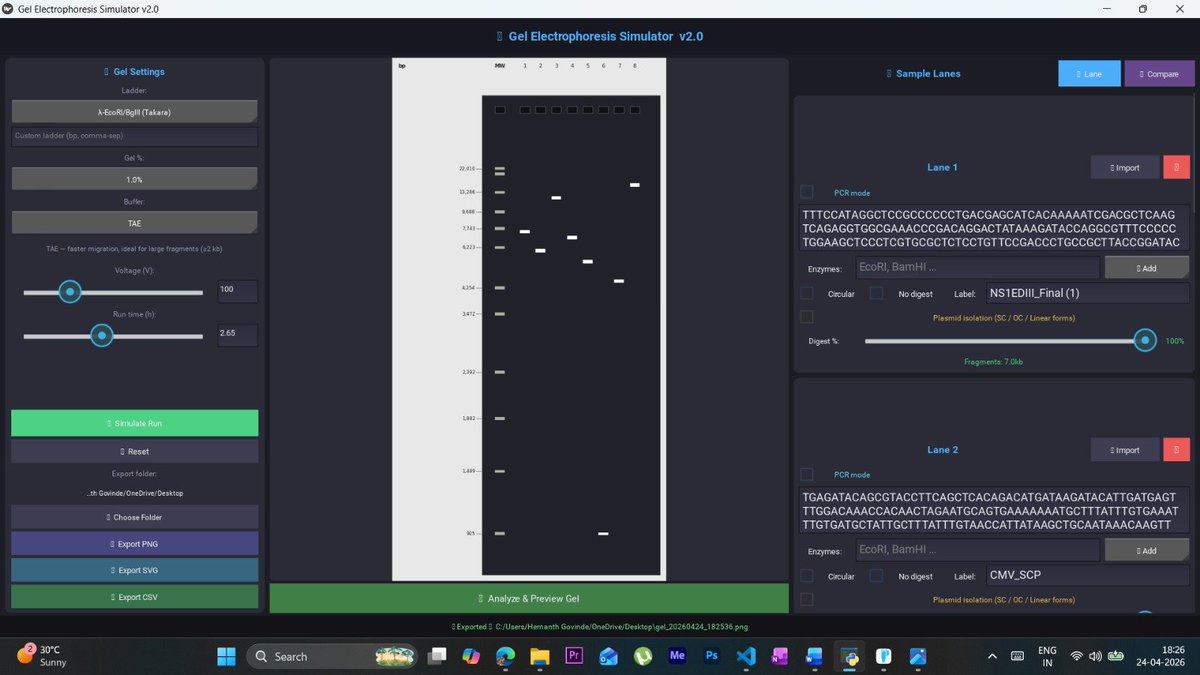
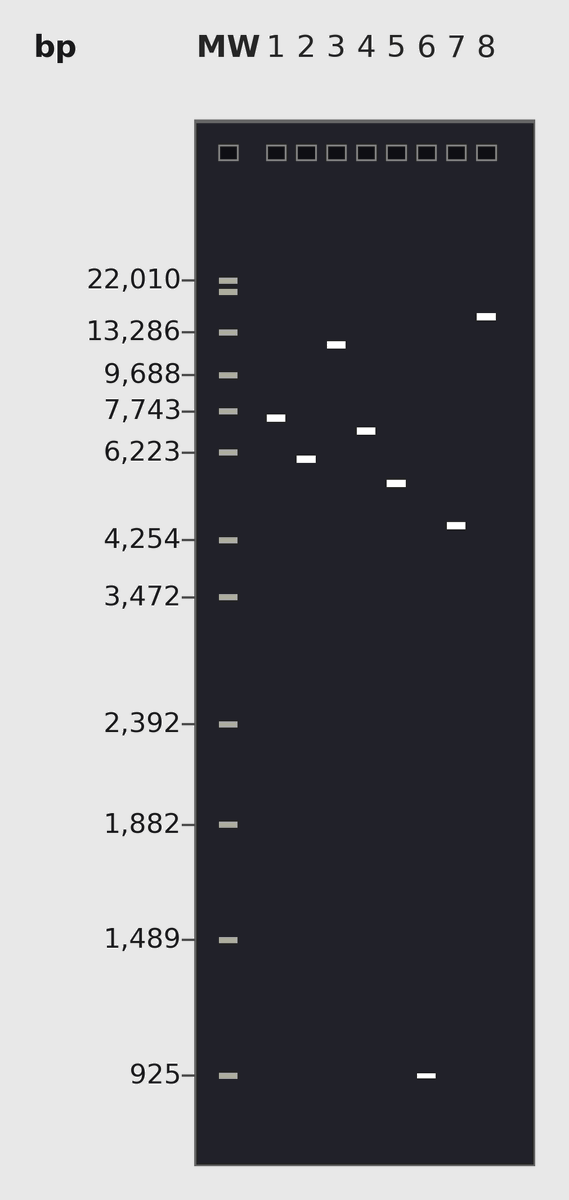
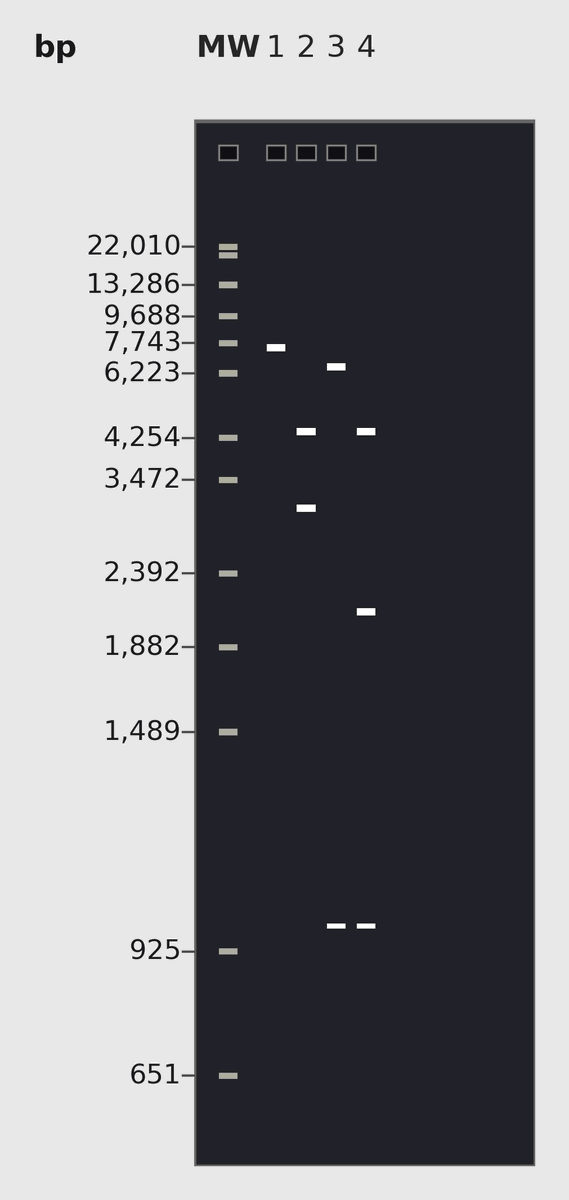
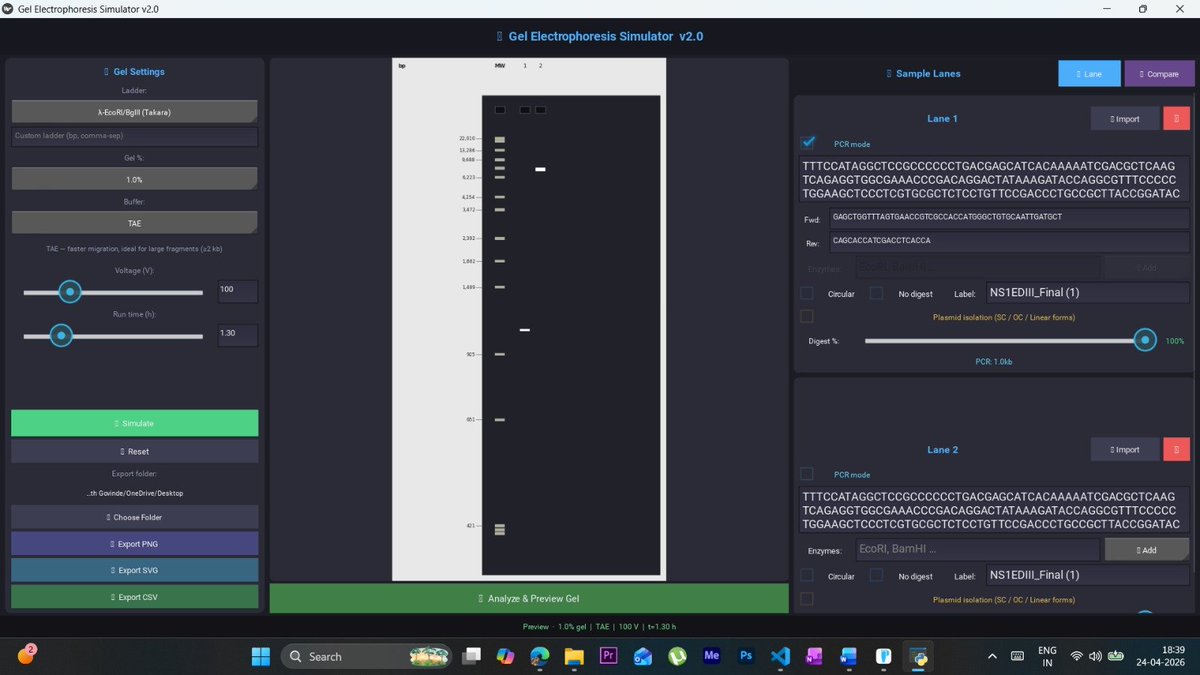
Vibe coded (Claude) an electrophoresis simulator.
Run the code and add more features if possible.
-Export PNG/SVG
-PCR mode - input both primers to simulate amplicon only
-Compare with multiple enzyme cuts (Use compare button) (1/n)
⏲️ Only one week left to apply to this year's #iDiv Summer School!
Accepted MSc students and doctoral researchers will receive expert guidance through hands-on data collection, trait measurements, phenology assessments, and ecological analyses. 🌿📏📊
Deadline: 31 March 2026
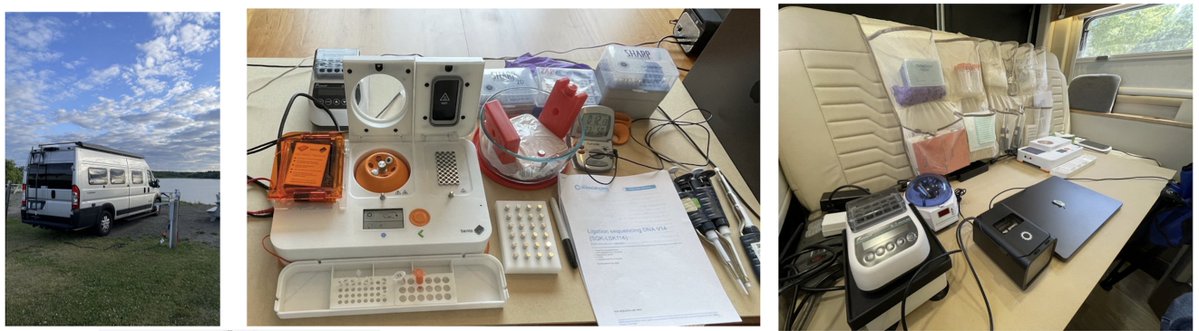
Genome sequencing goes off-grid! 🚐🧬
Researchers from Johns Hopkins successfully sequenced the Red Coachwhip snake (Masticophis flagellum piceus) genome using a mobile lab in a camper van.
Using a ONT Nanopore P2 Solo sequencing and Bento Lab, they show that genomes can be assembled at relatively low cost and without the need for a large laboratory!
🐍 Nuclear & mitochondrial genomes of Masticophis flagellum piceus sequenced
🐍 BUSCO completeness score better than most current snake genomes
🐍 All work done in field- or field-simulated settings
A great step toward decentralising and democratizing genomics, especially for research in remote locations!
You can read the article here:
Scott & Mohr (2026). A Nanopore-Only Assembly of a Nuclear and Mitochondrial Genome of a Red Coachwhip (Masticophis flagellum piceus). Genes, 17(3), 307.
https://t.co/nml8vEr8fY
Images copyright Alan F. Scott.
Please repost! 🙏
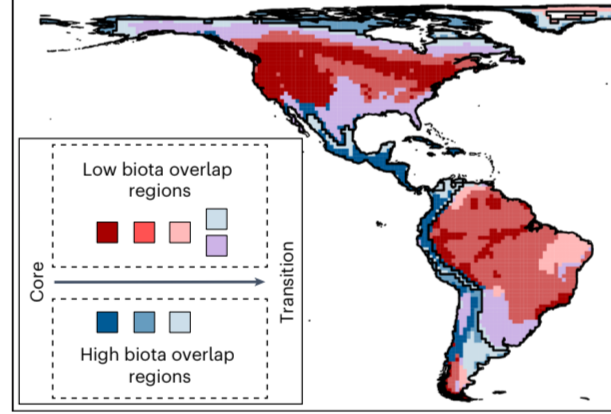
In collaboration with Iran Roman and the QMUL Centre for Multimodal AI, the McFadden Computational Ecology Lab is offering a 3-year, fully-funded PhD studentship at the interface of ecological theory, AI and global biodiversity mapping:
https://t.co/DDEahKY83c