For readers interested in in vivo CAR-T therapies, here's a comprehensive review by pioneers in the field
https://t.co/704yoIETgO
https://t.co/VZojof75jl
Sex difference in response to antibody drug conjugate immunotherapy is due to neutrophils !!
Yes...estrogen activates STING makes NETs, NETS block access...
https://t.co/NvvqwBMWLl
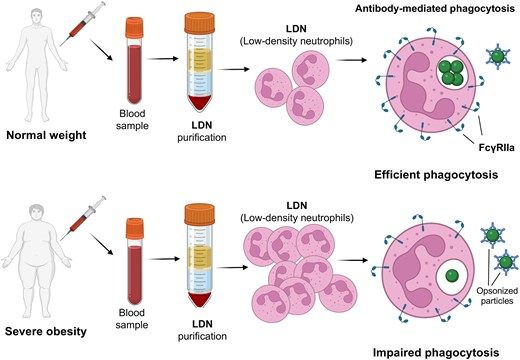
Carlos Blanco-Camarillo and colleagues @UNAM_MX@Ciencia_UNAM report that #Obesity induces elevated numbers of low-density #Neutrophils (LDN), but these perform #Phagocytosis and #NETosis less efficiently than LDN from individuals with normal weight
📖 https://t.co/oY3D0zHpu4
In 2025, Keytruda (pembrolizumab) was the number one drug for global sales ~$32 billion, targeting PD-1, for cancer immunotherapy. But we didn't know precisely how it works until today @ScienceMagazine
https://t.co/uIt3jDXzWW
https://t.co/xnxlg6burf
For readers interested in the potential of in vivo CAR-T cell therapies for cancer and autoimmune diseases, here's a comprehensive review by pioneers in the field
https://t.co/AEVGaTClxy
https://t.co/VZojof75jl
New paper out in Frontiers in Immunology!
We dissected how obesity and COVID-19 severity independently reshape the immune landscape, from adipokines and cytokines to T-cell and myeloid populations.
Obesity ≠ severity: they leave distinct immunological signatures.
🔗 https://t.co/C6CjaQksVV
#Immunology #Immunometabolism #COVID19 #Obesity
Online now: TCR origin and specificity to environmental or self-antigens on distinct antigen-presenting cells determine peripheral Treg cell differentiation https://t.co/gm0NNb194p
Dendritic cells don't just accompany tertiary lymphoid structures (TLSs)—they build and sustain them.
A new Science study identifies mature CCR7⁺ cDC1 dendritic cells as the central organizers of intratumoral TLSs, revealing that they coordinate local T-cell and B-cell immunity through simultaneous antigen presentation to both CD4⁺ and CD8⁺ T cells.
Key findings
• Early TLS formation requires IFN-γ-driven cDC1 maturation, migration to tumor-draining lymph nodes, WDFY4-dependent cross-presentation, and recruitment of activated T cells into tumors.
• Once tumors progress, TLS maintenance becomes independent of lymph node T-cell egress and instead relies on intratumoral CCR7⁺ mature cDC1s localized within CCL19⁺ stromal hubs.
• Mature cDC1s simultaneously present antigen through MHC-I and MHC-II, maintaining:
TFH cells
germinal centers
progenitor exhausted (TPEX) CD8⁺ T cells
tumor-specific IgG production
Loss of cDC1s rapidly disrupts TLS architecture and function.
• Conditional depletion of cDC1s after TLS establishment markedly reduced:
TLS number and size
germinal centers
TFH cells
tumor-specific antibodies
CD8⁺ T-cell responses
demonstrating that cDC1s remain essential long after TLSs have formed.
• Mechanistically, CCR7 directs cDC1 migration toward CCL19-producing stromal niches, where dendritic cells create local immune interaction hubs with TFH, TPEX, and B cells. Blocking CCR7 prevented cDC1 localization and destabilized TLSs.
• Importantly, both MHC-I and MHC-II antigen presentation were required simultaneously. Removing either pathway impaired TLS maintenance, while eliminating both produced the strongest disruption, establishing concurrent CD4⁺ and CD8⁺ T-cell engagement as the core mechanism sustaining functional TLSs.
Therapeutic implications
Rather than viewing TLSs as static biomarkers of good prognosis, this study positions them as actively maintained immune organs that require continuous dendritic-cell support.
Therapies that expand or activate cDC1s—including FLT3L and CD40 agonists—expanded TLSs experimentally, suggesting a strategy to enhance checkpoint blockade by strengthening local immune architecture rather than acting solely on T cells.
This work reframes mature CCR7⁺ cDC1s as the architects of intratumoral immunity, integrating spatial organization, antigen presentation, T-cell differentiation, germinal-center biology, and antibody production into a single mechanism that supports durable anti-tumor immune responses.
Excited to share our new study @ScienceMagazine by the fantastic Raphael Mattiuz and @jboumelha@SinaiImmunol showing how DC build and sustain tertiary lymphoid structures in cancer. A major step toward enhancing anti-tumor immunity (1/2) https://t.co/H8awCDz0HM