The right to access information is not a fringe right to other rights in the Bill of Rights. It is integral to the democracy conceptualized by the Constitution.
https://t.co/m00lmJ1OC7
Today, among the goods that are universally intended for everyone, we must also include new forms of property, such as patents, algorithms, digital platforms, technological infrastructure and data. In a context where the wealth of nations depends increasingly on knowledge and technology, when these goods remain concentrated in the hands of a few, without adequate forms of sharing and access, a new imbalance is created that contradicts the universal destination of goods. In turn, it widens the gap between the included and the excluded, between those who can participate in the digital revolution and those who remain on the margins. #MagnificaHumanitas
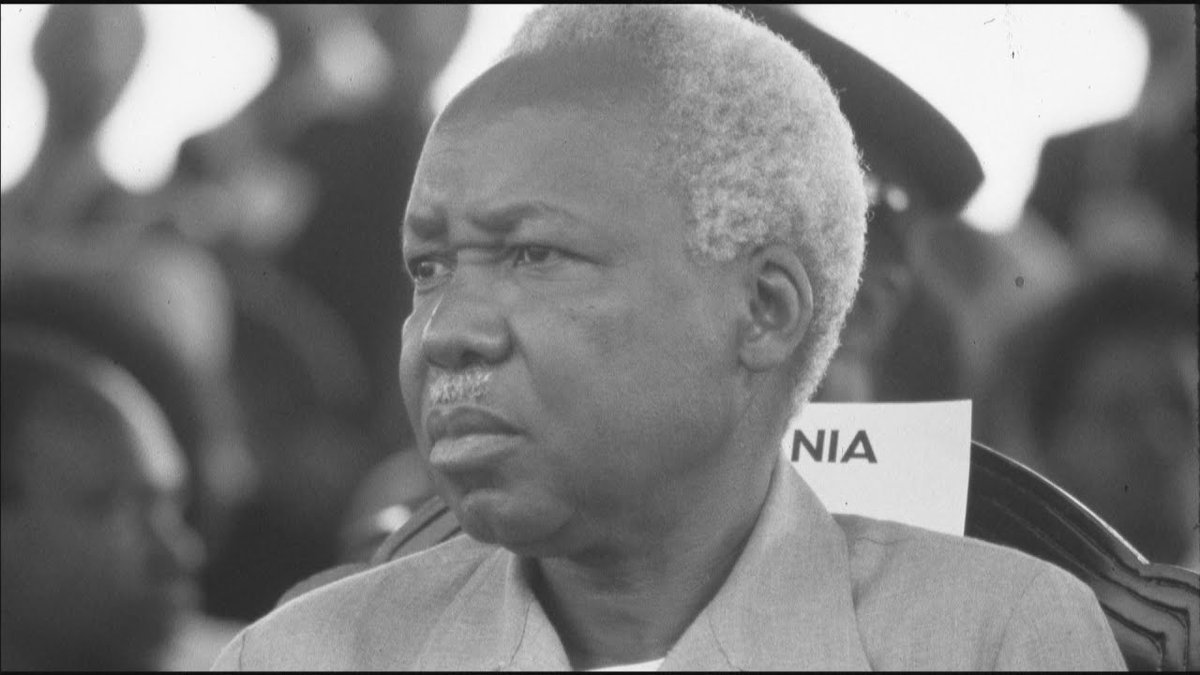
For decades, African leaders, from Ghana’s Kwame Nkrumah to Tanzania’s Julius Nyerere, made a simple argument to Europe and the industrialized world: No continent can sustainably develop while serving mainly as a supplier of raw materials and a consumer of finished goods./1
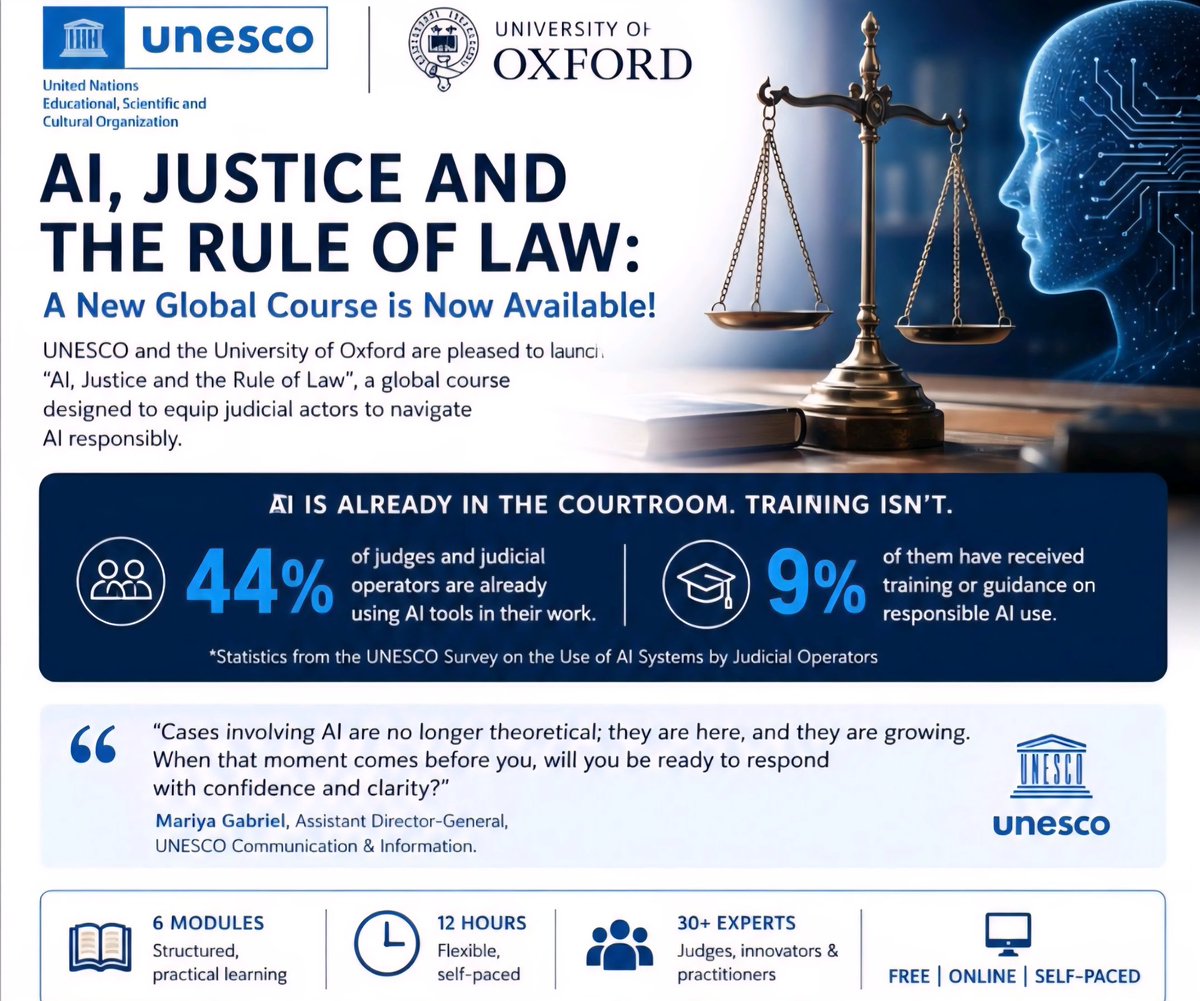
Are you a lawyer, or someone interested in AI regulation? @UNESCO, in collaboration with the @UniofOxford, has just launched a global course.
Register here: https://t.co/jHiMYZfda7
AI, Justice and the Rule of Law.
It is designed to equip judges, lawyers, policymakers, academia, and others with the requisite knowledge to navigate AI responsibly.
It goes further to talk about how AI affects access to justice and the Rule of Law.
It has 6 modules taught by 30+ global AI experts, with both graded and non-graded assessments. And of course, a reflective portfolio to work on.
At the end, if you pass at least 50%, you will be qualified for a globally recognized certificate.
Repost, bookmark and share to someone 👏
Come work with me!
A really cool job just opened up on our international investigations team at The New York Times for a reporter specializing in OSINT, with lots of room for different skillsets
https://t.co/gx8ZamNlMc
In Education for Self-Reliance, Mwalimu Julius Nyerere is categorical that colonial education is unsuitable for a post-independent populace because the curriculum and educational infrastructure are designed to create a cadre of entitled individuals obsessed with individual achievements rather than communal cooperation. The well-educated recipients of colonial education are more attuned to profit-making careers and are least committed to service provision.
Read Analysis: https://t.co/EjE4zgAG95
@ObyObyerodhyamb@m_ogada@wmnjoya@tony_mochama@ReginaldOduor@ArkAnudDinYaSin@WMutunga@jnyairo@NativeLandgrab@DavidNdii@KiamaKaara@jkobuthi@realoyungapala@johngithongo
#IWentToAlliance #TheElephant #EliteMediocrity #Governance
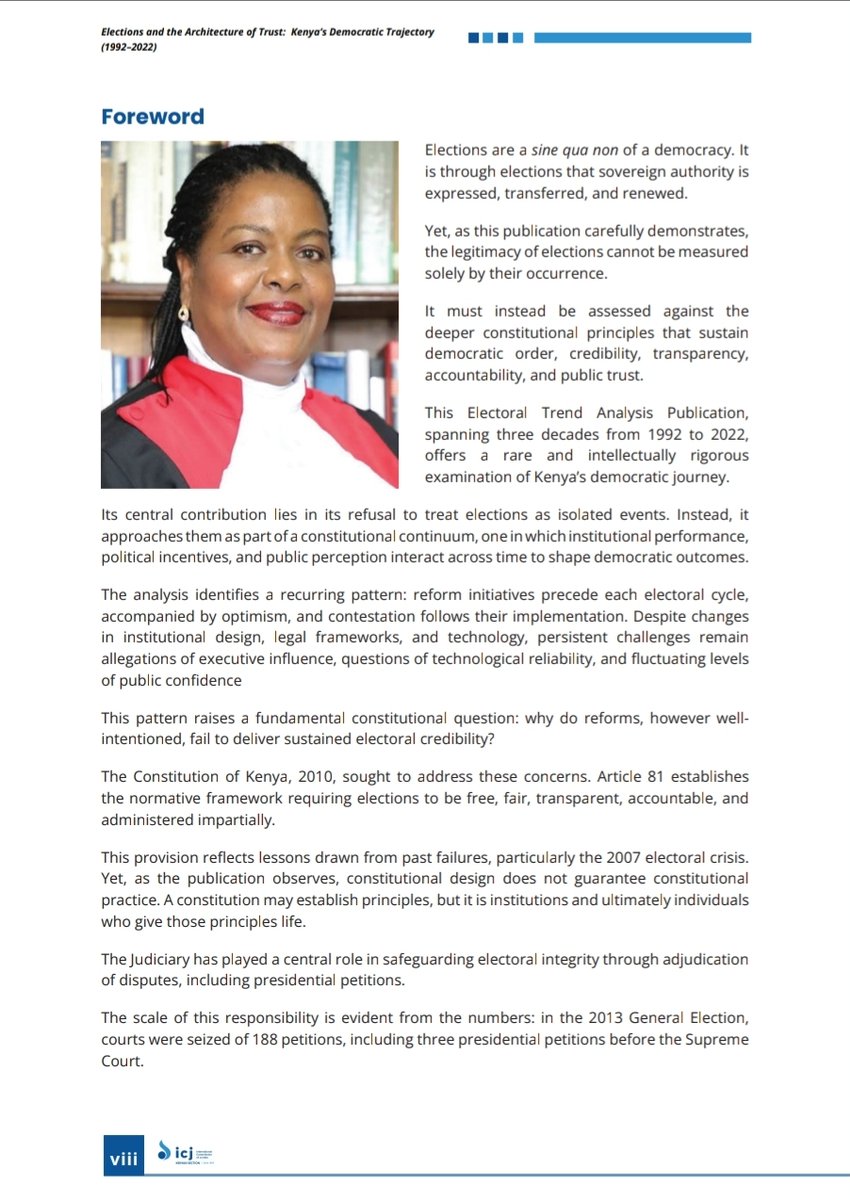
How have Kenya’s elections changed from 1992 to 2022?
Our new publication, Elections and the Architecture of Trust, looks at 30 years of electoral reforms, challenges, court decisions, technology, and public trust in Kenya’s democracy.
With a foreword by Hon. Lady Justice Njoki Ndungu, SCJ, @NjokiNdungu_LJ and remarks from ICJ Kenya Executive Director @kipdemas, the publication offers a timely reflection as the country looks ahead to 2027.
Read the publication: https://t.co/YUTuq5Cqs8
In Kenya 'dirty money' does not always hide. Sometimes it just buys a car.
@elsakariuki examines how Kenya's second-hand vehicle market became one of the most convenient and least regulated channels for laundering illicit funds, on the latest edition of The Signal Newsletter.
Read now on: https://t.co/Y1uzinpUAh
The world hasn’t noticed yet, but Mexico’s recent drop in homicides may be showing that there is an alternative to Bukele’s model.
Very happy to share my first piece for @ProSyn
https://t.co/lzPT2xFj2x
BIG.
An application has been filed at SCORK asking SCORK to depart from its decision in Mbaazi that barred an interested party from appealing from an adverse outcome.
SCORK has been asking us to move it formally for departure and now we have.
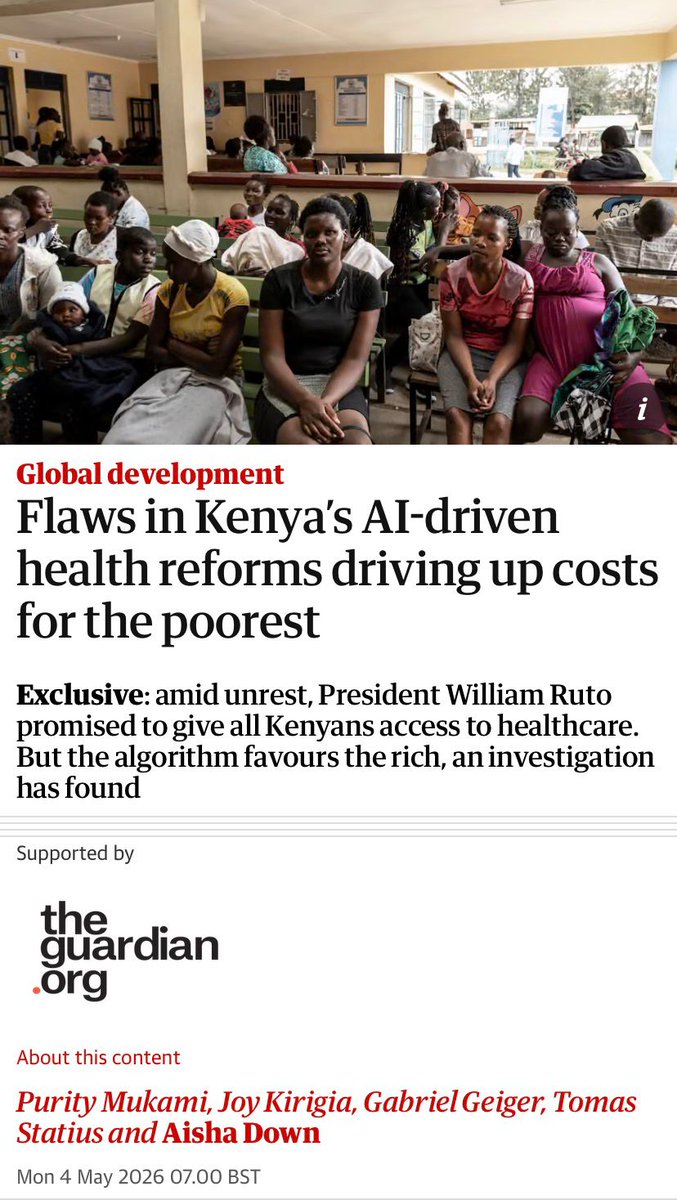
AI-driven Social Health Authority (SHA) was sold to us as a revolution in healthcare financing. However, the algorithm overcharges the poorest Kenyans while undercharging the wealthy. A single mother earning Ksh 3,500/month is now billed Ksh 1,030 for health cover. That is digital poverty extraction.
At the same time, yesterday’s Daily Nation cover story on the politics of motherhood reminds us that women, especially poor and working-class mothers, already carry the invisible burden of sustaining families, communities and the economy through unpaid care work, sacrifice and survival. Yet instead of easing that burden, the system is now digitising it. A mother struggling to put food on the table is reduced to an affordability score by an opaque algorithm that cannot measure exhaustion, caregiving, vulnerability or survival.
Many reports flagged this system as flawed and inequitable before it was even launched. The Government chose to proceed anyway. Today, only 5 million of 22 million registered members pay regularly and Kenyans are dying because they cannot afford to walk into a facility.
Technology should serve human dignity. This one entrenches inequality and calls it algorithmic neutrality. The poor are not data points. They are Kenyans who deserve better healthcare.
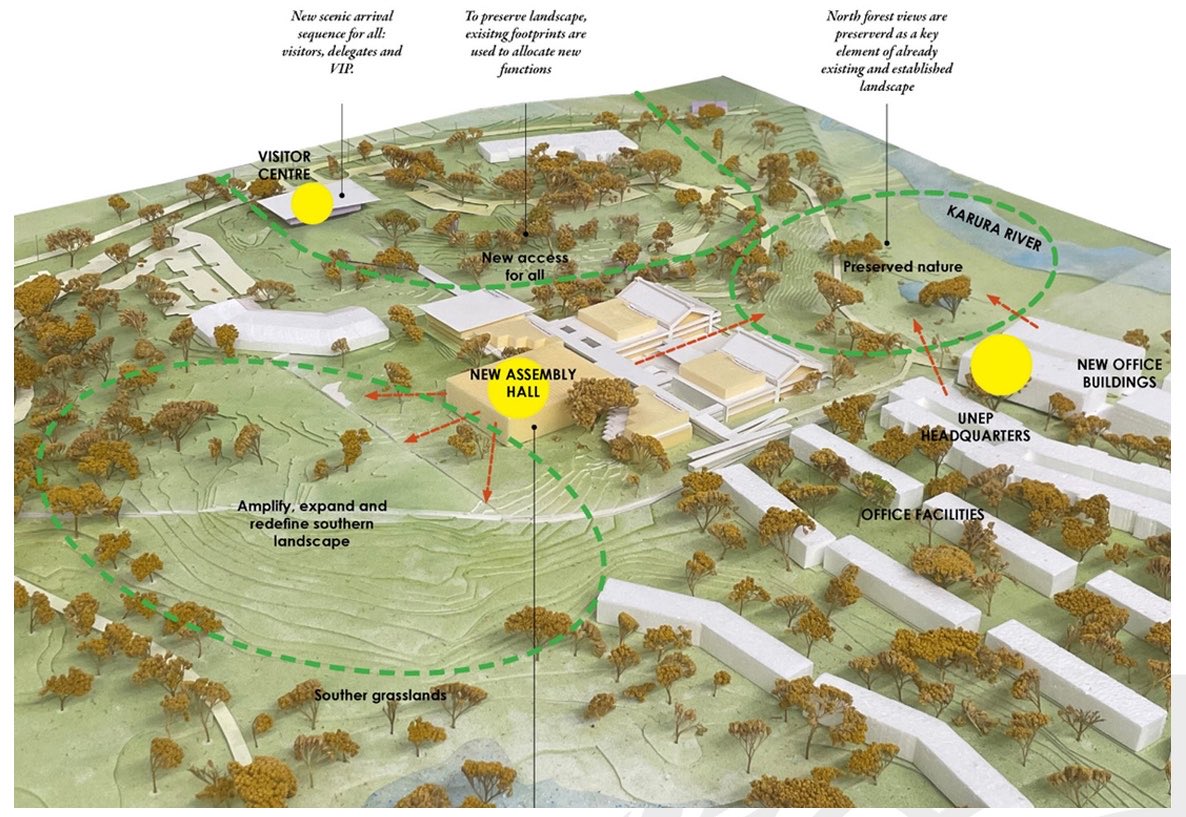
UN Sec. General António Guterres will be in Kenya next Monday for the groundbreaking of the $340 Million expansion of the 140 acre UNON facility at Gigiri.
The expanded facilities will operate entirely on renewable power.
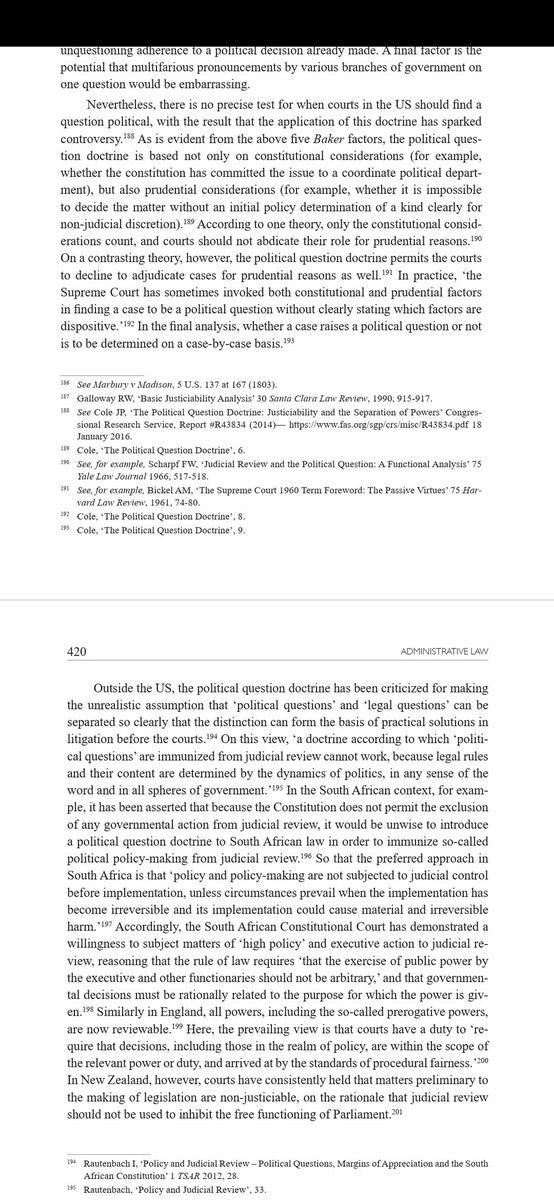
The political question doctrine wrongly assumes ‘political questions’ and ‘legal questions’ can be separated so clearly that the distinction can form the basis of practical solutions in litigation before the courts. See excerpt below from my Administrative Law book.
The Court of Appeal's judgement in Cytonn High Yield Solutions (CHYS) and Cytonn Project Notes (CPN) is a landmark decision on insolvency.
The court pierced the corporate veil and ruled that despite CHYS and CPN being separate legal entities ...
https://t.co/qCTQC5YqRq
On Hantavirus: a (non-technical) thread.
Disclaimer: I am a biology PhD, but not virology/epidemiology. Husbandman is a virology PhD. But I’m told I’m good at communicating science, so here’s my take.
#Hantavirus
MAJOR DEVELOPMENT: After lowering Value Added Tax on petroleum products for 90 days via the VAT Amendment Act of 2026 (see quoted tweet), Kenya moves to temporarily waive the sulphur parameter to the maximum limit of 50mg/kg for Diesel (code KS EAS 177:2025) & Super Petrol (code KS EAS 158:2025) for a period of 6 months.
The Ministry of Trade says that this temporary waiver on standards has been sought by the Ministry of Energy & Petroleum & has been approved in consultation with the National Standards Council.
Musings:
· The take home here is that G2G partners are facing challenges in guaranteeing delivery of pre-agreed product standards given the reality of sourcing from alternative markets in the wake of the the war on Iran
· The signal being sent here is that if Kenya remained rigid on standards, the risk of disruption of supply looms large