For journalists and researchers looking for more information regarding the shooting in Bondi - Here is a list of threads I wrote:
1. Analysis of timeline and weaponry used:
https://t.co/1f6fcZd2g4
2. Geolocation of verified footage with mapping:
https://t.co/hQaJuv3dVU
3. Analysis of the attack being targeted - not indiscriminate (Includes mapping):
https://t.co/mhoZwuMP34
4. Fake website shared / Wrong claim of 3rd assailant:
A. https://t.co/XMpyxHPPdO
B. https://t.co/IEYv3iLUzF
Programmer? We're hiring!
In, or willing to be in, the Los Angeles area?
Want to make an old dos game, but this time it's ray traced sparse voxel octtrees?
Apply via @bitshiftent. Not exactly sure what skills you need. You tell us.
no vibe coders or new-line-{-ers
Wait… someone actually brought student loans on-chain?
And made them investable??
Pencil Finance might be the weirdest (and smartest?) RWA I’ve seen in a minute.
> Lenders tokenize real student loans
> Investors pick a tranche (fixed vs high yield)
> Capital goes to students
> Repayments stream back transparently
> Everyone wins (except TradFi lol)
You’re not farming cartoon tokens.
You’re funding real people. Getting real yield. Backed by real-world debt.
First loan’s already live. $10M committed.
Built on EDU Chain. Backed by Animoca, HackQuest, and Open Campus.
This might actually be what RWAs were supposed to be.
How Coinbase Might Bring 1 Billion People Onchain Using Its Smart Wallet
On @Unchained_pod, @LukeYoungblood talks about the 🔥 new Coinbase smart wallet:
🛠️ How smart wallets differ from traditional wallets
💸 How @coinbase is subsidizing gas fees to onboard users
🌍 Why @MoonwellDeFi focuses on emerging markets
👀 Coinbase’s Magic Spend feature for seamless transactions
Timestamps:
01:40 How smart wallets differ from traditional wallets and embedded wallets
04:06 Why Luke is excited to be working with Coinbase smart wallet
06:33 What happens if the user loses the device linked to their smart wallet
08:12 How hard it would be for a hacker to try to get access to the assets in this smart wallet
09:36 How Coinbase is initially paying for user gas fees on dapps like Moonwell and other launch partners
12:02 How Coinbase’s Magic Stand feature enables users to transact onchain straight from their Coinbase accounts
14:24 How Coinbase might keep paying gas fees for some dapps even after the initial launch period
16:38 Why the smart wallet is also accessible via the web, and not just through an app
19:50 Why Moonwell has focused on lending and borrowing
18:03 Why Moonwell chose to build on Base as opposed to, say, Solana
21:24 Moonwell’s plans to grow
23:00 How having access to Coinbase’s user base changes Moonwell’s strategy for attracting users
BlackRock is ensuring that Real World Assets could be the year's biggest crypto narrative
This is what's getting tokenized + the standout projects to keep an eye on 👇
Are real-world assets crypto’s next frontier?
Real World Assets (RWAs) are the talk of the town. Big names like @BlackRock are getting into RWAs, @tether is rolling out its own platform, and the numbers are impressive too – RWA tokens reached a record market cap of $2.7 billion in February.
With so many major catalysts, the RWA narrative is expected to take center stage in the second half of 2024.
Today’s story gives a rundown of the RWA landscape, highlighting the different types of real world assets being tokenized and the standout projects to keep an eye on.
Let’s dive in! 👇
What's Next for RWAs?
RWAs are one of the fastest-growing sectors in crypto. Many see them as a way to tap into the world's trillions in assets, fueling the growth of the entire industry.
Larry Fink, the CEO of BlackRock, has called RWAs "the next generation for markets”. @BCG predicts that by 2030, turning these assets into tokens could unlock a $16 trillion opportunity.
However, until now, only one asset has been successfully tokenized and fully integrated into the crypto ecosystem: fiat currency in the form of stablecoins.
Stablecoins are the first, the largest, and the most established RWA. They’ve found product market fit in crypto, see strong demand for different services, and are a fundamental part of every crypto ecosystem.
But what's beyond stablecoins in the RWA space?
In recent years, we've seen a growing trend of various real-world assets being tokenized and brought onchain. Let's check out some of the most popular types.
Commodities, Equities & Funds
Commodities like gold, silver, and crude oil are commonly traded on various exchanges around the world. These natural resources can be tokenized to represent a stake in the actual commodity, much like stablecoins do for fiat currency.
So far, precious metals, especially gold, have gained the most traction in crypto as RWAs. Tokens like PAX Gold (PAXG) and Tether Gold (XAUT) are leading the charge, with gold-backed RWAs comprising 83% of the commodity token market cap, as reported by @coingecko.
This dominance of gold indicates just how nascent the RWA sector is. However, several projects are experimenting with different commodities. For instance, the @Uranium3o8 project has introduced a token pegged to the price of a pound of U3O8 uranium compound 👀
As the RWA tokenization space matures, we might see tokens for other commodities like crude oil and even crops like corn. The thesis is that more global trading will shift onto the blockchain in the future.
Similar to commodities, stocks, and mutual funds can also be tokenized. These assets are mainstays in the traditional finance market, but their adoption in crypto has been slow, largely due to regulatory hurdles.
Complying with laws across jurisdictions is tough, with many projects needing licenses and facing restrictions, like excluding users from certain countries or meeting strict KYC and AML criteria.
Despite these challenges, some projects like @SwarmMarkets and @BackedFi have navigated the regulatory maze, allowing onchain trading of global stocks and funds, like $COIN and $NVDA from the U.S. markets, and index funds like the Core S&P 500, among others.
Treasuries
Treasuries refer to tokenized government debt instruments. Traditionally, these instruments are secure, yield-generating assets as they are issued by governments.
Following the COVID-19 pandemic, treasury rates, which were historically low, saw a rise as the Federal Reserve adjusted its monetary policy to the shifting economy. By October 2023, short-term treasury yields had climbed from near zero to approximately 5.4%.
This uptick in rates spurred the launch of projects tokenizing U.S. treasuries, with some notable examples being:
Franklin Templeton — @FTI_US launched the Franklin OnChain U.S. Government Money Fund (FOBXX) in 2021, the first U.S.-registered fund on a public blockchain. It offers a 5.11% yield and has a $365 million market cap, ranking it among the largest onchain treasury products.
BlackRock — launched the BlackRock USD Institutional Digital Liquidity Fund ($BUIDL) in March 2024 on Ethereum. It currently leads the onchain treasury fund market with over $375 million in assets under management.
Ondo — @OndoFinance launched the Ondo Short-Term U.S. Government Treasuries (OUSG), which provides access to short-term U.S. Treasuries with a 4.68% yield and a market cap around $140 million. A significant portion of OUSG is invested in BlackRock's BUIDL. Ondo also offers the USDY yield-bearing stablecoin, with a market cap exceeding $120 million.
This category has seen substantial growth as treasury yields have become more appealing with rising interest rates. Other notable projects in this space include @superstatefunds, @maplefinance, Backed, @OpenEden_Labs, and more.
Onchain Private Credit
Private credit involves lending by financial institutions to businesses through debt instruments, essentially loans.
In the context of the RWA sector in crypto, these loans are tokenized through credit protocols, allowing lenders to extend capital to these institutions in exchange for yield.
In traditional finance, private credit is a massive $1.6 trillion market, and it's slowly carving out a significant niche in crypto.
Crypto credit protocols have already tokenized over $4.4 billion in loans, with more than $600 million currently loaned out to real-world businesses, generating returns for onchain lenders.
For onchain investors, private credit presents an attractive proposition due to its higher yield potential. For example, lending stablecoins through a protocol like @centrifuge can yield an average APY of 8.7%, surpassing the 4-5% APY typically found on platforms like AAVE, though it comes with increased risk.
Key players in the private credit space include:
- Centrifuge
- Maple
- @goldfinch_fi
- @Credix_finance
- @TrueFiDAO
- @homecoinfinance
- @ribbonfinance
Real Estate
The real estate category within RWA focuses on tokenizing physical properties like residential houses, land, commercial buildings, and infrastructure projects.
Real estate stands as the world's biggest asset class. But traditionally, real estate investment requires significant capital due to the high cost of properties. Making real estate tradable onchain by tokenization introduces a novel investment paradigm, enhancing accessibility, enabling fractional ownership, and potentially increasing liquidity.
Nonetheless, real estate's inherent illiquidity has tempered the pace of its onchain adoption. The protracted nature of real estate transactions and the small buyer pool make it challenging to align sellers with buyers onchain, especially given how the sector has operated on legacy systems traditionally.
Projects like @RealTPlatform are striving to inject liquidity into the market by simplifying property fractionalization, thus allowing sellers to easily divide their assets and enabling buyers to acquire tokenized shares.
Additionally, platforms like @Parcl allow for speculation on the value of real estate across various locations, such as different U.S. cities, through their onchain trading mechanisms.
All these initiatives will make the real estate market more liquid in the long term.
Closing Thoughts
The concept of RWAs promises to bring a new level of global access and liquidity to traditional assets like real estate, commodities, and debt. Should the bold predictions for RWAs materialize, the tokenization of these assets may well redefine how the world trades these assets and in turn, bring more people onchain.
🚨 AI Policy Alert: The German Federal Office for Information Security publishes the report "Generative AI Models - Opportunities and Risks for Industry and Authorities." Quotes & comments:
"LLMs are trained based on huge text corpora. The origin of these texts and their quality are generally not fully verified due to the large amount of data. Therefore, personal or copyrighted data, as well as texts with questionable, false, or discriminatory content (e.g., disinformation, propaganda, or hate messages), may be included in the training set. When generating outputs, these contents may appear in these outputs either verbatim or slightly altered (Weidinger, et al., 2022). Imbalances in the training data can also lead to biases in the model" (page 9)
-
"If individual data points are disproportionately present in the training data, there is a risk that the model cannot adequately learn the desired data distribution and, depending on the extent, tends to produce repetitive, one-sided, or incoherent outputs (known as model collapse). It is expected that this problem will increasingly occur in the future, as LLM-generated data becomes more available on the internet and is used to train new LLMs (Shumailov, et al., 2023). This could lead to self-reinforcing effects, which is particularly critical in cases where texts with abuse potential have been generated, or when a bias in text data becomes entrenched. This happens, for example, as more and more relevant texts are produced and used again for training new models, which in turn generate a multitude of texts (Bender, et al., 2021)." (page 10)
-
"The high linguistic quality of the model outputs, combined with user-friendly access via APIs and the enormous flexibility of responses from currently popular LLMs, makes it easier for criminals to misuse the models for a targeted generation of misinformation (De Angelis, et al., 2023), propaganda texts, hate messages, product reviews, or posts for social media."
➡️ According to the report, special attention should be given to the following aspects:
➵ Raising awareness of users;
➵ Testing;
➵ Handling sensitive data;
➵ Establishing transparency;
➵ Auditing of inputs and outputs;
➵ Paying attention to (indirect) prompt injections;
➵ Selection and management of training data;
➵ Developing practical expertise.
➡️ Of the dozens of AI reports published lately, this one is especially detailed regarding AI-related risk and potential countermeasures.
➡️The document is a must-read for people developing AI or working on AI policymaking and regulation, especially pages 8-28.
➡️ Link to the @BSI_Bund report below.
➡️ For more information on AI policy and regulation, subscribe to my weekly newsletter (link in bio).
@chiefaioffice Best example yet that content, both professional and individual, has tangible value 💰
@sharetoCLICK empowers everyone to sell licenses to their personal content.
Do what you love
Own what you do
Right where you are
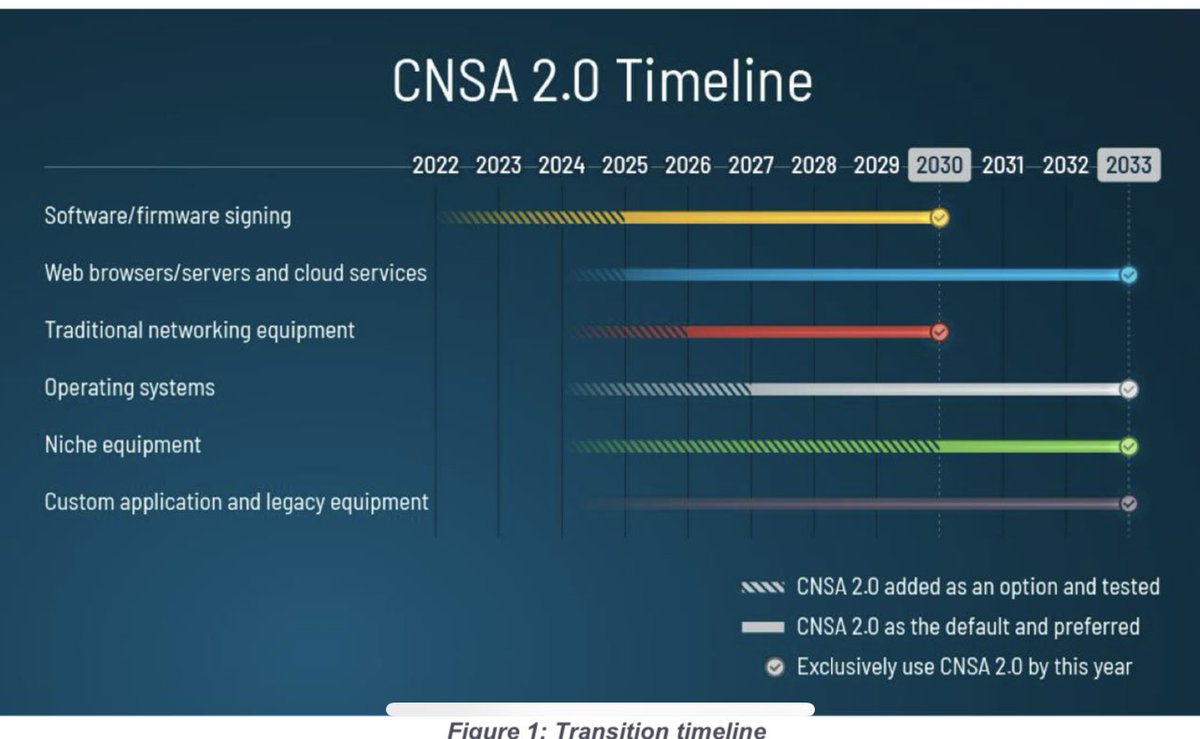
Why transition cryptography twice before the end of the decade, when you can skip another asymmetric encryption transition (Kyber) and graduate directly to accessible symmetric-only cryptography for all?
The post-PKI era is here.
https://t.co/uWEaLkDXPG
@LuizaJarovsky AI data value belongs to us all, not a few gate keepers. Governments are waking up to this inevitable future.
@sharetoCLICK is making it happen.
Based on https://t.co/ZCoeG7fl0f
One of the two columns is AI generated, which one?
Answer in comments 👇🏻
AI is now capable of reproducing almost perfectly human handwriting.
This, again, shows the crucial need to accelerate the deployment of Blockchain technology for proof of humanity and digital signature.
@worldcoin #proofofhumanity #acceleration
ARTISTS on ARTSTATION, block this user and GLAZE YOUR WORK. It’s an account with a MIDJOURNEY logo following hundreds of thousands of you in the last two days. Don’t forget the Midjourney Artist Database
Cybersecurity is going to be a hot space in AI in 2024 🔐
- Intel launches Articul8 following pilot w BCG
- AWS GMs leave to launch Protect AI
- ADP CDO left to join Securiti AI
Privacy and security remain the NUMBER ONE thing I get asked about in gen AI. Keep your eye on this space 👀
https://t.co/TUxMWhWWcH
What's still valuable to people in a post-AGI world:
- human content
- human connection
- human influencers
- human communities
- human physical interaction
Anything human really
there is a possible world where one of these parallelized EVM chains comes in and absolutely shocks the space by absorbing a critical mass of lower value / high speed activity right out of the gate in this early bull market
rapidly importing tooling from Ethereum and other EVM L1 chains
AND simultaneously reinforcing the differentiated value of the more decentralized Ethereum L1 for higher value activity
AND eventually ends up with their architecture being imported as an L2 on Ethereum
worth keeping an eye on
Some form of Licensing needs to come here.
IMO, "Search" is so yesterday's tech. In the era of super-powerful LLMs, we need to directly get to the correct knowledge. Not just get link-dumps and then it's my job to "search" with a huge Cognitive Load.
Time has finally come, for the evolution from Information Retrieval to Knowledge Delivery.
@gregisenberg Great points. I’m out here to change the economics behind #11 next year.
Just like IRL society thrives with a strong middle class, so must online society.
Follow the exploits of @sharetoCLICK & @EcoMintAI in 2024 to see how we do!
https://t.co/HVXBw7M2gS