@AfricanArchives I love him. Thank you. I wish they (unknown to me) didn’t burn down the Chapel he designed. Too many of our historical sites/assets have been lost to fires. 🙏
#KitsWin#KitsWin#KitsWin
Football beats New Trier 26-22 for the sweetest Homecoming victory the KITS could ask for!!!!
Thanks to the KIT PIT for their incredible support!!!
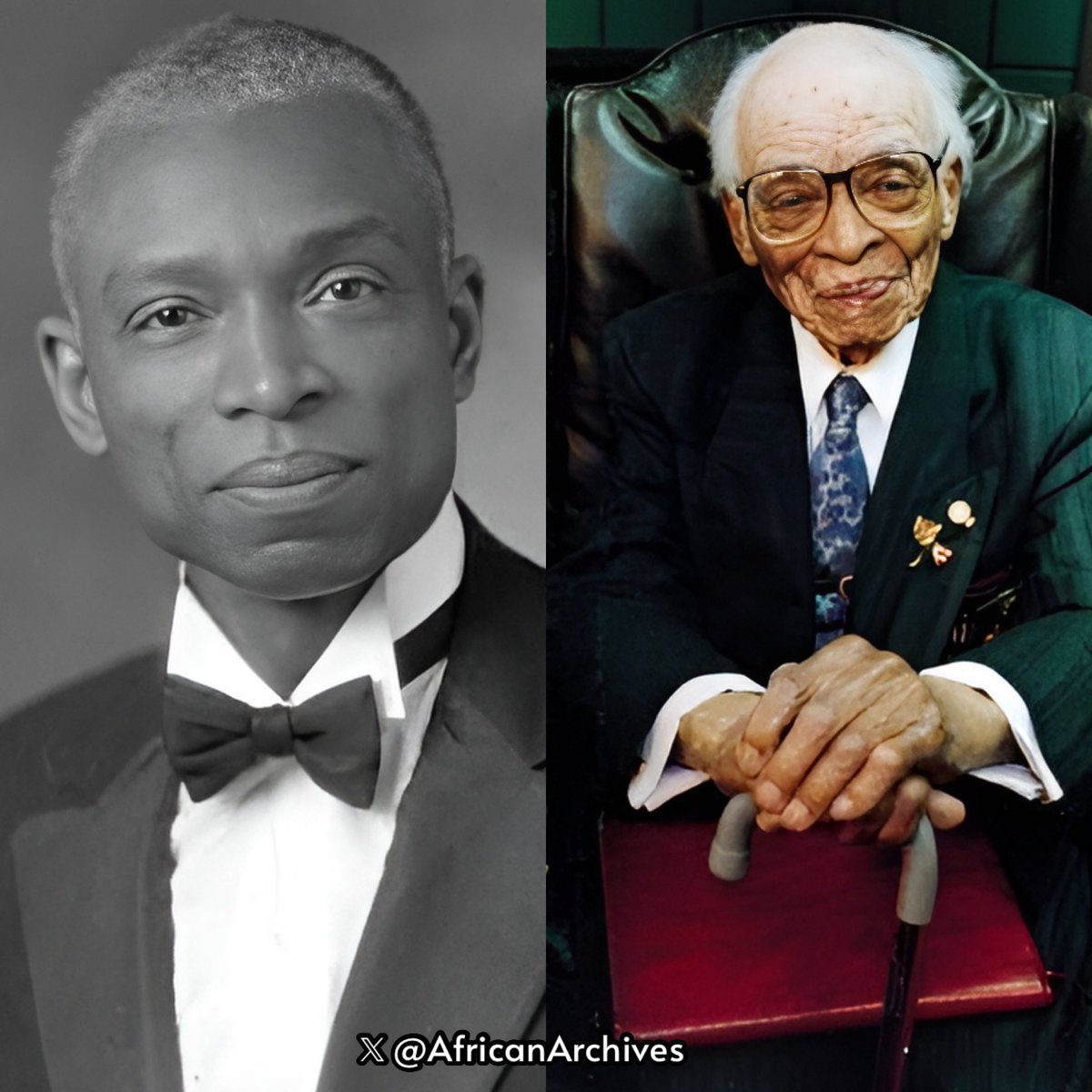
John Morton Finney was a Buffalo soldier who fought in World War 1, earned 11 degrees and practiced law until he was 106 years old.
He was believed to be the longest practicing attorney in the United States.
—John Morton-Finney (June 25, 1889 January 28, 1998) was an American civil rights activist, lawyer, and educator who earned 11 academic degrees, including 5 law degrees.
—He spent most of his career as an educator and lawyer after serving from 1911 to 1914 in the U.S. Army as a member of the 24th Infantry Regiment, better known as the Buffalo soldiers, and with the American Expeditionary Forces in
France during World War I.
—Morton-Finney taught languages at Fisk University in Tennessee and at Lincoln University in Missouri, before moving to Indianapolis, Indiana, where he taught in the Indianapolis Public Schools for forty-seven years.
—Morton-Finney was a member of the original faculty at Indianapolis's Crisps Attucks High School when it opened in 1927 and later became head of its foreign language department. He also taught at Shortridge High School and at other IPS schools.
—Morton-Finney was admitted as a member of the Bar of the Indiana Supreme Court in 1935, as a member of the Bar of the U.S. District Court in 1941, and was admitted to practice before the U.S. Supreme Court in 1972.
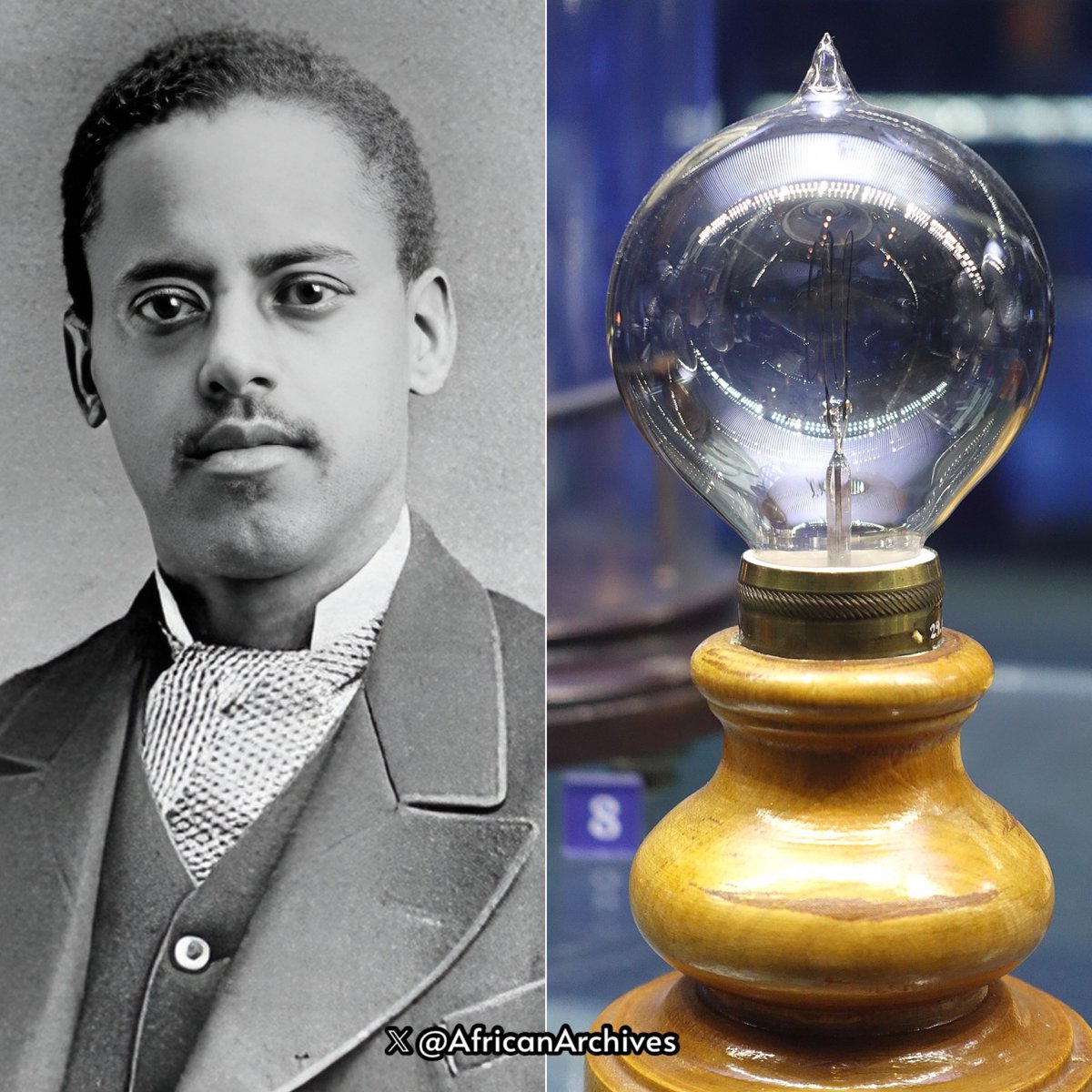
On this day in 1848, Lewis Latimer, an inventor and patent draftsman, was born.
Although Thomas Edison is recognized as the inventor of the light bulb, Lewis Latimer played an important role in its development.
In 1881, he patented a method for making carbon filaments, allowing light bulbs to burn for hours instead of minutes. He also drafted the drawings that helped Alexander Graham Bell receive a patent for the telephone.
—Lewis Howard Latimer was born in Chelsea, Massachusetts, on September 4, 1848, to parents who had fled slavery. Latimer learned the art of mechanical drawing while working at a patent firm. Over the course of his career as a draftsman, Latimer worked closely with Thomas Edison and Alexander Graham Bell, in addition to designing his own inventions. He died in Flushing, Queens, New York, on December 11, 1928.
Inventor and engineer Lewis Howard Latimer was the youngest of four children born to George and Rebecca Latimer, who had escaped from slavery in Virginia six years before his birth. Captured in Boston and brought to trial as a fugitive, George Latimer was defended by abolitionists Frederick Douglass and William Lloyd Garrison. He was eventually able to purchase his freedom, with the help of a local minister, and began raising a family with Rebecca in nearby Chelsea. George disappeared shortly after the Dred Scott decision in 1857, possibly fearing a return to slavery and the South.
After his father's departure, Lewis Latimer worked to help support his mother and family. In 1864, at the age of 16, Latimer lied about his age in order to enlist in the United States Navy during the Civil War. Returning to Boston after an honorable discharge, he accepted a menial position at the Crosby and Gould patent law office. He taught himself mechanical drawing and drafting by observing the work of draftsmen at the firm. Recognizing Latimer's talent and promise, the firm partners promoted him from office boy to draftsman. In addition to assisting others, Latimer designed a number of his own inventions, including an improved railroad car bathroom and an early air conditioning unit.
Latimer's talents were well-matched to the post-Civil War period, which saw a large number of scientific and engineering breakthroughs. Latimer was directly involved with one of these inventions: the telephone. Working with Alexander Graham Bell, Latimer helped draft the patent for Bell's design of the telephone. He was also involved in the field of incandescet lighting, a particularly competitive field, working for Hiram Maxim and Thomas Edison.
Latimer's deep knowledge of both patents and electrical engineering made Latimer an indispensible partner to Edison as he promoted and defended his light bulb design. In 1890, Latimer published a book entitledIncandescent Electric Lighting: A Practical Description of the Edison System. He continued to work as a patent consultant until 1922.
Latimer married Mary Wilson in 1873, and they had two daughters together. The Latimers were active members of the Unitarian Church and Lewis Latimer was consistently involved in Civil War veterans groups, including the Grand Army of the Republic. In addition to his drafting skills, Latimer enjoyed other creative pastimes, including playing the flute and writing poetry and plays. In his spare time, he taught mechanical drawing and English to recent immigrants at the Henry Street Settlement in New York.
Lewis Howard Latimer died on December 11, 1928, in Flushing, Queens, New York. His wife, Mary, predeceased him by four years.
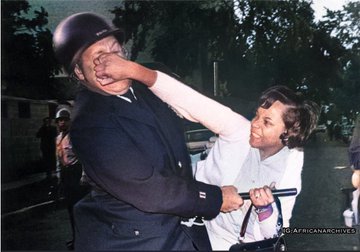
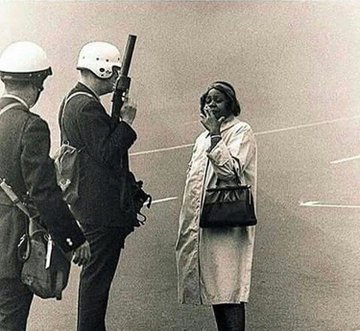
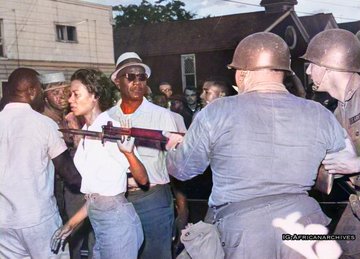
“f**k it, i’ll do it!” —black women
Black women are routinely erased from public memory and historical narratives of resistance.
Black women powered the civil rights movement, but rarely became its stars.
A THREAD!