I’m hiring a Chief of Staff to help run @ZeroPrimeVC & @AICouncilConf.
It's a mini-COO role for an unusually capable generalist.
Most of your time will go to operating and growing AI Council. The rest goes to increasing my leverage across both AI Council and Zero Prime: turning priorities into action, preparing decisions, protecting focus, and making sure important threads don't drop.
The right person is a high-agency generalist - comfortable owning a P&L, fully AI-pilled in how you work, and low ego about the job. You should move comfortably between commercial work, marketing, events, finance, executive communication, and operational detail.
The scope is intentionally broad and expected to grow. The right person will earn ownership quickly and can develop toward broader operating leadership over time. Evidence of ownership matters more to me than a matched resume.
$150–180K base, bonus, carry eligibility. Full time, in person, San Francisco.
To apply, send resume and LinkedIn profile to [email protected], with short answers to two questions:
1. What's the most ambiguous cross-functional problem you've personally owned through execution?
2. Why does building both an AI community business and a day-zero venture platform appeal to you?
Specific examples beat a polished cover letter.
If a name came to mind while reading this, please tag them. A repost also helps this find them.
Modal, CuspAI, LanceDB and 5 other Zero Prime portcos are hiring for technical roles across AI/infra right now. Here are the freshest, all posted in the last 3 weeks:
@modal | cloud infra for AI
➔ Analytics Engineer (NYC / Stockholm / SF) https://t.co/6WASQJFDTR
➔ Member of Technical Staff, Storage (Stockholm) https://t.co/X24dNdAQFN
➔ Member of Technical Staff, SDK (Stockholm) https://t.co/EwVGREBrN9
➔ Member of Technical Staff, Inference Runtime (SF) https://t.co/G91cOUfamx
@cusp_ai | AI-powered materials discovery
➔ Research Engineer, Materials Foundation Models (Cambridge UK / Amsterdam / London / Berlin) https://t.co/ZIfraonugs
@hexanalytics | the analytics platform for humans and agents
➔ AI Engineer Intern (SF) https://t.co/U329WY83H9
➔ Engineering Director, AI Engineering (SF / NYC) https://t.co/i4aOkOEMkI
@lancedb | multimodal lakehouse for AI
➔ Documentation Engineer (US / Canada) https://t.co/f28w4Wi5Bo
➔ Senior System Test Engineer (US / Canada) https://t.co/V6EhT4mJyq
@LightningAI | full-stack AI infrastructure platform
➔ Senior Infrastructure Operations Engineer, EMEA (London) https://t.co/LDZTGA9247
@runware | unified AI inference API
➔ Creative Engineer / AI Creative Technologist (UK / Spain / France) https://t.co/2cQi2kZfmt
➔ Senior / Lead Cooling Systems Design Engineer (Bucharest) https://t.co/b1ngjOc3q5
@Freshpaint_app | healthcare marketing performance & compliance platform
➔ Enterprise Implementation Engineer (US, remote) https://t.co/w7ZgR5T1Hn
@higgsfield | AI-native creative suite
➔ Data Scientist, Antifraud (Kazakhstan) https://t.co/age1M6Aylr
➔ Data Analyst, Antifraud (Kazakhstan) https://t.co/6nTqCBQFzT
We're hiring too, for @ZeroPrimeVC and @AICouncilConf (SF, in person):
➔ Growth Marketer https://t.co/Ksak3FikPS
➔ Chief of Staff https://t.co/LLBza4ynv2
From Spotify Engineering Intern to co-founder and CEO of a $15.75B company.
@Bernhardsson joined Spotify in 2008 while writing his master’s thesis on music recommendation. He worked his way up to Engineering Manager, and put together the Discovery team behind Spotify's early recommendation system.
Our paths first crossed in 2013 when Erik joined us our DataEng Meetup in NYC, and gave an excellent talk on data processing at Spotify. He introduced Luigi - an open-source Python framework that powered Spotify's recommendations, top lists, and several internal tools.
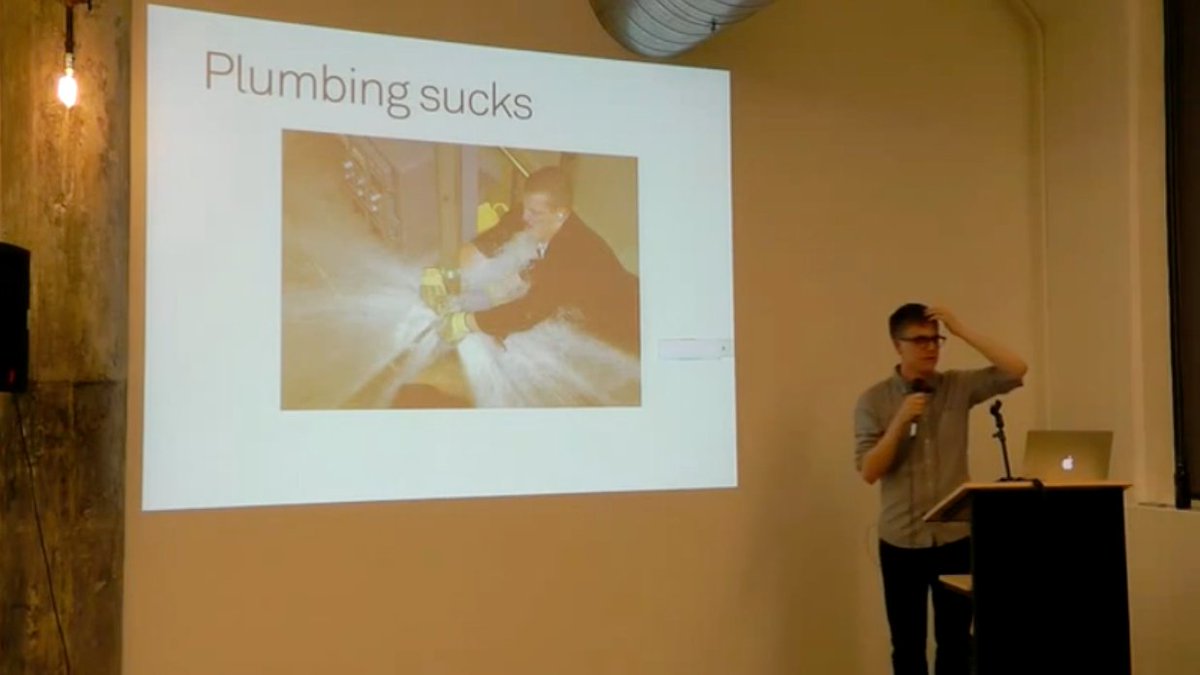
He also put up the slide in the picture: "Plumbing sucks"
In his words, “you want to implement the algorithms, you don’t want to deal with... what happens if something crashes.”
13 years later @Modal is that slide turned into a company. It gives engineers building blocks for running AI and ML in the cloud, so they write the code and Modal deals with the plumbing.
Today Modal announced it crossed $1B in annualized run rate and raised a $750M Series D led by Accel at a $15.75B valuation. Usage has tripled since their Series C 5 months ago.
Congrats to Erik, Akshat and the entire Modal team! We've been proud supporters at @zeroprimevc since the Seed round.
Know a great growth marketer? I’d love an intro.
I'm hiring one for @AICouncilConf and @ZeroPrimeVC to own top-of-funnel growth and channel execution.
This is a hands-on, individual-contributor role for someone who wants to build the growth engine of an ecosystem surrounding the frontier builders of AI.
To apply, send resume and LinkedIn profile to [email protected], with short answers to two questions:
1. What is a growth channel or campaign you built from zero, and what did the numbers look like before and after?
2. Where do technical builders actually discover things today, and how would you reach them?
Specific examples beat a polished cover letter.
If a name came to mind while reading this, please tag them. A repost also helps this find them.
The opportunity: https://t.co/Ksak3FikPS
Happy SF Tech Week Day 1 ☀️
Looking forward to Wednesday morning at First Pour 🍵 with @ZeroPrimeVC: matcha, pastries + great conversation with founders and researchers building in AI and software.
See you there if you're coming!
https://t.co/LjxKCWBudA
Next Wednesday morning @TheoryVC & @ZeroPrimeVC are taking over one of SF's best-kept matcha secrets in SoMa as part of SF @Techweek_.
Drop by anytime between 8am and noon, get caffeinated with us, and meet other founders and builders across AI and software.
We'd love to see you.
RSVP Required: https://t.co/6RoZemUDGB
.@Modal is hosting an invite-only AI/ML engineering event this Thursday at the Midway in SF. Looking forward to this lineup! Who will I see there?
If you haven't gotten your invite, apply to join:
https://t.co/K0EBrX1CdD
.@typesafeai coined "System One models" on September 15.
The name comes from Daniel Kahneman's 'Thinking, Fast and Slow'.
Fast thinking is System One. Quick calls like reading the mood on a face.
Slow is System Two. Thoughtful work like multiplying 17 by 24 in your head.
In TypeSafe's framing, LLMs are System Two. They write every answer one token at a time, and reasoning models spend extra tokens thinking before they commit.
A System One model skips the slow parts. You send it some text (like a support ticket) plus questions whose answers are fixed in advance:
question: "Which team owns this?"
options: ["billing", "technical", "sales", "account"]
question: "Does the customer want a refund?" options: ["yes", "no"]
It sends back a pick for each question with a probability attached, something like "billing, 0.94" and "refund, 0.95." Because every possible answer is known before the model starts, it can score them all in one pass and answer in well under a second.
TypeSafe named Jev after the Jevons paradox. When something gets cheaper to use, people end up using far more of it.
Here's a very small fraction of what's been published so far by teams testing TypeSafe's first System One Model:
➔ @MotherDuck ran it over 100,000 labeled news articles. Jev got 89% right in 40 seconds for $0.50. The most accurate LLM they tested got 88% in 32 minutes for $37.58.
➔ @LangChain used it to grade an agent's work. It matched the expected verdict on all 500 decisions for $0.34 total, against $28.17 for Claude Sonnet 4.6.
➔ @Every had it judge writing in a median 0.35 seconds per passage, against 8.83 seconds for Fable 5.1. It caught 6 of 7 planted defects; Fable caught all 7.
➔ @archestra_ai ran it on 100 tool calls from Claude Code sessions. It flagged 7 of the 9 dangerous ones to Sonnet 5's 4, (though Sonnet scored higher overall).
When a decision costs a fraction of a cent and comes back in half a second, you can stop rationing it. Checks that used to run on a sample can run on every row and every agent step.
@AstasiaMyers Strong agree, been thinking about this a lot lately too. Many firms will be left trying to figure out the hard work of what it really means to build/nurture a brand
.@AgnoHQ just showed you can pay a frontier model to solve a problem, then let a far cheaper model reuse what it learned and nearly match its score.
ARC-AGI-3 drops an agent into a game it has never seen, without instructions or goal. The agent has to experiment its way towards understanding the game, and it's scored on how efficiently it learns.
GPT-5.6 + Agno's Learning Machines scored 100 on the public set (183 levels across 25 games). As it played, it saved what it learned into a per-game manual.
Then Agno handed those manuals to Gemini-3.7-Flash, which had scored 37.33 starting cold. With the manuals it scored 96.42, above the 95.4 human baseline. And because nothing was retrained and no weights changed, the whole gain came from the smaller model reading what the bigger one had learned.
The learning transfer made the much cheaper, small model viable for a task you'd normally trust only to the frontier. Significant, because agents burn a lot of tokens rediscovering lessons an earlier run already paid for.
Pay frontier prices for discovery once, and the repeat work runs on cheaper models. Full write-up: https://t.co/7rxRRSy1yg