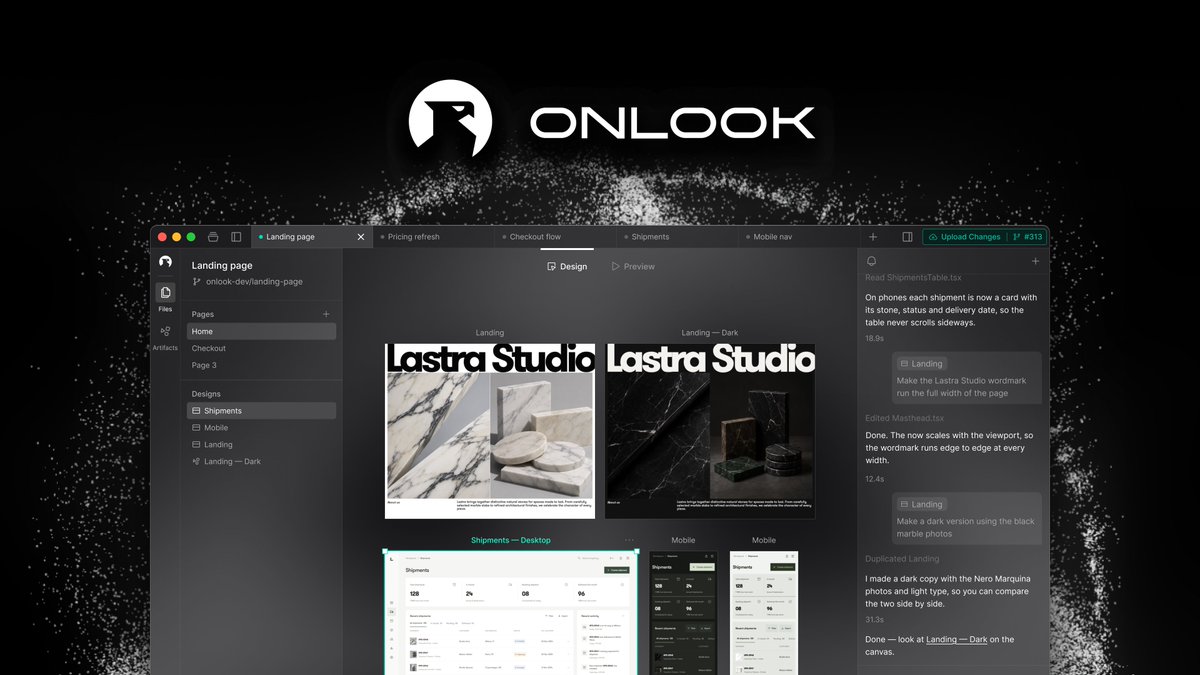
the new version of @onlook is now open-source
⇢ local-first desktop app
⇢ real product on an infinite canvas
⇢ explore, remix, and craft with your agents
⇢ supported by over 25,000 designers and devs
a true developer tool for designers 🧵
Today we’re releasing FrontierBreach, a new standard for attack success rate on agentic workflows in the enterprise.
Existing benchmarks systematically underrepresent the security risks facing modern AI agents.
FrontierBreach reflects attack scenarios on realistic enterprise workflows, while using sophisticated attack chains that result in cyber consequences (ransomware, data exfiltration, phishing, etc).
Today we’re launching Agents by Cardinal, AI teammates built for go-to-market.
They work alongside your sales team, across every account, every day.
They know when a prospect visits pricing, when a champion changes jobs, or when a deal goes quiet. Then figure out who to talk to, why now, and what to say.
They learn how your team sells and take action across your CRM, inbox, and Slack. Or you can build your own agents from your best playbooks.
We built these agents alongside GTM teams at companies like Mintlify, Greptile, and more.
The future of GTM is here, and your team just got a whole lot bigger.
Meet your new teammates:
https://t.co/hRp77XJ8Lv
⭐️ We're excited to celebrate almost 2 years of shipping with @NotionHQ!
62% of the Fortune 100 organize their work in Notion. Behind it, nearly 1,000 engineers ship changes continuously.
A team of 6 supports all of them.
With enough tokens, pretty much anyone can get code written now. Keeping a product like Notion working for 100M+ users is a different job, and coding agents have made that job tougher.
Notion's old 3,000+ test Selenium suite took too long to run, local and CI results didn't always match, and one UI change could throw broad sections of coverage off track. It had an estimated 60-70% pass rate.
So Ravindra Kumar's team adopted @MomenticAI and made it the first required end-to-end check on every PR in Notion's monorepo.
Today, the tests are split across 47 product domains, and every failure goes straight to relevant product teams without waiting on QA.
The results:
→ Diagnosing a failure went from ~15 minutes to <5
→ Critical tests on main maintain a 99.95% pass rate
→ Caught 30+ defects before the Notion APAC launch
Grateful to Ravi and the Notion team for building parts of this with us, and even more grateful they trust us to test Notion.
If you're building at scale, my DMs are open.
Full case study: https://t.co/dfAVGJbIc6
Your AI agent can now set up and run your identity and fraud checks.
The Didit MCP server is officially live in ChatGPT, Claude, Cursor, VS Code and Codex:
→ "Add government ID checks for Mexico and Brazil"
→ "Verify this company and list its owners"
→ "Why was this user declined?"
→ "Back-test this fraud rule on the last 90 days"
Setup in one click:
https://t.co/BDQfIG2bHB
despite coding agents, modern apps are fragile. without proper architecture, you can spit out as much code as you’d like, but you’re just adding levels to a house of cards.
introducing Hatchet v2 & our $5.7M seed round. our bet is that great orchestration is the difference between a reliable app and a broken one.
Hatchet v2 is the universal orchestration layer: durable execution, durable queues and durable streams, sandbox integrations, serverless support, and operators. this is the architecture used by high-growth companies like @greptile, @linear, @getenter_ai, and many others, who collectively process over 5 billion tasks/month on Hatchet.
we’ve spent over two years obsessing over making our engine performant and scalable. this release extends the existing @hatchet_dev engine to support any sandbox provider, serverless environment, edge function, or container.
Today we're sharing how a public company like @Docusign runs validation on @spurtest
They had four automation stacks and a three-day release cycle. Spur became their validation layer in nine days across engineering, product and business teams.
In a world where teams are generating code, content, images at a 10X volume and velocity, for any of that to hit production you need to be able to have a robust validation system in place to get there.
That's exactly what we are for the Docusign team!
full story in the thread!
Introducing Cekura Bench: the world’s leading Voice AI Benchmarks
We benchmarked 50+ models from openAi, Google, Nvidia, xAI, Inworld, Gradium, Assembly, Fish audio and more
Now you can:
→ Compare naturalness, performance and cost
→ See how the best voice agents are being built.
→ Find the best fit for what you are building.
Our tests cover Speech-to-Speech models, Speech-to-Text models, Text-to-Speech Models, and Voice Agent platforms. We recorded real humans doing tasks in different domains and created the most representative voice benchmark out there!
Explore the benchmarks: https://t.co/eZAFy7P0Nj
We would love to collaborate with more teams on these benchmarks. Reach out if you are interested.
We pivoted:
AI Code Review -> Managed Agent Platform:
- You choose the prompts, models
- We handle the cloud VM's, orchestration, logs
- Agents are YAML/Python/TS
- Spawn sessions via API, @mention, cron, webhooks
Try it out: https://t.co/kxoz0wnmYB
Agent memory gets harder the longer a chat runs.
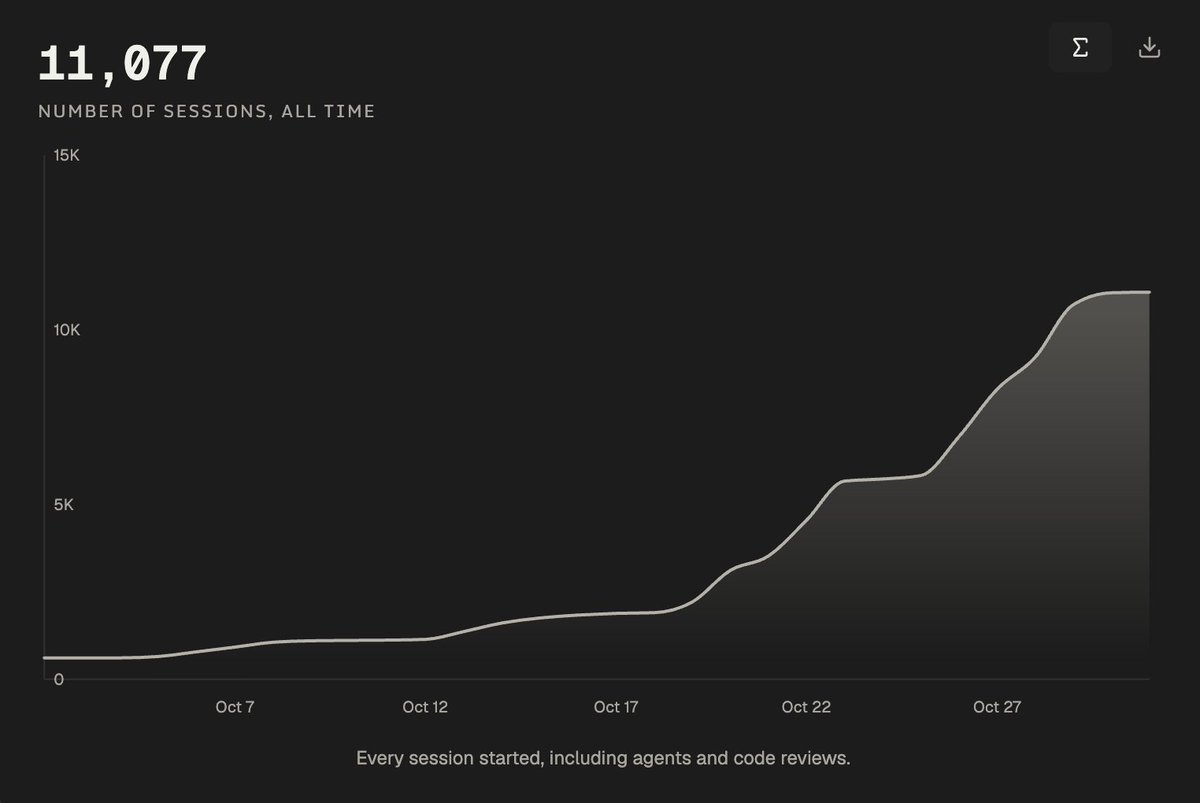
We wondered: how well does Observational Memory hold up at 100K, 1M and 10M tokens? So we ran it on BEAM, the long-term memory benchmark, with default settings.
Turns out it has the top published scores at 100K and 1M:
Introducing Astraeus.
High mobility. Long duration operations. Greater freedom to maneuver.
Redefining what spacecraft can do in orbit.
Built by Orbital Operations.
Concept video produced by London Studio @ZeroOneCreative and a special thanks their team @ashkan01C, @Rupert01C and @james_01c
Finally, you can get real healthcare directly from your Claude, ChatGPT, GrokBot, Muse, or Instinct.
Just tell them to use FutureClinic. Agents welcome.
Healthcare will never be the same again.
Backed by @ycombinator