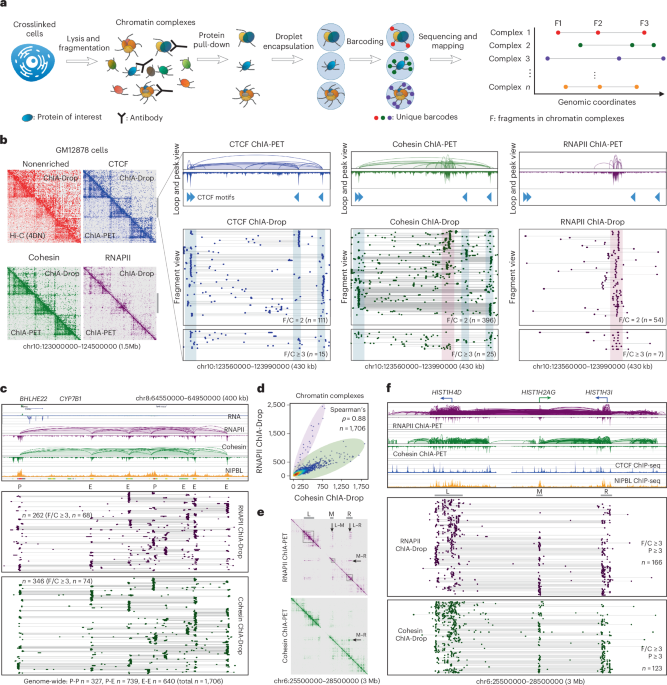
Im so happy to share this part of my PhD thesis just right now in @NatureComms. Check it out! Implications of the 3D chromatin organization for genome evolution in a fungal plant pathogen Special thanks to @MFSeidl and @Team_Thomma https://t.co/9vIennQQ2p
A big week for the lab! Two new papers on how cells repair DNA double-strand breaks: one on getting NHEJ started in chromatin, one on processing the ends before ligation. Years of work by a fantastic team.
Last talk today at #PPRM2026 by Moutassem Omary (Zipfel lab) illustrates the modularity and flexibility of PRR signalling: after redundant receptors, peptides and antipeptides, here come the secreted LRR domains that can basically replace BAK1 and interfere with various pathways.
Landraces and wild species hold genetic diversity that could be key to developing new potato varieties, which are needed to help farmers adapt to climate change and other challenges.
🥔 Learn more on #NationalPotatoDay in this 2019 issue of Science: https://t.co/13rkgE45Te
AF-Cluster recovers alternative protein conformations through MSA subsampling, but seq similarity isn't a good conformational signal.
Introducing SF-Cluster, which instead guides MSA selection using energetic frustration to more reliably recover alternative conformations! 🔥
📜: https://t.co/g8eTXuIx10
🤗: https://t.co/UShaWnEgnt
🧵👇🏾
AlphaFold 3.0.4 https://t.co/KvSauNC3bX
- AlphaFold 3 now runs on CPU-only machines!
- AlphaFold 3 now runs on Apple Silicon (mps backend, 3x faster than CPU-only)
Genomic analysis of 3,330 accessions provides insights into the evolutionary history and self-incompatibility locus of the Brassica A genome @NatureGenet
https://t.co/o8Kk4g0Mof
Thrilled to see this finally out!!
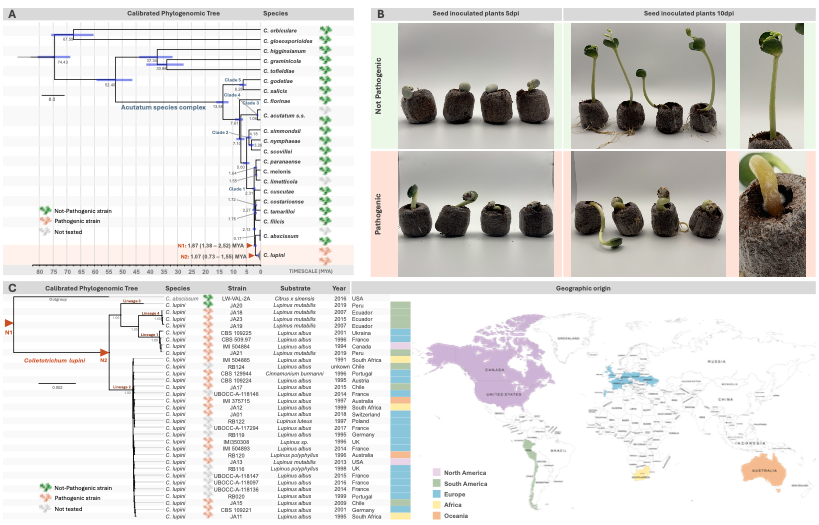
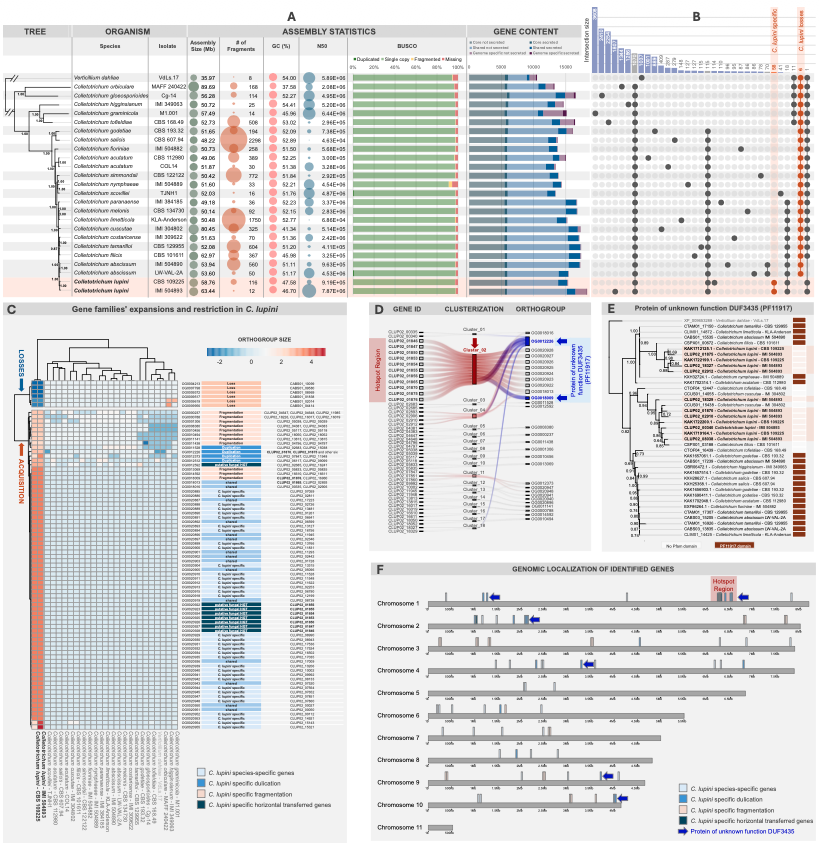
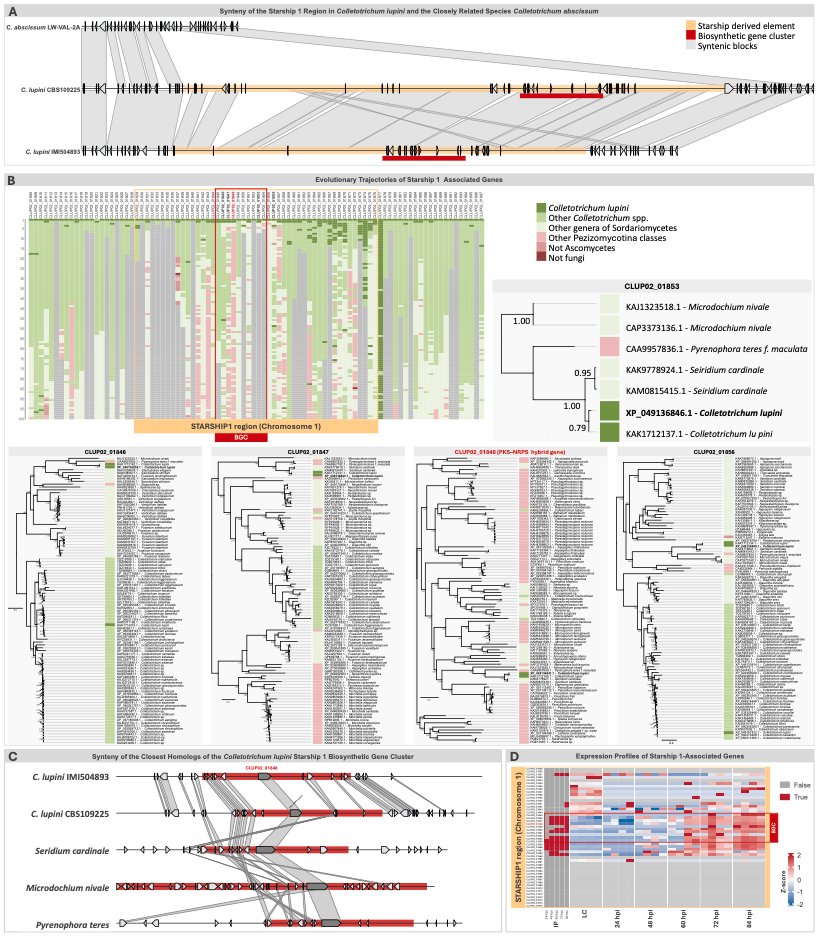
Our new work suggests #Starships helped #Colletotrichum acquire the genes needed to infect lupin.
A glimpse into how fungal pathogens emerge through horizontal transfer and genome reshaping.
https://t.co/HjiV1Lr8KI
#Fungi#Genomics
���� EffectorGeneP is finally here! Stop missing small, single-exon or orphan genes from your favourite pathogen genome. Current tools only annotate 15%-78% of effector genes, EffectorGeneP finds 95% - including the large AvrSr26 family in stem rust. https://t.co/Pn2cJIxlBd
🎉 📰 Very happy to share the journal publication of our manuscript "Plant-associated fungi co-opt ancient antimicrobials for host manipulation"! #ScienceAdvancesResearch@ScienceMagazine@Team_Thomma
https://t.co/eDCr7hcoZ7
Vorholt Lab re-created endosymbiosis in the lab: injected bacteria into a fungus and evolved a heritable partnership.
Evolution, fast-forwarded.
https://t.co/PcLCB7x7aQ
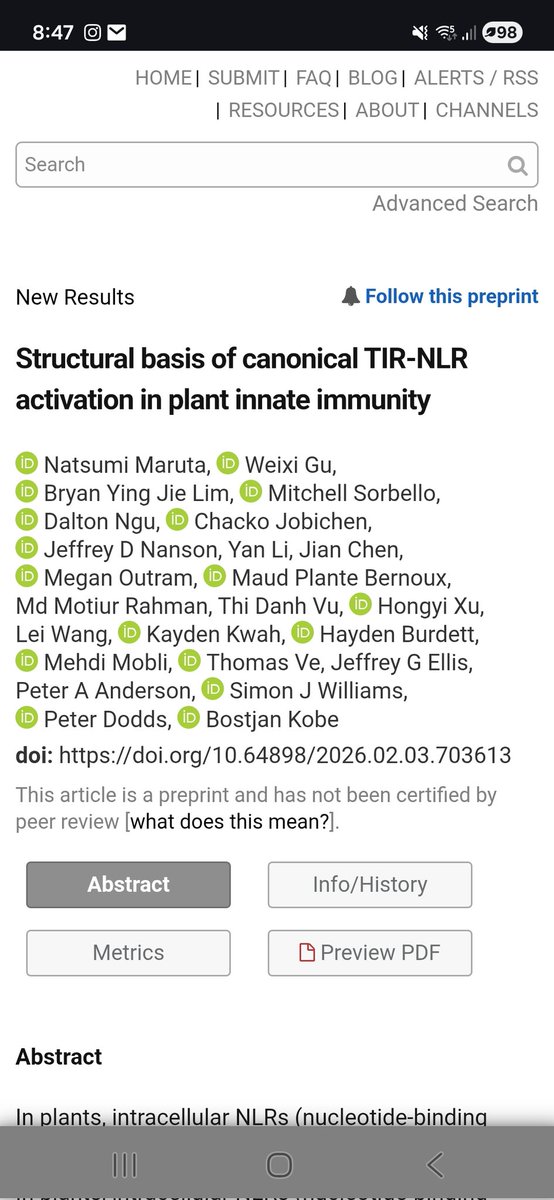
Check out our recent preprint on the structure of a non C-JID TNL resistosome from flax.
We are very proud of the persistence of Natsumi who got this long running project over the line and a congratulations to all involved.
Check it out... https://t.co/RCtCCNPwX9
📢 Three new #bioRxiv preprints from our team on holocentric chromosomes.
Together, they connect centromere repeat evolution, karyotype dynamics, and meiotic recombination outcomes, revealing how holocentric genomes evolve and function. 🧬👇
Big congrats to PhD @Ken_M_Mugambi for pulling together this amazing piece of work 🫡
This study details the genome biology of the largest #AMF genome (G. margarita) and its intricate links with its🦠 endosymbiont and 🌱hosts 😀
https://t.co/WIFI2hXfWc
Join us in Norwich this July for the TSL Summer Conference in Plant-Microbe Interactions! ☀️🌱🧬
Discuss the latest approaches & discoveries in plant health with international keynote and local speakers.
APPLY by 30 March '26 ⬇️ Click link for more info
https://t.co/G8XcQ9NkV0
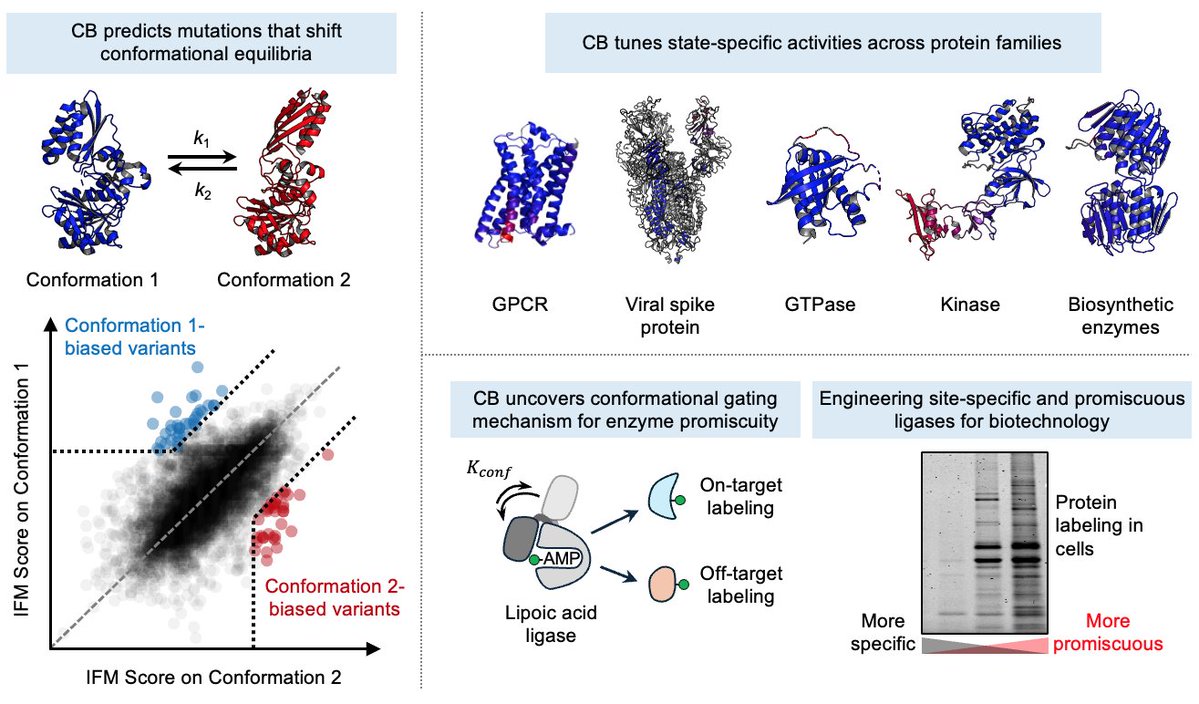
Can we design mutations that predictably bias proteins towards desired conformational states?
Today in @ScienceMagazine, we introduce Conformational Biasing (CB), a simple and scalable computational method that uses contrastive scoring by inverse folding models to identify conformation-biasing mutations.
https://t.co/lbWzHNdMRJ