Forever a student & sometimes educator. 1st Polytechnic recipient of the President's Award for Teachers. Teaching & learning, tech & serendipitious finds.
So what are the implications of over 100 years of research on forgetting for educators?
Principles to know:
▶️ Our capacity to store stuff in memory is relatively limitless but our capacity to retrieve it is not. In other words, just because you know something, it doesn't mean you can remember it. This process happens in classrooms every day without us realising it - so much effort (planning/teaching/student work) is wasted because of ineffective instructional design.
▶️ Our brains are quite efficient at some things but also really inefficient at other things which is why learning how to do quadratic equations is so hard for teenagers.
It's also why for the vast majority of people, trying to discover stuff on your own is such a bad way to learn anything.
▶️ We're very good at learning stuff we want to learn but incredibly bad at learning stuff we don't want to learn. (and most kids don't want to learn quadratic equations.)
Storage strength and retrieval strength are crucial concepts to long term learning - without regular retrieval practice/questioning/generative activities we will not be able to recall learned material - it's as if our brain throws stuff in a warehouse without cataloguing/indexing any of it. Retrieval practice is the way to make that catalogue/index.
▶️ This process of long term learning is largely dependent on the context in which students try to remember stuff and the good news is that teachers can do something about that (curriculum + instruction).
▶️ You don't learn something when you encounter it, you learn it when you forget it-remember it-forget it -remember-link it to something else you know and so on... Think of learning as something which happens over 6-12 months not in a single lesson.
What to do:
▶️ Because of these limitations of how learning happens, the first thing to consider is curriculum. But curriculum doesn't just mean what you're teaching (content), it also means how you teach it (instruction).
▶️ Don't just ask students questions that have 'answers' - those answers really need to be connected to stuff they already know and this needs careful planning. For example, knowing the year of the storming of the Bastille is likely to be of very little use unless it's linked to deeper understanding of how this event relates to the broader trajectory of the French Revolution.
▶️ When planning curriculum and building in retrieval practice, consider when they will forget the material and where they will remember it. As in, actually plan for them forgetting it. If you're teaching them something in September and then giving them a quiz on it in May and thinking that's retrieval practice then you're doing it wrong. Think really carefully about where they will re-encounter what you've taught them.
▶️ Do you want students to remember what you're teaching them now or in a year? If it's the latter then you have to use desirable difficulties otherwise they will probably only remember it by chance not design.
(See Bjork on this and also Fiorella/Mayer on generative learning.)
▶️ Lastly, If you're leading teaching and learning in a school, stop asking teachers to 'show student learning' in a lesson. This is a waste of time and in most cases, gets in the way of actual learning.
Direct or explicit instruction seems to be widely misunderstood. It's often characterised as boring lectures with little interaction and not catering to the needs of all students. Nothing could be further from the truth. A short thread 🧵⬇️
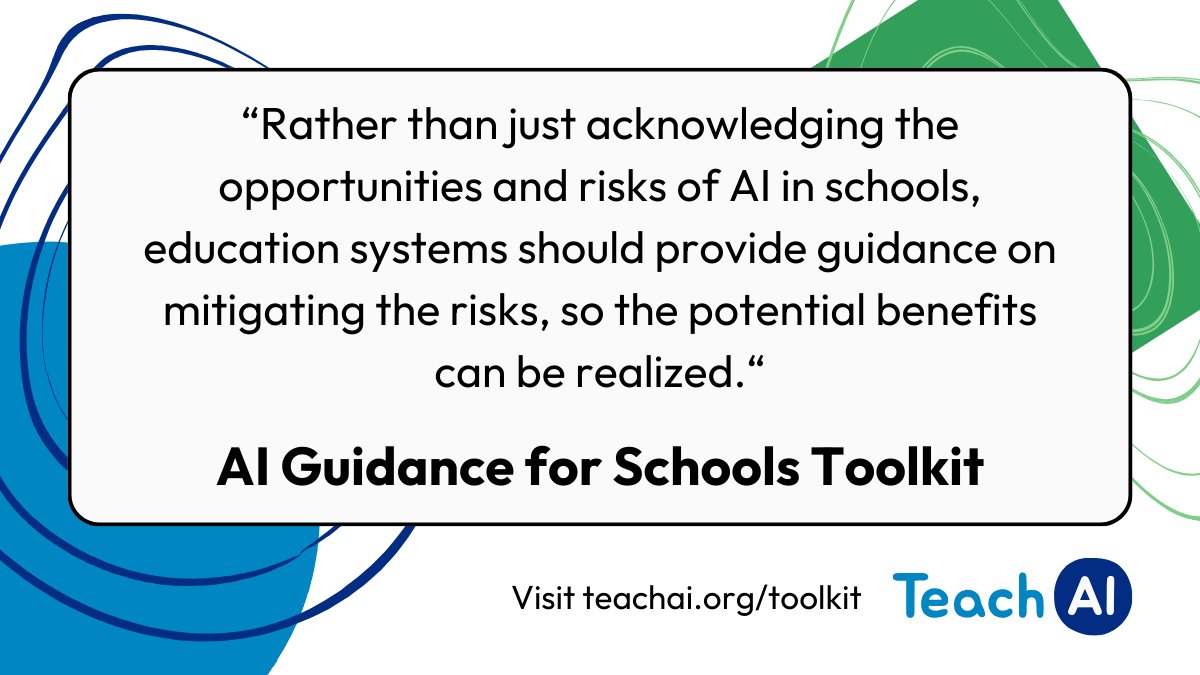
58% of students are using generative AI tools, but many schools don't have clear policies on how to use AI ethically and responsibly.
We’re excited to have supported the development of the AI Guidance for Schools Toolkit with #TeachAI!
➡️ https://t.co/YW2SgikAzH
When we're seeking to improve our practices (the actions & routines we undertake on a daily basis), the approach we should take depends on the type of practice. If it's novel practice, we cannot be clear whether our actions will deliver the results we seek (cause & effect not clear), so we have to test at small scale. If it's best practice, we should build it into pathways & SOPs. But even best practice needs to keep evolving.
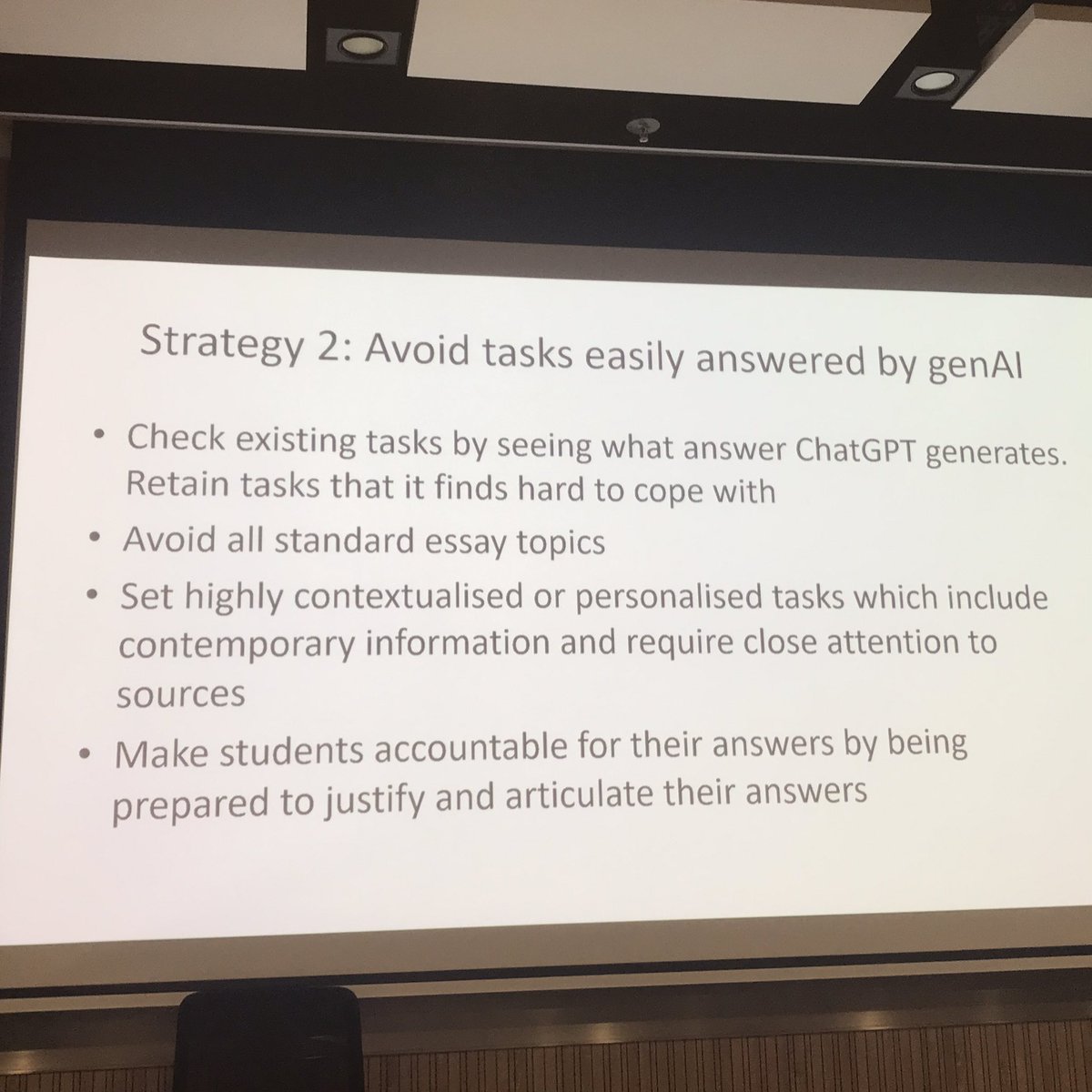
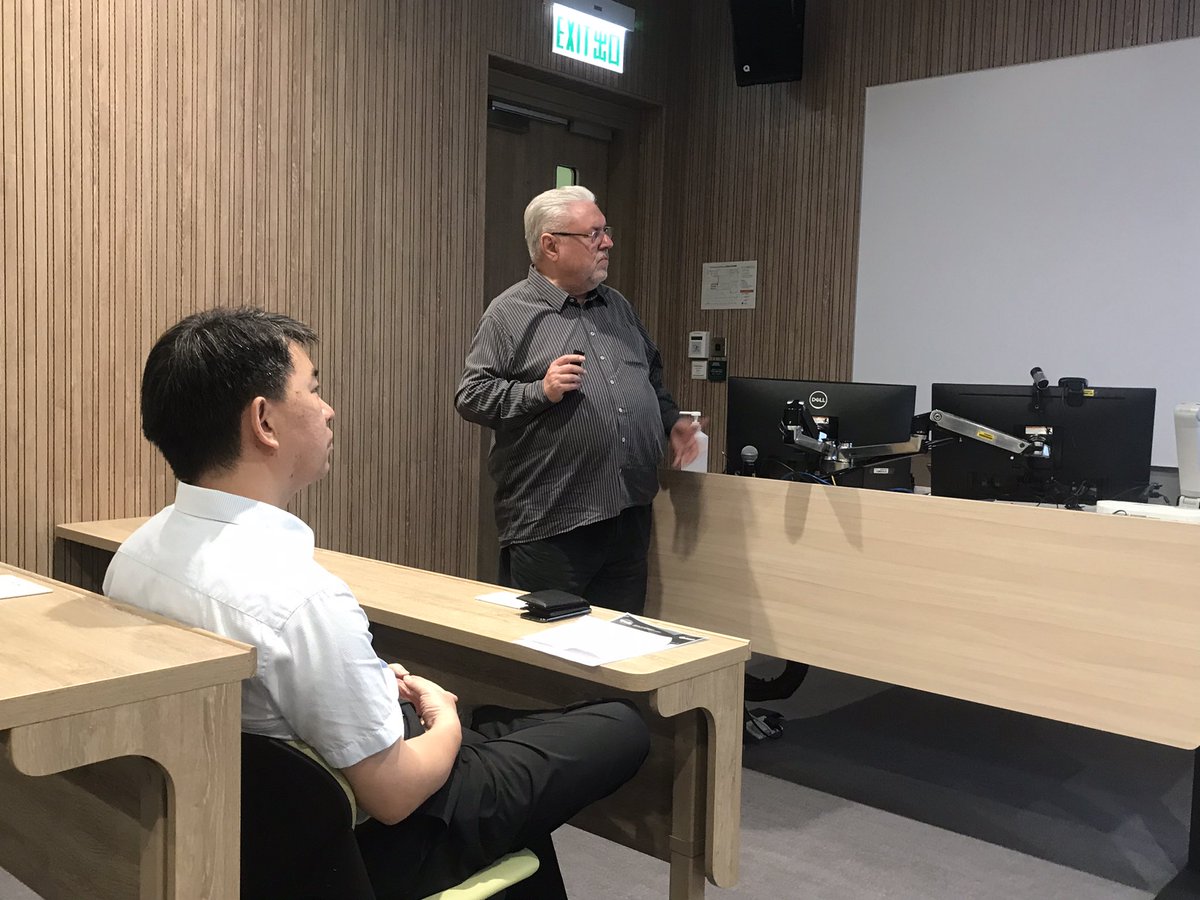
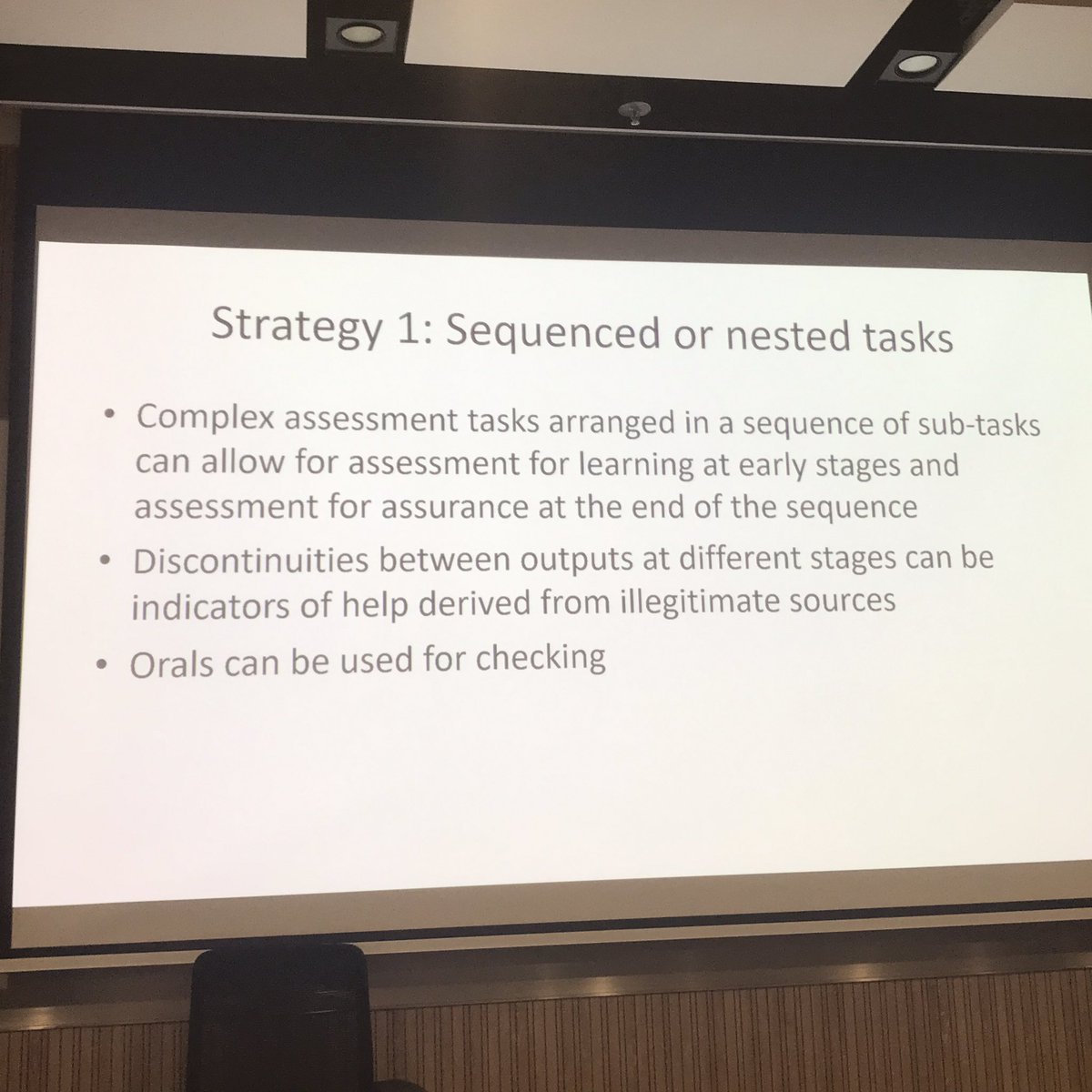
Reduce assessment overload to create time & space for assessment re-design in GenAI times: slides from my keynote @CUHKofficial https://t.co/n3KF6ykjxT
Don't use ChatGPT for academic research. It creates fake citations to papers that don't even exist.
Instead, use Consensus — an AI-powered search engine designed for academics.
Ask it a question and it'll give you a summary of top 5-10 (real) published papers.
A series of digestible one-pagers on important T&L topics such as retrieval practice, memory, novice learners etc. Thanks for sharing @AndrewWhitworth
This paper I am reading today is pulling no punches and taking no crap. I cheered a few times. It might be the most significant learning research paper out right now. https://t.co/BfJVJ7FHqL 1/3
The #1 problem/weakness in teaching and how to address it. https://t.co/qxsZlTsrxq Now with an awesome infographic by @olicav to download from the linked post.
I've spent the last 3 years writing a book on teacher expertise.
Here are the most important ideas I've learned around:
→ What expertise is (and is not)
→ What causes it
→ Its emergent properties & limits
Let's go
↓
Thread: There are lots of great blogs about the use of Multiple Choice Questions (MCQs) in the classroom. I have shared them before but felt they were worth sharing again. As with lots of other approaches in the classroom, MCQs can be used effectively & efficiently or badly!
Is the paper you need stuck behind a paywall?
Five websites every researcher should know to access any research paper for free
@AcademicChatter@OpenAcademics
🧵Feedback was something that felt like a waste of time for me for a long time with my students. It seemed like I would spend hours providing it only to have it be ignored.
I blamed the kids, when I should have been looking at my practice.
Here's what I've changed...
1/
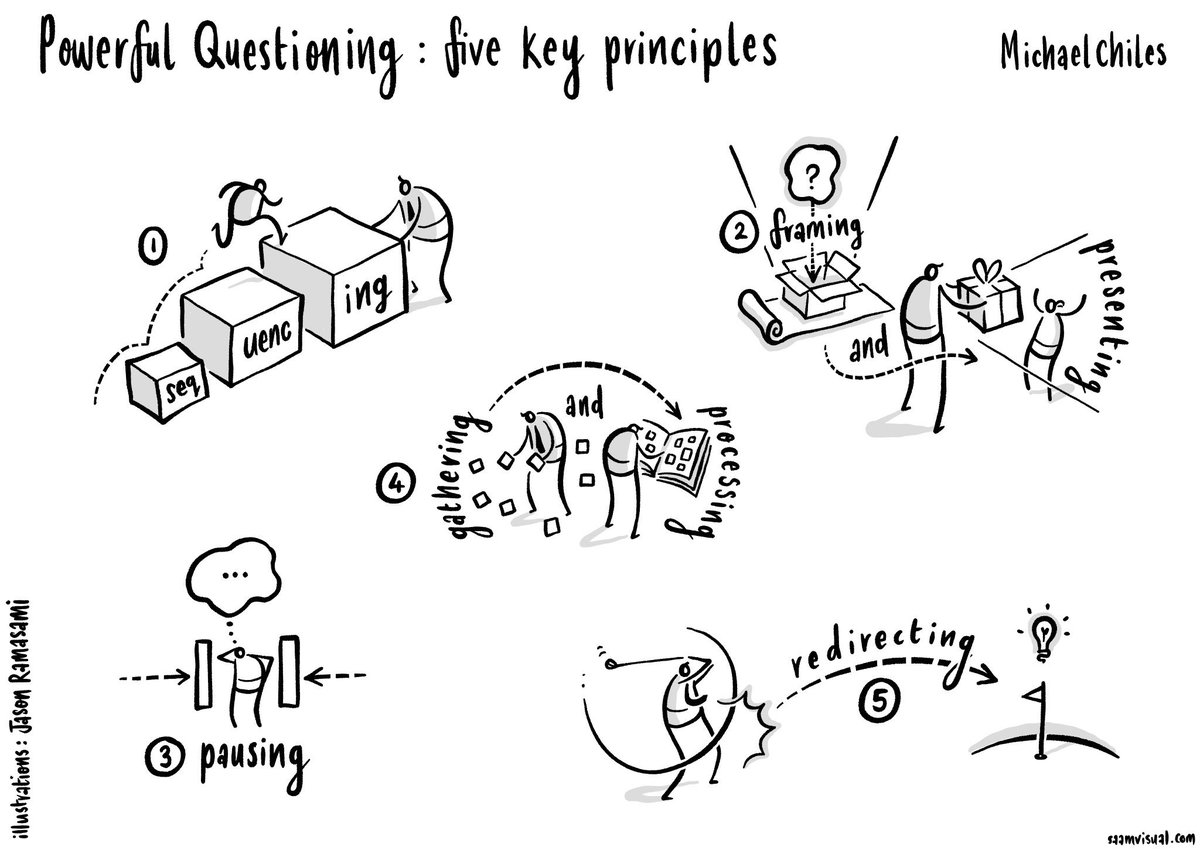
Five core principles for powerful questioning in the classroom ❓❓
Sequencing
Framing & Presenting
Pausing
Gathering & Processing
Redirecting
Keep an eye out 👀 for a podcast with me and @KateJones_teach and @EvidenceInEdu#comingsoon
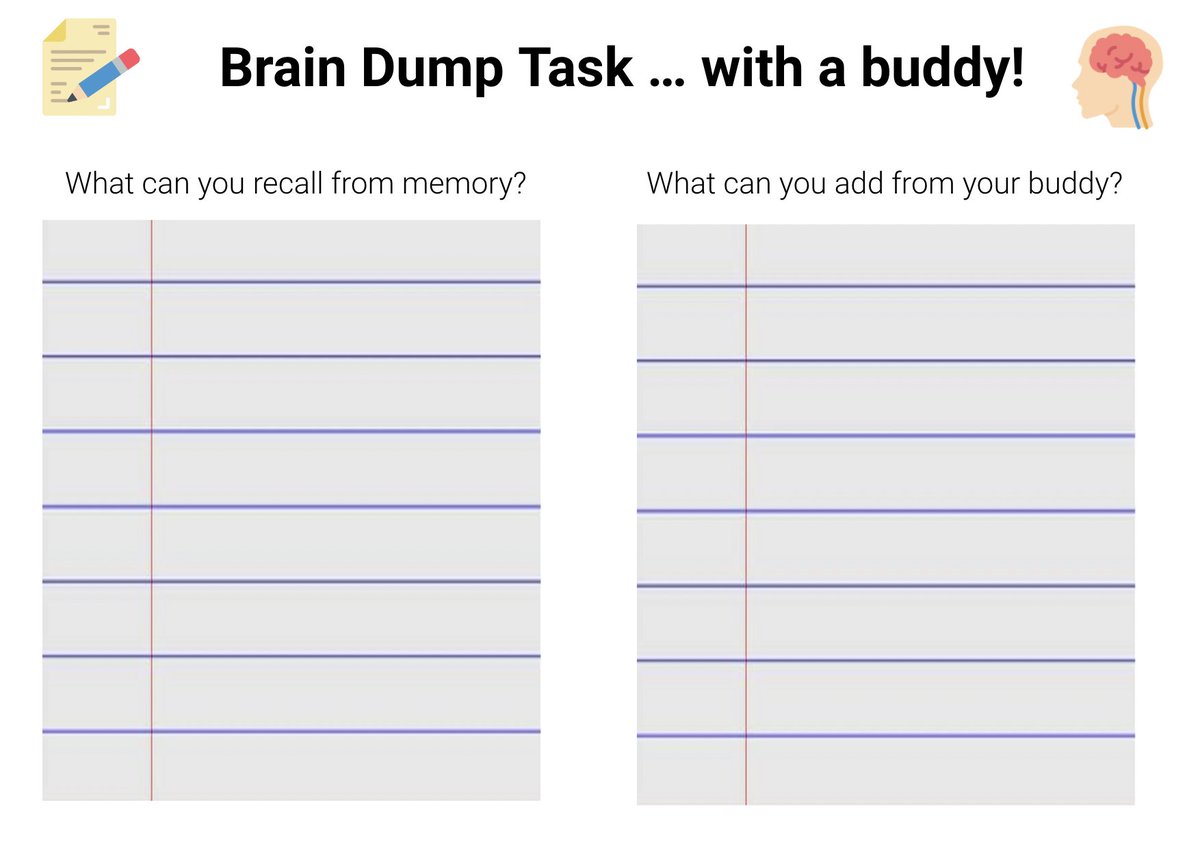
'Brain dump with a buddy' ... a slight twist, similar to 'cops n robbers' task.
Student must write down all they can recall from memory in the first column, then they can compare their answer with a peer & add extra/additional information in the second section. 🧠