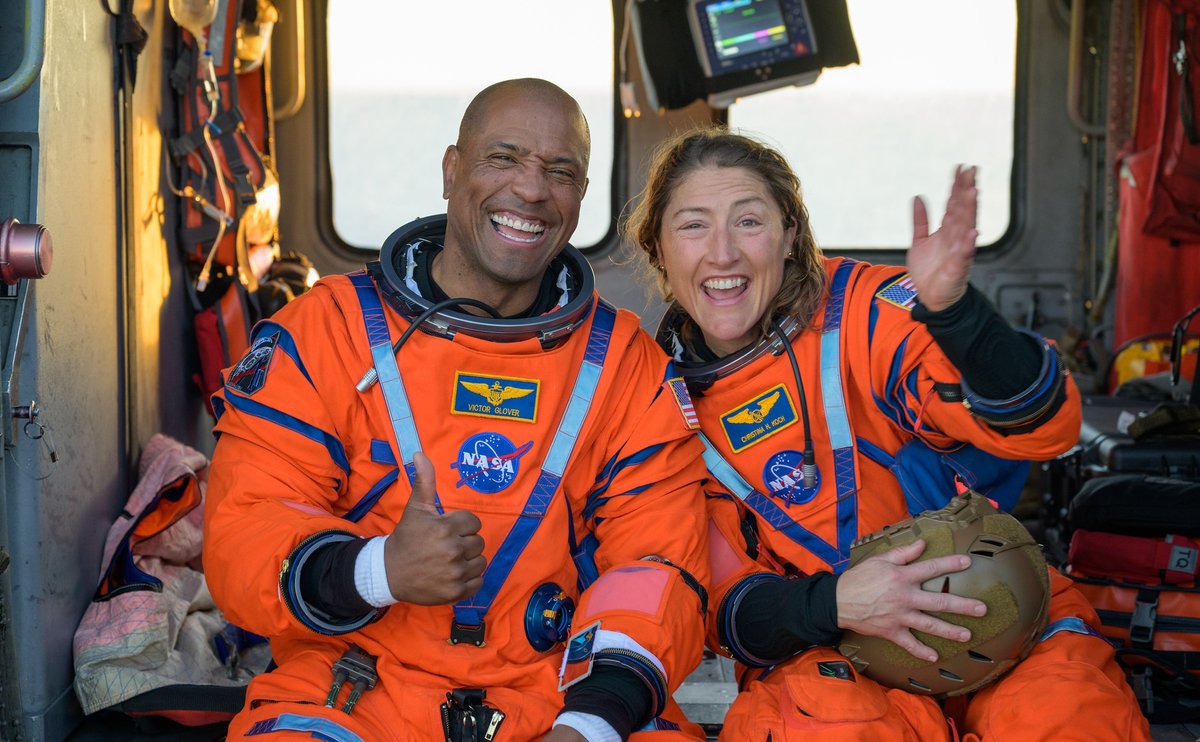
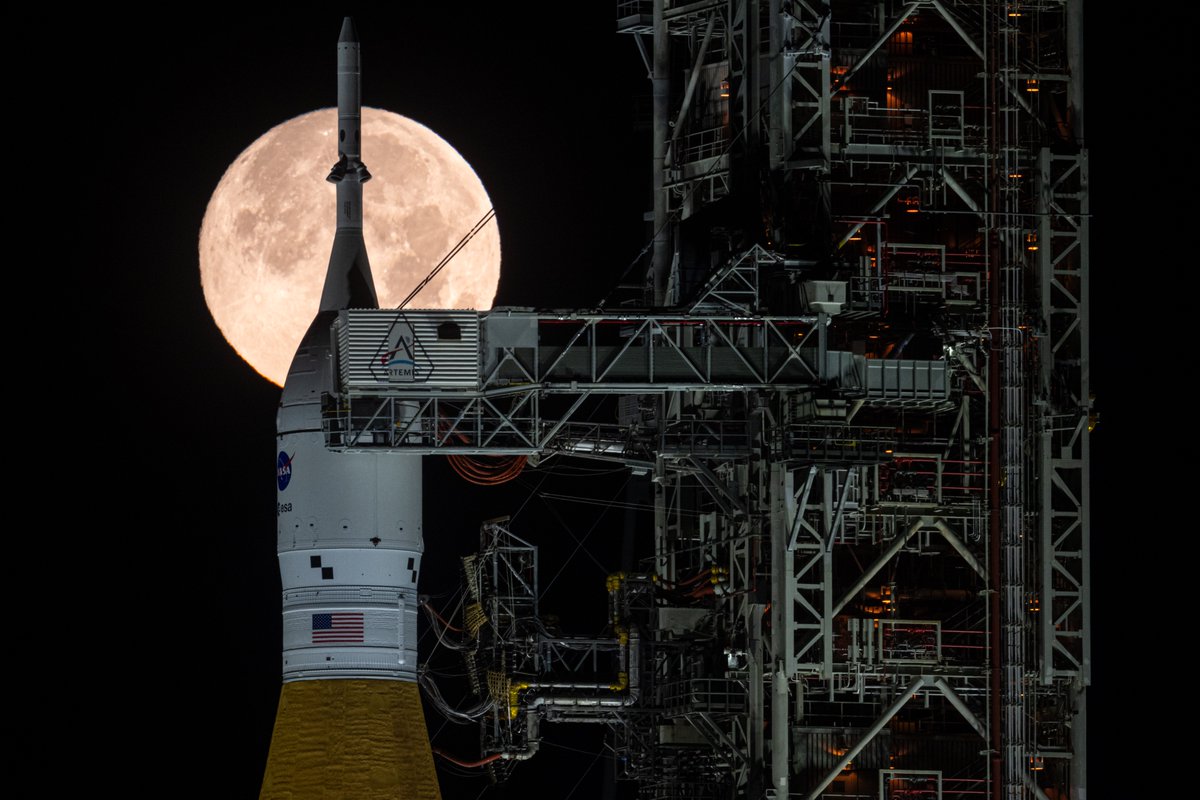
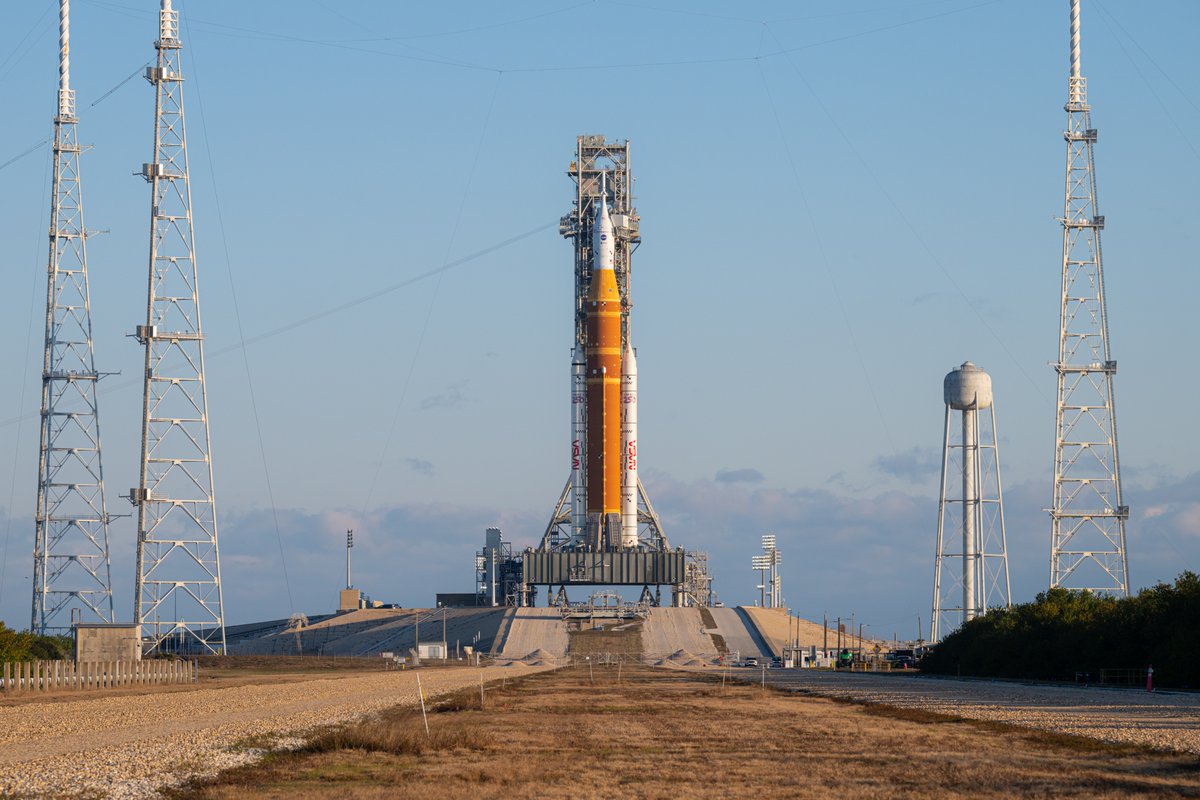
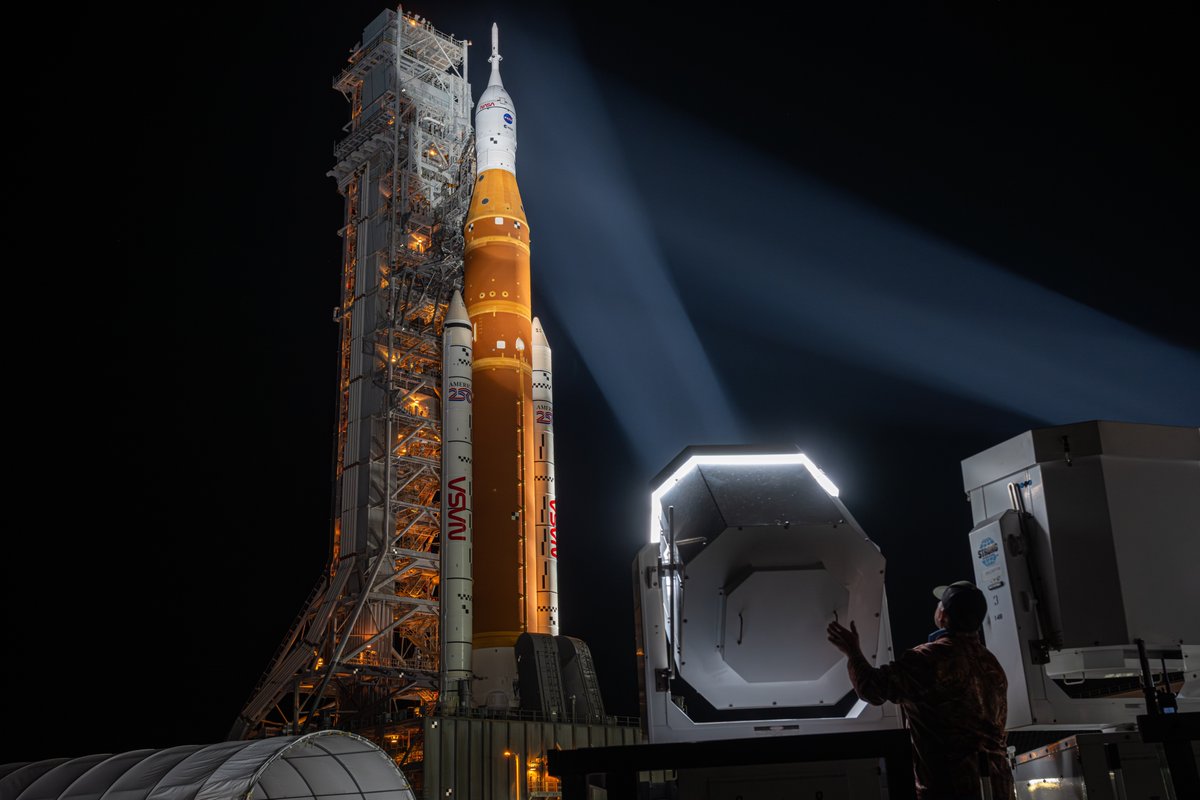
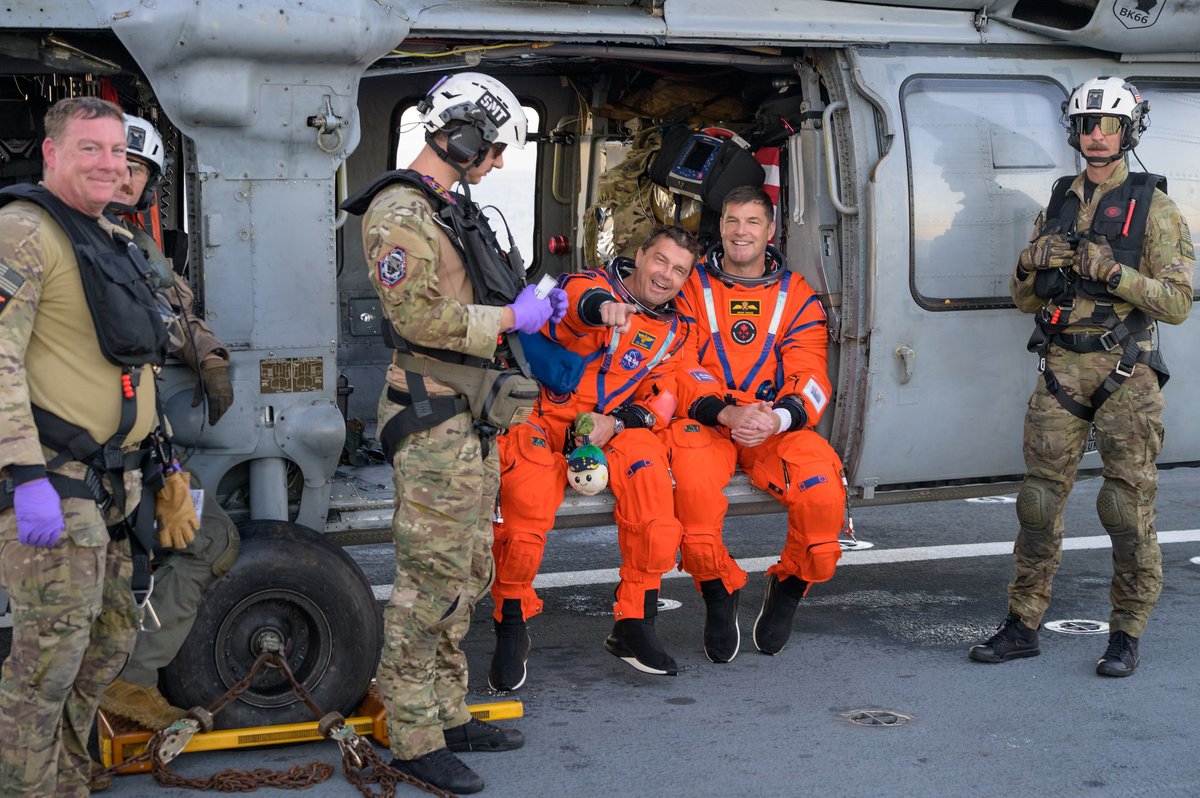
The Artemis II astronauts were all smiles on the flight deck of USS John P. Murtha after they were extracted from their Orion spacecraft after splashdown.
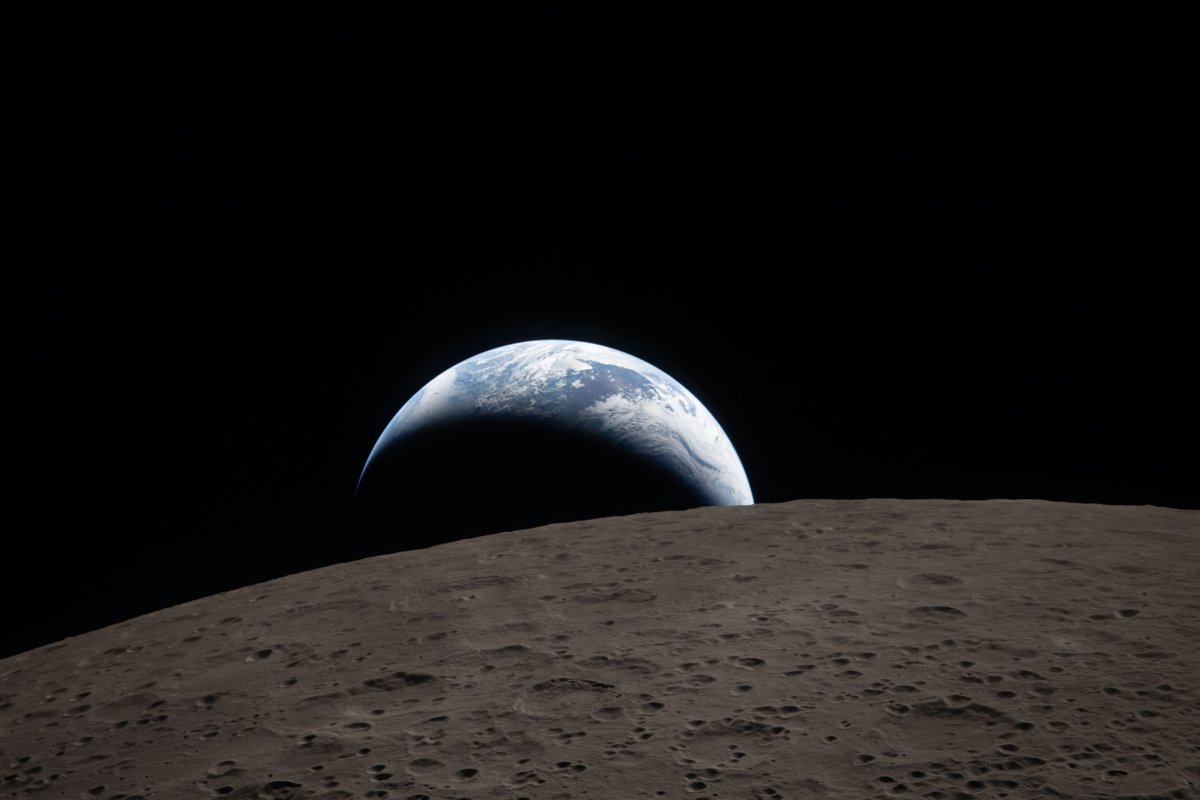
Earthset.
The Artemis II crew captured this view of an Earthset on April 6, 2026, as they flew around the Moon. The image is reminiscent of the iconic Earthrise image taken by astronaut Bill Anders 58 years earlier as the Apollo 8 crew flew around the Moon.
To commemorate the Artemis II mission, the astronauts announced their suggestion to rename certain features on the Moon to honor the Orion spacecraft, named Integrity, as well as commander Reid Wiseman's late wife, Carroll.
If you were born after 19:45:58 UTC on December 19, 1972, you have not been alive during a time when a crewed lunar spaceflight was underway.
This is approximately 75% of the global population.
That could change as soon as Wednesday evening with the planned launch of Artemis II.
Hundreds of thousands of people near Kennedy Space Center will see the launch with their own eyes and likely millions will watch live online.
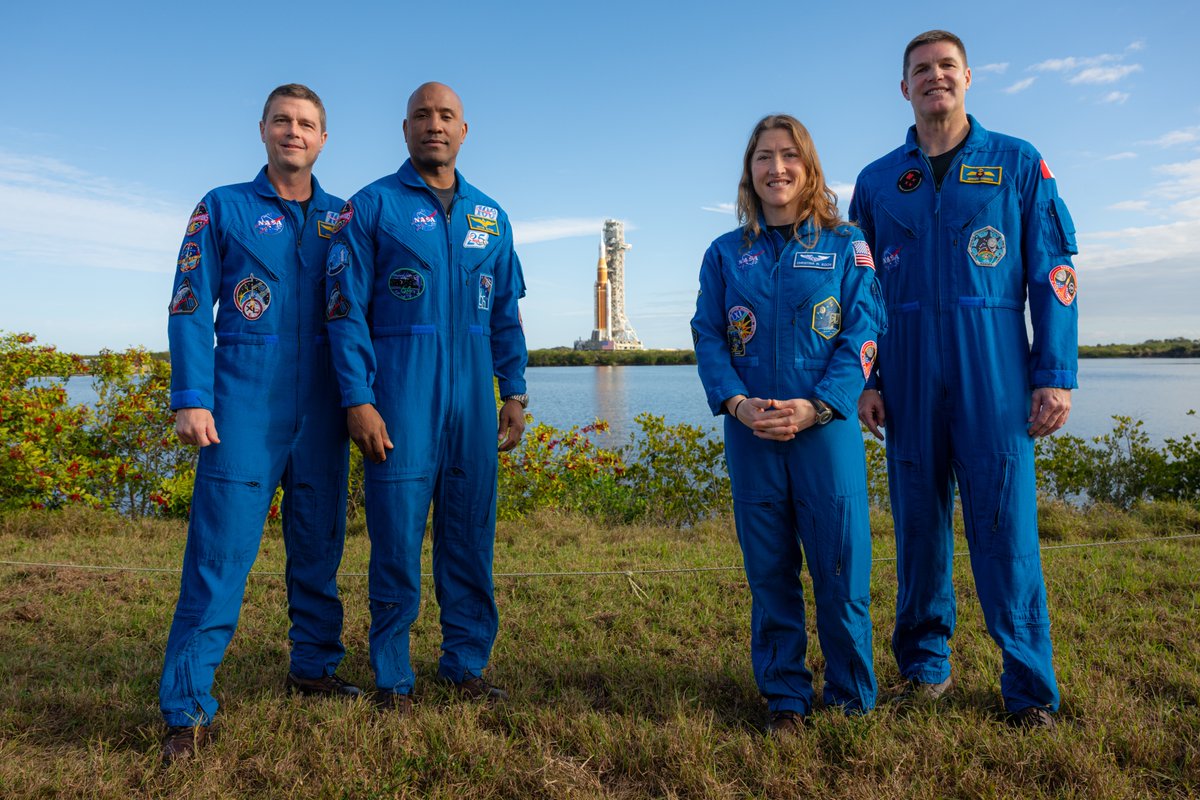
If you can't make it out in person, I hope you'll tune in and watch as NASA makes its first attempt to send Reid Wiseman, Victor Glover, Christina Koch, and Jeremy Hansen into space and around the Moon this week.
It is not often you have the opportunity to witness a historic moment in real time. Please watch and soak it in, and after launch, look up at the Moon and smile knowing that our great return to the lunar environment is well underway.
Godspeed, Artemis II!
The crazy, beautiful thin line of air between us and space.
Living in orbit I would often look to Earth's horizon, marvelling at how bizarrely thin our atmosphere is. Half of all air is in the first 3 mi/5 km. A common running distance.
Sometimes big thunderheads were visible, pushing to the edge of the stratosphere. Above that, the coloured aura of the mesosphere, and then eternal empty blackness. Lit by an occasional star, like a small lightbulb in a vast darkened hall.
Let's appreciate and take responsibility for our planet.
A 2.5-second rocket flight that heralded decades of discovery in space!
Today marks 100 years since the first successful test of a liquid-fueled rocket. Robert H. Goddard's achievement would have appeared unimpressive by most measures: His rocket flew just 41 feet in the air, landing in a nearby cabbage patch. Liquid-propelled rocketry has been the backbone of spaceflight ever since.
📷 by Esther Goddard on March 16, 1926 (Clark University Archive)
How to make planet Jupiter:
1) be on the @Space_Station
2) make a thin film sphere of water
3) add food coloring
4) blow on the edge to create swirls
This is way cool!