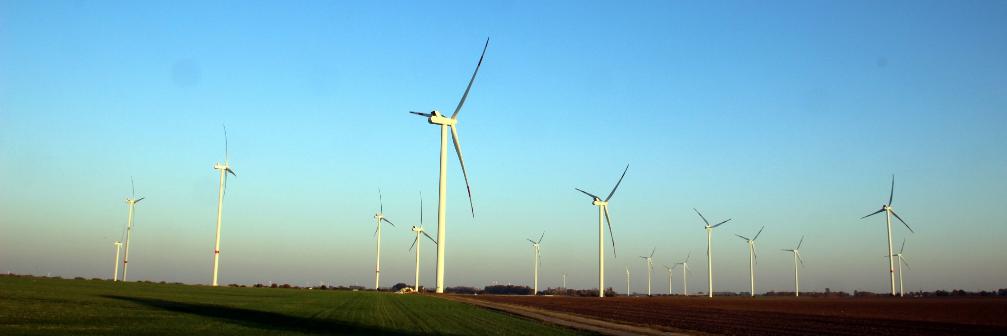
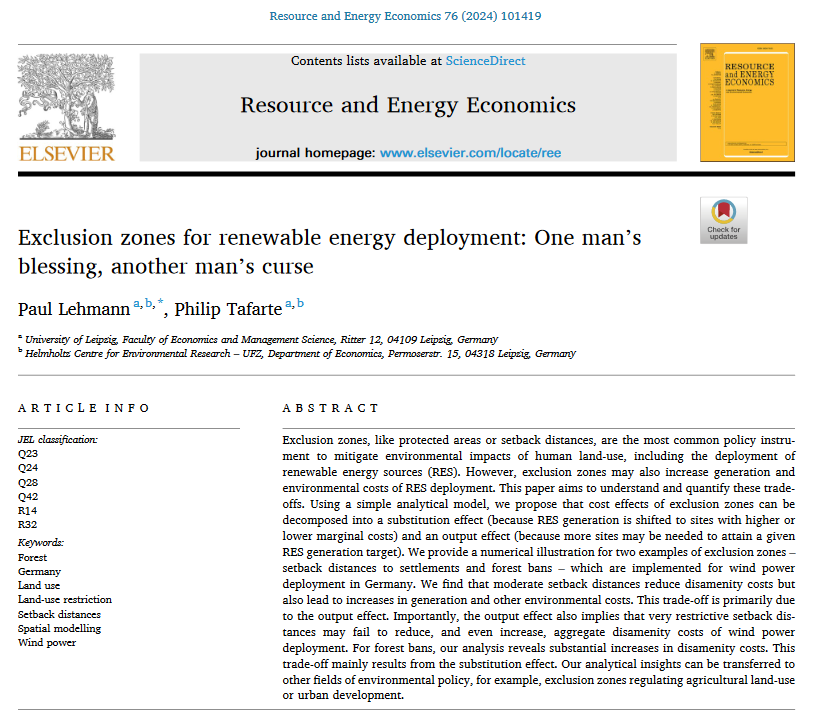
To manage spatio-environmental impacts of renewable energies, their deployment is often restricted by exclusion zones (e.g., setback distances, forest bans). Our new open access paper in @ResEnergyEcon analyzes the trade-offs of this policy. Thread 👇 1/9
https://t.co/PtP2q4mMx8
Noch mal etwas ausführlicher zum Thema Akzeptanz und Sozialverträglichkeit eines CO2-Preises. Die mögliche Rolle des Klimageldes dabei kann man nämlich durchaus differenzierter sehen als ich in meinem Tweet letzte Woche. 1/18
Alle Ökonom:innen: Wer einen CO2-Preis einführt, sollte den Menschen die Einnahmen als Klimageld zurückzahlen. Sonst wird es schwierig mit Akzeptanz und Sozialverträglichkeit.
Die Bundesregierung:
18/18 Ein solches Hin und Her lässt eben gerade Zweifel aufkommen, wie ernst es die Bundesregierung mit Akzeptanz und Sozialverträglichkeit meint - und gefährdet damit auch die Umsetzung einer effektiven Klimapolitik durch steigende CO2-Preise. https://t.co/rpMnqyNXn0
Und da ist es - das Commitment-Problem, das mit dem Kompensationsversprechen von Regierungen verbunden ist. Ein potentiell wichtiger Grund für die Ablehnung von Preisinstrumenten.
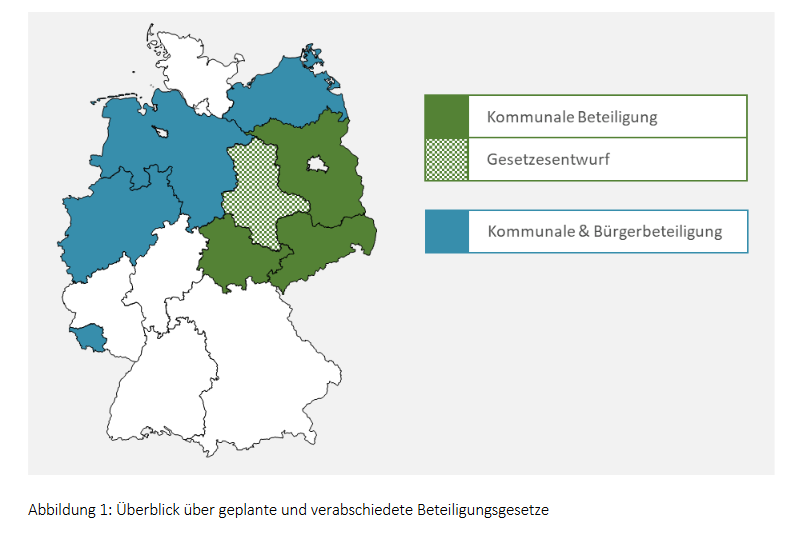
Immer mehr Bundesländer regeln die finanzielle Beteiligung von Gemeinden und Anwohner:innen am Ausbau erneuerbarer Energien. Die #EnWG-Novelle wollte das vereinheitlichen, ließ den Passus aber aus – aus gutem Grund, so @pleh_mann (@UniLeipzig, @UFZ_de) 👉 https://t.co/GhzVmic0JS
Paper shows that the construction of wind turbines in Germany has boosted the electoral support of both the green party and the populist radical right (AfD) - and has thus contributed to the polarization of the party system.
https://t.co/I2yTJ4hzPV
10/11 Wrap-up I: Scrapping subsidies often only have a short-term economic stimulus effect, which is later on compensated by lower sales. Environmental benefits may well be negative. If they are positive, they are small.
11/11 Wrap-up II: Importantly, all studies lack a counterfactual analysis: What would have been the benefits of alternative ways of government spending? What would have been alternative (possibly cheaper) policies to reduce emissions?
@gri_mm@edenhofer_jacob@infornomics@meilaoban@BWEeV Wichtig für dieses Thema: Aktuell zirkuliert ein Referentenentwurf für ein Artikelgesetz zur Änderung des Energiewirtschaftsrechts. Eine geplänte Änderung darin betrifft §22b EEG. Damit sollen die finanziellen Beteiligungsmodelle der Länder stärker harmonisiert werden.
@gri_mm@edenhofer_jacob@infornomics@meilaoban Der @BWEeV hat einen guten Überblick zu den beschlossenen und geplanten finanziellen Beteiligungsmodellen für erneuerbare Energien in den Ländern. Wird auch fortlaufend gepflegt. https://t.co/XrJAvjzpYe
Can anyone recommend textbooks or other material to teach environmental management to business and economics students at bachelor level? Thanks also for reposting. #EconTwitter
Can anyone recommend textbooks or other material to teach environmental management to business and economics students at bachelor level? Thanks also for reposting. #EconTwitter
Der Photovoltaik-Ausbau in Deutschland boomt, während die hiesige Solarindustrie schrumpft. Kann eine zu starke Importabhängigkeit zum Problem für die Energiewende werden? Die fossilfrei-Hosts @WPSchill & @roth_kohl haben sich umgehört: https://t.co/H6qq4NcnYi (1/3)
@edenhofer_jacob@HenzeTimon@fetzert Two papers on this question with proper econometric approaches come to my mind for Germany:
(1) One by @rgermesh et al. https://t.co/1sBFvCqKc6
(2) One by @UniLeipzig colleagues: https://t.co/0uRMfRvrWg
They also cite other related papers which may interest you.
@HenzeTimon@edenhofer_jacob@fetzert There's also a bunch of other papers analyzing the costs of excluding scenic landscapes for renewable energy deployment, e.g.:
https://t.co/zEVdH9hXQt
https://t.co/M6XiYyu7HD
🚨 New @PNASNews study out in this week’s issue with the brilliant @jgrunau3 and @MoritzDrupp 🚨
Discover how the European carbon market contributes not only to reducing climate damages for future generations but also to boosting your health today!
🧵⬇️