🧬 HOW DOES A PERSONALIZED mRNA CANCER VACCINE ACTUALLY WORK?
As an oncologist, and also as a university professor, I strongly believe that understanding how a new treatment works is often the best way to understand why it may eventually change our clinical practice.
So, what exactly is a personalized mRNA cancer vaccine?
The concept is both sophisticated and surprisingly intuitive.
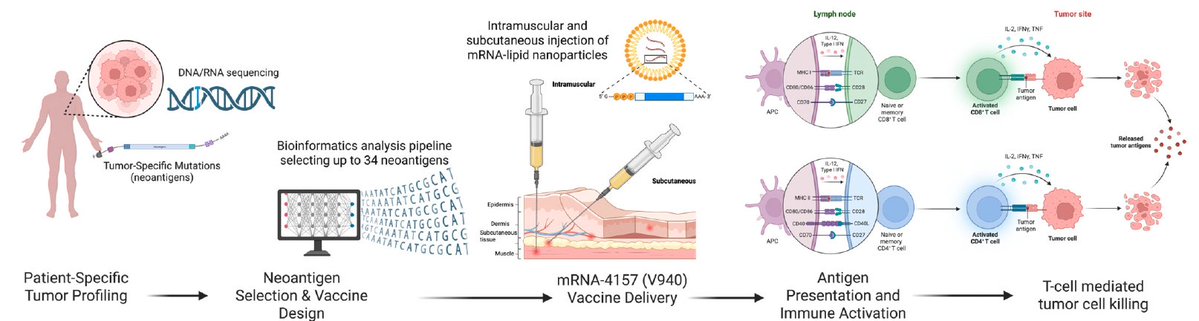
1️⃣ Start with the patient's own tumor 🧬
Every cancer is genetically different.
By sequencing tumor DNA and RNA, and comparing this information with normal tissue , we can identify tumor-specific mutations.
Some of these mutations generate abnormal proteins that are not present in healthy cells.
These are called neoantigens.
And importantly, they can become molecular "flags" allowing the immune system to distinguish cancer cells from normal cells.
2️⃣ Select the best targets 🎯
Not every mutation will generate an effective immune response.
Bioinformatic algorithms therefore analyze the patient's tumor and predict which neoantigens are most likely to be recognized by their immune system.
In the case of intismeran autogene, up to 34 patient-specific neoantigens can be selected.
3️⃣ Build an individualized mRNA therapy 💉
Here comes the fascinating part.
A synthetic mRNA sequence encoding those selected neoantigens is manufactured specifically for that individual patient.
Think about what this means.
We are no longer simply choosing the best available drug for a patient.
We are manufacturing a treatment based on the molecular identity of that patient's own cancer.
4️⃣ Teach the immune system what to recognize 🛡️
After administration, the mRNA enters cells and provides the instructions to produce the selected neoantigens.
These neoantigens are processed and presented to the immune system, activating tumor-specific CD4+ and CD8+ T cells.
The objective is to generate an immune response capable of recognizing cells carrying those same neoantigens.
5️⃣ Let T cells search for the cancer 🔎
Those activated T cells can then recognize tumor cells displaying the corresponding antigens and potentially destroy them.
This is why combining personalized vaccination with PD-1 blockade such as pembrolizumab makes so much biological sense:
🎯 The vaccine may teach the immune system WHAT to attack.
🔓 Checkpoint inhibition may help the immune system KEEP attacking it.
And this is where, in my view, the concept becomes much bigger than one drug or one tumor type.
For many years, we have defined precision oncology as:
“the right treatment for the right patient.”
Personalized mRNA vaccines introduce an even more ambitious paradigm:
“a treatment designed and manufactured specifically from the molecular characteristics of one patient's cancer.”
@OncoAlert@_SEOM@moderna_tx@GEPAC_
Figure adapted from: doi:10.3390/cancers17091408.
Over the last few hours, many colleagues and friends have contacted me about the positive Phase III results announced for intismeran autogene (V940/mRNA-4157) — interestingly, not only from the scientific and clinical perspective, but also asking what these results could mean from an investment perspective.
I am certainly not a financial analyst, so I will stay where I feel much more comfortable: the science and the clinical implications.
And while the announcement is genuinely exciting, I think it is equally important to discuss what we still do not know.
The big story here goes far beyond melanoma. For the first time, we may be witnessing the Phase III validation of a completely new drug-development platform in oncology: individualized mRNA-based cancer vaccines.
The concept is remarkable. Instead of developing one drug for thousands of patients, tumor-specific mutations are identified and used to design an individualized therapy targeting neoantigens specific to that particular patient's cancer.
If this approach proves reproducible beyond melanoma — with pivotal studies also exploring other tumors — we could be looking at a major step forward for precision oncology.
But enthusiasm should not prevent us from asking difficult questions.
I see three important areas of uncertainty.
1️⃣ We know the trial is positive. We do not yet know HOW positive it is.
The press release tells us that INTerpath-001 met its primary endpoint of recurrence-free survival (RFS) and the key secondary endpoint of distant metastasis-free survival (DMFS), with statistically significant and clinically meaningful improvements.
That is excellent news.
But we have not yet seen the hazard ratios, confidence intervals, absolute differences, Kaplan-Meier curves or the complete dataset.
And the benchmark is exceptionally high because the randomized Phase II study produced impressive long-term results:
➡️ 5-year RFS: 72.4% vs 49.1% — HR 0.51
➡️ 5-year DMFS: 83.9% vs 65.4% — HR 0.41
I am including those data and the trial design in the accompanying figures.
Replicating effects of this magnitude in a much larger Phase III trial would be extraordinary. But it also creates very high expectations. A statistically significant Phase III result could still appear disappointing to the market if the magnitude of benefit is substantially smaller than what we saw in Phase II.
And there is another important endpoint: overall survival (OS).
The press release does not report an OS benefit. In the Phase II study, the OS curve shows an encouraging trend, but without a statistically significant difference.
Why does this matter?
Because in the adjuvant setting our ultimate objective is not simply to delay recurrence. We give additional treatment after potentially curative surgery because we ultimately want to prevent more cancers from returning and help more patients live longer.
RFS and DMFS are extremely important endpoints and can support regulatory decision-making, but mature OS will remain an important piece of the clinical story.
2️⃣ Personalized medicine at this level creates an unprecedented logistical challenge.
This is perhaps one of the most fascinating aspects of the technology.
We are moving from:
“the right drug for the right patient”
towards something even more ambitious:
“a drug specifically manufactured for one individual patient.”
Tumor tissue must be obtained and analyzed, relevant mutations and neoantigens identified, an individualized mRNA construct designed and manufactured, quality controlled, transported and finally administered — all within a clinically meaningful timeframe.
If successful, this would represent a giant leap for precision oncology.
But scientifically elegant does not necessarily mean operationally simple.
Manufacturing capacity, turnaround time, reproducibility, international distribution and the ability to deliver treatment outside highly specialized centers will ultimately determine how scalable this approach can become.
3️⃣ And inevitably: what will individualized cancer treatment cost?
This deserves a much broader discussion than a LinkedIn post, and this is certainly not intended to reopen the debate about the price of cancer medicines.
But economics matters when assessing the real-world impact of a technology.
A therapy manufactured individually for every patient will inevitably face different economic challenges from a conventional drug produced at scale.
The key question will therefore not only be:
Can we manufacture it?
but also:
Can healthcare systems afford to provide it broadly?
Pricing, reimbursement and health-technology assessment could ultimately influence access — and potentially delay it significantly in some healthcare systems, including countries such as Spain.
This is relevant clinically, but also when trying to extrapolate impressive scientific results into future commercial value.
None of these questions diminish what has just been achieved.
Quite the opposite.
A positive Phase III trial potentially validating individualized mRNA vaccination in cancer is a remarkable scientific milestone.
But there is an important distinction between:
a positive trial → a successful drug → a successful platform → a commercially successful platform.
We have potentially crossed the first major bridge.
Now we need to see the complete Phase III data, understand the magnitude and durability of benefit, follow overall survival, and ultimately determine whether these results can be reproduced in other malignancies.
If they can, melanoma may eventually be remembered not as the destination, but as the proof of concept that opened the door to an entirely new way of developing cancer treatments.
And that, scientifically, is what I find most exciting.
#Oncology #CancerResearch #mRNA #CancerVaccines #PrecisionOncology #PersonalizedMedicine #Immunotherapy #Melanoma #ClinicalTrials #DrugDevelopment #Biotechnology #TranslationalResearch #Innovation #Healthcare #Pharma
FDA Approves Pluvicto® for PSMA-Positive Metastatic Hormone-Sensitive #ProstateCancer#mHSPC. Based on PSMAddition: rPFS HR 0.67 (33% risk reduction) and positive OS trend (HR 0.80). First PSMA-targeted RLT approved across all metastatic prostate cancer stages—nearly doubling the eligible population. #ReadNow on UroToday > https://t.co/be4eD8rHtr @sartor_oliver@PhillipKooMD@DrScottTagawa@PCFnews@Novartis
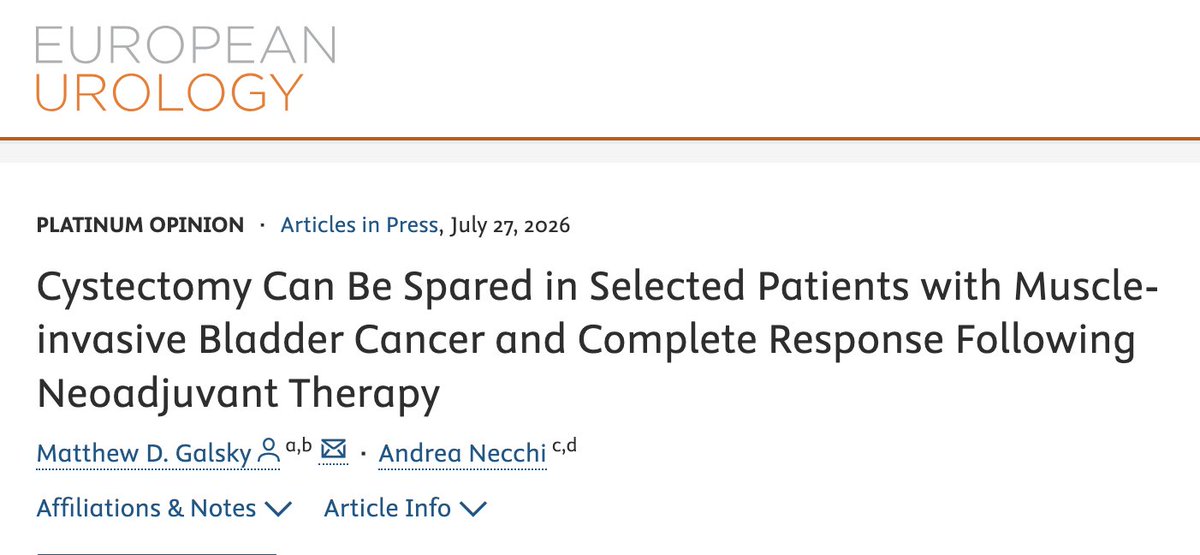
⚡️ On @EuropeanUrology - With pCR rates of 57–64% with perioperative EV + pembrolizumab in MIBC, can cystectomy be spared in selected patients who achieve a complete response?
The evidence is building — but defining how to get there remains the key challenge.
#BladderCancer@AndreaNecchi
https://t.co/TEtpgAXR0d
⚡️KEYNOTE-B15/EV-304 published in @NEJM: perioperative EV + pembrolizumab vs cisplatin-gemcitabine in cisplatin-eligible MIBC.
Significant improvements in EFS, OS and pCR. The perioperative standard now extends to all MIBC patients candidates for cystectomy.
https://t.co/vLWW1n3pqg
#BladderCancer
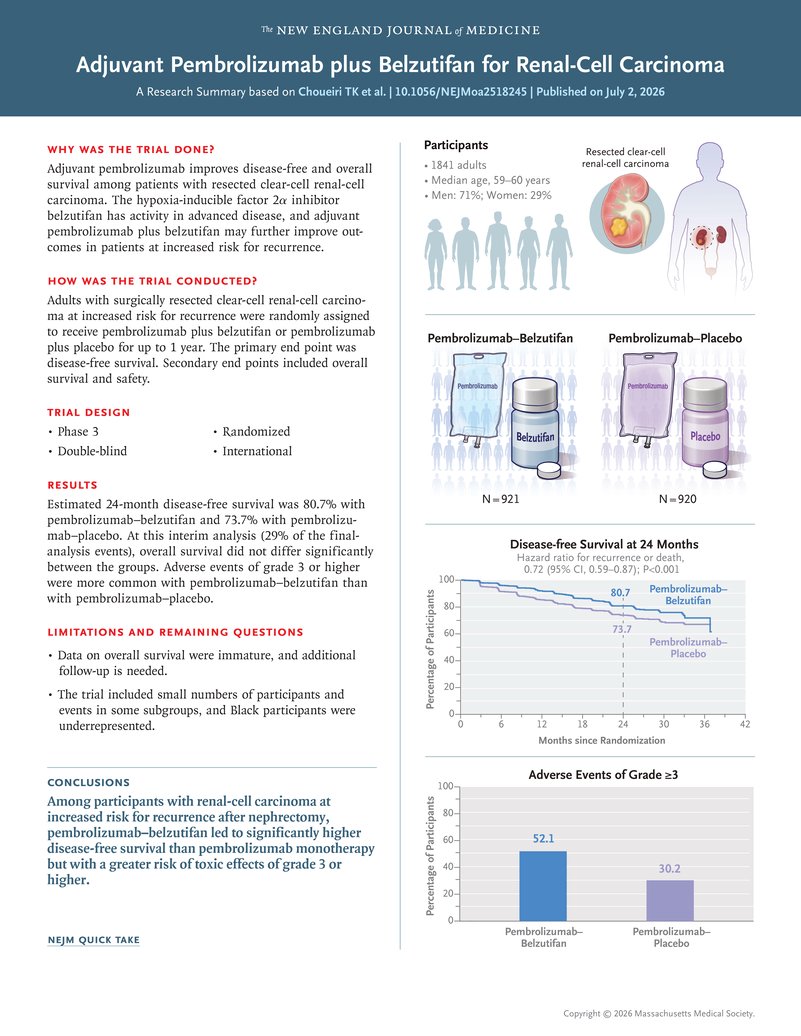
⚡️ Adjuvant pembrolizumab + belzutifan vs pembrolizumab alone in high-risk ccRCC after nephrectomy (LITESPARK-022):
DFS: HR 0.72 (95% CI 0.59–0.87; p<0.001)
24-month DFS: 80.7% vs 73.7%
First phase 3 trial in RCC to show DFS benefit of a combination vs an active IO comparator.
Grade ≥3 AEs 52.1% vs 30.2%. OS immature.
https://t.co/tG7YDywaG2
#KidneyCancer @NEJM
⚡️ In MIBC, radical cystectomy remains the standard — but not every patient chooses it.
In the ICI/ADC era, trimodality therapy is gaining ground as an individualized alternative. How do we integrate it alongside perioperative EV + pembrolizumab?
https://t.co/e1dB56UDf5
#BladderCancer @EurUrolOncol
Pleased to share our newly published article in Therapeutic Advances in Medical Oncology:
“Primary prostatic seminoma: a rare case report and structured literature review”
https://t.co/rW66jMOTwr
#GermCellTumors#Oncology
Risks of thrombosis and hemorrhage in concurrent use of anticoagulants and potential interacting prostate cancer agents
https://t.co/Inu5taP3Zl
In a population-based retrospective study from Ontario and Alberta, Canada🇨🇦 (2012–2023), investigators evaluated whether androgen receptor pathway inhibitors interact with direct oral anticoagulants (DOACs) in patients with #ProstateCancer . Among 2,997 patients, concurrent use of enzalutamide or apalutamide with DOACs did not increase thrombosis risk, and abiraterone with DOACs did not increase bleeding risk🩸
Overall, combining these therapies showed no clinically meaningful impact on thrombotic or bleeding outcomes.
@TzufeiWang@Dominick_Bosse@pietro_ravani@Msood99M@MarcCarrier1@OncoAlert@silkegillessen@AOmlin@weoncologists@JournalCancer
The same applies in bladder cancer. Pathological complete response is only a potential surrogate for the effect of neoadjuvant systemic therapy on the micro-metastatic disease which is not yet radiologically visible. ctDNA tells us what’s actually happening in those micro/metastatic sites which is much more relevant.
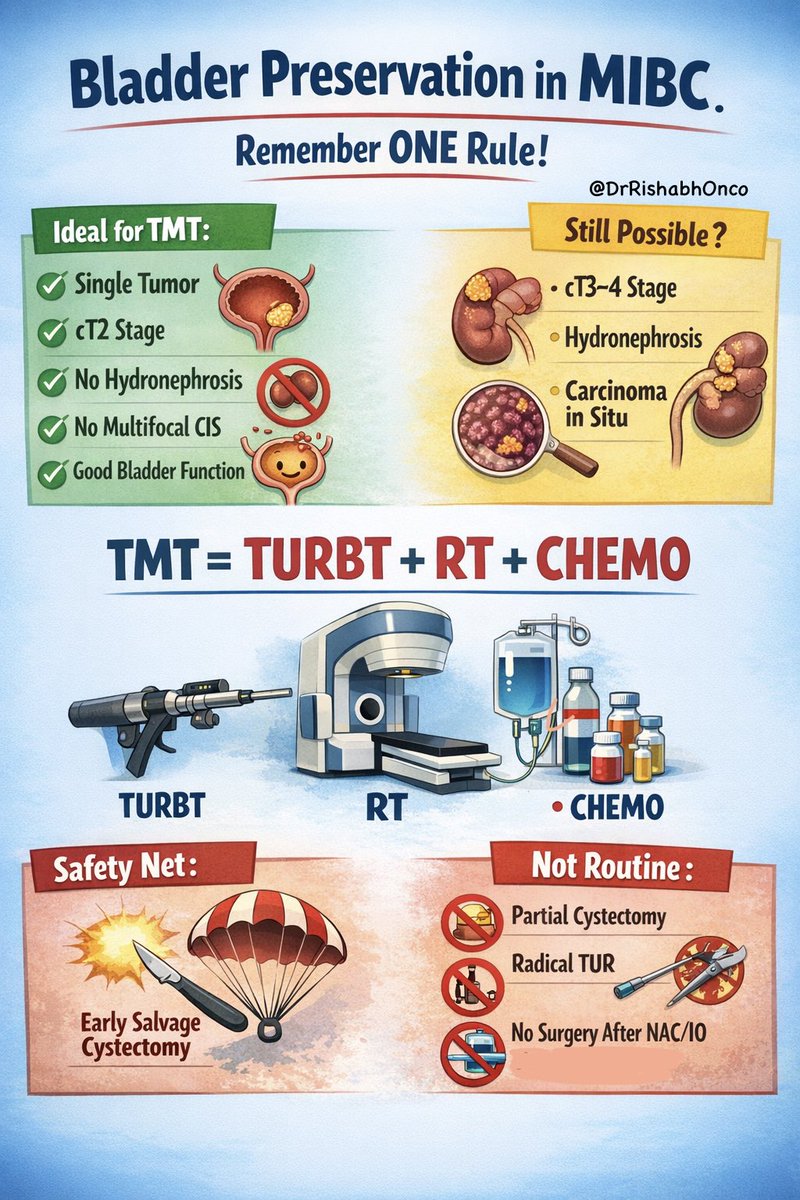
Radical cystectomy is NOT the only standard for MIBC anymore. 🚻🔥
The International Bladder Cancer Group just made it crystal clear in European Urology 📘
If you remember ONE thing, remember this 👇
🧠 TMT = TURBT + RT + Chemo
That’s bladder preservation.
That’s guideline backed.
That’s no longer niche care.
Who wins with TMT 🎯
🟢 Single tumor
🟢 cT2
🟢 No hydronephrosis
🟢 No multifocal CIS
🟢 Good bladder function
Big myth busted ⚠️
cT3–4, CIS, hydronephrosis
👉 Worse prognosis ≠ absolute no
The safety net that makes this work 🛟
If local failure happens
👉 Early salvage cystectomy still cures
What is NOT routine 🚫
❌ Partial cystectomy for most
❌ Radical TUR alone
❌ Skipping local therapy after chemo or IO outside trials
One line takeaway 💡
If you never discuss TMT, you are denying patients a real option.
Would you offer TMT to every eligible MIBC patient ❓
📖 Full paper in comment ⬇️
#BladderCancer #UroOncology #OncoTwitter #MedTwitter #EAU
@OncoAlert@myESMO@ESMO_Open@Uromigos
IT IS THIS TIME OF THE YEAR AGAIN!
TOP 10 GU clinical trials in 2025!
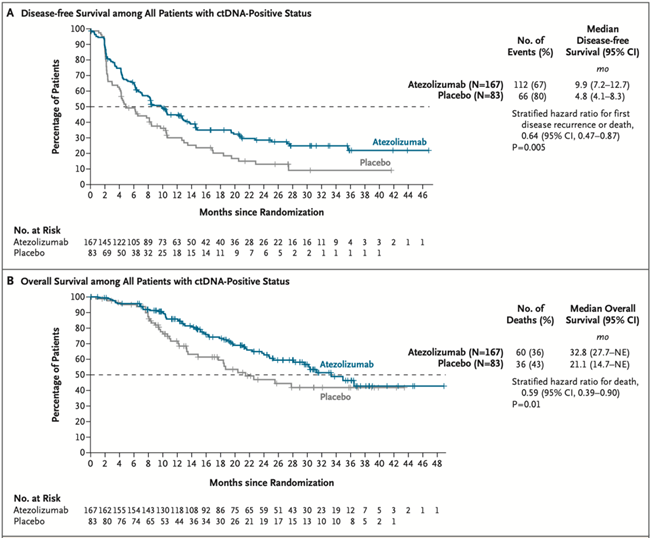
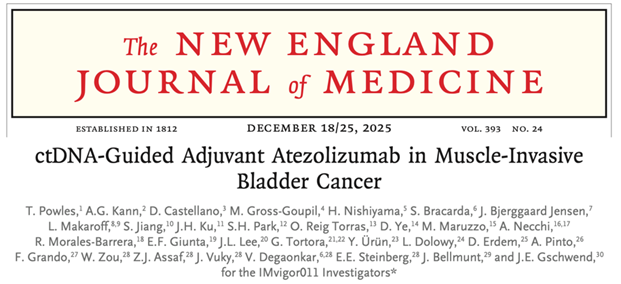
1/ Practice-changing IMvigor011: In ctDNA+ MIBC post-cystectomy, adjuvant atezo improved DFS (HR 0.64) & OS (HR 0.59) vs placebo. ctDNA- pts spared therapy w/ 2-yr DFS ~88%.
@tompowles1@DrYukselUrun@OncoBellmunt@NEJM #ESMO2025 Plenary @myESMO
https://t.co/mbl2VKLZ2N
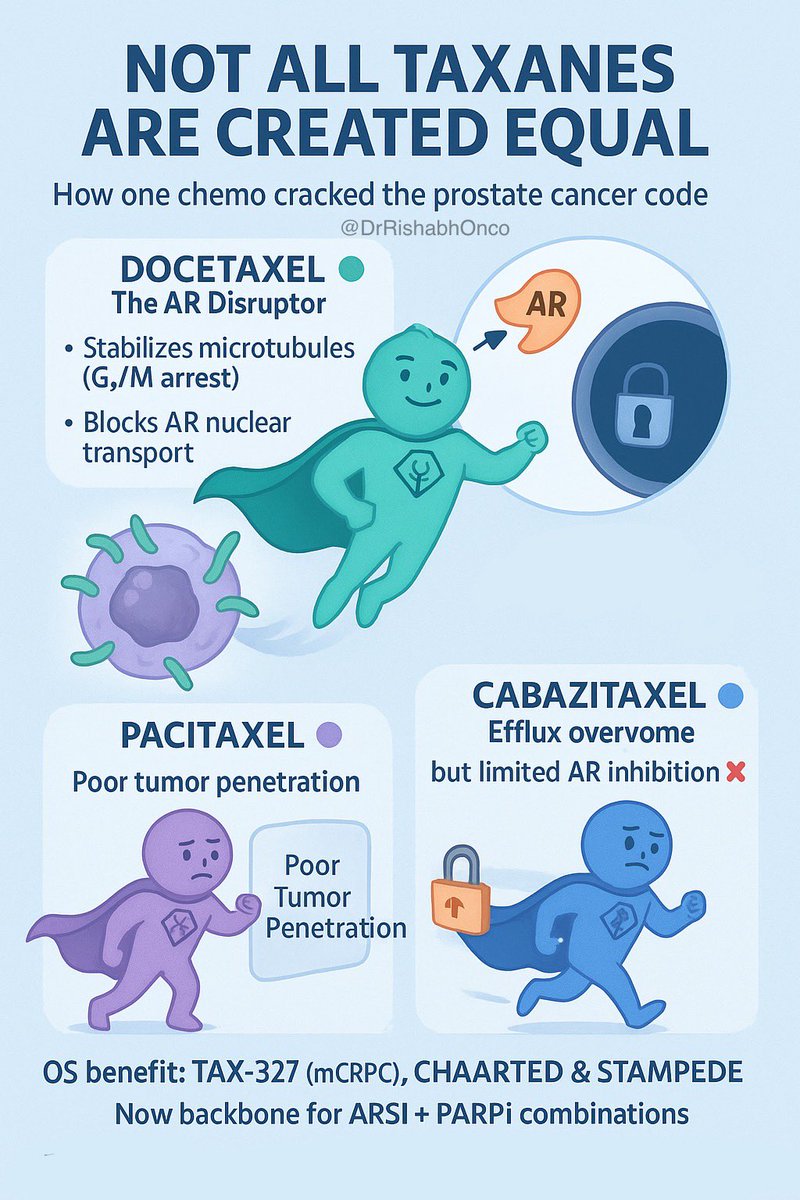
🧬 Why Docetaxel Works in Prostate Cancer (and Others Don’t 😮)
Not all taxanes are born equal — one cracked the prostate code 🧩
💥 Docetaxel = The AR Disruptor
•Freezes microtubules → mitotic chaos (G₂/M arrest)
•Phosphorylates Bcl-2 → flips the “self-destruct” switch
🚫 Stops androgen receptor (AR) from entering the nucleus — and that’s its secret weapon!
⚖️ Paclitaxel vs Cabazitaxel: Why They Miss the Mark?
•Paclitaxel → can’t penetrate prostate tumor microenvironment effectively ❌
•Cabazitaxel → beats resistance pumps 💪 but doesn’t block AR trafficking as powerfully
👉 Only docetaxel truly starves the tumor of AR signaling
🧠 Proof in Trials
•mCRPC: OS ↑ in TAX-327
•mHSPC: OS ↑ in CHAARTED & STAMPEDE
•Now the backbone for ARSI + PARPi combos
💡 Takeaway:
Docetaxel isn’t just chemo - it’s a molecular double agent that shuts down both cell division and androgen signaling.
🔖 Save this gem for viva, boards & clinic rounds!
#OncoTwitter #ProstateCancer #MedTwitter @myESMO@esmo_open@OncoAlert@ASCO@Uromigos
2️⃣ positive trials for belzutifan on the same day! LITESPARK-022 tests adjuvant belzutifan+pembro vs pembro alone post surgery in ccRCC. It is +ve for DFS. It’s the 1st +ve combination trial in adjuvant RCC & moves pateint care forward.@DrChoueiri https://t.co/8s5MvBU2NQ
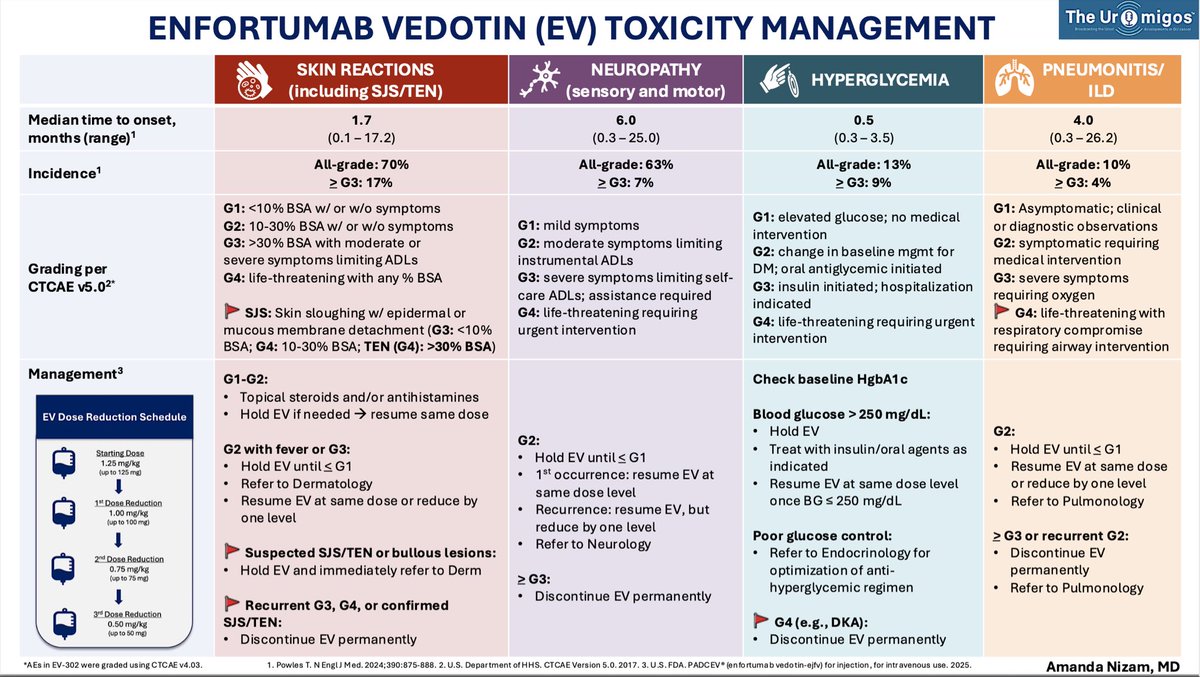
EV+P is a pivotal regimen in la/mUC & 🔜 expanding to MIUC. Proactive AE monitoring, pt 📚, & multidisciplinary collaboration are critical to optimizing safety & efficacy.
🚨 SJS/TEN, DKA, ILD
📋 Baseline & ongoing monitoring for AEs
🔑 Early ID & proactive dose modifications
⬇️ Summary of EV AEs of special interest
#UromigosLive @Uromigos@drenriquegrande@PGrivasMDPhD@OncHahn@LauraBukavinaMD@TanyaJindal97@koshkin85
A standing ovation moment at #ESMO25
In front of more than 9,000 cancer specialists and researchers, the Phase 3 RC48-C016 trial redefined the outlook for HER2-expressing urothelial cancer:
Disitamab vedotin + Toripalimab nearly doubled overall survival over chemotherapy — marking the arrival of the ADC + IO era in this disease.
#UrothelialCancer #Oncology #DisitamabVedotin #Toripalimab #Immunotherapy #ADC #IOcombination
@myESMO@OncLive@CParkMD@tugbawitter@Dr_ElvinaA @atakansare2016 @drmukremin@dr_yakupergun@OncoAlert@alimurattat@DrYukselUrun
1/2 KN905 Enfortumab Vedotin + Pembro continues to transform bladder cancer in spectacle fashion. In cisplatin ineligible operable disease it beats cystectomy with EFS HR 0.4, OS HR 0.5. pCR of 57% is much ⬆️ than anything before #ESMO25 pCR> 50% questions unselected surgery