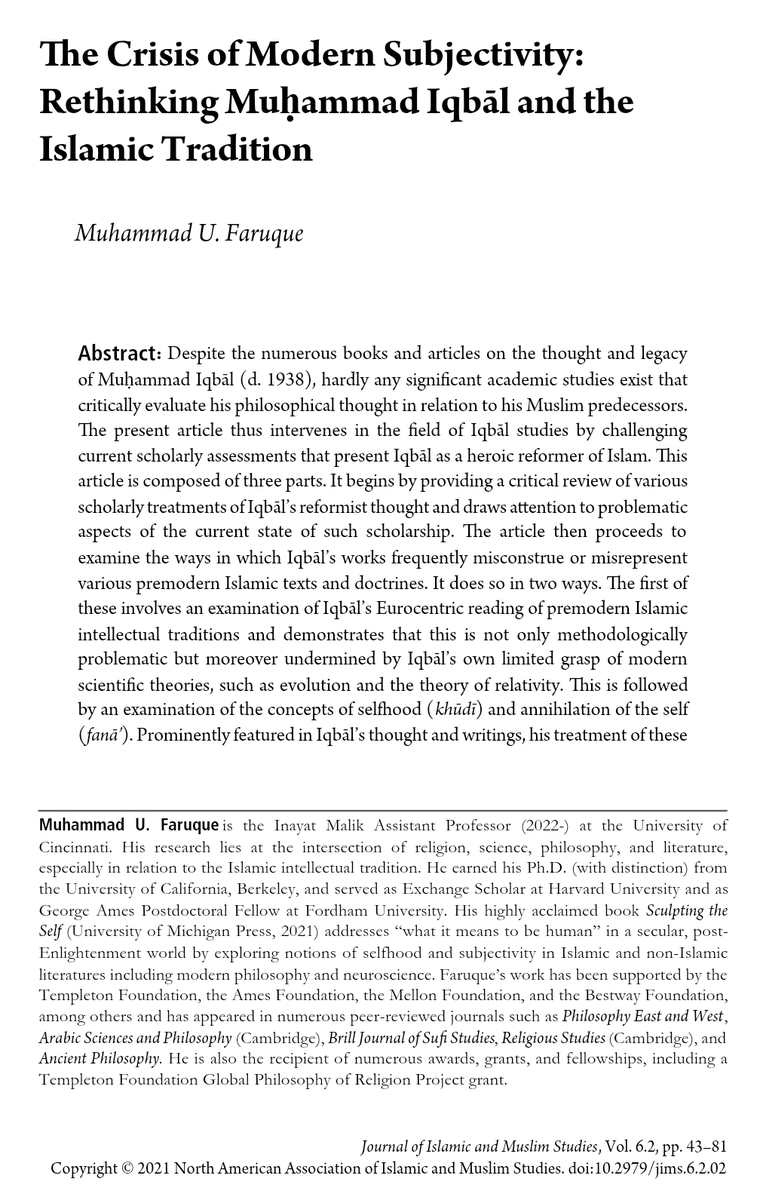
In my view, Muhammad Iqbal is widely misunderstood and mischaracterized in both Eastern and Western academic circles for a variety of reasons. One of the more nuanced readings of Iqbal that I have seen—albeit somewhat harsh in tone—is this paper by Muhammad U. Faruque.
Kalecki supposedly said macroeconomics is the art of confusing stocks and flows. Open macro, I’d add, is the art of confusing domestic-currency debt with foreign-currency debt. Keynes understood the difference. Very Serious People often don’t /1
China’s Debt Machine Has a Long Runway
https://t.co/uAPAfoP8g6
This is a very good summary by @greg_ip, on WSJ, of China’s attempt to dominate manufacturing through debt-fueled expansion — a point others have also been circling around for some time.
My view is this:
China’s debt-driven investment machine will run far longer than most people expect.
Why?
First, the Chinese state can absorb and redirect national wealth — including private wealth — through its control of banks, capital markets, credit allocation, and the entire financial system. Beijing can force-feed money into industries far longer than any market-based economist believes possible.
Second, China does not operate as a market economy. This is not about profits. Beijing sees manufacturing dominance through an ideological and geopolitical lens. It wants control.
Once China has crushed enough competitors through overcapacity, price wars, and exported involution, it will reap the harvest.
Economically, it will dictate industry terms and eventually jack up prices — exactly the way this has played out domestically.
Geopolitically, it will turn industrial choke points into weapons.
We have seen this movie before.
That is why market economies have no choice but to defend themselves now. Waiting for China’s “unsustainable” system to collapse is not a strategy.
By the time it collapses, your manufacturing base may already be dead.
Or China may already be in harvest season after your collapse — and by then we will have moved on to a very different script.
Great stuff on how Japanese immigrants to the US, disappointed by racism & taking inspo from US policies, promoted Japan's settler colonialism in Asia. Torajiro Sato, a settler leader in Korea who studied in the US, called for a Japanese "Monroe Doctrine" & "manifest destiny."
To avoid economic stagnation:
1) Stop equating government budgets with household budgets.
2) Focus on reducing private debt, not public debt.
3) Implement policies that increase the money supply in the economy.
Ignoring these steps leads to economic downturns and crises.
I’m back from the countryside, and ready to talk institutions. Here is my take on the latent constraints underpinning the development debate and what it means to operationalise a definition of institutions for policymaking in practice. (Link below)
There is a great book on this very topic written a few decades ago by Richard Samuels (MIT). It explores the idea of technonationalism in Japan symbolized by the 19th slogan “Rich Country, Strong Army,” a slogan more or less co-opted by the PRC. Urgent reading again.
ngl it is quite insane how the CCP had a 'heightmog the Japanese' program launched in the early 2000s that's still ongoing and the result is the median height of Chinese teenagers went up by like 10cm
"the history of the rise of European civilization was in fact a process of import substitution. From the twelfth century onwards manufactured goods which had previously been imported from the Levant started to be produced in Europe. At the core of what is generally referred to as ‘the commercial revolution’ was the growth of an industrial sector, Goldthwaite argues: Initially Europeans had an unfavourable balance of payment…and initially they made up the difference through piracy and plundering, but above all through the export of silver and gold…With the growth and development of the European economy, the Italians steadily improved their situation. They began to produce for themselves the manufactured goods they had been importing, and by the fifteenth century they had gone beyond import substitution and were exporting these very goods to the Muslim world." (Arkebe Oqubay, Christopher Cramer, Ha-Joon Chang, and Richard Kozul-Wright, The Oxford Handbook of Industrial Policy)
Starting in 2012, the Bank of Japan began buying domestic equities at scale. Japan also built something few countries have ever attempted: a de facto sovereign wealth fund financed at near-zero borrowing costs.
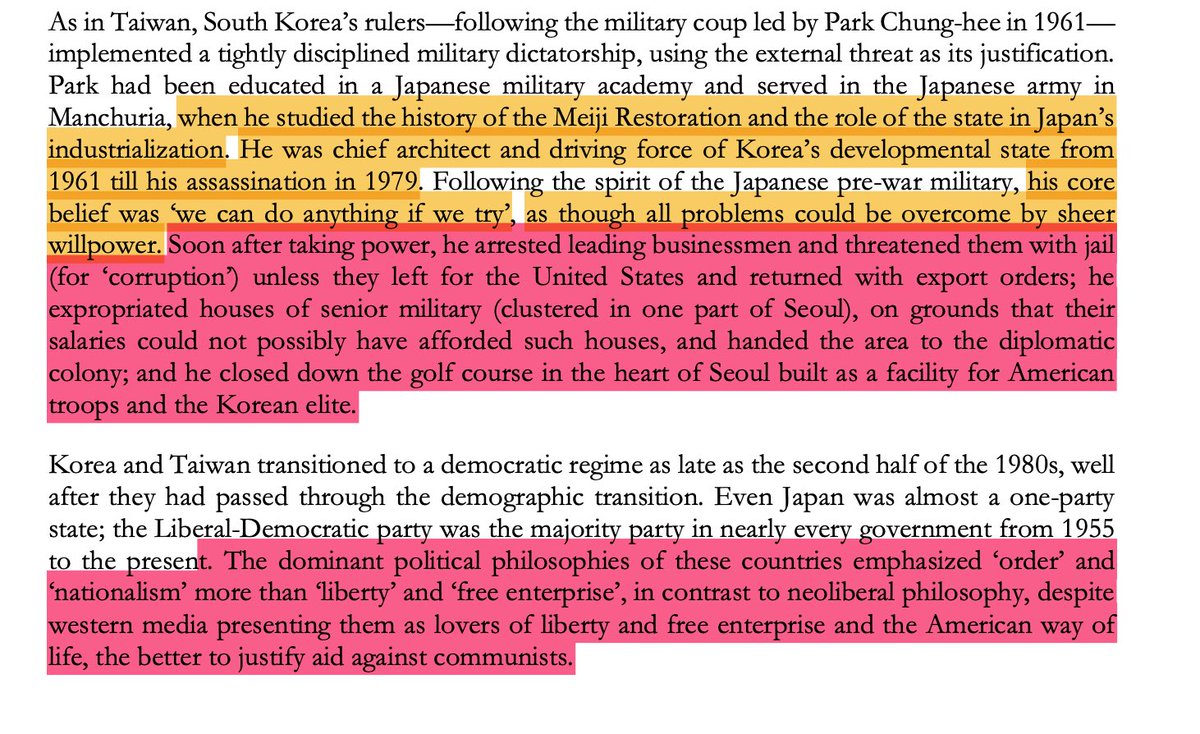
South Korea’s Park “rounded up businessmen and subjected them to public humiliations, such as being forced to march through the streets carrying placards proclaiming, ‘I am a corrupt swine.’ He was not being unreasonable.”
"Indonesia was on the cusp of actively exporting aircraft to the world, only for state support to be cut off and never seriously restored."
Sulfikar Amir (@sociotalker) explained this thoroughly in his book.
South Korean President Park Chung Hee announces that he is launching a campaign to purify the Korean language and rid it of foreign influences, especially from English and Japanese.
He orders the Ministry of Education to coordinate the elimination of Korean substitute words.
Furthermore, Park orders all businesses to stop displaying advertisements in English, or else face fines or a month in jail.
Premature Deindustrialization and the Urgency of Reindustrialization
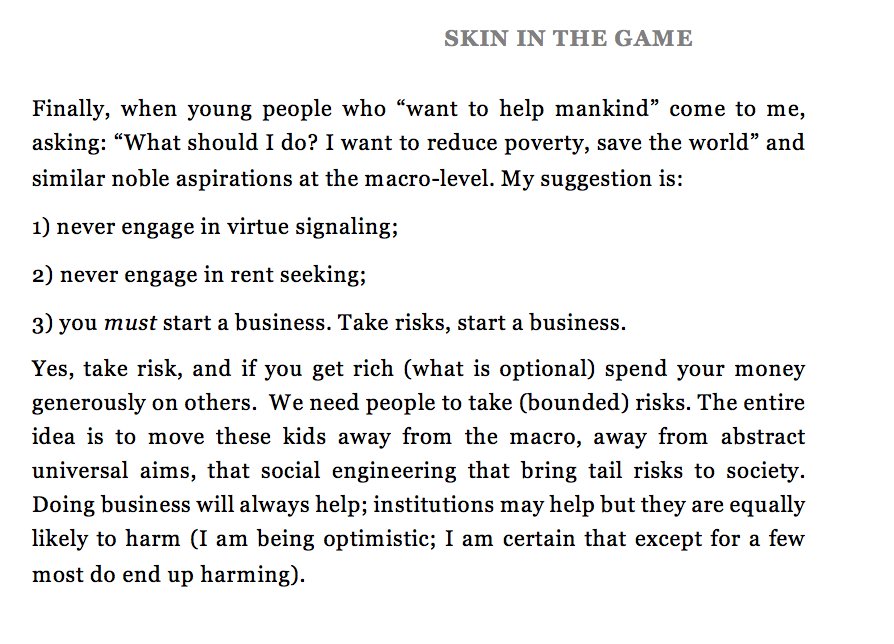
Industrial policy was long viewed as taboo, to be avoided for fear that it would foster rent-seeking and lead governments to misallocate resources by attempting to ‘pick winners. But it has now re-emerged as a central pillar of economic strategy across the world.
Industrial Policy Lab Indonesia was established in response to this changing global landscape. We seek to help shape a coherent industrial policy agenda that can rebuild domestic productive capabilities, generate quality employment, and place Indonesia on a stronger path of structural transformation.
Edmund Burke: "Manners are of more importance than laws. Upon them, in a great measure, the laws depend."
Tocqueville also compared the two concepts (see below)
2/1
https://t.co/oE7HGZdFKb