One of Monaco’s demand generation agents is sustaining 20-40% response rates on conversations that went cold and turning them back into real pipeline.
Last week we made Monaco generally available. I wrote that Monaco represents a different way to think about revenue software: not just software that stores the work, but a system that can learn how sales organizations actually operate.
We’re already seeing that work in production.
The visible part is the agent. The harder part is everything underneath it.
There are really two parts to making that work.
Part 1 is the system itself.
The important context has to be captured when the work happens, not reconstructed every time an agent runs.
Who is this person? What relationship already exists? What did they say? What did we do? What happened afterward?
If that history is durable, the next agent inherits what the company already knows instead of starting from zero. When it acts, the outcome gets written back.
That’s how memory becomes intelligence.
Over time, replies, meetings, stage movements, wins and losses become evidence about which signals matter, which messages work, and which actions actually change an outcome.
The re-engagement agent is one example. The same underlying system powers agents across prospecting, outreach, follow-up and pipeline execution.
Part 2 is a different kind of org design.
Some of the most valuable judgment still lives in the heads of the best operators.
A while ago, we deliberately moved one of our top sales reps into the engineering team for exactly this reason. His job is to turn what strong reps actually do into product logic, evals, cases, test loops, decision rubrics and outcome loops.
I think this is fundamental to vertical AI.
If you’re automating expert work, the people building the product can’t stay several abstractions removed from the people who are actually great at doing that work.
You need the system learning from production and outcomes, while operators continuously encode what good judgment looks like into the product.
That’s the broader idea behind Monaco
Not a collection of independent agents, but a System of Intelligence for Revenue where every agent operates on the same organizational memory and contributes back to the same learning loop.
I wrote a longer piece on the architecture and org design underneath this.
Link in comments.
Now might be the best time in a generation to become an IC.
Small teams have more leverage. Individual builders have more power.
Doesnt matter how senior you are - you must become an IC for a bit to re learn the new way to build.
In few months, building and maintaining tools will be outdated, we are already moving towards our agent harness to write tool functions as need basis in sandbox and get job done.
I’m excited to finally announce the newest edition my Stanford course 𝗧𝗵𝗲 𝗠𝗼𝗱𝗲𝗿𝗻 𝗦𝗼𝗳𝘁𝘄𝗮𝗿𝗲 𝗗𝗲𝘃𝗲𝗹𝗼𝗽𝗲𝗿. It has been 9 months in the making.
Last November, with the release of Claude Opus 4.5, coding agents experienced a step function improvement in capability. We all felt it. The LLMs were more powerful, could reason for longer, solve harder tasks.
This year’s iteration of my course reflects the 2026 metamorphosis of software engineering.
My core belief is simple: AI-native developers of the LLM era are going to become the most important members of any software organization. I have designed my course to train this next generation of engineers.
𝗪𝗵𝗮𝘁’𝘀 𝗱𝗶𝗳𝗳𝗲𝗿𝗲𝗻𝘁 𝘁𝗵𝗶𝘀 𝘁𝗶𝗺𝗲 𝗮𝗿𝗼𝘂𝗻𝗱
First, 85% of my Fall 2025 class material is being thrown out. The Fall 2026 syllabus reflects the core capabilities AI-native engineers must have: agent skills, advanced context engineering, MCP portals, agent-ready codebase principles, agentic code review, security, parallelizing background agents, software factories, and more.
Second, I am going to teach my students how to have software taste. Every student will be required to ship pull requests to production-grade, real-world codebases. The course is collaborating with the top open-source AI repos who will offer support and mentorship to students on how to meaningfully contribute to their projects.
This has never been done before in any university course so I am incredibly grateful to our OSS Partners: @browserbase, @HeyGen, @CopilotKit, @semgrep, @OpenHandsDev, @milvusio, @marimo_io, Pi, @crewAIInc, @warpdotdev, @vercel, @cmux, @arizeai, @UnslothAI, and @anyscalecompute.
𝗪𝗵𝗮𝘁’𝘀 𝘀𝘁𝗮𝘆𝗶𝗻𝗴 𝘁𝗵𝗲 𝘀𝗮𝗺𝗲
I’m fortunate to again have AI software engineering leaders and founders as guest speakers to share their learnings from building top coding agent products. Thank you to @leerob from @cursor_ai, @bcherny of @claudeai code, @EnoReyes of @FactoryAI, @silasalberti of @cognition, @0xine of @semgrep, Rajesh Bhatia of @Cloudflare , @amasad of @Replit, and @eladgil.
All resources will be available online. All classes will be available to the public.
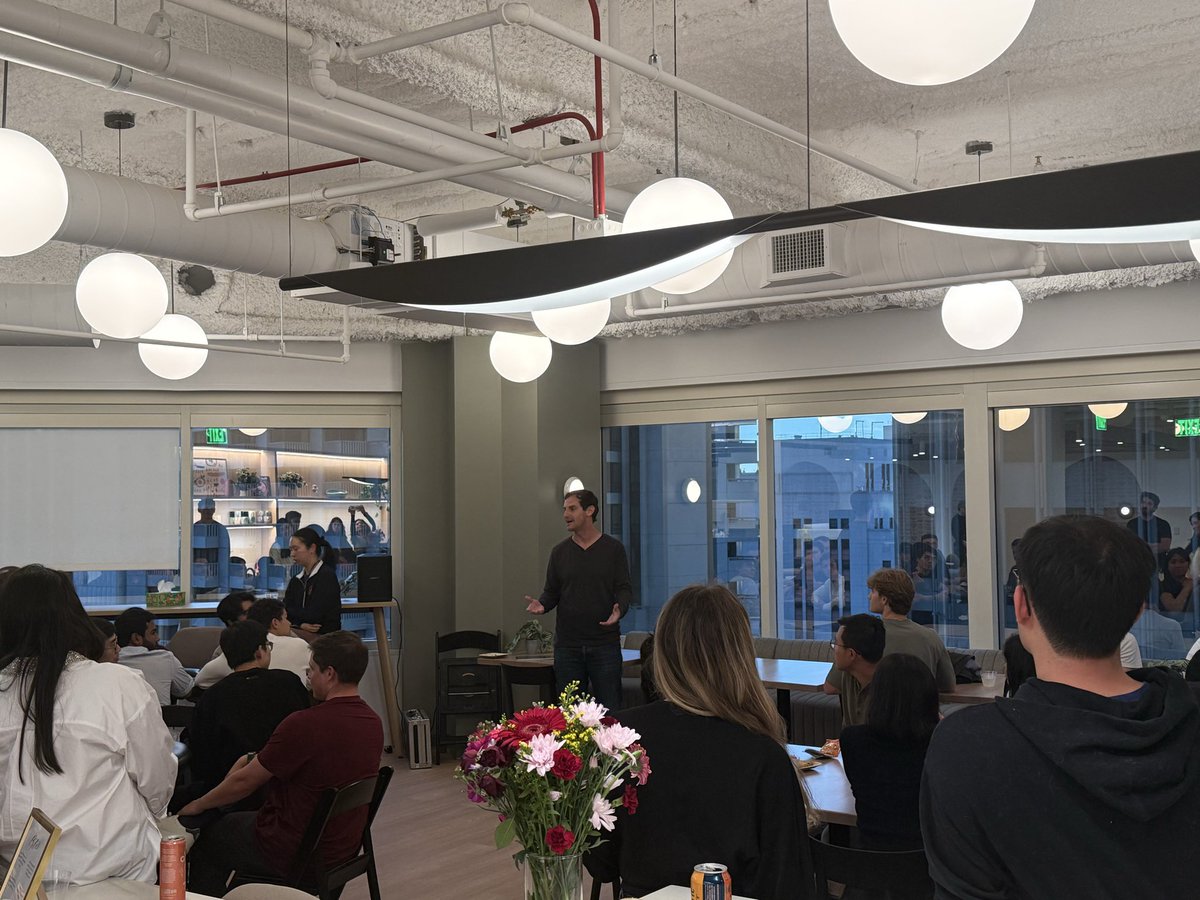
9/22 on Stanford campus. See you in class.
https://t.co/wTokHyUMsz
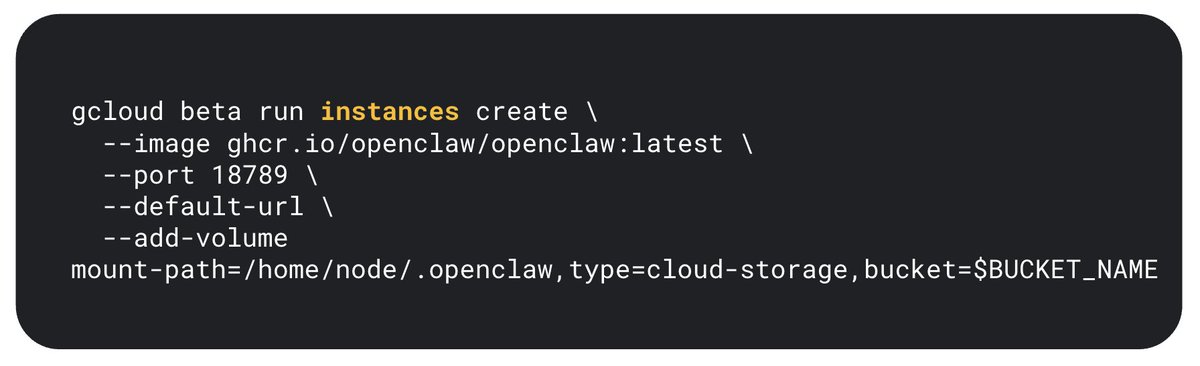
🦞 Deploy and run OpenClaw or Hermes on Google Cloud Run for $11 a month, in one command.
Introducing the Cloud Run Instance:
- A new primitive to manage individual microVMs,
- Full Linux compatibility,
- Always on and long running,
- SSH (soon)
Just 5 years ago I was begging developers to build the forms I designed.
Now I’m watching this and realizing designers can just… build the damn things ourselves.
Wild how far we’ve come.
https://t.co/9O5I4R7hgh
Introducing GLM-5.3-Flash
- Leading capabilities at a highly competitive price
- Natively multimodal with a 1M-token context window
- A 320B-A18B model released under the MIT License
- Previously previewed as Ox Alpha, running entirely on Chinese AI chips
Blog: https://t.co/tzOmB7gdZP
Available now across all official platforms:
Weights: https://t.co/9LRMahY9Wa
API: https://t.co/VcaQnzYmS9
Coding Plan: https://t.co/Nk8Y98HNhU
ZCode: https://t.co/Peepqv4XSx
Chat: https://t.co/WCqWT0qCQb
AutoClaw: https://t.co/aGEG5HqTTb
Using only Monaco cold outreach, my start-up closed an $18M deal within 4 months of starting the company.
Monaco is the Ferrari of CRMs and a daily joy to work with.