Excited to introduce PolaRiS, a real-to-sim recipe for turning short real-world videos into high fidelity simulation environments for scalable and reliable zeroshot generalist policy evaluation.
https://t.co/nWcR6YuPf4
(1/N 🧵)
learned a ton watching/chatting w pranav while he worked on this! interventions are strong crutch to enable deployment, and a great source of data from improvement :)
Excited to share the first paper of my undergrad, Q-OIL, which we’ll be presenting at #CoRL2026 in Austin!
Interventions provide a natural source of feedback for robots to learn from in the real world. But, humans intervene suboptimally, which needs to be accounted for in both simulation benchmarking and algorithms.
We analyze human intervention data and measure intervention suboptimality in both timing and execution. Thus, rather than using interventions as supervision, we use them as soft exploration guidance.
(1/8)
Want to turn any VLM into a better reward model for robotics? (yes, even Astra)
Introducing D&A: decoupling description and assessment improves any VLM family for zero-shot robot rewards.
D&A scales with improvements across GPT, Gemini, Claude, Qwen, ...
It enables zero-shot RL and filtered IL, improves code-as-policies via rich language feedback, and achieves SOTA on three benchmarks.
Website: https://t.co/Ccrv3HpVgY
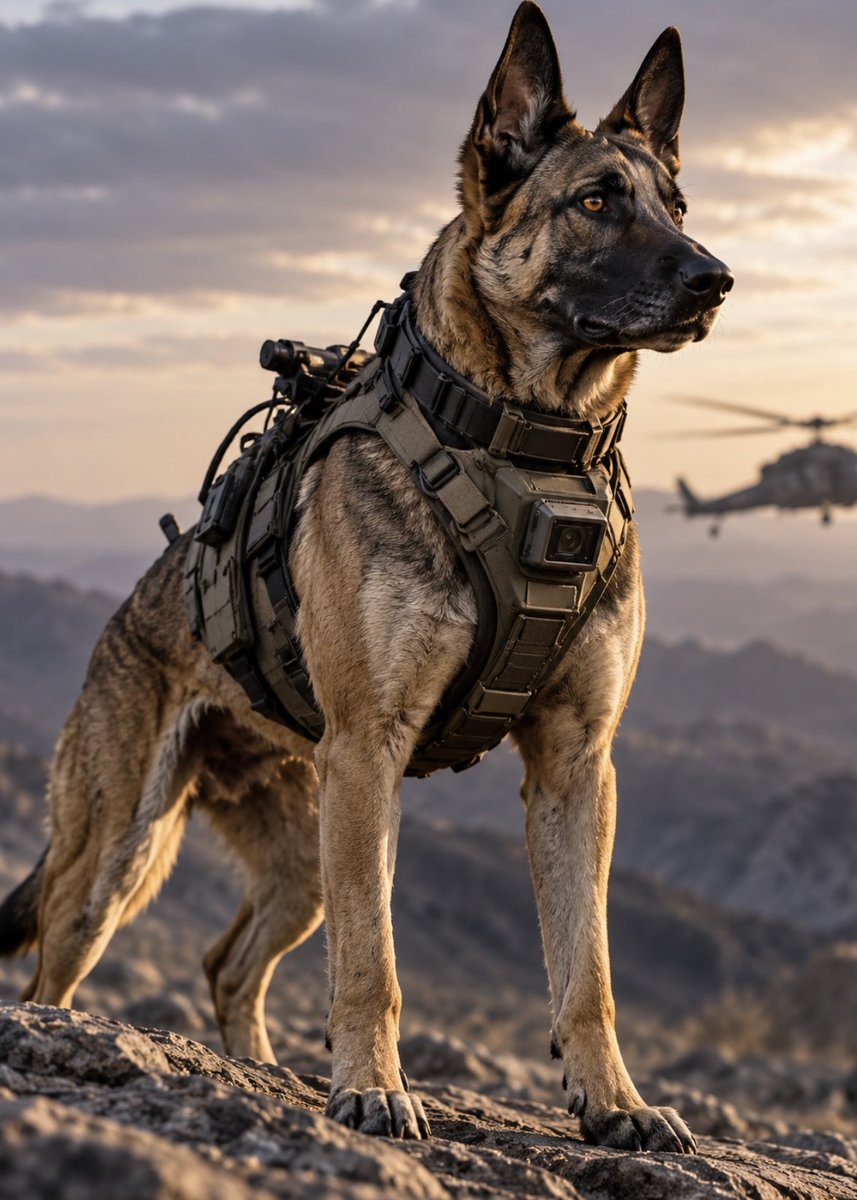
JUST IN: Palmer Luckey's genetically modified military dog startup, Warhound, comes out of stealth, aiming to create enhanced canines for the U.S. military.
(1/6) From @GoogleDeepmind’s AlphaGo to AlphaZero, we saw machines find moves that reached beyond what we’d imagined for them. No one taught them those strategies. They emerged from reinforcement learning: playing, failing, and trying again under a single binary task reward for success or failure. Inspired by them, we couldn’t help but wonder: what might a robot discover if we gave it that same freedom to learn?
That question led us to AlphaNIST. Starting tabula rasa, with that same binary reward plus only a simple control cost, a single policy solves all 20 @NIST assembly tasks at a 98.2% success rate in simulation. More surprising still, AlphaNIST can complete 10 different tasks in a row, receiving that reward only once, after all 10 are done.
Just as AlphaGo’s strategies surprised its creators, AlphaNIST discovered dexterous strategies we couldn’t have come up with ourselves.
Paper: https://t.co/HZBYgG7SWK
Website: https://t.co/VyUKiYFI2y
This robot has never seen a real-life gear, but assembles one with a 94% success rate! It can also thread an M16 nut and insert a 16mm peg. All trained with RL and transferred zero-shot sim2real from RGB. 🔈
Our method, Success-Guided Sampling (SGS), makes a small change to how we sample environment resets. More on SGS in @octi_zhang's thread, and more on sim2real transfer down below! 🧵
Website: https://t.co/C1wYuSquTc