PostDoc research fellow at AI health cluster @AIHCluster, @zi_mannheim @UniHeidelberg. Interested in Social Cognition, Computational Psychiatry & Psychotherapy.
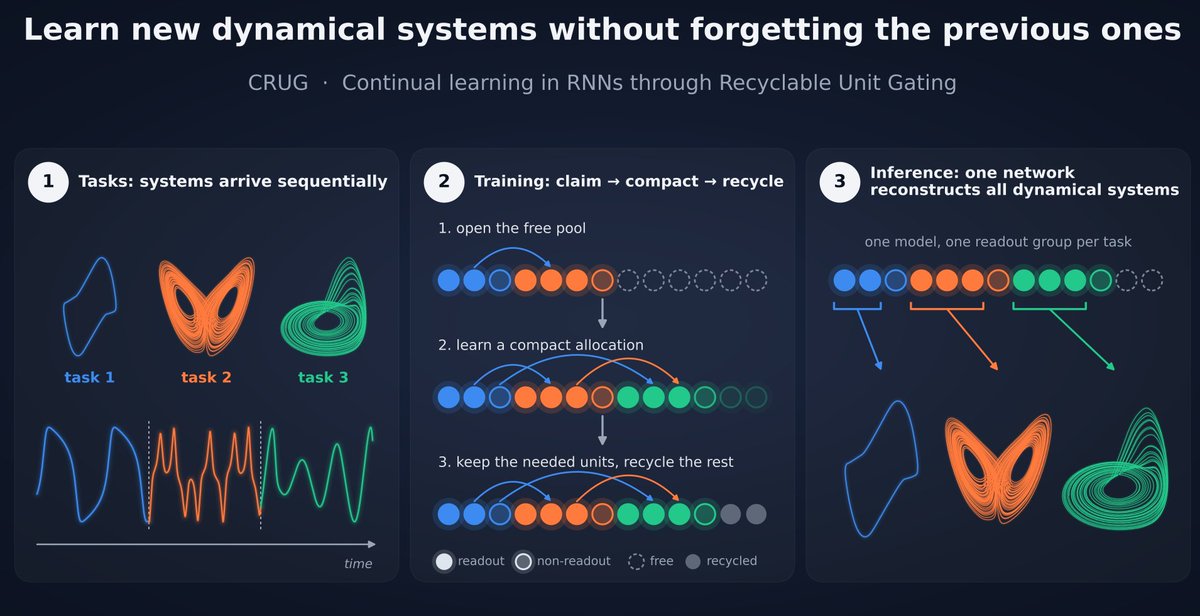
Check out our new work on continual learning of dynamical systems! CRUG lets a single RNN learn new systems while preserving earlier dynamics, allocating units as needed and recycling unused capacity. https://t.co/UlanTD2m90
📢 @SWC_Neuro & Gatsby Unit are looking to sponsor early career researchers in mechanistic theories of neural computation for external fellowships.
Join a collaborative, world-class community at the interface of theory & experiment.
⏰ Apply by 16 July
ℹ️ https://t.co/DLvT96Jr15
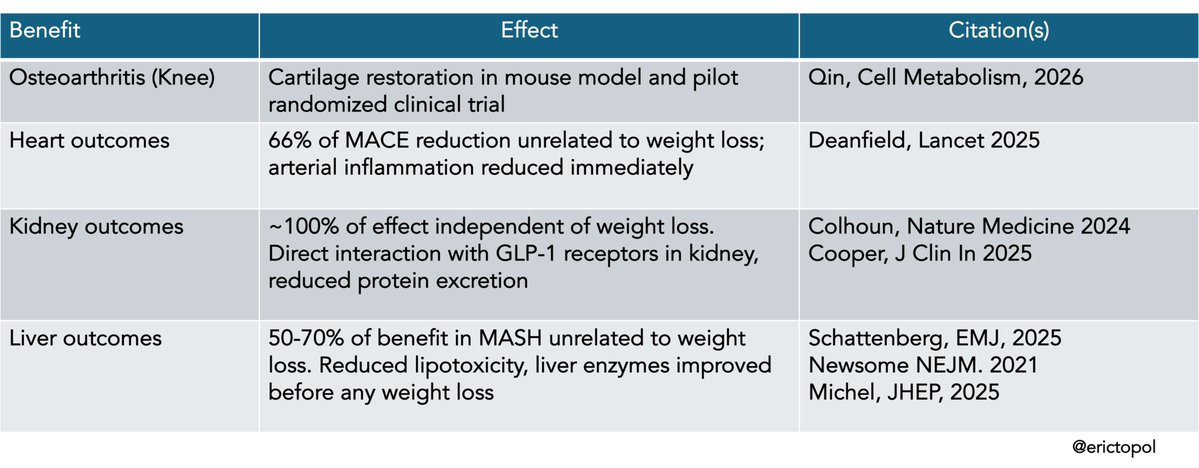
We used to think that the benefit of GLP-1 drugs (like Ozempic) was dependent on weight loss.
Now we know so many health benefits have little to do with that!
🧠 We're hiring a computational postdoc!
3+ years with me & Mitul Mehta on a @wellcometrust-funded social cog/paranoia research @ IoPPN @KingsCollegeLon
Lead computational work, collaborate with experimentalists on psychosis/THC data.
Apply here https://t.co/OHj3fLZkg9
Postdoc Opening!
We’re hiring a postdoc at the intersection of neuroscience, ML, and/or optimal control and RL at Hertie AI, Tübingen. Find the add here:
https://t.co/AOi8pj2T36
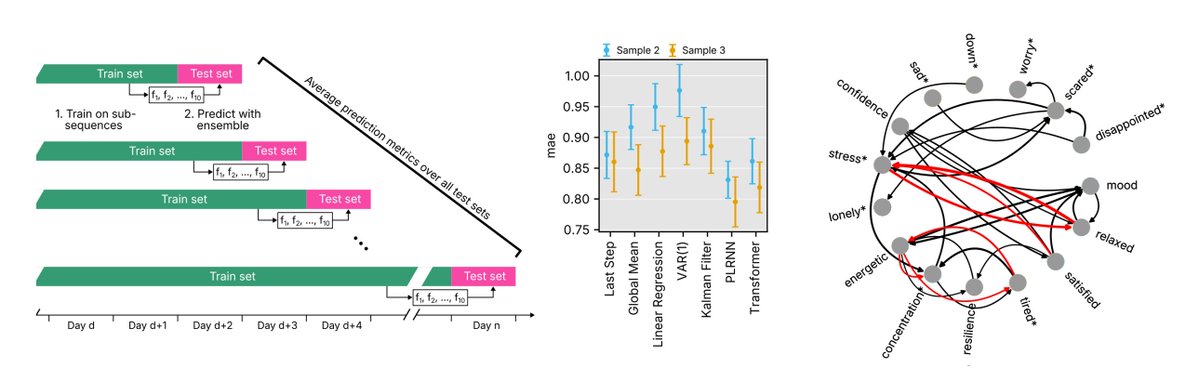
Our new preprint compares naïve baselines, network models (incl. PLRNN-based SSMs), and Transformers on 3x40‑day EMA+EMI datasets. PLRNNs gave the most accurate forecasts, yielded interpretable networks, and flagged “sad” & “down” as top leverage points. https://t.co/9trDupOR4A
Symbolic dynamics bridges from #DynamicalSystems to computation/ #AI!
In our #NeurIPS2024 (@NeurIPSConf) paper we present a new network architecture, Almost-Linear RNNs, that finds most parsimonious piecewise-linear representations of DS from data: https://t.co/sePJ4WHGkg
1/4
Interested in interpretable #AI foundation models for #DynamicalSystems reconstruction?
In a new paper we move into this direction, training common latent DSR models with system-specific features on data from multiple different dynamic regimes and DS:
https://t.co/uaf1RcyTBi
1/4
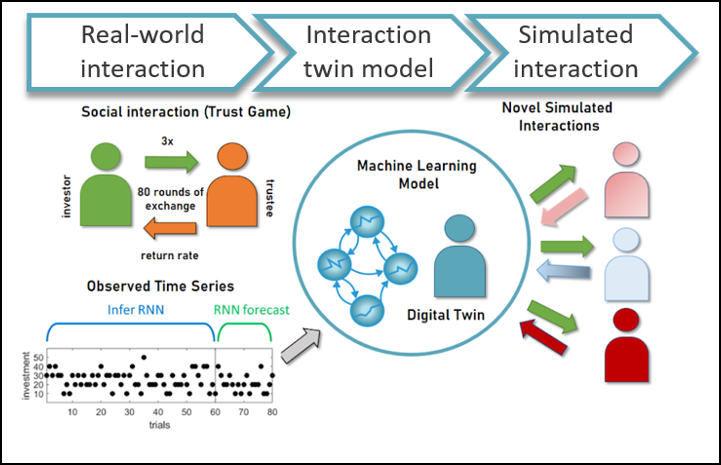
Creating digital twins of social interaction behavior with #AI! Our study shows how generative models can predict interactions from limited data, revealing hidden dynamics. Together with @brenner_manuel@DurstewitzLab. Explore: https://t.co/4zoEniAQcc #DigitalTwin#SocialBehavior
What kind of childhood makes a top scientist? Is it enough to have all the right traits (brilliance, grit, etc) or do you need the right family too?
And why should we care? A 🧵 on our paper on the Nobel Laureates.
A teaser: the income distribution of the laureates' fathers.1/N
Really enjoyed #Cogsci24 in Rotterdam. It was a pleasure to organise the symposium on computational social cognition with @MaartenSpeek and speak alongside the brilliant @JoeBarnby, @rebecca_saxe and @JaraEttinger
@demishassabis Having spent many teenage summers training ( and usually failing) to solve IMO problems, I am really excited to see this milestone reached. What a time to be alive. Such inspiring work @demishassabis and team!
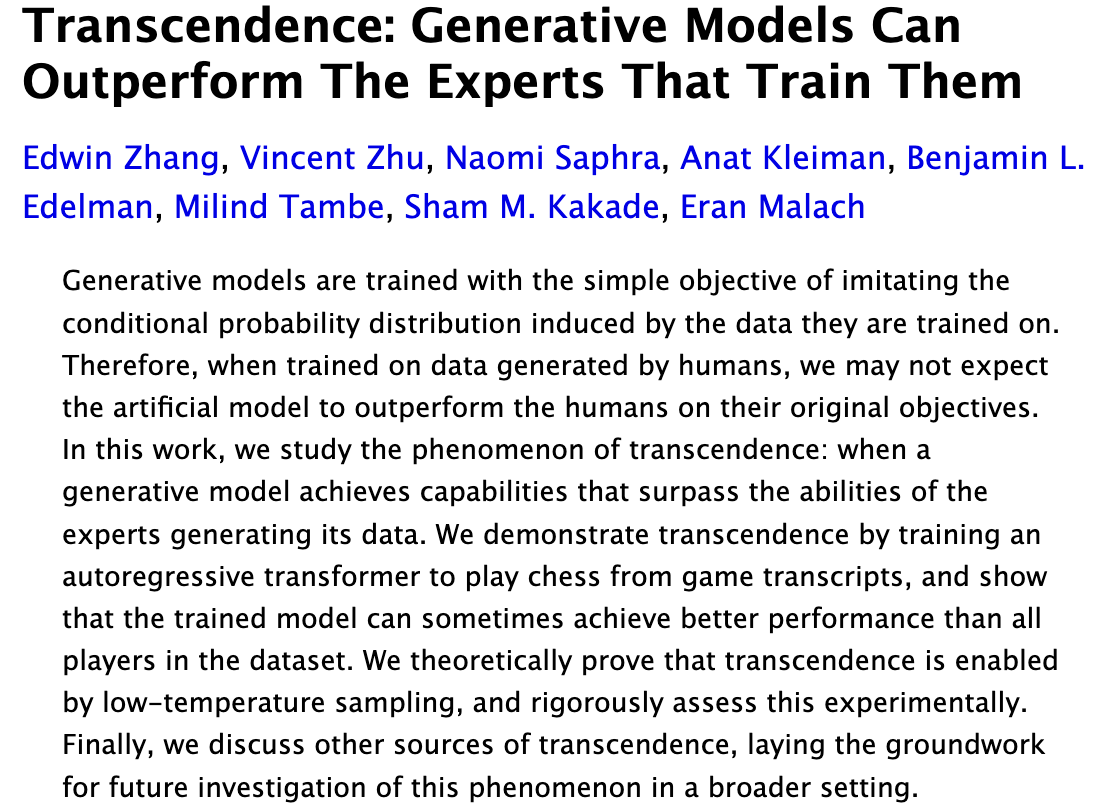
This paper seems very interesting: say you train an LLM to play chess using only transcripts of games of players up to 1000 elo. Is it possible that the model plays better than 1000 elo? (i.e. "transcends" the training data performance?). It seems you get something from nothing, and some information theory arguments that this should be impossible were discussed in conversations I had in the past. But this paper shows this can happen: training on 1000 elo game transcripts and getting an LLM that plays at 1500! Further the authors connect to a clean theoretical framework for why: it's ensembling weak learners, where you get "something from nothing" by averaging the independent mistakes of multiple models. The paper argued that you need enough data diversity and careful temperature sampling for the transcendence to occur. I had been thinking along the same lines but didn't think of using chess as a clean measurable way to scientifically measure this. Fantastic work that I'll read I'll more depth.
@RNAiAnalyst Can you elaborate on why you think there is no path to profitability please? Thank you. Great threads by the way. I’m learning a lot from them.