‼️🚓New Research🚓‼️
Law enforcement officers (LEOs) are told to "protect and serve"—but who's protecting them? Our new study in @LancetRH_Americ reveals that LEOs bear greater all-cause/cause-specific mortality risk than the working-age general population. 🧵
This one will blow your mind. How genes interact w/life circumstances circa puberty shapes levels of impulsivity, drive & health. Also a serious discussion about sinning & forgiveness through the lens of psychology and biology. @kph3k brings extraordinary knowledge & insight.
Our multi-ancestry GWAS of EXTernalizing conditions (ADHD, substance use...) in ~4M people reveals neurodevelopmental risk, drug-repurposing targets, and yields one of the strongest psychiatric polygenic indices yet! 🧬🎉 https://t.co/VyNXMRuzcz
#NewResearch ‼️ by PhD student @eleuteriopmpr & @alerrtcenter colleagues entitled, "Striking or grappling? Comparing public and officers' perceptions of police use of force, " now out in the Journal of Criminal Justice!
https://t.co/xCZNzAsWAM
‼️🚓New Research🚓‼️
Law enforcement officers (LEOs) are told to "protect and serve"—but who's protecting them? Our new study in @LancetRH_Americ reveals that LEOs bear greater all-cause/cause-specific mortality risk than the working-age general population. 🧵
#NewResearch ‼️ from Drs. @pttanksley , Blair, Martaindale (@alerrtcenter) & Barnes (UC) analyzes U.S. law enforcement officer mortality using 2020–2023 national data. Published in The Lancet Regional Health – Americas. Link below! https://t.co/IeYtEk5gP2
New preprint up @CrimRxiv. We test whether AI-generated police officer profiles can provide a valid, scalable way to study public perceptions of officers.
Led by @UUtah's Chandler Robinson, and alongside Matt Logan and Pete Blair, we varied officer race, gender, and body type across thousands of AI-generated headshots. Participants rated competence, warmth, and agency.
Findings:
1. Male officers seen as more competent/agentic, less warm.
2. Muscular officers rated highest for competence/agency.
3. Heavier officers penalized.
4. Minority race officers viewed as warmer than White officers.
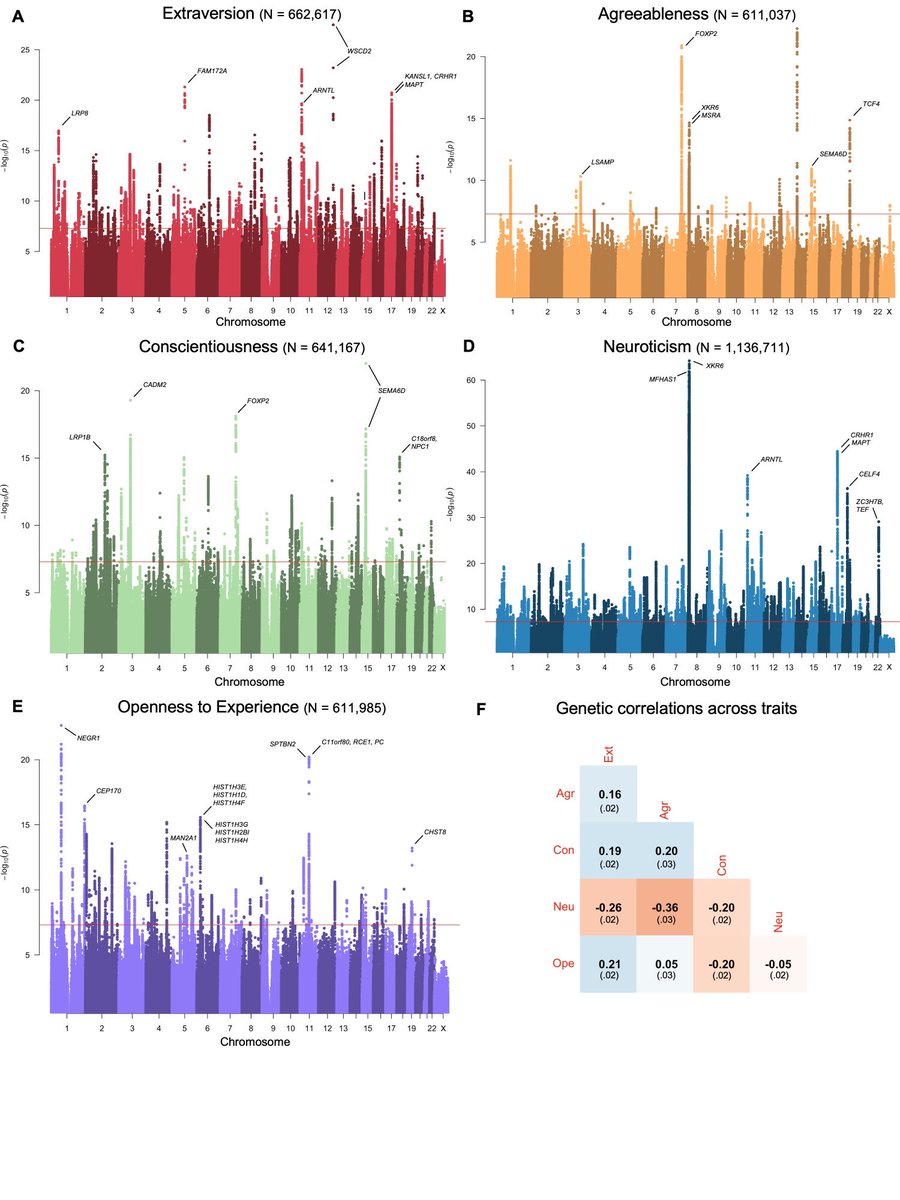
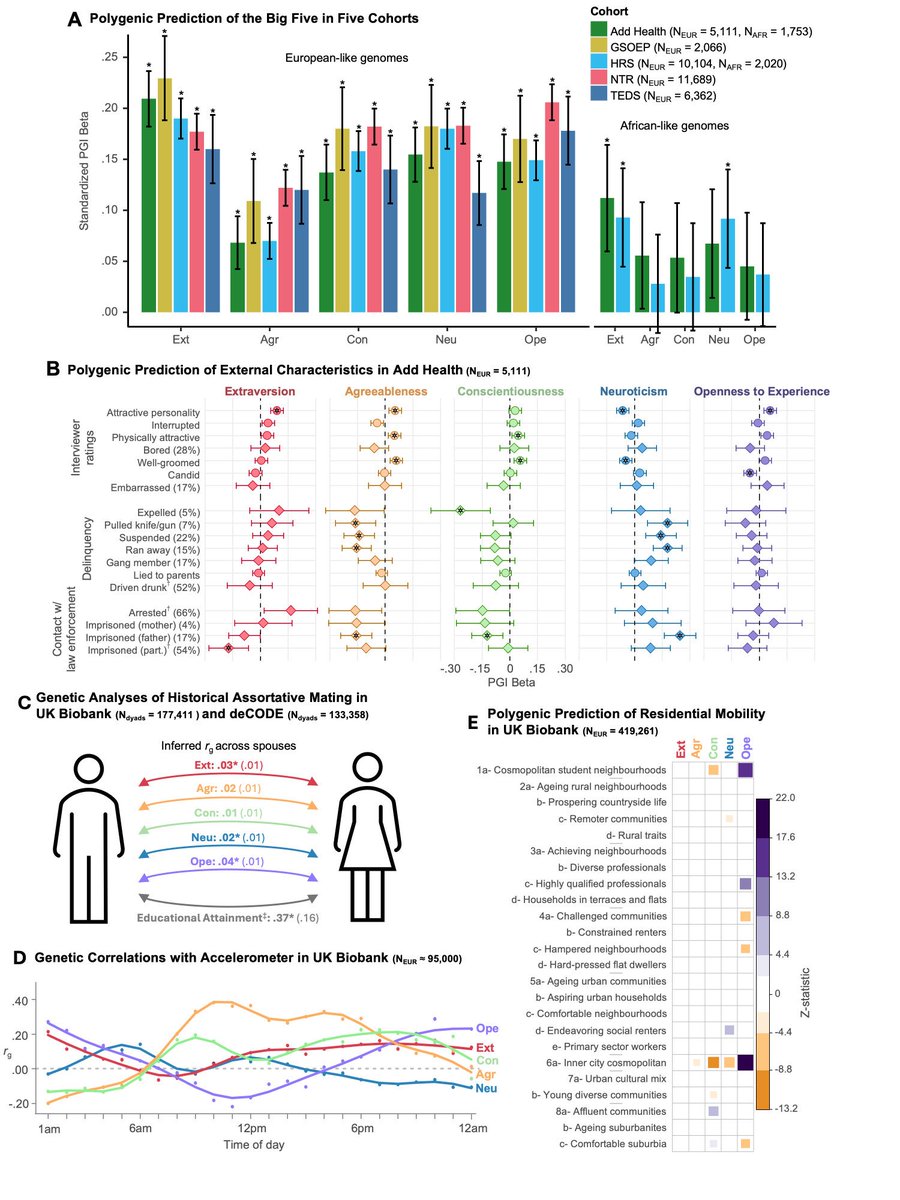
The ReGPC presents comprehensive GWAS of the Big Five personality in N=611K-1.14M and within-family GWAS in N=51K. In contrast to many other social/behav traits, pop GWAS of personality almost entirely reflect direct genetic effects. https://t.co/j5Esm4qHPC
@pttanksley in the @ERiskstudy & the #MCS found an externalising polygenic index links genetics to early-life self-control issues 🧬🧠. This could help identify at-risk youths for support before it leads to externalising behaviors 🚸@KingsIoPPN
https://t.co/aM3tm1Bmqu
🚨 New paper!
In this review, we explore factor indeterminacy and outline how we can use genetic data to test the validity of latent factors.
https://t.co/PALYML62El
With @Tedo_, @tuckerdrob, @kph3k, Andrew Grotzinger, and @michelnivard