Are you still struggling with the manual curation of TEs? Do you want to know the magic of cleaning TE MSAs with only a single button click?
Welcome to try TEtrimmer (paper will come soon)
https://t.co/PV8SUwokHp
I am also looking forward to discussing this with you in #ICTE2024
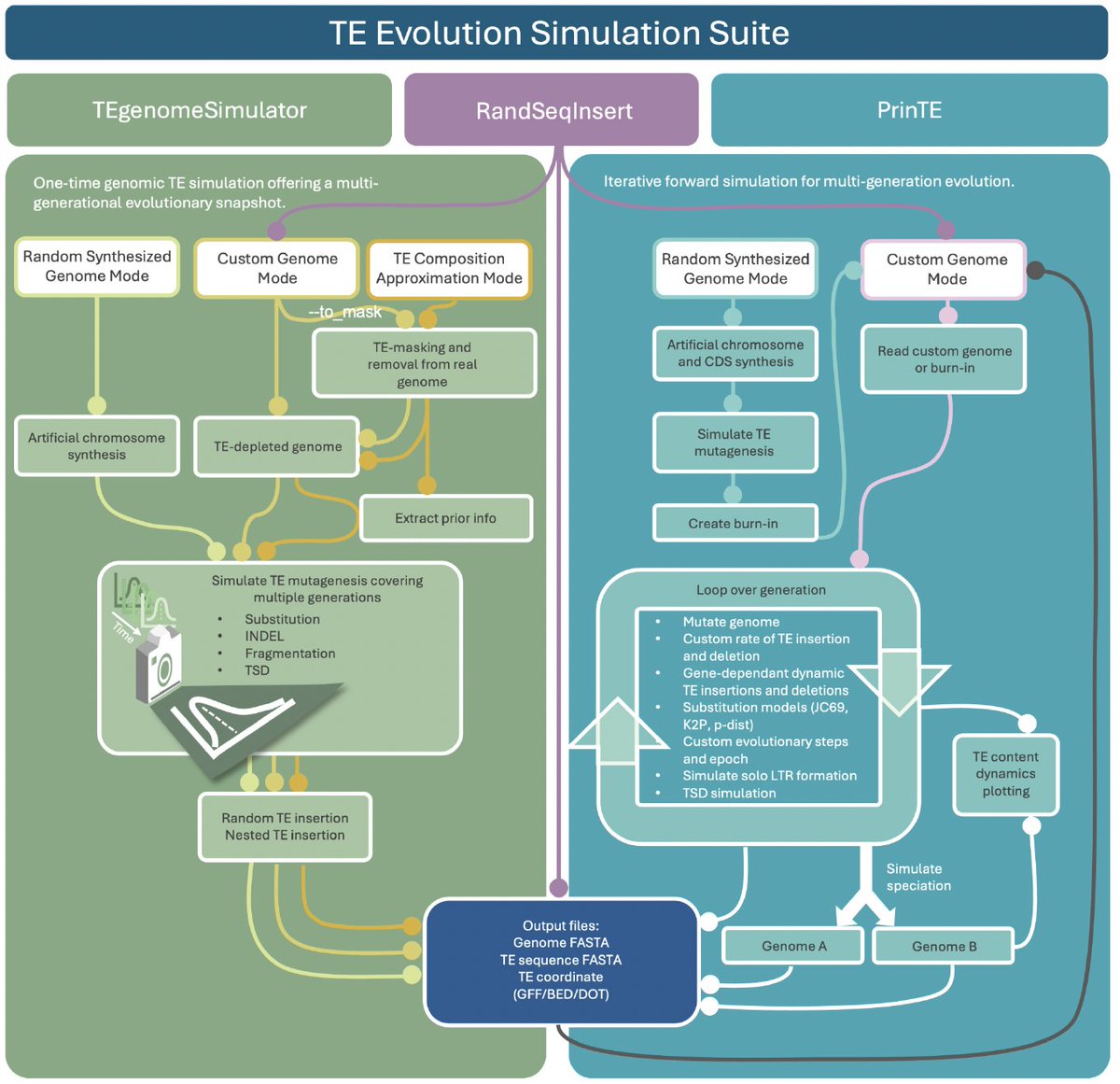
I want to share our latest work on a forward simulation framework on transposable element evolution. The TE Evolution Simulation Suite, or TESS, contains three components that can simulate many scenarios of genome evolution under the impact of TEs.
Hello world! I have a postdoc position immediately available in my lab. It will focus on identifying high-quality transposons in many genomes and finding their impacts in evolution and traits. Most works, including EDTA2 development and annotation of 400+ genomes, are done! 1/n
Between 2001-2010, the EU spent €200 million on 50 research projects studying GM crop safety for the environment, animals, and human health.
The conclusion?
No evidence shows GM crops carry more risk than conventional plants or organisms.
https://t.co/6oEBenPgyh
We're hiring! If you're looking for a postdoc position and are interested in #fungal genomics and/or giant transposons please apply. We're hoping to find someone with experience transforming A. fumigatus.
https://t.co/XtGxP56CeU
A team led by the @LeibnizIPK, incl. @Nils__Stein and @murukarthickj, reports a pangenome of barley comprising long-read sequence assemblies of 76 wild and domesticated genomes. The results were published in @Nature.
➡️PR: https://t.co/OPGj30Gnh6
➡️Paper: https://t.co/dtj63QWdkH
It is out: "Analyses of transposable elements in arbuscular mycorrhizal fungi support evolutionary parallels with filamentous plant pathogens"
@Blunt_Microbe@Ken_M_Mugambi
https://t.co/EcK5O4VmdY
🌱🧬Excited to let you know that I will be joining @RWTH as Professor in Molecular Botany this Fall.
In Aachen, we will continue to look at plant genomes and chromosomes, focusing on #RepetitiveDNAs, esp. #TransposableElements: Impact on regulation & evolution? Use in breeding?
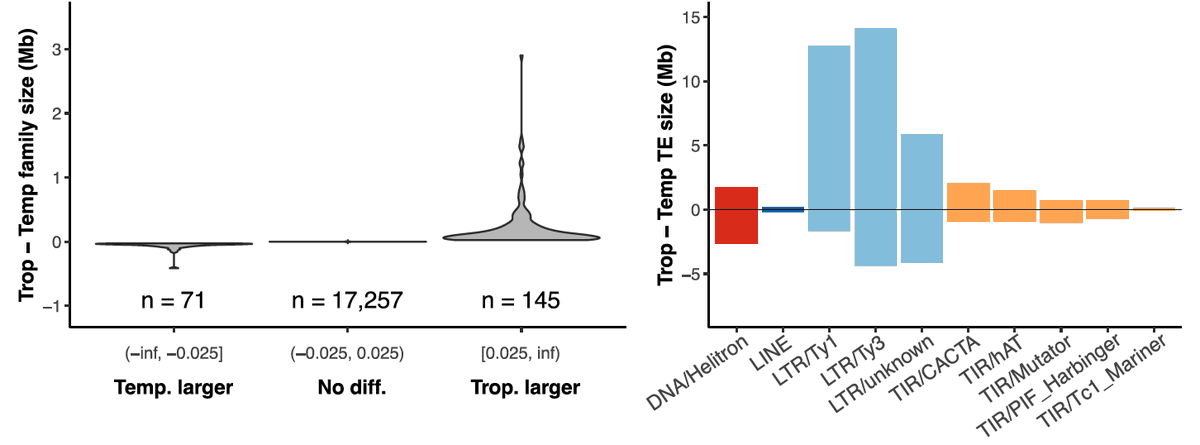
How TEs gain and lose between tropical and temperate maize inbreds? We found that tropical corns have 35Mb more TEs than temperates, and it's mainly due to a small number of LTR families that are young, less methylated, and more expressed in tropical maize.https://t.co/LbZDKwlkjN
Happy to share four strategies to annotate TEs and other repeats in maize and other plant genomes. You can shop for an approach depending on the goal, including gene-focused annotation, TE-focused study, comprehensive annotation, and pan-genome annotation: https://t.co/FQxjh9hRZ6
Just out 📣
It is my pleasure to share our latest review on #effector#proteases from plant pathogens by @jessiana_lee and yours truly : https://t.co/Cm43PSFYLL
🧬👩💻 Integrated learning for the win! By merging computational and molecular biology training, students are better equipped to tackle complex genome research. Read about this successful course model! #Genomics#EducationInnovation
https://t.co/bzwWMcLV0b
#bioinformatics peeps! Version 0.6.1 of oarfish—our tool for transcript quantification from long-read #RNAseq reads—is out! It brings some cool new features & quality-of-life improvements. Check it out in the link, but here’s my favorite new feature! 1/
https://t.co/8i4oEK1g32
Are you interested in an Introduction to Large Language Models; in the context of BioImage Analysis?
Join my @GloBIAS_ seminar this Tuesday 3pm CEST.
https://t.co/nilatkaLYp