Theory research group in quantum computing and simulation at the University of Strathclyde, Glasgow, led by Prof. Andrew Daley. Updates from group members.
★ Just published a new episode of The New Quantum Era: Adiabatic and Counterdiabatic Quantum Computing with Dr. Ieva Čepaitė. Listen: https://t.co/hLhr5K99F4
The first paper of this summer 😎 @CERNquantum program is out! In this work, @titant3k applied the Counterdiabatic Optimized Local Driving (COLD 🥶), developed by @HyperboIeva, to various spin systems, e.g. the ANNNI model. Go check out the preprint https://t.co/MyUFibxQvy!
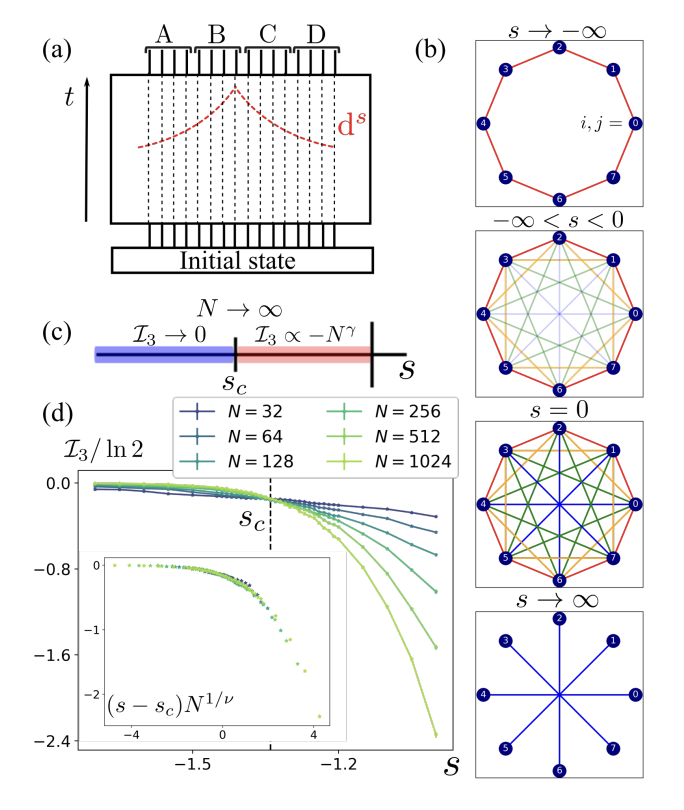
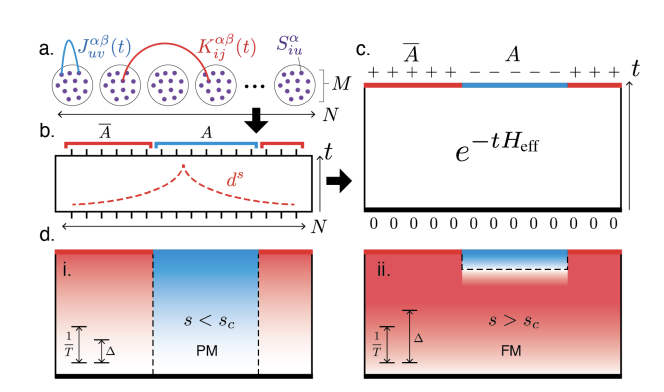
Quantum circuits with tunable-range interactions can probe a new dynamical transition in the propagation of correlations in quantum circuits. @Sridevi_K_, @quantum_daley, @qoqms, @PhysicsStrath, @BrandeisU
https://t.co/8q7c6xf4Pj
A short thread on some recent work, where we look at many-body quantum dynamics through the lens of Krylov complexity and find an interesting Trotter transition! Very happy with this one, and amazing work by Philippe Suchsland @mpi_pks https://t.co/HbHsD7Q9Wj
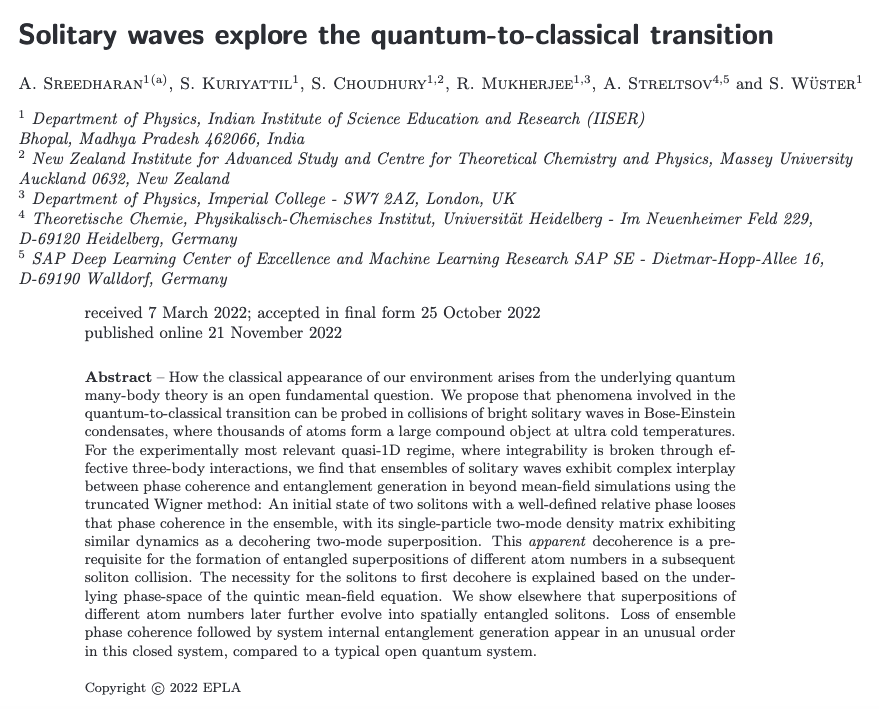
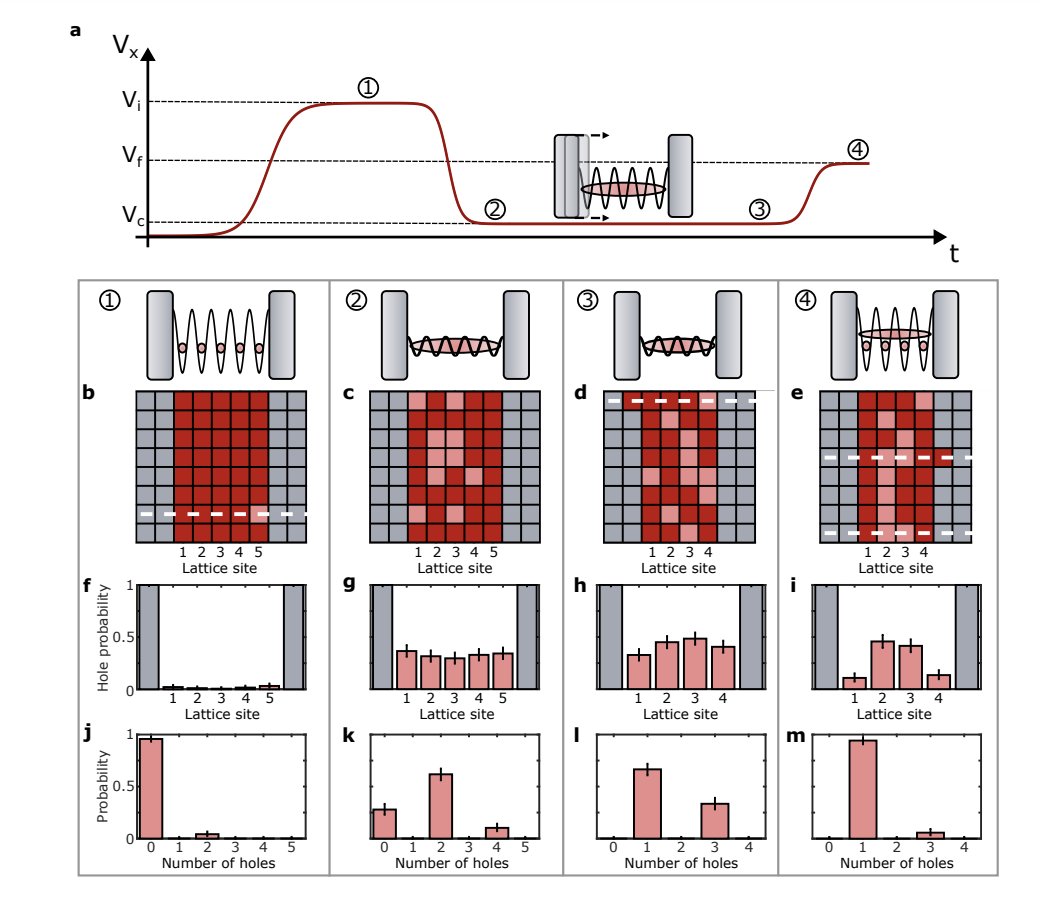
In our work (@IOPPublishing ), we simulate colliding quantum solitons with quintic interactions using truncated Wigner approximation to show that the post-collision state is hyper-entangled in spatial degrees of freedom and atom number within solitons.
https://t.co/TnaNxVfz4L
Summary:
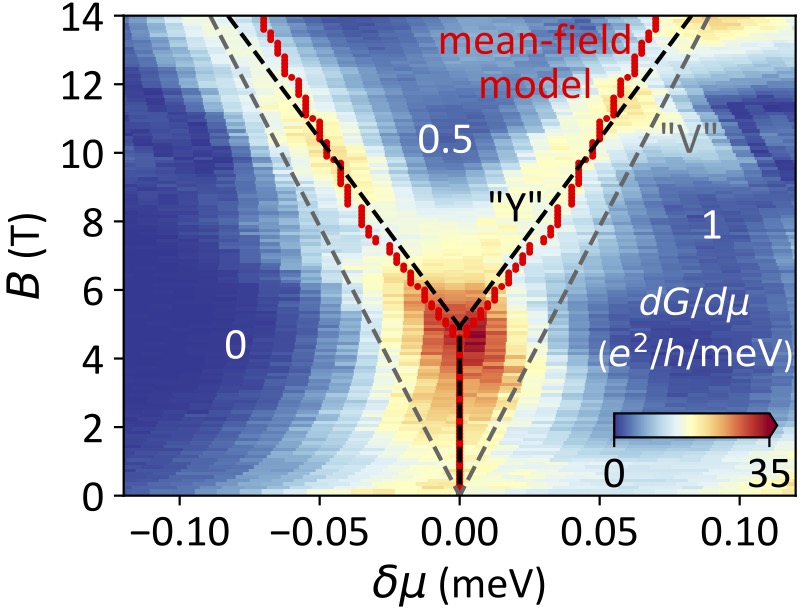
We report on a high-mobility quantum point contact in strontium titanate with surprisingly high critical magnetic fields, indicative of strong electron pairing
And yet another new publication from members of the group, this time in Nature electronics!
"A clean ballistic quantum point contact in strontium titanate"
https://t.co/V081g5P102
New publication from members of the group in Journal of Physics A: Mathematical and Theoretical
"Can multipartite entanglement be characterised by two-point connected correlation functions?"
https://t.co/kG0ybz7T86
Our latest in the arxiv this week: How to probe scrambling via operator distributions using mixed states and randomization, and avoiding costly OTOC measurements --> https://t.co/coLTOt3GEd - collaboration with P. Blocher, @Karthik_chinni1@SivaprasadOman1 !
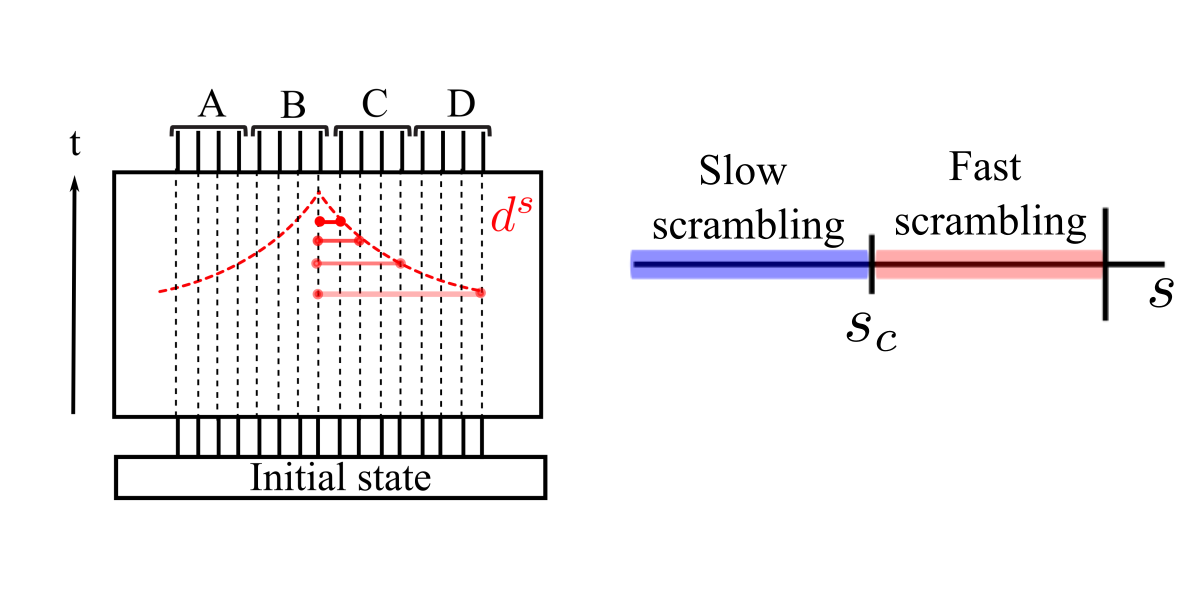
In our new preprint, we study a dynamical transition between slow and fast scrambling in both sparse and densely coupled quantum circuits. Excitingly, we identify the same phenomena in models that can be experimentally realized as well.
Our latest with @Manuel_muz : a quantum-optics-sy (?) take on measurement-induced entanglement phases. https://t.co/HRbn6FlwkU. What happens when interactions and scrambling compete with collective entangling measurements? ...
While preparing for application season, I am reminded that almost three years ago we were launching #QChaos2020 with the great @Pieter_Cl . Awesome speakers, from PhD students to senior researchers, spanning three continents. 24 talks can be accessed in https://t.co/c0TcbkC3dr
New preprint out by members of the group @CallumWDuncan and @quantum_daley along with colleagues at @strathEQOP:
"Commensurate and incommensurate 1D interacting quantum systems"
https://t.co/wdr2X1QBMX
New preprint out from members of the group @Sridevi_K_ T. Hashizume and @quantum_daley along with G. Bentsen of @BrandeisU!
"Onset of scrambling as a dynamical transition in tunable-range quantum circuits"
https://t.co/GZSXLrTiqN
⇝ ⚛ PhD positions available in EQOP ⚛ ⇜
Posts related to atomic quantum technologies for sensing are open for experimental PhD students to start in October 2023.
Are you interested in atomic clocks, atom interferometry, quantum magnetometry, MEMS , cold atoms, BECs, …
My episode of @insideqm is out now! Hear more about me, my research, and all things quantum.
I very much enjoyed this conversation, hope you find it interesting — and thanks to @PhysicsSteve for having me on!
I am at the #APSMarchMeeting and will be presenting a talk on our recent work on fast scrambling dynamical transition in quantum circuits on the 7th of March in the Session G67: Neutral atom qubits and applications session at 1:42 pm.