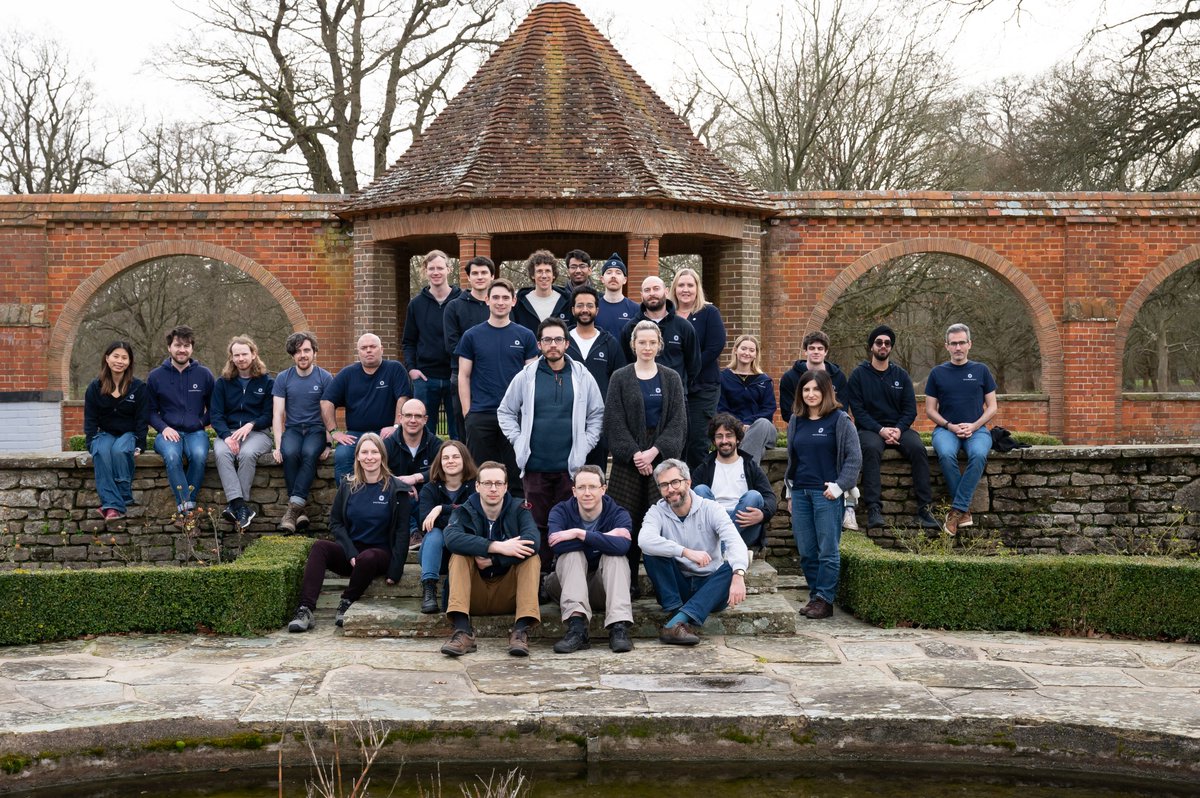
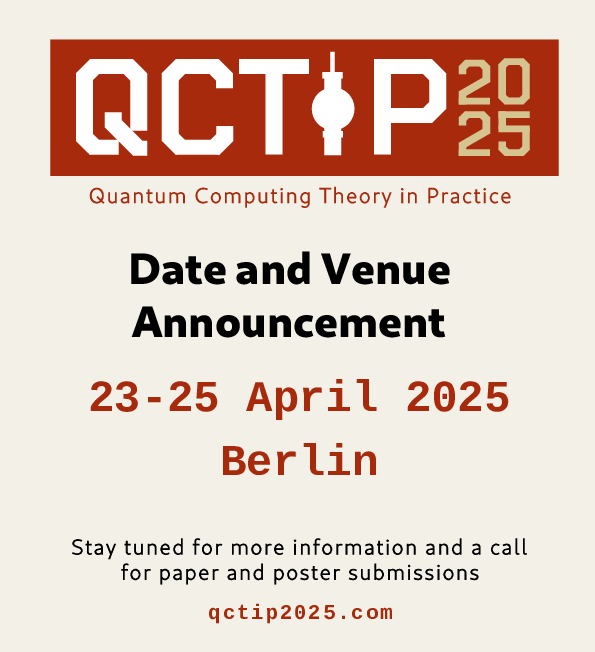
We have multiple open postdoctoral positions in quantum computing theory at the University of Bristol, to work on topics including quantum algorithms, verification of quantum systems, quantum complexity theory, ... - next deadline 18 Jan https://t.co/cisD58Eanw
@4gravitons This is a good question, but my feeling is no, because the problems that are important in industry tend not to be ones where query complexity is relevant. And some examples where it is (like unstructured search) have been understood for a long time.
Excited to see that the Aaronson-Ambainis conjecture has apparently been proved! But depressed to see the amount of completely incorrect commentary on its implications, so here's an attempt to clear things up.
For Aaronson-Ambainis, you have to remember that in quantum computing we say "query complexity" the way that biologists say "in mice."
As in "we can cure cancer in mice" or "we know the power of QCs in query complexity."
Anyway, quantum query speedups turn out to have very little relevance to things like simulating quantum systems more efficiently than classical methods can. Whether this conjecture was true or false, it wouldn't impact practical quantum computing. But great to know the answer!
So this result is great to see, and sharpens our intuition about how quantum query algorithms behave. But we've known since 1999 that significant quantum query speedups need some kind of special structure! This doesn't change that intuition.
@S_Flammia I fully agree with this take. When I've organised conferences and served on PCs, my goal was always to optimise for the audience's experience, not for the authors. Of course, soon AI may be delivering the talks, as well as doing the research itself...
Thrilled to announce the next stage of our journey. Huge thanks to our stellar team and our amazing investors (@soundboy and many others) - onward to quantum advantage!
We’ve raised $34M to accelerate our mission to make quantum useful now. Thank you to @pluralplatform , @PlaygroundVC, @novoholdings who co-led this round, and to our returning investors @AlbionVC , @latitudevc and @ParkwalkAdvisor for backing this next chapter.
@henryquantum@gregrosent Unfortunately, it turned out that there was a bug in Lemma 2.1, and the overall proof isn't correct. We've withdrawn the paper from the arXiv and are thinking about how to fix it.
Can low-depth QAOA provide exponential quantum speedup over the best known classical heuristics on any optimization problems?
Yes! ✅ @quantumashley and I show this in our new paper:
https://t.co/NqdPtP6XU1
which we did while I was a visiting fellow @PhasecraftLtd! (1/6)
@DulwichQuantum Something I particularly like about this example is that the objective function the author has chosen can be minimised using a greedy algorithm :)