I sat down and did some schizo ranting for my attempt at a book I might name "Malware 4 Noobs" (no idea yet).
Here is my introduction segment, part zero (no reforms or changes made yet).
If you're noob, please read and give feedback.
https://t.co/h3p0gVpeRR
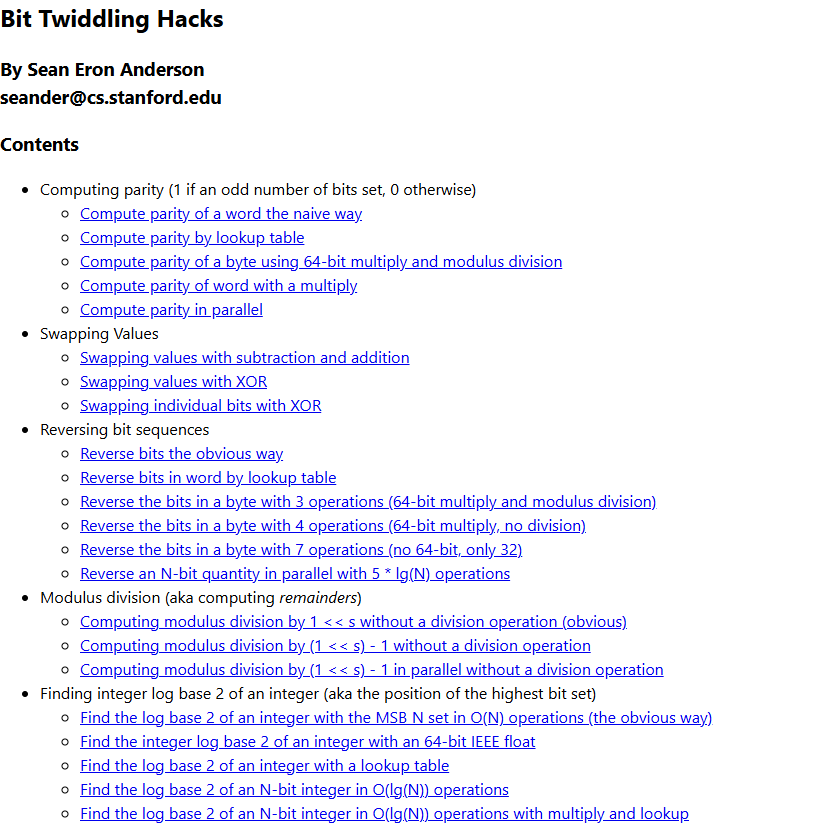
Sean Eron Anderson collected hundreds of bit manipulation tricks into a single page
many of them became classic techniques used in compilers game engines operating systems and performance-critical code
one of the best resources for low-level bit hacks ever put together
GPUs need a new operating system. We're stuck in this paradigm of launching kernels when really we have 256 independent processors with various synchronization and communication primitives.
there are a lot of benchmarks that suggest 5.6 sol is the best model in the world right now, but the most reliable way to tell is that elon is obsessed with me again
This article gives a good educational content regarding price discovery and lead-lag relationships. A couple of thoughts from my side:
1. Some of the numbers are correct, but a lot of are wrong mostly due to the fact that analyzing HFT data with 10/50/100ms windows is a bad idea.
2. Crypto is already very, very sophisticated in terms of the latency on the best exchanges, so the windows should be as small as possible in order to give you decent conclusions.
3. If you think that Binance does not lead Lighter on ETH (and that's the conclusion from the chart) then you cannot be further from truth.
4. Lighter does not lead Hyperliquid in any trading sense. You have this kind of chart only because of the matching engine differences, not the actual leading. It's all caused because from those 3 exchanges, most of the information comes from Binance and if execution is faster on Lighter then it will always be earlier than Hyperliquid even if this kind of information gives you nothing that you can monetize - it's no the methodology that you are interested in.
5. Assuming that Binance leads all the markets and you have exchange A in the same datacenter and exchange B in different, according to this methodology A will always lead B even if A is tier-5 zero-turnover exchange and B is Bybit. The numbers are ok, but the methodology is wrong if you think about price discovery from HFT perspective.
6. Peak-lead-lag analysis is good for educational purposes, but it's not what is measured or analyzed in HFT and it's not what you optimize you algorithms for.
7. In most cases Binance is way faster than it is on the graph (and a lot other exchanges are already much faster). The crypto has changed massively in that aspect in recent years.
8. Ligher impact on price discovery is negligable.
9. Final remark - the beauty of HFT is that the devil is in the details. If you want to make a proper analysis on such thing like price discovery in HFT perspective, the number of assumption that you need to test, the number of timestamps that you need to consider and the number of methods for noise filtering that you need to apply is tremendous.
@choffstein
“You have to add a correlation estimate” — yes, and your correlations come from your factor model. If you have a good model which has captured all relevant factors, and you have hedged the ones that you don’t want exposure to, then the volatility of your portfolio will be driven only by idiosyncratic volatility. The only other way to blow up your portfolio volatility is via unhedged, missing, or badly estimated factors. For example, an increase in volatility of the market factor relative to idiosyncratic volatility will increase average pairwise correlation, which will lead to higher volatility of your portfolio if you haven’t hedged this factor, or if you have hedged it badly. But if it’s hedged correctly then the change in correlations washes out (the increase in correlation between your longs drives an increase in volume of your long portfolio, and similar an increase in vol of your short portfolio, but it is matched by an increase in correlation between your longs and shorts, which now hedge each other better, and the net effect on overall portfolio volatility is zero).