Just posted a preprint on our new spatial genomic recording system, baseMEMOIR.
https://t.co/ef5i8FnIOw
Motivation: Cells divide, differentiate, and migrate to form exquisitely organized tissues. Reconstructing the dynamic histories of individual cells, including their lineage relationships and ancestral states, is essential for understanding how intrinsic and extrinsic signals generate tissues during development and in regenerative medicine.
Engineered genomic recording systems can reconstruct cell lineage histories from endpoint measurements. However, existing methods either require sequencing (disrupting spatial organization) or have been limited in memory size and scalability.
To address this need, @ChadlyDuncan, Kirsten Frieda, and others in the lab created a high memory capacity image-readable recording system termed baseMEMOIR.
Our first paper is out in @CellCellPress! Led by @born2raisecell, we present a programmable reaction-diffusion system that generates synthetic protein waves, oscillations, and patterns for spatiotemporal circuit design and FM data-encoding in human cells. https://t.co/lNRtRdJAxx
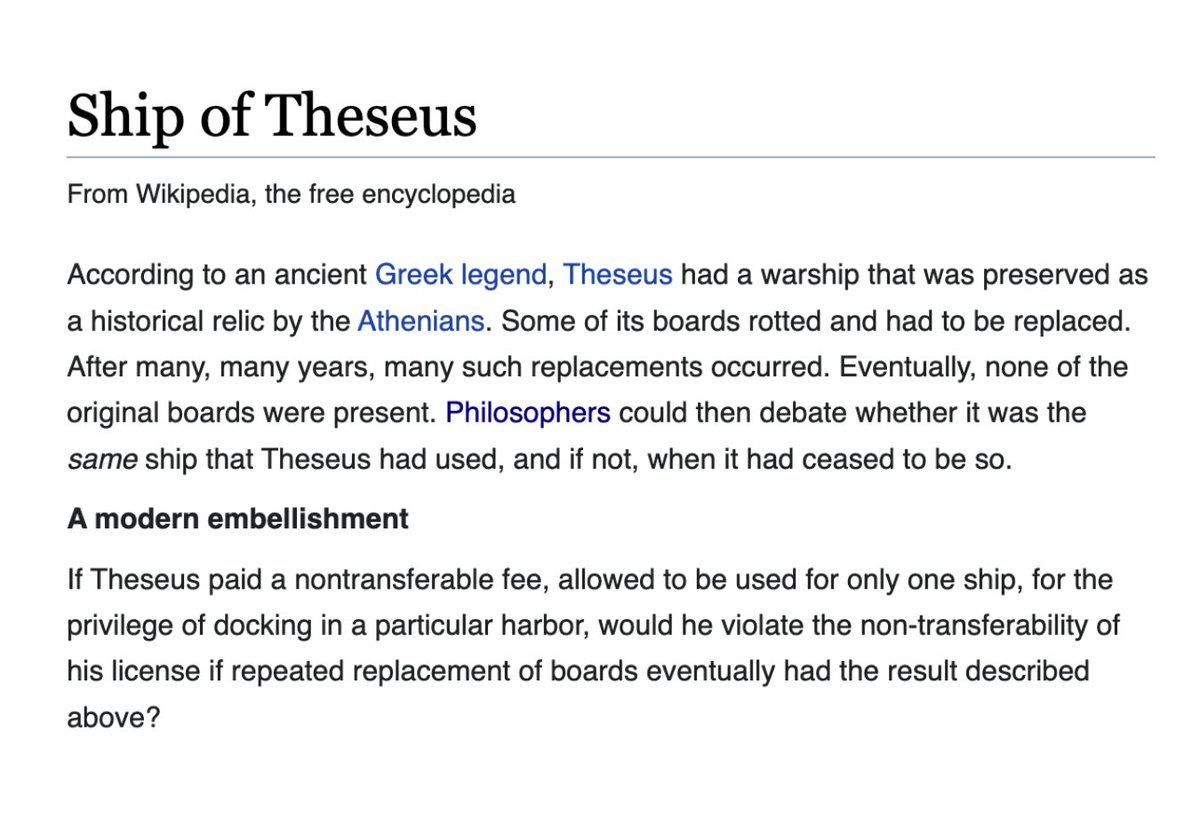
The "Ship of Theseus" article has been edited 1792 times since it was created in July of 2003. At present, 0% of the phrases in the original article (seen below) remain.
We're depositing parts on @Addgene and hope that our tools join the MoClo-YTK ecosystem to make yeast synbio more accessible, alongside recent work from @willmshaw, @MoKhalilLab, and @ProfTomEllis (https://t.co/OaOrAPmc3g), whose previous tools have enabled a lot of our work.
Other work has also created the AID2 system, which uses 5-Ph-IAA to induce the TIR1-AID complex. Combining these with the previous TIR1 mutations, allow us to build a 5-Ph-IAA-inducible system, which activates at 60X, and doesn't respond to NAA at all!
Recently engineered variants of the TIR1 and AID proteins, which are generally used as degron systems, block them from E3 ubiquitin ligase pathways, and allow for auxins to induce heterodimerization. Our system adapted for yeast uses NAA and achieves 80X fold activation!
The danoprevir-induced system was adapted from the NS3 system first engineered in mammalian cells. DNV induces heterodimerization of a DNA binding and activation domain. It took us some work, but we were able to build a system with low basal and high maximal expression!
We ported an abscisic acid-inducible system from mammalian cells and optimized the activation domains to achieve high maximum expression, and over 300X induced fold change!
Our set of doxycycline-inducible systems were developed after testing three advanced Tet-On variants, has basal expression comparable to background cells, and maximum expression 1.5X higher than the yeast pTDH3 promoter.
Need a small molecule inducible system in yeast? We ported FIVE (doxycycline, ABA, DNV, NAA, and 5-Ph-IAA) from mammalian systems and optimized them!
My work with @rickyolaughlin, @AndrewLezia, @wngamkan97, and @PhilEmmanuele is out in @ACSSynBio today!
https://t.co/t5fcssexIB
It's finally out... Will Shaw's awesome YTK add-on toolkit for rapid parallel yeast genome engineering is published today in @ACSSynBio@willmshaw@MoKhalilLab > If you do yeast synthetic biology, you're going to need this game-changing kit from @Addgene https://t.co/hpAU42HNMP
Our latest paper is out today (with @axmukund@JoshTycko and many other talented trainees): High-throughput functional characterization of combinations of transcriptional activators and repressors, at Cell Systems https://t.co/XinGzuRmNJ
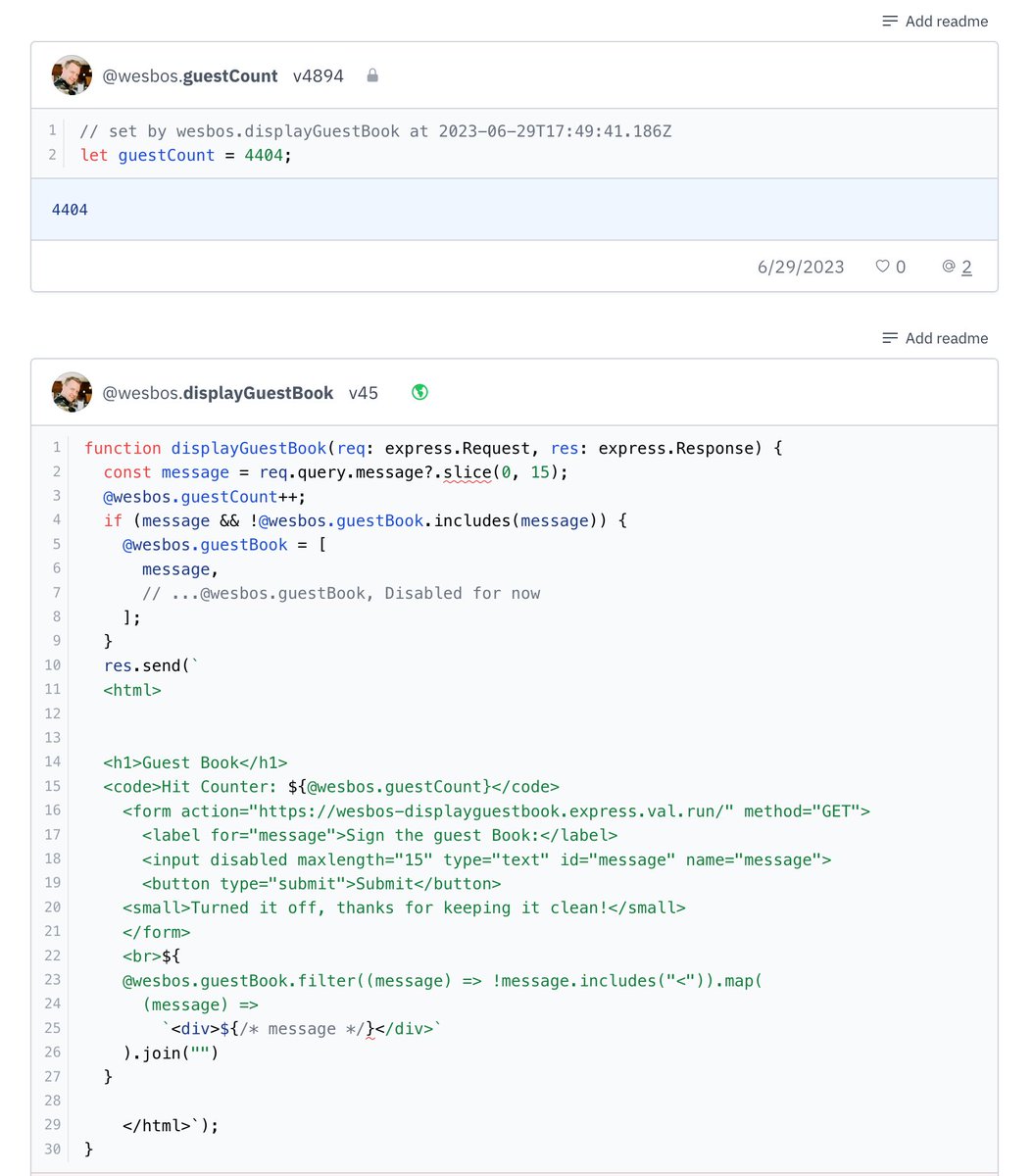
It's been a while since I've seen something as neat at https://t.co/mLd8fe3GUs
It's serverless functions meets myspace? You have to try it.
Just start coding - nothing gets in your way. variables persist, great for iOT, cron jobs, npm support...
Two decades ago @AvigdorEldar & @BarkaiLab introduced concept of shuttling, in which protein circuits push morphogens away from their source, or smush them into narrower regions. We have now reconstituted shuttling in mammalian cell culture: https://t.co/mlQPLULGGS.
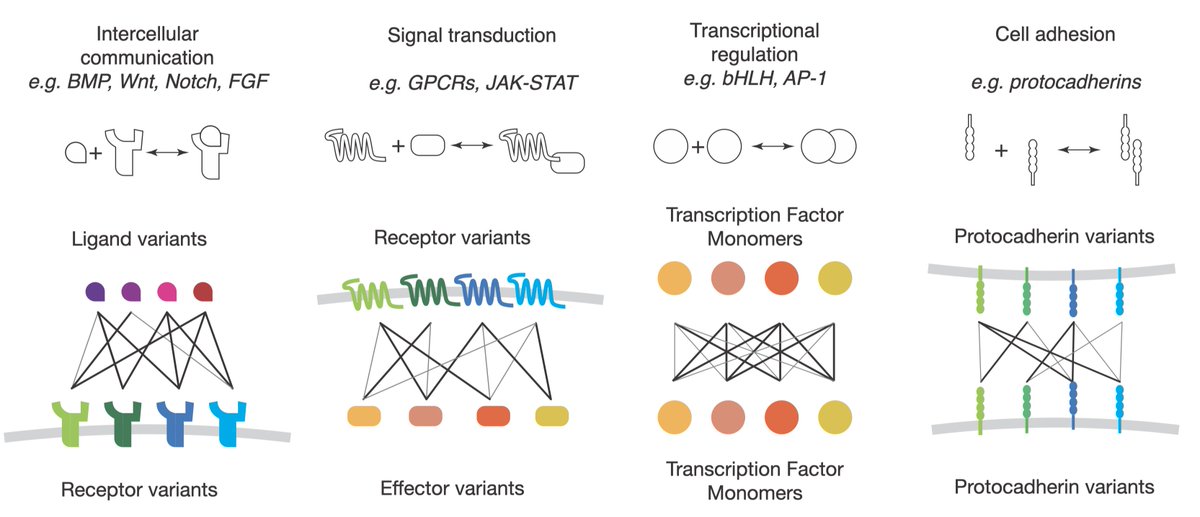
“Messy” many-to-many protein networks control signaling, transcription, adhesion, etc. Is this a bug or a feature? In this new perspective, we argue for feature, critical for multicellularity. With brilliant @HeidiKlumpe, @jgojalvo, & @yaronantebi. https://t.co/E1z4Yh8HMn
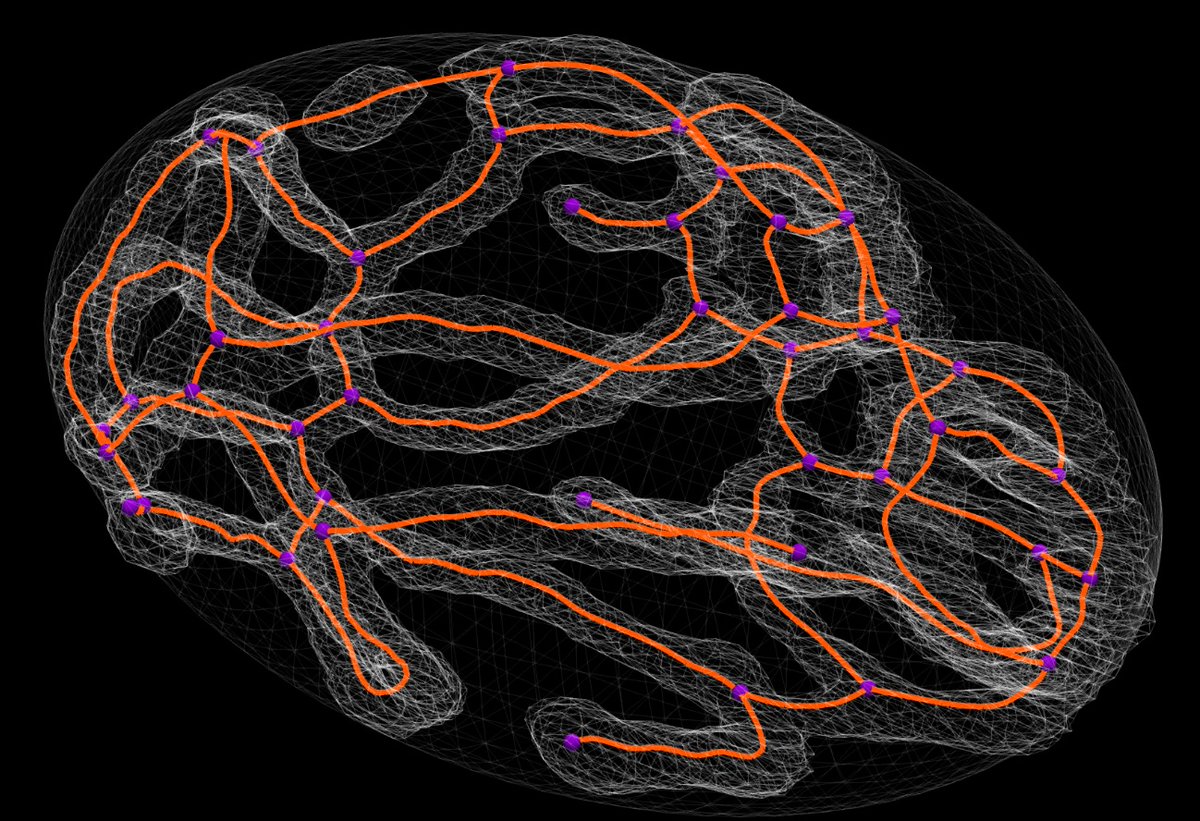
Where does the structure of mitochondrial networks come from? In a new paper from Greyson Lewis, we review mitochondrial through the lens of graph theory 🧵
https://t.co/ZYEMugTdj4
I’ve spent the last few weeks making Wiki Wall Street 📖📈! It’s the stock market game but for Wikipedia articles! You can buy and sell “stocks” of Wikipedia articles priced by their daily pageviews — join and play at the link below!
https://t.co/TD39GnevjX