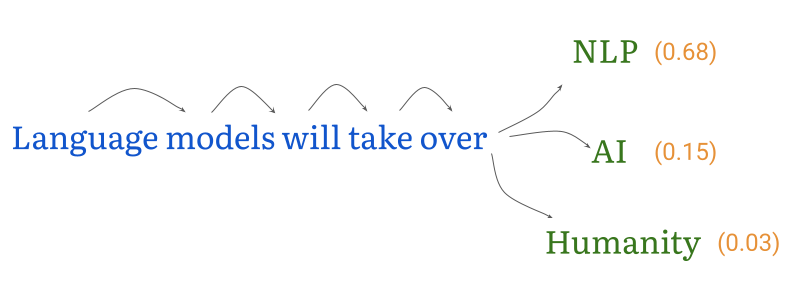
LLMs like chatGPT are all the rage now, but language modeling has a long history before them. I outline the history of language models from when they were simply a sub-area within NLP, to today, when they are expanding beyond NLP to many other areas of AI.
https://t.co/vk6QQiuydK
@hmkyale @YaleSEAS @dragomir_radev@Yale@YINSedge@YaleCompsci Very sad to learn this :( Apart from being a great researcher, he had tremendous intellectual breadth. I once saw the novel 2666 on his table and said that it's a difficult book. He replied, yes, especially because I am reading it in Spanish! I'll miss him :(
@yoavgo@nlpnoah@ipnosimmia I've worked in the industry for ~6 years after my PhD and most managers I've had have cared about their reportees as much as my academic advisors. The additional checks industry has with anonymous manager feedbacks along with mandatory trainings helps too.
Really enjoy the collaboration with Ming Zhong, Tao Yu @taoyds , Ahmad Zaidi, Mutethia Mutuma, Rahul Jha @rahuljha , Asli Celikyilmaz @real_asli , Ahmed Hassan Awadallah, Yang Liu, Xipeng Qiu @xpqiu , Dragomir Radev! [2/n]
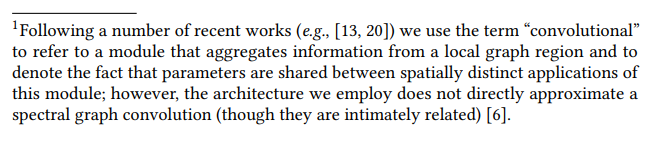
Reading up on recent work in GCN's. I didn't realize that the word convolution is used quite loosely in this stream of work :) The PinSage paper has a nice footnote:
Hello, Twitter! On 2020 August 02 I will be launching my rewrite of Sheridan Le Fanu's queer vampire classic, entitled CARMILLA REVAMPED on https://t.co/CG6lLCbGbe! (1/10)
@nasrinmmm I was a long term emacs user, but vs code won me over a few months back. The remote dev experience was amazing + all the extensions for doc strings, pylint etc + emacs keybindings 🙂
@vivekramac A big part of in-person interviews is testing collaboration abilities: if the is candidate able to work with the interviewer to clarify the problem and potential solutions.
Find how we're bringing summarization to Office using state-of-the-art deep learning models: https://t.co/ZCZZlObPbS. To collect data for our models, we came up with a unique hierarchical annotation methodology called Artemis, find more details here: https://t.co/atFKHiqdMP.
Grateful that my #acl2020nlp theme paper "The Unstoppable Rise of Computational Linguistics in Deep Learning" was accepted. Traces how the nature of language has and will impact neural network architectures, including variable binding in Transformer. https://t.co/jJ3bXNaH3g
Surviving every AI wave, two kernels have consistently been the beating hearts of Natural Language Processing:
Datasets and Metrics
Today we release "nlp", a library to easily share & load data/metrics already providing access to 99+ datasets!
Try it👉 https://t.co/37pfogRWIZ
How can you successfully train transformers on small datasets like PTB and WikiText-2? Are LSTMs better on small datasets? I ran 339 experiments worth 568 GPU hours and came up with some answers. I do not have time to write a blog post, so here a twitter thread instead. 1/n
Not everyone can afford to train huge neural models. So, we typically *reduce* model size to train/test faster.
However, you should actually *increase* model size to speed up training and inference for transformers.
Why? [1/6] 👇
https://t.co/GcjytCEmox
https://t.co/HatYO5GfhP
"[W]hile the bias is monotonically decreasing as in the classical theory, the variance is unimodal or bell-shaped: it increases then decreases with the width of the network."
"Rethinking Bias-Variance Trade-off for Generalization of Neural Networks" – https://t.co/3wpG4zlA8v


![Eric_Wallace_'s tweet photo. Not everyone can afford to train huge neural models. So, we typically *reduce* model size to train/test faster.
However, you should actually *increase* model size to speed up training and inference for transformers.
Why? [1/6] 👇
https://t.co/GcjytCEmox
https://t.co/HatYO5GfhP https://t.co/ivKyNo1ve0](https://pbs.twimg.com/media/ESXC8SvVAAAt0H4.jpg)







![Eric_Wallace_'s tweet photo. Not everyone can afford to train huge neural models. So, we typically *reduce* model size to train/test faster.
However, you should actually *increase* model size to speed up training and inference for transformers.
Why? [1/6] 👇
https://t.co/GcjytCEmox
https://t.co/HatYO5GfhP https://t.co/ivKyNo1ve0](https://pbs.twimg.com/media/ESXC9p0U8AAYz5Z.jpg)
![joeddav's tweet photo. "[W]hile the bias is monotonically decreasing as in the classical theory, the variance is unimodal or bell-shaped: it increases then decreases with the width of the network."
"Rethinking Bias-Variance Trade-off for Generalization of Neural Networks" – https://t.co/3wpG4zlA8v https://t.co/gn7YjJljfq](https://pbs.twimg.com/media/ESHMNMDXUAM_hkm.jpg)


