You incorrectly stated China’s approach as merely blocking it. In parallel they also deployed a complete system of their own in record time that offers a better alternative. Your incomplete option would not solve India’s problem. Why not suggest India’s own FULL SCALE alternative that serves the entire region.
Starlink is no longer just expanding It is steadily surrounding India. 🇮🇳
It is already operational in Bhutan, Bangladesh and Sri Lanka, while Nepal is also moving towards adoption. Every neighbour India has except China is either on Starlink or getting there.
Now connect the dots.
Over the past few years governments changed in Bangladesh, Sri Lanka and Nepal.
Each time, Starlink was not just embedded but actively used to keep protest movements connected when those governments tried to shut the internet down.
We have seen in Iran exactly how US-controlled satellite internet becomes an operational tool the moment a government tries to cut its own network.
Starlink bypasses ground infrastructure entirely, No government can filter, monitor or cut it through conventional means once it is being used.
China looked at this exact scenario and banned Starlink entirely and It built its own satellite internet through the Thousand Sails constellation instead.
India currently holds Starlink at the licensing stage and has not yet allowed full commercial rollout.
Pausing is the right instinct but it is not a permanent answer. India needs to decide now, before the rollout begins, whether it wants a US-controlled satellite network operating on its soil or whether it takes China's approach and shuts the door completely.
More than 30,000 people packed Marvel Stadium in Melbourne yesterday to see Modi. Albanese was on the same stage. Anti-immigration protesters gathered outside. The usual commentary followed: Why are these people more loyal to India than Australia? Why is a foreign leader holding political rallies on our soil? Where is the assimilation?
Let us work through this with some numbers and some common sense.
First, the crowds. India has 1.4 billion people. The Indian diaspora is the world's largest, at over 32 million. People of Indian origin now make up more than 5% of Australia's population. India-born Australians have just overtaken England-born Australians as the largest overseas-born group in the country. When the Prime Minister of a nation of 1.4 billion visits a country where his diaspora numbers in the hundreds of thousands, large crowds are a base rate phenomenon, not a loyalty crisis. Modi is also genuinely popular. You do not have to like his politics to acknowledge that he draws crowds that most world leaders cannot.
Second, the "foreign leader holding a rally" framing. Every world leader engages with their diaspora abroad. Trump gets grand receptions in India. Obama addressed thousands in Kenya. Macron holds townhalls with French citizens overseas. Diaspora engagement is standard diplomacy. It builds people-to-people bridges, facilitates trade, and strengthens bilateral relationships. Albanese was standing right next to Modi at Marvel Stadium. He called Modi "the Boss" during the 2023 Sydney event. This is not a hostile foreign incursion. It is a jointly hosted diplomatic event that both governments wanted.
Third, and this is the uncomfortable part, let us talk about assimilation.
Those demanding assimilation rarely define it. What exactly do they mean? Language? Indian immigrants in Australia speak English. Rule of law? Indians in Australia have among the lowest crime rates of any immigrant group. Economic contribution? Indian Australians are disproportionately represented in medicine, engineering, IT, academia, and small business ownership. They are high-income, high-education, high-tax-paying residents. Family stability? Indian families in Australia have among the lowest divorce rates and strongest intergenerational support structures. Not being a burden on the state? Indian immigrants are net contributors to the Australian economy and social security systems.
So what is left? Is it religion? Skin color? Food? Festivals? The willingness to stop being visibly Indian?
That is not an assimilation argument. That is a racism argument wearing a policy hat.
Full cultural integration, including interracial marriages, deeper social mixing, and the gradual blending of traditions, happens over generations. It always has. The Italians in Australia were once considered unassimilable. So were the Greeks. So were the Vietnamese. Today they are "Australian" without anyone questioning it. The Indian community is earlier in that arc. Give it time. It is not something that can be forced or demanded. It happens naturally when people live alongside each other.
Finally, the economics. Australia runs a trade surplus of over $6.5 billion with India. Bilateral trade hit $24.1 billion last year. India's exports to Australia have more than doubled in four years. Since January 2026, all Indian exports enter Australia duty-free. India is the world's fastest-growing major economy. Australia is betting its economic diversification strategy on the India relationship to reduce dependence on China.
In this context, protesting the Indian Prime Minister's visit is not just xenophobic. It is economically illiterate.
Citizens of any country should put their country first. No one disputes that. But attending a diaspora event for the leader of your country of origin is not disloyalty. It is not an endorsement of a political party. These are not election rallies. They are cultural and diplomatic gatherings. An Indian Australian cheering Modi at Marvel Stadium and then going home to pay Australian taxes, follow Australian laws, raise Australian children, and contribute to the Australian economy is doing exactly what a good citizen does.
Unlike many modern nations that were founded on a constitutional idea, India is a civilizational state. Its people carry deep cultural, linguistic, and spiritual bonds that do not dissolve at immigration counters. That is not a threat. It is an asset. A diaspora that maintains strong ties to its roots while building a life in a new country creates the "living bridge" that both Modi and Albanese described. The alternative, a diaspora that severs all connection to its origins, is poorer for everyone.
The protesters outside Marvel Stadium had every right to be there. Free speech is non-negotiable. But their argument does not survive contact with the data.
Xbox CEO and Indian Asha Sharma just fired 3,200 American employees while Microsoft files for thousands more H-1B visas to bring in foreign replacements.
We cannot keep allowing them to import cheap labor at the expense of the American people.
Prioritize Americans first! 🇺🇸
@visonmilan So far they did not invent technology, mostly licensed it and turned it into service. The same would be to use Starlink or Chinese equivalent platforms and retail to consumers. That would be hailed in India as some great achievement.
Next in who after the Ramanujan series?
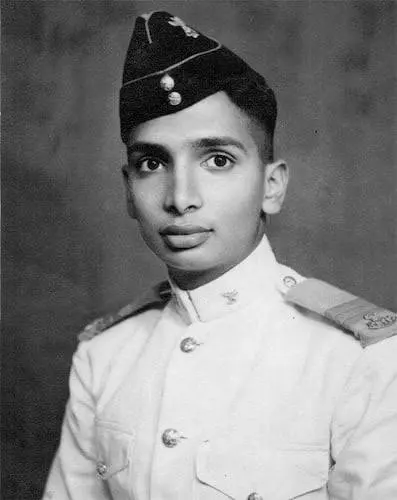
At a tender age of 16, a brilliant but completely unguided boy from Tamil Nadu joined the National Defence Academy & was commissioned into the Indian Navy's electrical branch . He did not have the luxury of a quiet university setting; he was trained in practical skills to maintain weapons systems on warships.
But Arogyaswami Paulraj possessed an insatiable, self-taught obsession with the advanced mathematics of signal processing, control theory & information theory. He studied advanced matrices & random variables by lamplight on naval ships.
By the late 1970s, India faced a serious strategic challenge. After the 1971 Indo-Pak War exposed weaknesses in imported sonars, the Navy needed an advanced anti-submarine warfare system but was blocked by international export restrictions. The Navy turned to Paulraj, then a rising officer with a PhD from IIT Delhi (earned while still in service). He was tasked with leading a major indigenous project to develop a world-class hull-mounted panoramic sonar from scratch.
Operating under intense resource scarcity, Paulraj’s mathematical genius took over. He designed complex signal-processing algos that could filter the chaotic, deafening acoustic noise of the ocean to pinpoint enemy submarines. The resulting system, APSOH (Advanced Panoramic Sonar Hull), inducted in 1983, completely stunned global military observers. It did not just work, it outperformed contemporary Western systems.
After setting up major defense labs in India, Paulraj retired from active naval service & arrived at Stanford University in 1991 as a research associate. This is where the story shifts from military history to modern legend. While working on signal separation experiments for airborne military reconnaissance, Paulraj noticed a strange, fleeting physical phenomenon.
When a radio signal is transmitted in a crowded area (like a city with buildings), it bounces off walls & scatters into 1000s of chaotic, distorted paths. Engineers treated this scattering as a nightmare, multipath interference that corrupted data.
Paulraj had a paradigm-shifting realization rooted in multi-variable calculus & spatial matrices: What if the scattering was not a bug, but a feature?
He realized that if we used multiple antennas at the transmitter & multiple antennas at the receiver, we could use advanced matrix mathematics to isolate those scattered paths & stream parallel, independent channels of data over the exact same frequency, at the exact same time.
He called it MIMO (Multiple Input, Multiple Output).
When he 1st proposed it, the academic world mocked him. Prominent profs & industry skeptics told him it violated the laws of physics & information theory. They claimed it was mathematically impossible to multiply data speeds w/o expanding bandwidth.
Paulraj did no back down. He built his own prototype, founded a startup & proved the mathematics in real-world silicon. He designed the microscopic architecture, the microchip algos that allowed small devices to execute these hyper-complex spatial matrix calculations in fractions of a microsecond.
If we look at the device we are using to read this right now, look at the top corners of our screen. We cannot see them, but embedded inside the frame of our phone are multiple microscopic antennas operating on Paulraj’s exact MIMO-OFDMA mathematics.
Every single modern 4G network, 5G network & high-speed Wi-Fi router on Earth is built entirely on the mathematical foundation invented by the self-taught Indian Navy officer who packed his bags for Stanford. He did not just solve a math problem; he built the invisible highway that carries nearly 100% of the world's mobile data traffic today.
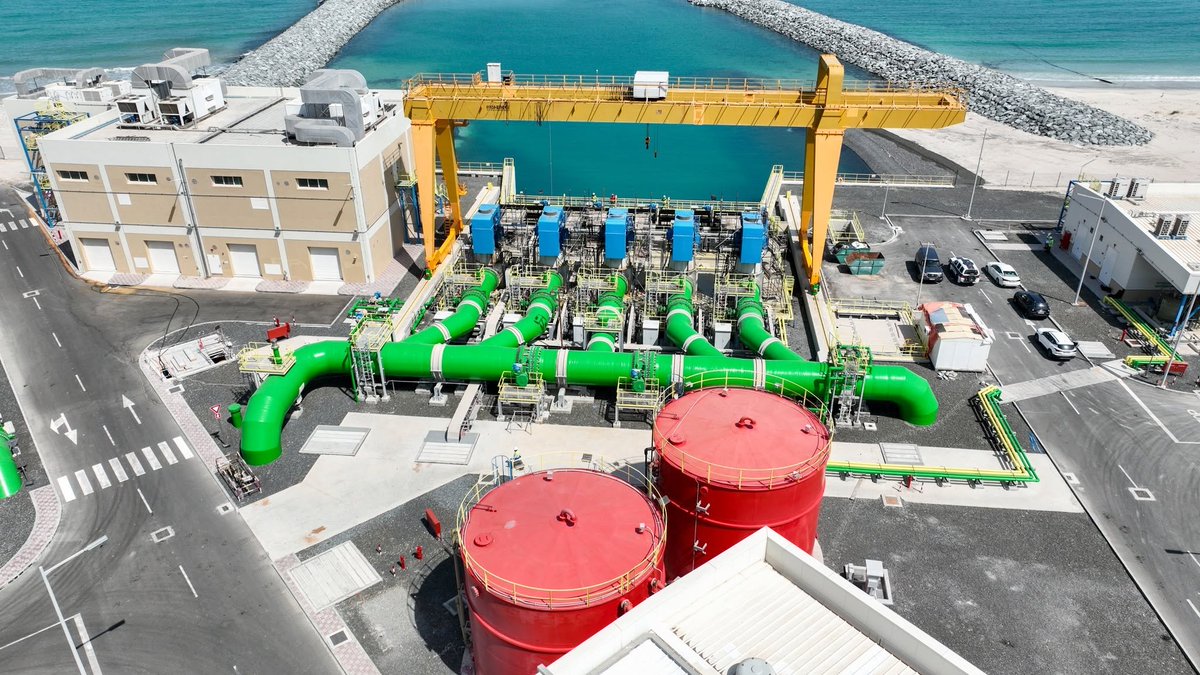
Over 300 million people drink water that only exists because a sheet of polymer can let water molecules pass while holding back the salt dissolved in seawater. Push the ocean against that film hard enough and fresh water comes out the other side. This is how nearly 20,000 desalination plants supply cities that have no river to drink from. That same membrane, run as reverse osmosis, strips about 99% of the dissolved solids out of the water a semiconductor fab needs to rinse its wafers. Water treatment is one of our biggest markets. The $20 billion desalination industry depends on polymer chemistry the United States and Japan still dominate. China is racing to copy it. Whoever prints that film decides which cities get drinking water and who can build chips.
Good point that @TVMohandasPai wont answer, but hurl personal insults to anyone raising such issues. Industrialists who sold out India's youth surround themselves with chamchas to suck up to them & protect.
Infosys used Indian resources. Funded by govt for their degree. Exported them to help in building western economy. Listed there. Listed here. Made fortune.
What are they doing for resources they made fortune from? Asking them to work 70 hours a week. @RajivMessage
@MongolianBeast1 fair point. criticize her behavior with evidence, and i will support you. but when you make race a crutch to boost your argument, then you have lost already.
@arunpudur Stupid jealousy by low iq over emotional losers. Deal with opponent’s strengths. That will make you stronger. Make fun of his shortcomings and you will remain where you are. Think.