Building a product is equivalent to creating a new Instagram profile.
Because Instagram profile won’t go viral just by creating the profile no matter what the profile look like.
Distribution is the key. Took me some time to understand this.
Zuckerberg owns
Facebook — 3.1 billion users
Instagram — 3 billion users
WhatsApp — 3 billion users
Threads — 400 million users
X has 650 million users
he just broke a 3 year silence
on the smallest platform he doesn't own
to announce his new AI
think about that
Fun fact: OpenAI handles 800 million users on ChatGPT with just one PostgreSQL primary and 50 read replicas 🤯
Today, OpenAI published an engineering blog explaining how they scaled their Postgres setup to support a massive 800 million users using a single primary and 50 multi-region replicas.
They dive into details around their scaling approach, the PgBouncer proxy, cache locking, and cascading read replicas. It is genuinely neat and impressive.
Some time back, I published a video on my YouTube channel where I dissected the blog and broke down the nuances.
Give it a watch - it is short and fun.
@Hiteshdotcom Even I am thinking the same, at the time of designing or thinking we should keep in mind that design should be as AI friendly as possible.
Otherwise, new programmers are busy doing and flexing Tokenmaxxing 😅
feels like a good time to seriously rethink how operating systems and user interfaces are designed
(also the internet; there should be a protocol that is equally usable by people and agents)
What I told 2,000 future founders in Bengaluru today:
1/ We believe we are at the start of a second wave of Indian companies that will build world-class AI native products for the global market. Emergent and Giga are the model of the future.
2/ Just because a space seems crowded doesn't mean it's too late. Zepto, Emergent, Giga - none were first movers. Second mover advantage is real.
3/ In fact, a good formula for finding startup ideas is to look at ideas that are showing some promise and just execute them better. Execution is everything: if you're an exceptional engineer, and you can build and move faster than your competitors, you'll win.
4/ There is every reason to believe Indian teams can beat US teams building global products. The level of engineering talent here is on a whole different level, and that's the key input.
5/ In the AI era, the best founders are the ones building at the edge of what's technically possible. You need to be experimenting wth the latest models, the latest open source projects.
6/ Stay in the flow of information. Watch the right podcasts, follow the right people on X. With AI changing this fast, you need to know what the smartest builders are thinking.
7/ Most of the best startups don't come from someone explicitly trying to start a company. They start from someone building a project just for fun, or tinkering with a new technology because they are curious. India needs more of this "tinkering" culture - this is how you have novel ideas when technology is shifting quickly.
8/ Founders are getting younger. Aadit was 18 when he started Zepto. The Giga founders were 20 when they came to SF. Young people who can learn very fast have the advantage right now.
9/ The best founders are pushing AI coding to the max. You can now write 20K lines of code / day. One person can do the work that just a year ago would take a 100 person team. The best builders are taking advantage and building at Garry Tan speeds.
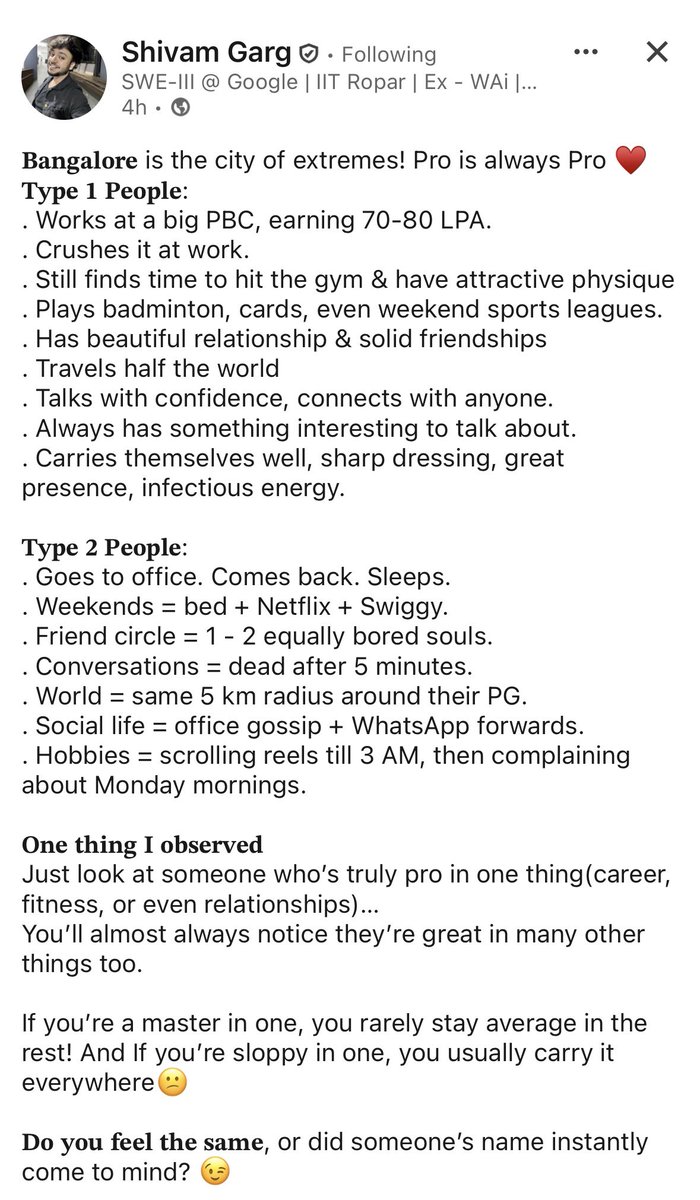
The gap isn’t talent.
It’s how you live outside work.
Same city. Same opportunities.
Completely different lives.
Your habits decide which “type” you become.
Announcing Amazon S3 Files.
The first and only cloud object store with fully-featured, high-performance file system access.
Learn more here. https://t.co/rNuWa5Rsi2
@TukiFromKL@grok how would it know that it is the exact same person/airmen because there can be some different person whose heartbeat can be classified as US airmen?
🚨Last night, India switched on a reactor.
Here are 9 numbers nobody is talking about:
→ 72 years: Time since Homi Bhabha conceived this plan
→ 22 years: Time to actually build it
→ ₹7,700 crore: Final cost (started at ₹3,492 crore)
→ 500 MW: Power it will generate
→ 2nd: India's global rank only Russia had this before
→ 25%: India's share of world's thorium reserves
→ 400 years: How long those reserves can power India
→ 200+: Indian companies that built it. Zero foreign designs.
→ 3: Countries that tried and quit - USA, Germany, UK
🧵 A thread that will blow your mind:
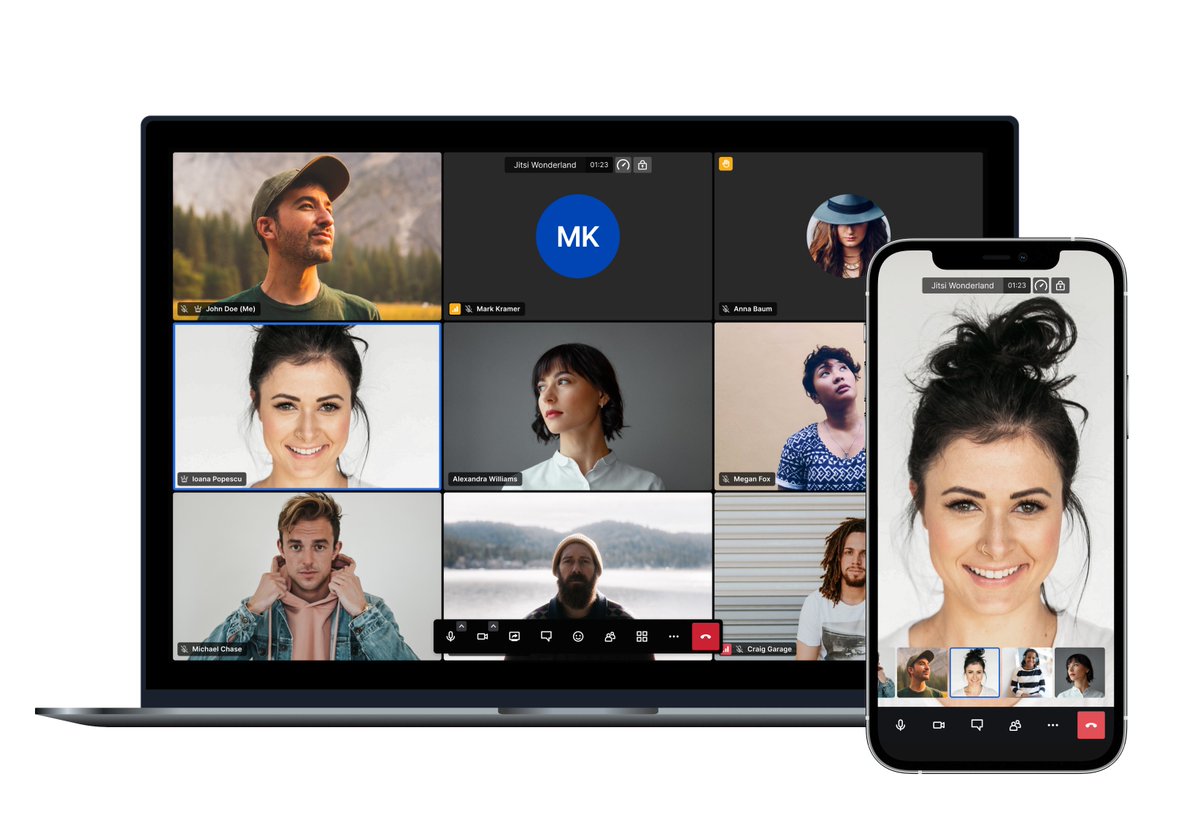
🚨 Zoom and Google Meet charge for group calls. Someone just turned any basic server into a private video conferencing hub. Unlimited time. $0.
It is called Jitsi Meet.
Install it on any VPS. It becomes a full HD video calling platform.
No Zoom. No 40-minute time limits. No forced app downloads. Just your own server and a secure meeting link.
Here is what is inside this thing:
→ HD video and audio with unlimited participants
→ Screen sharing and collaborative document editing
→ End-to-end encryption for total privacy
→ Works directly in the browser without any downloads
→ Complete control over your meeting data
Here is the wildest part:
You just send a link. People click it and instantly join the call from their browser. You get the exact same seamless experience as premium Zoom, but nobody is recording your meetings or selling your data.
Video calls, screen sharing, and remote meetings. All the things companies pay SaaS providers thousands a year for.
Free. Running on hardware you already control.
Startups spend $150+ a year per user on Zoom licenses. This costs the price of a basic VPS.
21,000+ GitHub stars.
100% Open Source.
RCS 4.0 is coming, and it could change messaging completely 📩🔥
What’s new:
• Built-in video calls directly inside Messages (no extra apps)
• Cross-platform support between Android & Apple for video calls
• Higher quality photos & videos
• Interactive tools for businesses inside chats
Messaging is about to level up 👀