62% of Indian resident doctors work more than 36 hours at a stretch. 86% report severe sleep deprivation. 97% earn less than an entry level civil servant. 76% are assaulted while on duty.
We can call ourselves civilised only when we learn to treat our doctors like they treat us.
The UK's proposed social media restrictions for children have reignited a debate that India can no longer postpone.
As a psychiatrist, I have little doubt that many parents' concerns are justified. Cyberbullying, sleep deprivation, online exploitation, social comparison and endless scrolling are no longer isolated problems. They have become part of growing up for many children.
India faces a different challenge. For millions of children, the internet is also a classroom, a tutor, a library and sometimes the only window to opportunities beyond their immediate surroundings.
That is why I remain cautious about simple answers to complex problems. Protecting children cannot be reduced to a choice between unrestricted access and outright bans.
Age-based safeguards deserve serious discussion. So do stronger parental controls, digital literacy in schools, safer platform design and greater accountability from technology companies.
The question is not whether children need protection online. They do.
The question is whether we can protect them without taking away the opportunities that the digital world also provides. That balance will be difficult to achieve, but it is the conversation India needs to have.
I discussed these issues earlier this year in the Indian Journal of Psychiatry:
https://t.co/lrnBjuXlsn
If I stay home and raise my own children I am a loser and not ambitious
But if I hire and pay another woman to raise and take care of my children for me than I am an empowered woman
If that same woman stayed home with her children she would be a loser
But if she takes care of my children she is not
If we both switched and raised each others children for a paycheck we would be successful ambitious girl bosses
But if we do it for our own children we are losers
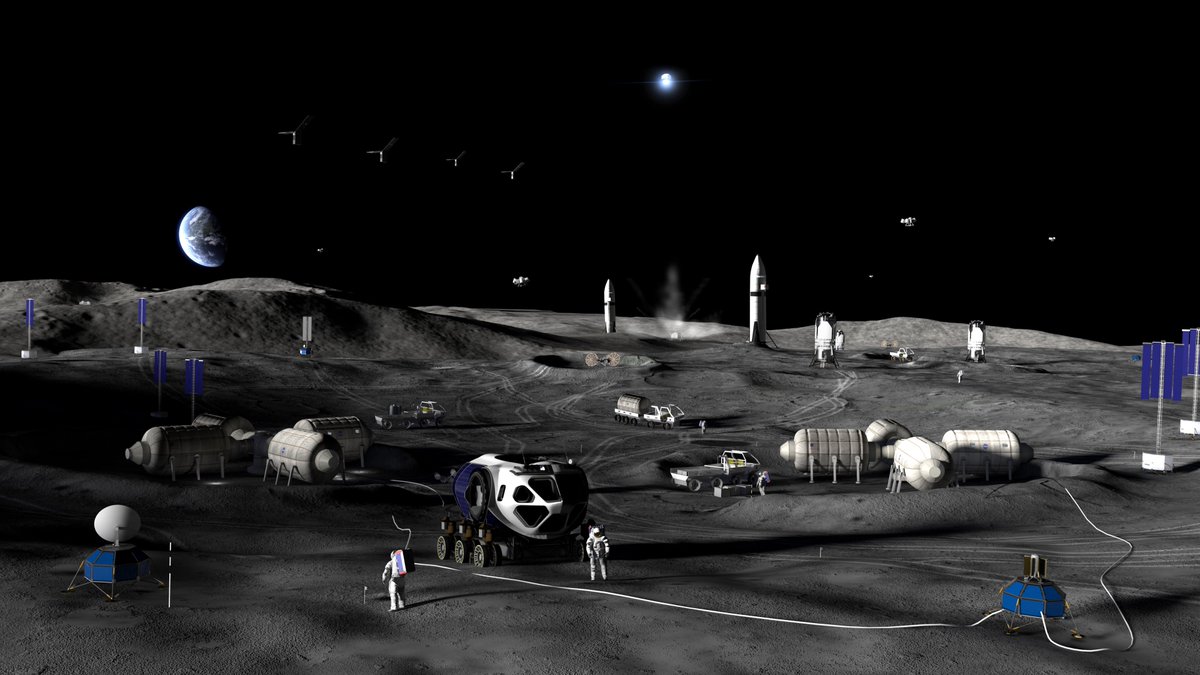
To build a sustained human presence on the Moon, we are building @NASAMoonBase, prioritizing surface operations and scalable infrastructure.
- Frequent robotic landings and mobility testing including MoonFall drones
- Starting in 2027 nearly monthly cadence of equipment and rovers with scientific payloads landing on the Moon.
- Investments in power, communications, and surface mobility
- Scalable infrastructure to support long-term human presence
The objective is clear: build the foundation for an enduring lunar base and take the next step toward Mars.
This is incredible.
This machine is capable of cleaning up 100 million kg of plastic ocean waste, and as of 2025, it has already collected about 500,000 kg of plastic.
It aims to remove 90% of ocean plastic by 2040.
TAX HACK:
If you purchased a Bitcoin at $100,000
and it dropped to $68,000
you can sell it
and buy it back 5 seconds later
you still have one whole Bitcoin
But now you have a realised loss of $32,000 for tax purposes.
Most investors never... Show more
We've uploaded a fruit fly. We took the @FlyWireNews connectome of the fruit fly brain, applied a simple neuron model (@Philip_Shiu Nature 2024) and used it to control a MuJoCo physics-simulated body, closing the loop from neural activation to action.
A few things I want to say about what this means and where we're going at @eonsys. 🧵