Too many faces, not enough pies.
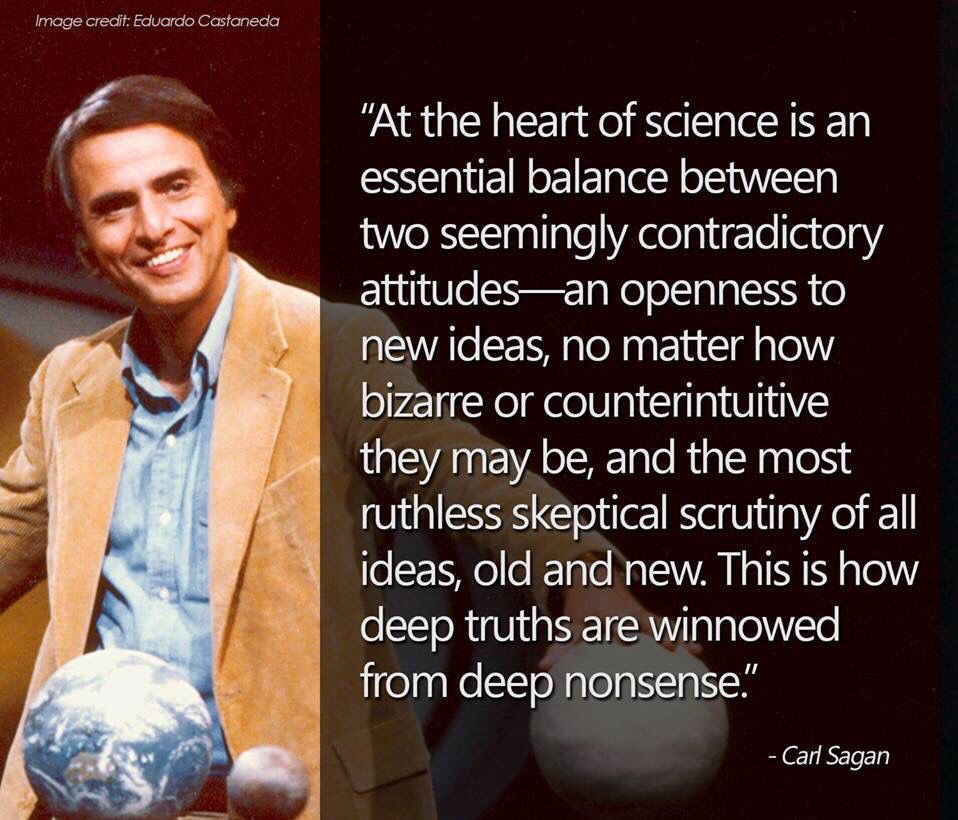
"It is far better to grasp the universe as it really is than to persist in delusion, no matter how satisfying & reassuring." CS
The Nancy Grace Roman Space Telescope has arrived at the Space Coast! Carried inside NASA's Pegasus barge, this new telescope is set to launch on Falcon Heavy later this year.
The countdown is on! ⏱️ While Artemis III is assembled in the Vehicle Assembly Building, teams are busy in the Launch Control Center. Teams participate in simulations for terminal count, propellant loading and more to prepare for launch day. 🚀 Drive past the VAB and LCC on the Bus Tour, included with admission.
The two-part Viking 1 spacecraft reached Mars orbit 50 years ago today. A few days later, the images it returned of the proposed Viking 1 landing site were met with both elation and shock.
Mars as viewed by Viking 1's cameras did not look like the planet Mariner 9 saw. The Viking 1 Lander's proposed landing site, chosen after years of debate, lay on the floor of what looked like a deeply incised river bed. America's first Mars landing—scheduled for July 4, 1976, America's Bicentennial—would have to be delayed so a less risky landing spot could be found.
📷 This mosaic of Mars is a compilation of images captured by the Viking Orbiter 1. The center of the scene shows the entire Valles Marineris canyon system.
Space Shuttle Discovery launched on 39 Earth-orbital missions, spending a total of 365 days in space and traveling almost 150 million miles — more than any other orbiter. Each of Discovery's missions launched from Kennedy Space Center in Florida.
🐝Looking somewhat like a swarm of bees returning to their hive, this @NASAHubble image features the galaxy cluster MACS0329-0211. Galaxy clusters like this one can help us understand how the structure of the universe evolved.
READ MORE >> https://t.co/5Akyb0X3v4
Starry Night II
Does this scene look familiar? It is a modern recreation of the famous painting Starry Night by Vincent van Gogh.
Both the image and the painting depict a tall tree on the left, a crescent moon on the upper right, the planet Venus just to the right of the tree, a foreground horizon rising from left to right, and clouds above the horizon.
Differences include that the photograph was taken in mid-April earlier this year in Cascavel, Brazil, while the painting was composed in Saint-Rémy-de-Provence, France, in 1889.
The original Starry Night is considered by many to be one of the three most famous paintings in the world today and a statement about the wonders of the night sky.
Today is (roughly) the anniversary of the morning that van Gogh saw the sky that he later painted in his version of Starry Night.
Image Credit & Copyright: Rodrigo Guerra, Original Painting: Vincent van Gogh
Smile! Tomorrow is the Northern Hemisphere’s summer solstice! 😎☀️
This “sunny smile” is made of coronal holes — darker, cooler regions on the Sun where solar material escapes to space at incredible speeds. 🕳️
More on coronal holes in this episode of NASA’s Illuminate.👇
This photo from the @Space_Station shows the aurora australis arcing over Earth during an active solar event.
When energetic particles from space collide with atoms and molecules in the atmosphere, they can cause the colorful glow that we call auroras: https://t.co/hTLLxD0WTP
This asteroid is a little… quirky.
Shaped like a five-mile-long peanut 🥜
Wobbles like a top 🌪️
Encountered water, but lost it 💦
Published today, NASA’s Lucy mission reveals close-up imagery and data from its flyby of oddball asteroid Donaldjohanson.
More: https://t.co/BD2Zf89ghy
#OTD in 1985, Space Shuttle Discovery launched on its fifth mission—STS-51G—to deploy three communications satellites, including Mexico's Morelos-1 satellite, pictured here.
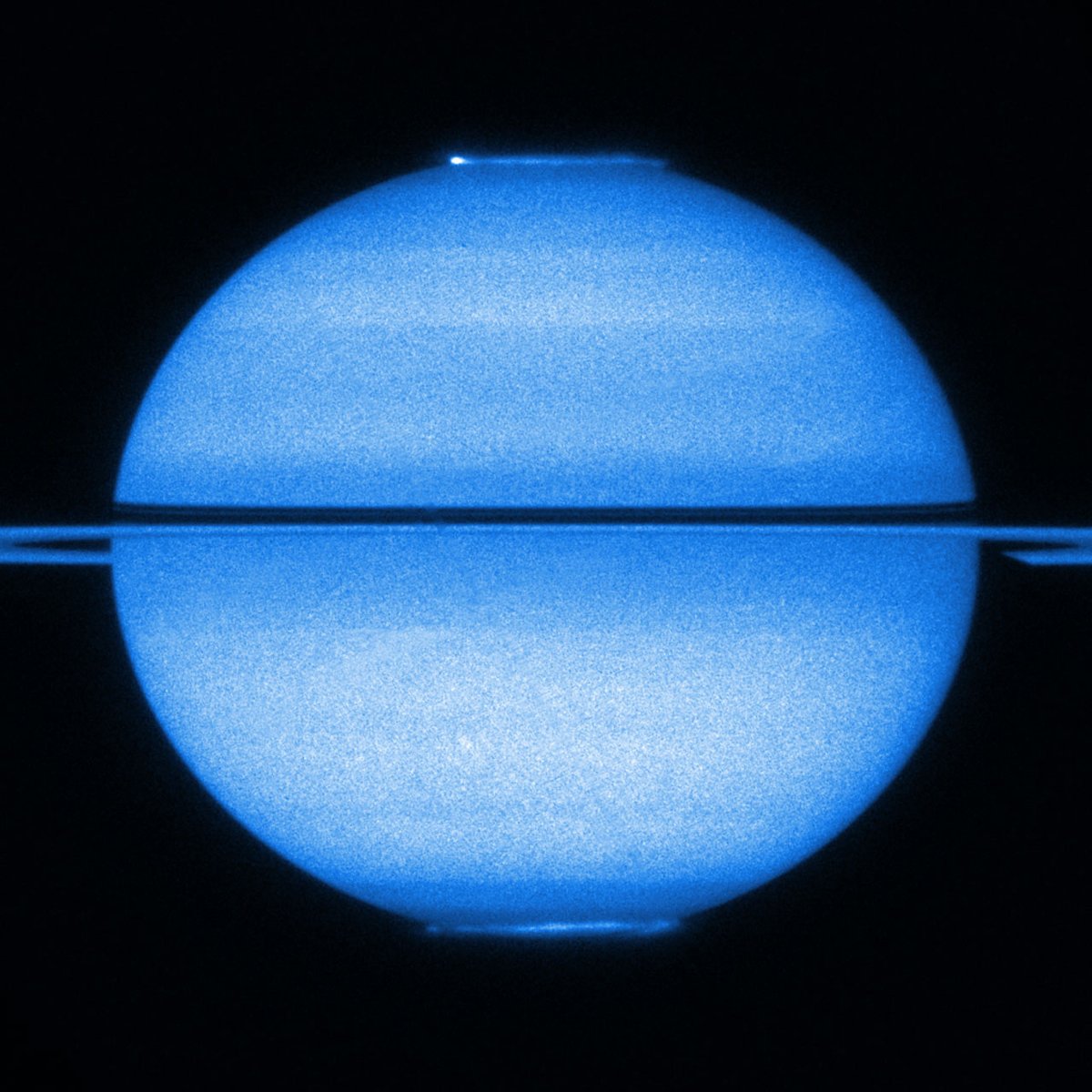
Our #HubbleTopImage features Saturn 🪐
This one-of-a-kind Hubble image from 2009 features Saturn with its rings edge-on and both poles in view, offering a stunning double view of its fluttering aurorae! 1/2
Summer, summer, summertime ☀️
June 21 is the summer solstice for folks north of the Equator. This is when the Northern Hemisphere reaches its maximum tilt toward the Sun and has its longest stretch of daylight all year. https://t.co/LmLttEnj9Y
🛎️ It's quiz time! Webb has been helping astronomers study star clusters in these four galaxies, revealing that the most massive star clusters emerge the fastest 🏃♂️➡️
Ancient star system Terzan 5 is not a globular star cluster, a class that typically has one star population. It is a bulge fossil fragment: It has up to four generations of stars and maintains its separate identity in the Milky Way’s bulge: https://t.co/tmaWZX4e4t #AAS248
What looks as if it is going to swallow the great Pillars of Creation?
The Eagle Nebula (M16) is not a bird, a plane, or Superman. M16 is actually a combination of several celestial objects.
NGC 6611 is the young star cluster that appears to peak out beneath the Eagle’s “wings”. The ultraviolet light from these stars ionizes the surrounding gas, creating the emission nebula IC 4703. The Stellar Spire is seen reaching towards the Pillars of Creation from the left.
Both are structures of cold gas and dust that are optimal for star formation. Some astronomers previously thought the Pillars of Creation had been evaporated away by a supernova. Because M16 is 6,000 light years away, we would not be able to see the Pillars’ destruction for thousands more years.
However, there is no conclusive evidence of the theorized supernova, so the Pillars of Creation will likely continue to create stars for millions of years.
Image Credit & Copyright: Emmanuel Delgadillo
Text: Keighley Rockcliffe (NASA GSFC, UMBC CSST, CRESST II)
Did you miss the conjunction of Jupiter and Venus last night? You didn't! Not really, because the pair will still appear close together tonight. Look to the western sky after sunset. In this view from June 10th, see if you can spot Mercury near the horizon as well.
Hold my hand?
In this Hubble view, two galaxies known collectively as NGC 5331 are seen just beginning to "link" their spiral arms.
This galactic interaction is unfolding about 450 million light-years away, in the constellation Virgo.
Read more: https://t.co/V0qJECHPZ7