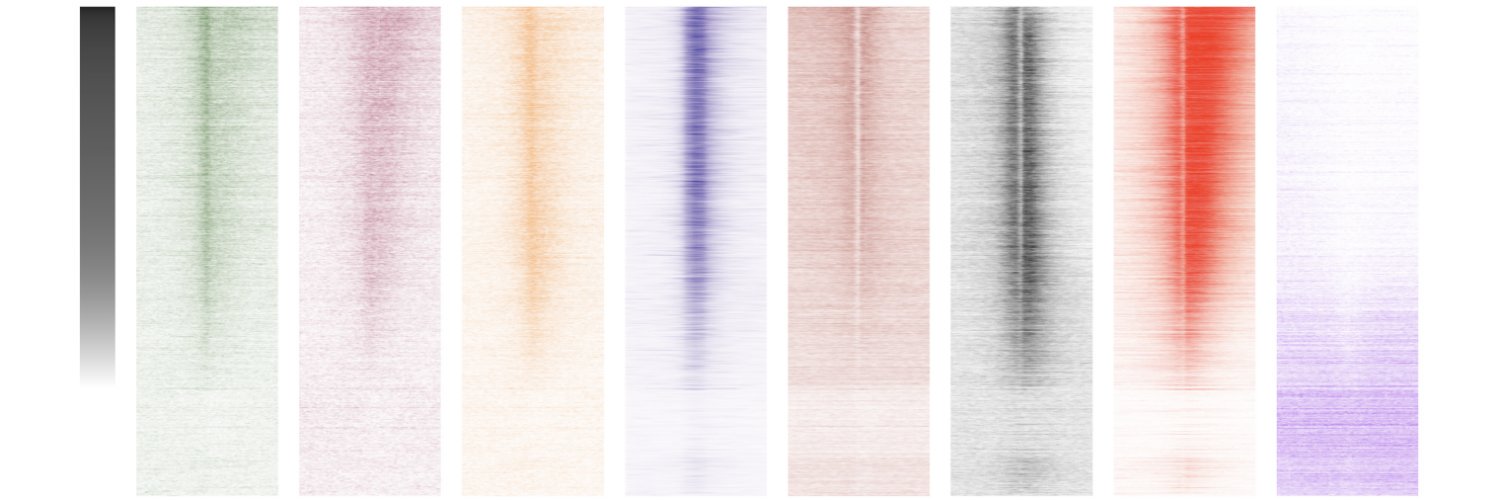
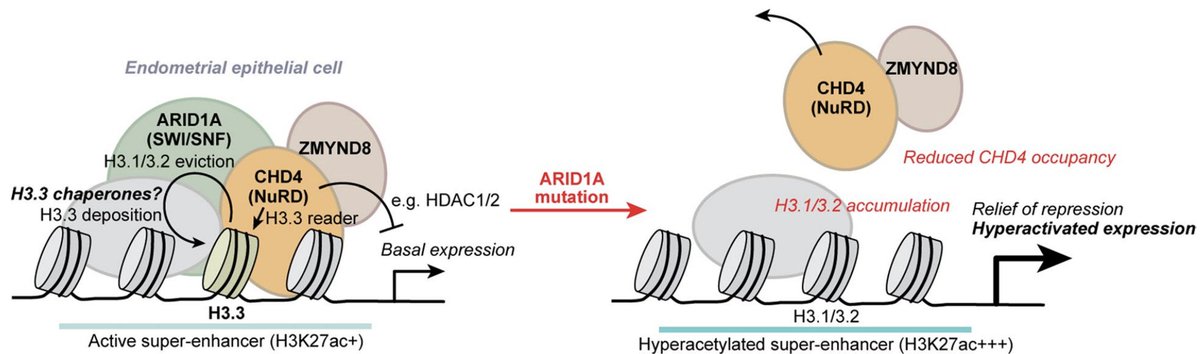
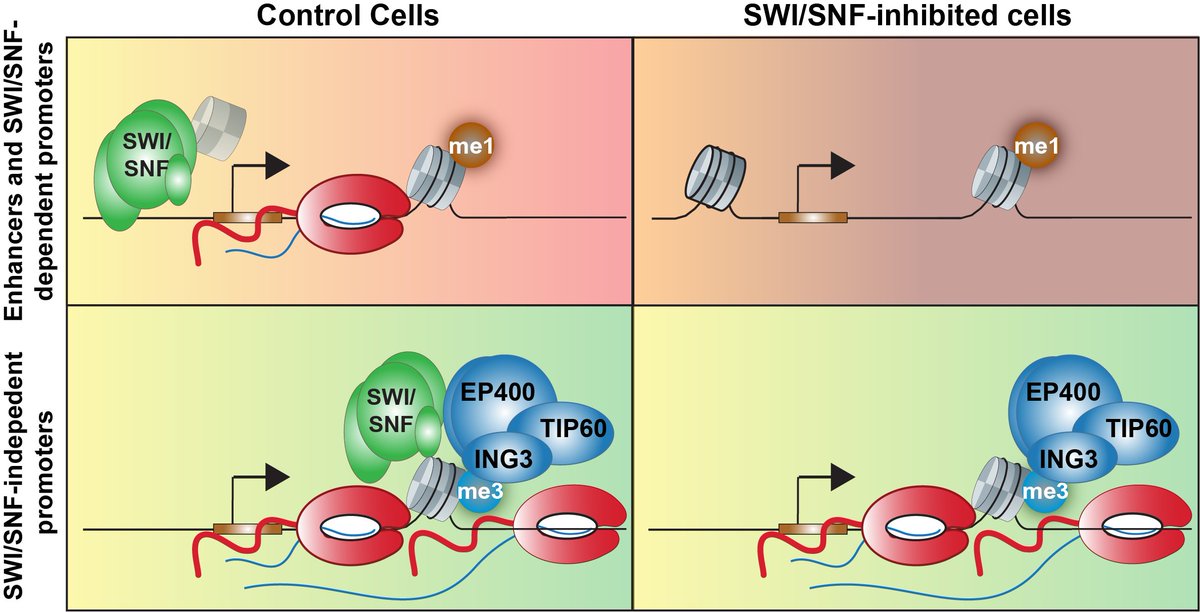
A chromatin mechanism hiding in plain sight. We found that a fundamental function of mammalian ARID1A-SWI/SNF chromatin remodeling is to facilitate H3.3 variant histone exchange, likely by ejecting canonical H3.1/3.2.
https://t.co/L73u4BgwEY
Incredibly excited that our paper linking single molecule states of TF binding to gene expression using quantitative thermodynamic models is out in Nature today. An amazing collaboration with the Bintu Lab. Congrats to Ben, Michaela, and Julia! https://t.co/4zjMOlOgVV
Facing challenges with data harmonization on EPICv2? Our latest preprint introduces mLiftOver, designed for data conversion between HM27/HM450/EPIC and EPICv2, including support for the new MSA array! Details here: https://t.co/21Wx8tgpn4 #genomics#bioinformatics
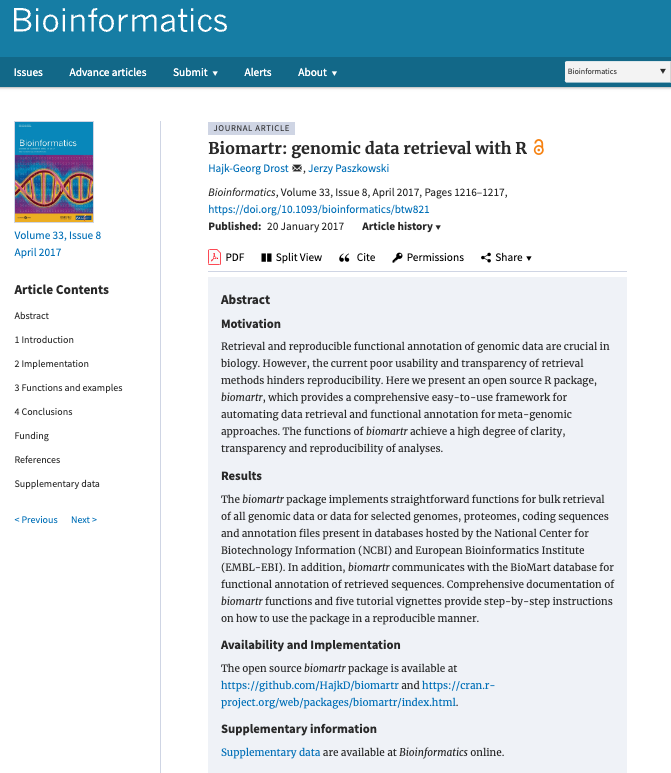
Data retrieval for massive (comparative) genomics is not easy, especially when you care about genome origin, assembly quality & functional annotation.
We hope new release {biomartr} v1.0.5 will help you to automate retrieval & reproducibility at scale ⏩⏩https://t.co/VPy4fYMOsb
Evaluation of MethylationEPIC v2.0 now published in Epigenetics Communication! Another great collaboration led by the labs of @zhouwanding and @peterwlaird. Comment below if you have any questions about the BeadChip & its performance.
https://t.co/Juj9uLC2nV
@arjunrajlab Signal at a given locus tells you nothing about the overall efficiency of the ChIP reaction in that sample. Reads mapping to "background" genome can vary widely between samples. Relative binding signal at a locus within the sample is a better indicator.
R fans! If you or your students want a gentle, free intro to R programming, check out "R for the Intimidated" by @bugsized (my favorite scientist). It was on @DataCamp (h/t @jtleek) but they removed it, so @bugsized put all 27 lessons on @youtube https://t.co/YPy9ICed9C
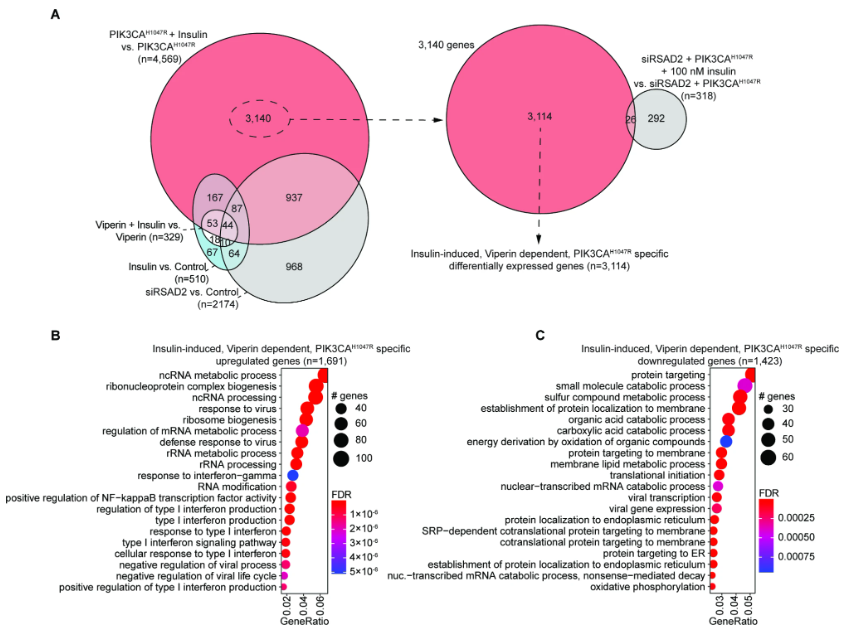
Happy to share our new paper where we show the inflammatory response to insulin in PIK3CA mutant endometrial cells is due to Viperin/RSAD2 overexpression. Thanks to @MikeRoyWilson and our collaborators @reskejak@VAInstitute@UNC_Lineberger@MSUCancer. https://t.co/grlmPjct1y
Incredibly proud to see our benchmark of single-cell preprocessing methods finally published 🥳🥳🎉
We show that despite its theoretical limitations, no other transformation consistently outperforms log(y/s+1).
All details at https://t.co/0caikoVmBa and https://t.co/X61ICd6sao
Glad to see our review on best practices for single-cell analysis across modalities out @NatureRevGenet! In a big team effort led by @LukasHeumos & @AnnaCSchaar, we recommend workflows based on benchmarks. Paper at https://t.co/dN1jwlmIZA & extension at https://t.co/NVurPpJaHH.
So excited to see my postdoc work out in the world! Here we show that EP400/TIP60 can broadly compensate for loss of SWI/SNF activity at promoters. See below for a short(ish) thread on our work (1/X):
https://t.co/2aNGRoVgJz
@LewisLab@iskander E.g. repeat the same experiment two more independent times, and plot the data for all 3 experimental batches together. :) Thanks for sharing your data here!
@LewisLab@iskander It would be interesting to explore the variation introduced between batches using the same extraction method. Until demonstrated otherwise, it remains possible that the observed difference between extraction methods can be attributed to batch.