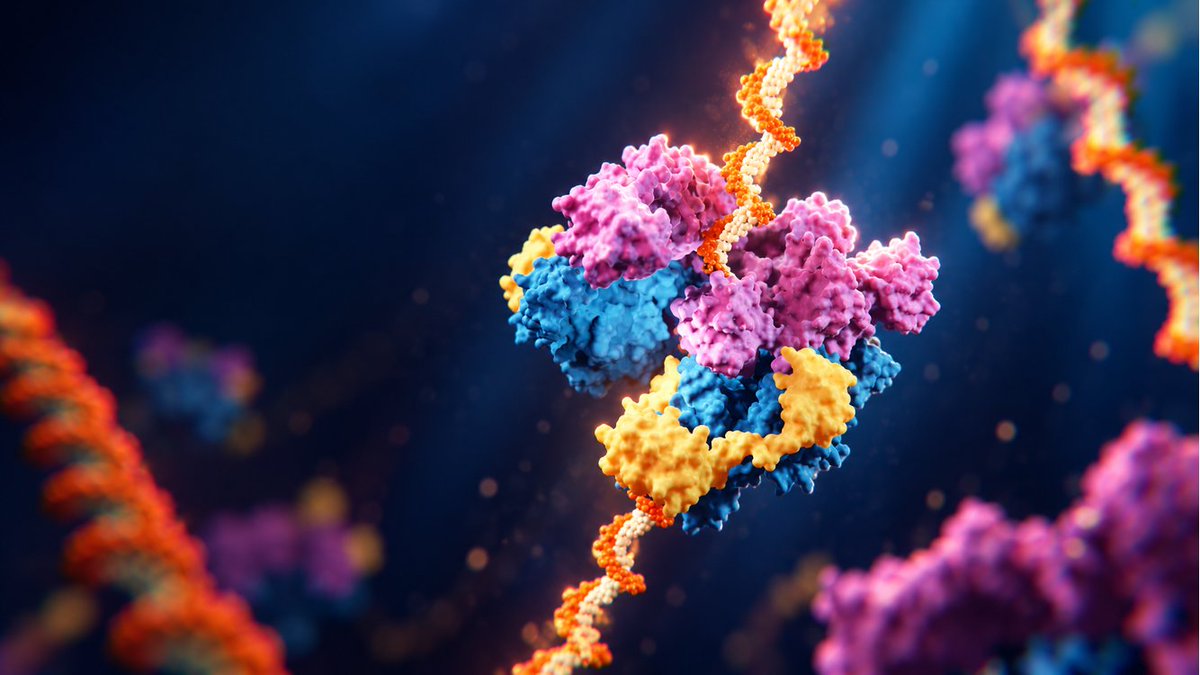
🧬 How do bacteria open a molecular ring to start DNA replication?
Excited to share our new work in NAR @OxUniPress, where we reveal how the ancestral helicase loader DciA opens the bacterial replicative helicase DnaB.
@CIB_CSIC
https://t.co/8guRSHsgD2
🧵👇
Today, our work in partnership once again with @SternbergLab presenting the structures of several DRT10 bacterial defense systems and comprehensive analysis of their mechanisms of action is published… very happy!
Great work guys!
https://t.co/0y14n2R2CX
Here one simple movie of the first complex Eco1-DRT10:
The RNA presents a unique conformation that resembles a 8 shape generating a pseudo-symmetric configuration. The 8 shape host inside a protein dimmer with catalytic pockets facing the outside.
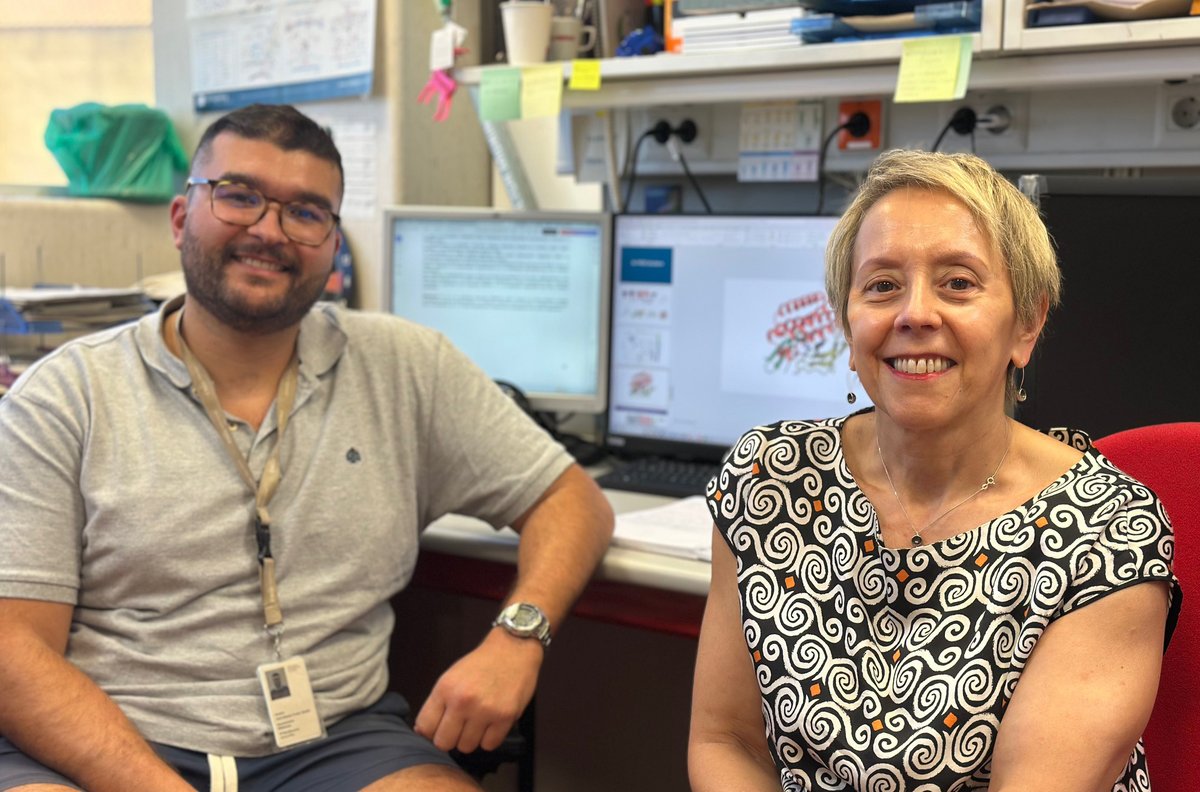
The power of collaboration: Jose A Torres in my lab will be validating in vitro and in vivo a series of minibinders generated by a clever customized AI platform of @rfleiro group. This @ERC_Research PoC will also assess patentability and exploitation routes for the resulting IP
✅ Una medida excelente, que se venía demandando por todos aquellos que en algún momento participamos en paneles de evaluación del Programa RyC. @ASEICAnews@CienciaGob@ciccancer
Our latest manuscript is finally out in @NatureSMB!
Here, we show that the GAP activity of SEAC (GATOR) acts as a molecular switch, regulating both inhibition and reactivation of TORC1 upon changes in amino acid levels.
https://t.co/EgW0fh2c0a
#cibjoboffer
Postdoctoral candidate to collaborate on a project that aims to understand the pathophysiology of mitochondrial disorders.
Deadline: February 28, 2026
More info 👇
Revista SEBBM 227 diciembre 2025
Dinámica conformacional del receptor GluA4: bases moleculares de su función y modulación por TARP-γ2
https://t.co/EYjykYTRPy
@BeatrizHergued1
Very happy to share a new preprint from my work in the @VanniniLab at @humantechnopole! https://t.co/eyEPUJDupD
If you are curious to understand what are the conformational changes that make human condensin II active in compacting the DNA during mitosis, have a read!
Researches at #cniostopcancer create the ‘human repairome’, a catalogue of DNA ‘scars’ that will help define personalised cancer treatments.
Published in @ScienceMagazine
https://t.co/Fu0UIIhMF6
Our GPUs are always busy processing cool cryoEM data❄️, but we *really* wanted a to mess around designing protein binders.
To avoid swamping our cluster (and our colleagues complains 😅), we built a small batch-based binder design pipeline.
Hopefully you'll find it useful too!