“The real problem of humanity is the following: We have Paleolithic emotions, medieval institutions and godlike technology. And it is terrifically dangerous, and it is now approaching a point of crisis overall.”
— Edward O. Wilson
For any fans of political theory:
I published a book a few months ago. It is an edition of John Stuart Mill's about parliament, representation, and democratization.
May be of interest to those curious about the fraught relationship between liberalism and democracy.
https://t.co/GMtXTaehxd
We keep asking whether AI will replace academics. We also know that being an academic isn’t one job, but a collection of very different tasks.
That’s why I’m more interested in which parts of academic work AI is actually changing.
(Whether we should be integrating AI into all of these tasks is another question altogether.)
Some examples that come to mind:
Literature searching.
Proofreading.
Coding.
Data analysis.
Brainstorming.
Grant writing.
Peer review.
Teaching.
Supervision.
I’m curious, which of these has AI genuinely helped you with already? And which do you think it never will, or shouldn’t?
A tool used to rephrase plagiarised text changed "final solution" to "mass killing of an ethnic group" in a chemistry paper. Now retracted thanks to a PubPeer user who spotted this.
This is actually worse than people are making it out to be. This is *reproducibility* not replicability, meaning they took the authors’ own data and redid the analysis. 0% of education papers even did their math right.
Andrés Velasco became the founding dean of @LSEPublicPolicy in 2018. He was then only Full professor. He leaves the job this month with nine tenured faculty, five profs of practice and three teaching track faculty, over 450 students from 58 countries and five degree programmes, including double degrees with Sciences Po, Columbia and Toronto. Institution-building is one of the hardest jobs in academia, Andrés has succeeded in just 8 years. Happily, he remains on the faculty. Thank you, Andrés.
Yesterday I wrote a post about culture in the aftermath of the World Cup final. While most reactions have been thoughtful and positive, a small number of people responded with insults.
To illustrate a point, I replied to one comment using the rude Argentine vernacular that was often directed at me. What surprised me was what happened next. The immediate reaction of some of these accounts was to "accuse me with my mommy." They began a smear campaign contacting the universities where I work in an attempt to get me into trouble.
This illustrates exactly the contradiction I was writing about. If the culture they claim to admire is one of toughness, on and off the field, then portraying yourself as a victim and running to someone's employer is hardly an example of toughness. It is just another way of refusing to engage with the argument.
https://t.co/mI6h6shT3C
Argentina’s behavioral crisis in the World Cup final has brought to light traits many of us in Latin America have internalized and that we need to come to terms with.
In many countries, emotional self-control and the ability to admit mistakes are seen as virtues. A behavioral problem in parts of Latin America is that there are social circles where the opposite is often celebrated.
This is the idea that someone who remains in control of their emotions is a coward or, depending on the situation, a traitor.
If someone offends you, your family, your team, the reaction that is celebrated in these circles is not restraint but flipping the table. The more berserk you go, the more you show that you care. That is a harmful value to hold, and also, one that many of us once shared. I certainly had it internalized when I left Chile 20+ years ago. In fact, I’ve spent much of my adult life trying to unlearn what I grew up believing was the socially acceptable behavior.
The second trait is an unwillingness to admit mistakes. You can always find an excuse, move the goalposts, or, once again, start a fight instead of publicly accepting that you’ve made a mistake. Admitting fault is a sign of weakness. Defending a losing position is a symbol of courage or, in sports, a test of loyalty.
Together, these two traits are behavioral dynamite. People explode because they cannot admit fault, and double down. Instead of learning from their mistakes, they become prisoners of them.
I grew up watching football with my father. When I was 10 or so, I was learning what was right and wrong from the way he interpreted the game. This included behavior both on and off the field. Only later in life did I realize that every penalty he called for, or contested, had little to do with the play itself. Whether a call was fair depended entirely on which team benefited. He was happy if his team received a nonexistent penalty or an opposing player got an undeserved red card.
These traits are among the things that pushed me away from the continent. They are certainly not exclusive to Latin America or the Southern Cone. I’ve encountered them in people all over the world. In an important sense, these are behaviors that all of us exhibit as children. What strikes me as unusual from the place I am from is having been part of social circles where these behaviors were not seen as flaws of character but as virtues to be admired, celebrated, and enforced.
These excessive forms of pride are not conducive to learning. They make it psychologically difficult to update one’s beliefs, accept responsibility, or improve. Although they become particularly visible in sports, they are by no means confined to them.
Something I am proud to have learned is to apologize quickly and often. Not because it is too difficult, but because it was like learning a new language at old age. That doesn’t mean becoming a pushover. But I’ve learned that a man who never apologizes cannot be a man of integrity, because we all make mistakes.
Argentina’s behavior on and off the field during the World Cup final was, to me, a particularly blatant expression of values that many people continue to defend. In some circles, these attitudes have become intertwined with ideas of national identity and loyalty. Yet they are shackles that ultimately limit our development, not because they make us lose a football match, but because they make it harder for us to learn from our mistakes.
The right thing to do now is the least likely: offer an honest apology. If my interpretation is even partially correct, we are more likely to see the opposite. Never back down. Never apologize. Never control your emotions. There is such a thing as having the wrong values. I hope that one day we can do better.
Aujourd’hui est ta dernière danse.
Toi qui nous as tant donné.
Nous aurions dû t’offrir une meilleure fin, mais nous avons échoué.
Mettre des mots sur ce que tu as apporté pendant 14 ans est très difficile, tant tu as été un acteur majeur du renouveau de cette équipe. Les gens n’ont pas toujours su apprécier ta grandeur, mais le temps et l’histoire s’en chargeront…
Merci de m’avoir donné la chance et l’opportunité de représenter mon pays sur la plus grande scène pendant tant d’années.
Je me sens privilégié d’avoir pu être aux côtés de l’une des plus grandes légendes de notre pays, et je ne garde que d’excellents souvenirs de tout ce que nous avons vécu et accompli ensemble.
Je te souhaite le meilleur dans ta nouvelle aventure, et encore merci pour tout ce que tu as apporté à ce maillot qui compte tant pour nous.
👑
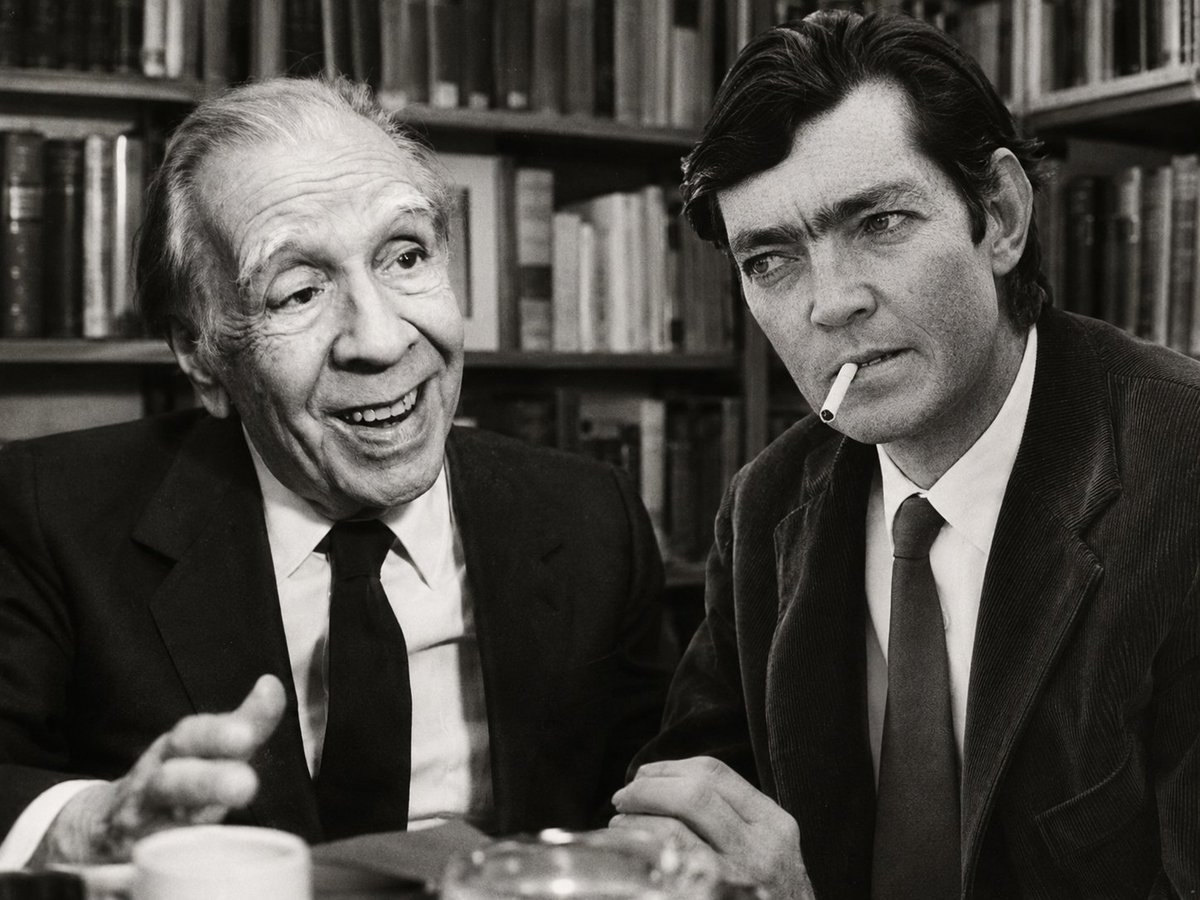
Borges y Cortázar.
F.S. ¿Le agradaban los cuentos fantásticos de Julio Cortázar?
J.L.B. Sí, me agradaban, y ocurrió un pequeño episodio... ¿Se lo he contado ya?
F.S. No.
J.L.B. Yo me encontré con Cortázar en París, en casa de Néstor Ibarra. Él me dijo: "¿Usted se acuerda de lo que nos pasó aquella tarde en la diagonal Norte?" "No", le dije yo. Entonces él me dijo: "Yo le llevé a usted un manuscrito. Usted me dijo que volviera al cabo de una semana, y que usted me diría lo que pensaba del manuscrito".
Yo dirigía entonces una revista, los Anales de Buenos Aires (una revista ahora indebidamente olvidada), que pertenecía a la señora Sara de Ortiz Basualdo, y él me llevó un cuento, Casa tomada; al cabo de una semana volvió. Me pidió mi opinión, y yo le dije: "En lugar de darle mi opinión, voy a decirle dos cosas: una, que el cuento está en la imprenta, y dentro de unos días tendremos las pruebas; y otra, que ya le he encargado las ilustraciones a mi hermana Norah". Pero, en esa ocasión, en París, Cortázar me dijo: "Lo que yo quería recordarle también es que ése fue el primer texto que yo publiqué en mi patria cuando nadie me conocía".
Y yo me sentí muy orgulloso de haber sido el primero que publicó un texto de Julio Cortázar. Y luego nos vimos un par de veces en la Unesco, donde él trabaja. Él está casado —o estaba casado— con la hermana38 de un querido amigo mío, Francisco Luis Bernárdez (otro poeta que hubiera debido mencionar, y que no he mencionado porque la memoria suele fallarme: yo admiro a muchos escritores...). Bueno, como le decía, nos vimos creo que dos o tres veces en la vida, y, desde entonces, él está en París, yo estoy en Buenos Aires; creo que profesamos credos políticos bastante distintos: pero pienso que, al fin y al cabo, las opiniones son lo más superficial que hay en alguien; y además a mí los cuentos fantásticos de Cortázar me gustan. Me gustan más que las novelas suyas: creo que en las novelas él se ha dedicado demasiado al mero experimento literario, a ese experimento del que no diré que inventó, pero del cual abusó William Faulkner y que se encuentra también en Virginia Woolf: el hecho de invertir el orden cronológico en la narración —que me parece el orden natural— y de contar las historias barajando un poco el orden en que ocurren los hechos.
Pero aquí pienso (lo que sin duda se ha dicho también) que eso es lo que ocurre deliberadamente en todo relato policial. Porque realmente un relato policial empieza por el último capítulo, y todo el libro ha sido hecho para llegar al último capítulo, lo cual condice con la estética de Poe, inventor del género policial, que dijo que un cuento debía escribirse para la última línea. Eso, desde luego, puede producir cuentos admirables, pero, al mismo tiempo, a la larga, tiene algo de trampa. Creo que pueden escribirse cuentos que no estén escritos para la última línea. En todo caso, no sé si antes de Poe, o antes de Hawthorne quizá, alguien intentó ese tipo de cuento: pero creo que pueden escribirse cuentos que sean continuamente agradables, continuamente emocionantes y que no nos lleven a una última línea de mero asombro o de mero desconcierto.