Welcome to Rocket Diaries 🚀🌌
We're here to share space stories, trends, and insights that'll make you fall in love with the cosmos. Follow us for your daily dose of space inspiration!
What excites you most about the future of space exploration? Let us know! 👇
Starting with some energy, and my inability to write brief updates, I am just extremely proud of the NASA crew, our industry, and our international partners. We are getting into a rhythm here at NASA. Earlier this year, setbacks put the Artemis II rocket back in the VAB for repairs, and we determined it was necessary to add another mission, Artemis III in 2027. Since then, we have unveiled the Ignition plans to build a Moon Base and nuclear-powered spaceships, launched a highly successful mission around the Moon, brought the crew home safely, and now watched the torch pass to Artemis III. There will be no shortage of major milestones to celebrate in the months ahead as we build the Moon Base and launch the Nancy Grace Roman telescope. I am beyond proud of the team and all the momentum and excitement around the space program.
I do want to take this moment to address two of the questions I have been seeing since the crew announcement.
Why are there no women assigned to Artemis III?
I have seen reactions ranging from disappointment to outrage. I have personally been to space twice with 50% female crews. My closest advisors and some of the smartest engineers I know are women. In our latest NASA leadership organization, nearly 50% of the Center Directors and Mission Directorate leadership are women. The last astronaut candidate class selected under this Administration was majority female because they were the best of the best, including one astronaut I previously went to space with.
In a world with so much controversy, I hope this can be a moment where we celebrate the astronauts selected, respect the integrity of the process, and recognize the extraordinary depth of talent across the entire corps. The crew selection does not involve any political appointees. The Astronaut Office assigns the crew that gives the mission the best chance of meeting its objectives, taking into account many factors, including the background and expertise of the astronauts, such as test pilot experience, development work on specific programs, and availability. For example, those raising this concern may not be aware of the pipeline of crews already preparing to launch to the Space Station, or those who have been undergoing lunar-specific training that would be a better fit for a future surface mission.
The Artemis III astronauts are experienced, qualified, and deserve to be celebrated for the mission they have been assigned, just as the crews that follow will be celebrated when their time comes. We have an extraordinary astronaut corps, and every mission and every crew is part of a larger campaign to get America back to the Moon and to build the future we all dreamed about as children.
What are the objectives for Artemis III if both landers will not be fully ready?
Coming off a highly successful lunar mission like Artemis II, it is not surprising that the bar is set high for Artemis III. I think it is important to understand how difficult and dangerous it is to land astronauts on the Moon. We have not done it in a very long time, and we want to draw from a past playbook for success. That means getting into a cadence of launching, learning, and rolling improvements into the next mission.
First and foremost, it is imperative for SLS to be flying with some frequency for operational currency and, honestly, safety. Earlier this year, it was very clear across NASA leadership that an additional mission was necessary in 2027. It is also imperative to gain interoperability data from rendezvous and docking with landers in Earth orbit. We do not need those landers that are still in development to be fully capable and certified for landing on the Moon on Artemis III, but we do need to test certain systems and controllability. Not to mention, we are moving quickly into a future where we do not require a single rocket to bring everything necessary for a mission to space, and as such, gaining experience with multi-launch campaigns and on-orbit assembly is directionally correct.
The Blue Origin test lander for Artemis III will incorporate many of the most important systems and subsystems that have not previously been operated by the provider, including ECLSS in a crew cabin, and other avionics. With SpaceX, they have demonstrated many of those capabilities continuously on Crew Dragon, but other controllability tests are important based on the negative-X axis acceleration that will be necessary when Starship undertakes the TLI burn to the Moon with a docked Orion.
After Artemis III, we will learn a lot and roll in further improvements, be that hardware, software, or procedural updates, as both providers undertake end-to-end uncrewed demonstrations to the surface in 2028, in advance of Artemis IV, where NASA astronauts will finally complete the grand return to the Moon.
As I said in my remarks yesterday, when Gene Cernan left the lunar surface on Apollo 17, he said, “We leave as we came, and, God willing, we shall return, with peace and hope for all mankind.” We are returning, and we are doing so with the fire carried forward from Apollo, the lessons learned from Artemis II, the crew of Artemis III, and all those who will follow. NASA will send the very best crews for the right missions. If the composition of our astronaut corps and our latest class of candidates says anything, it is that we have exactly the talent required to get the job done.
Godspeed Artemis III, and all those who will follow.
Roscosmos has paused Friday’s structural repair efforts inside the Zvezda service module transfer tunnel, known as PrK, as more measurements and data is assessed. Given this development, NASA has instructed the crew members inside the Dragon spacecraft to end the safe haven procedures and return to planned operations aboard the International Space Station. We look forward to working with Roscosmos on a collaborative approach to address the leaks.
The Zvezda service module transfer tunnel, known as PrK, has suffered from cracks and leaks for some time, and has been mitigated by Roscosmos as much as possible to date. The cracks have always been a concern that NASA watches very closely. NASA and Roscosmos have been working to determine the root cause of the cracks, and Roscosmos manages the issue through operational mitigation measures and periodic partial-repair efforts. Following new leaks, Roscosmos has elected to proceed with a more extensive repair operation on Friday, June 5. Out of an abundance of caution, NASA has directed all four of the agency's SpaceX Crew-12 members and NASA astronaut Chris Williams to assume an elevated safety posture in the Dragon spacecraft while the repair is underway. We continue to work with our Russian counterparts, along with the rest of the international community that supports the space station, to arrive at a more permanent resolution.
🚨 STARSHIP V3 UPGRADES
SpaceX just unveiled Starship Version 3
Every major system redesigned:
> payload tripled to 100 metric tons
> all 33 Raptors now fire simultaneously
> 3 grid fins instead of 4, 50% bigger
> hot-stage adapter now fully reusable
> engine shielding deleted
> fuel transfer tube the size of a Falcon 9 first stage
> 60 Starlink V3 sats per launch
> new docking ports for in-orbit refueling
The redesigned internal fuel transfer tube is so massive, it's literally the size of a Falcon 9 first stage.
"We kind of put a rocket inside of a rocket"
The hydraulic pin holding the tower arm in place did not retract.
If that can be fixed tonight, there will be another launch attempt tomorrow at 5:30 CT.
BREAKING: Starship Flight 12 NET May 12, 22:30 UTC / 17:30 CDT
An advisory has appeared on the CADENA Operational Information System.
- NEW Trajectory
- Afternoon Launch Window
The window spans 22:30 - 00:43 UTC, which is 17:30 - 19:43 Starbase local time.
Instead of flying the corridor between Florida and Cuba, Starship Flight 12 appears to be targeting a more inclined corridor, threading the needle between Mexico's Yucatán Peninsula, Cuba, the Cayman Islands, Jamaica, Haiti, and the Dominican Republic.
Despite this change in launch trajectory, splashdown remains in the Indian Ocean, with a corridor running through Madagascan, Mauritian, and Australian airspace.
🗺️ CADENA Operational Information System
Credit to @NeedPizza42 for spotting
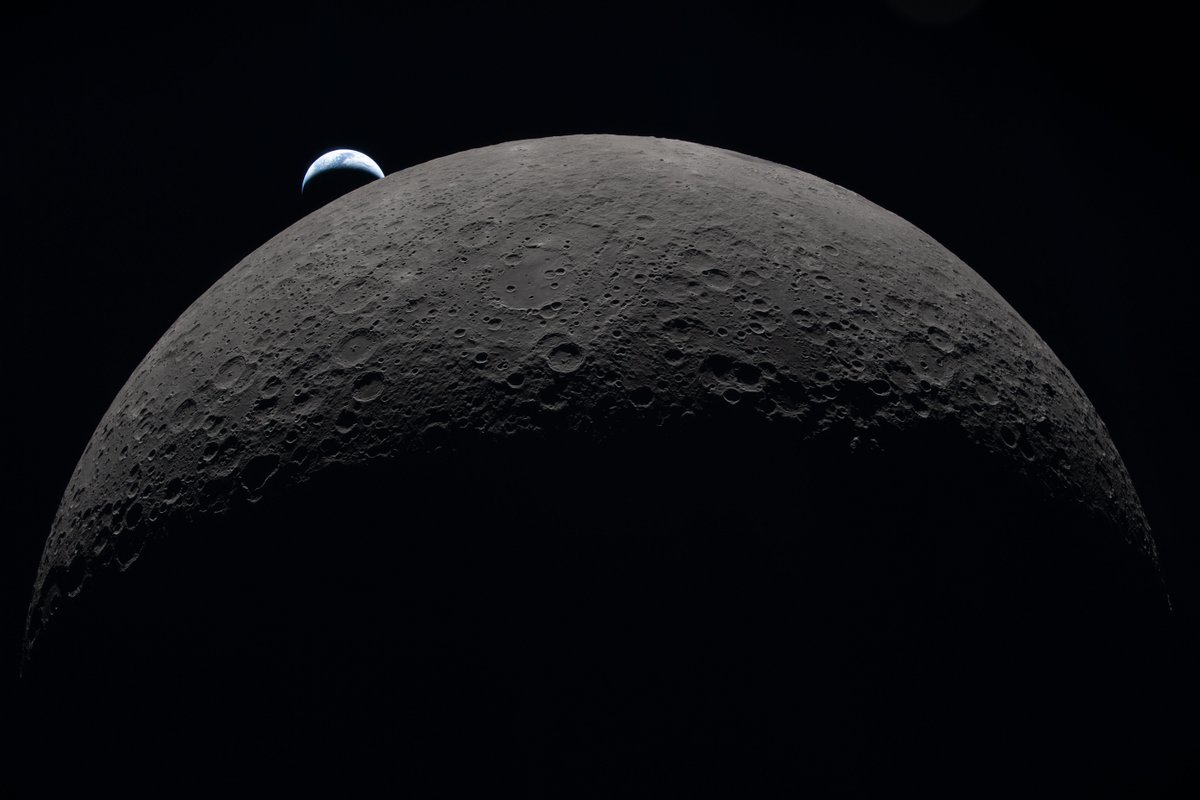
Hello, Moon. It’s great to be back.
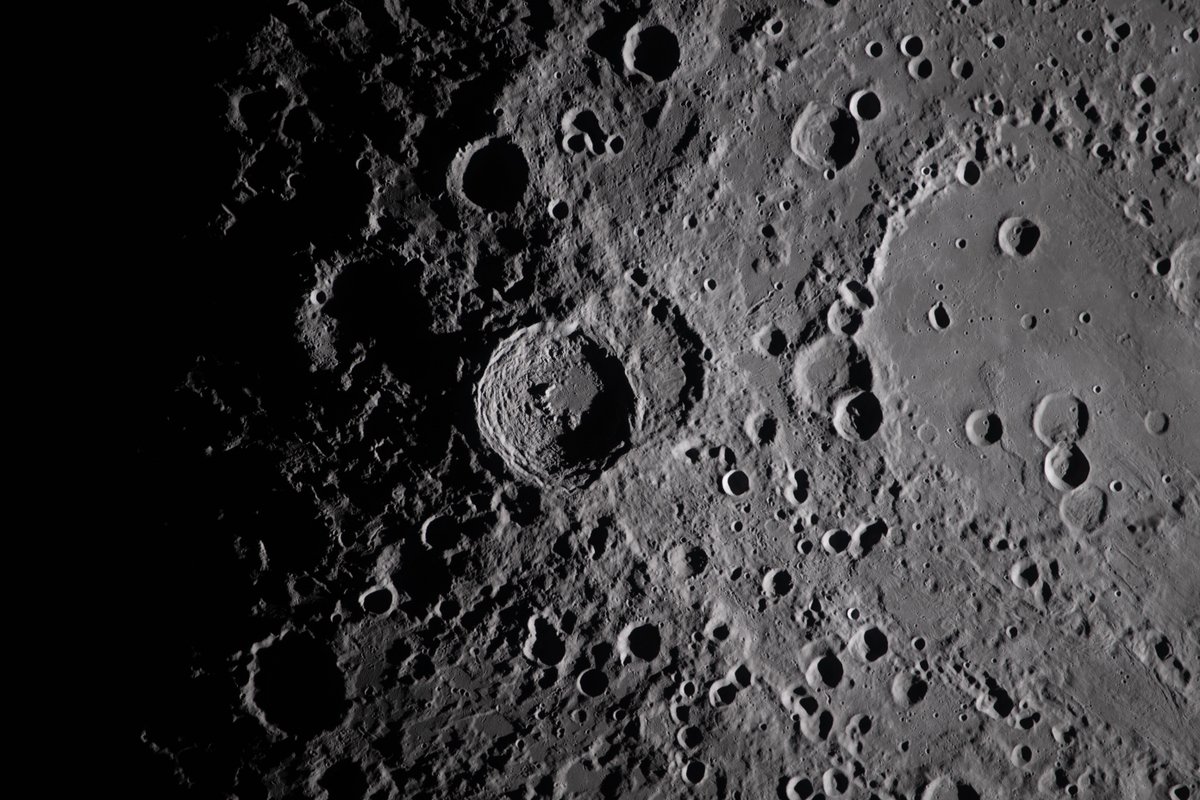
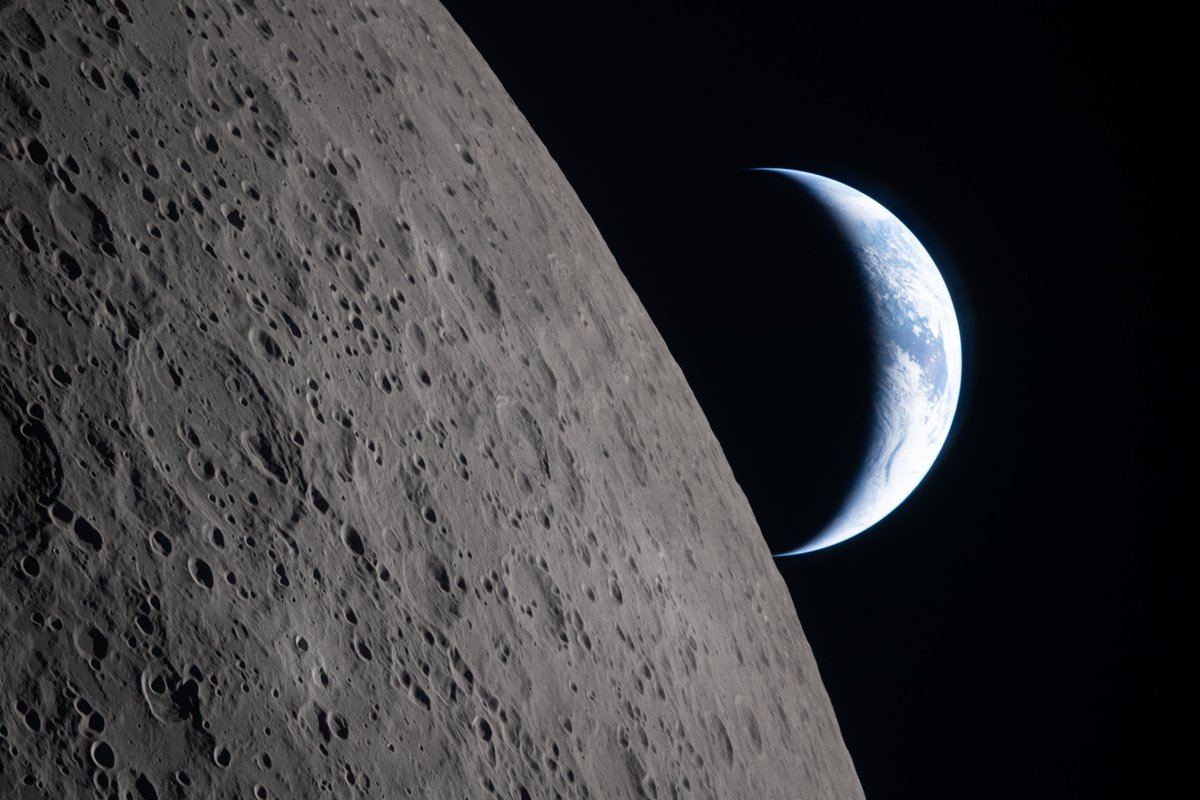
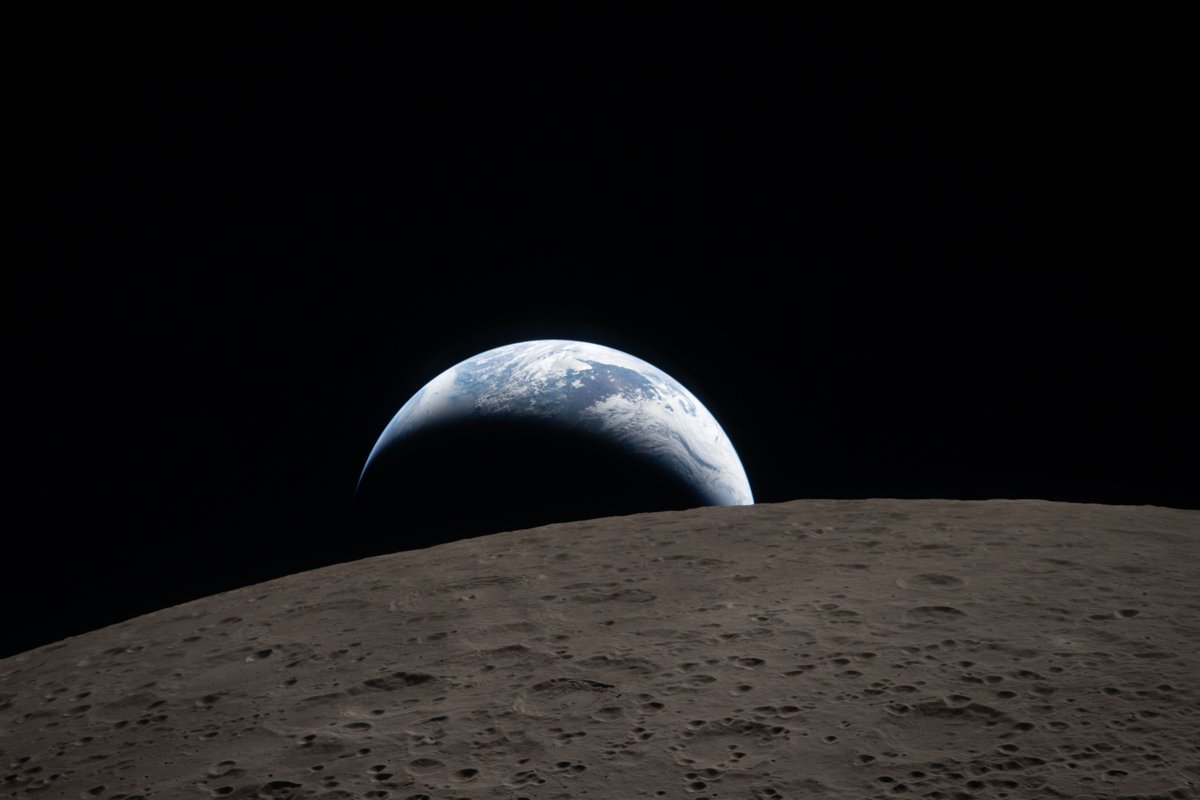
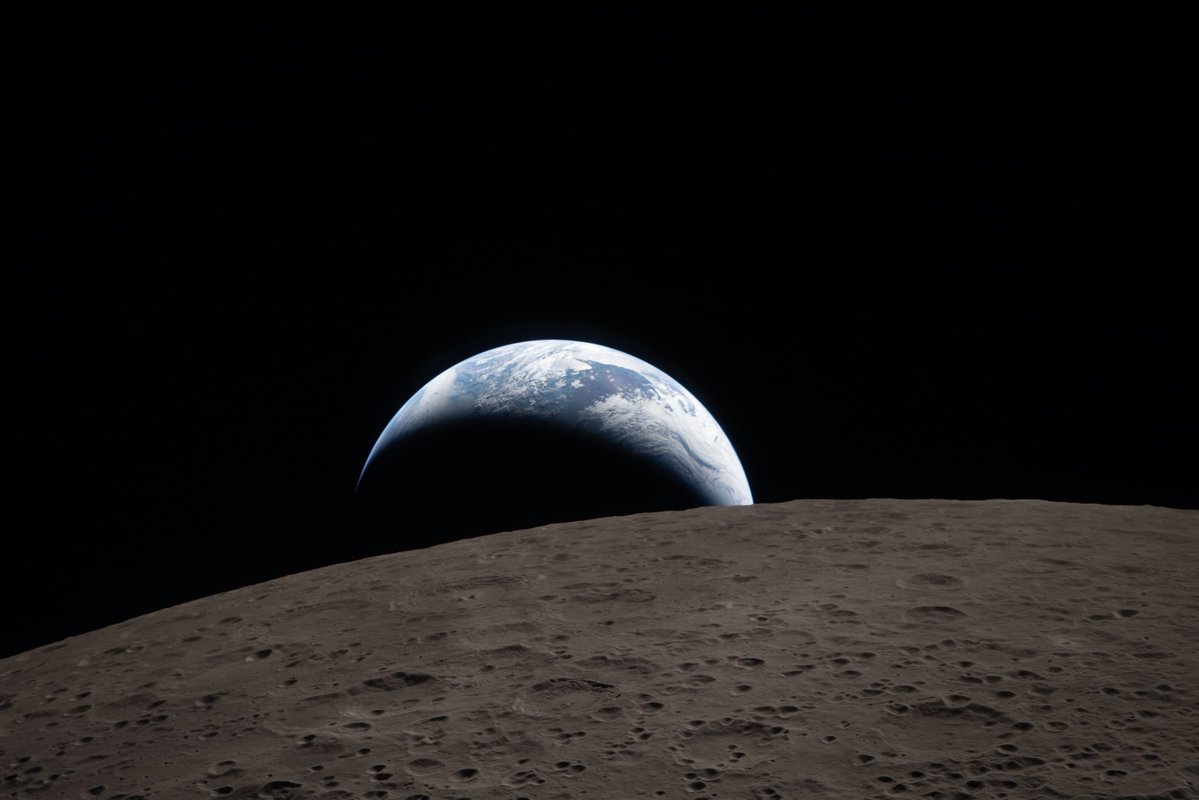
Here’s a taste of what the Artemis II astronauts photographed during their flight around the Moon. Check out more photos from the mission: https://t.co/rzM1P0QbOl
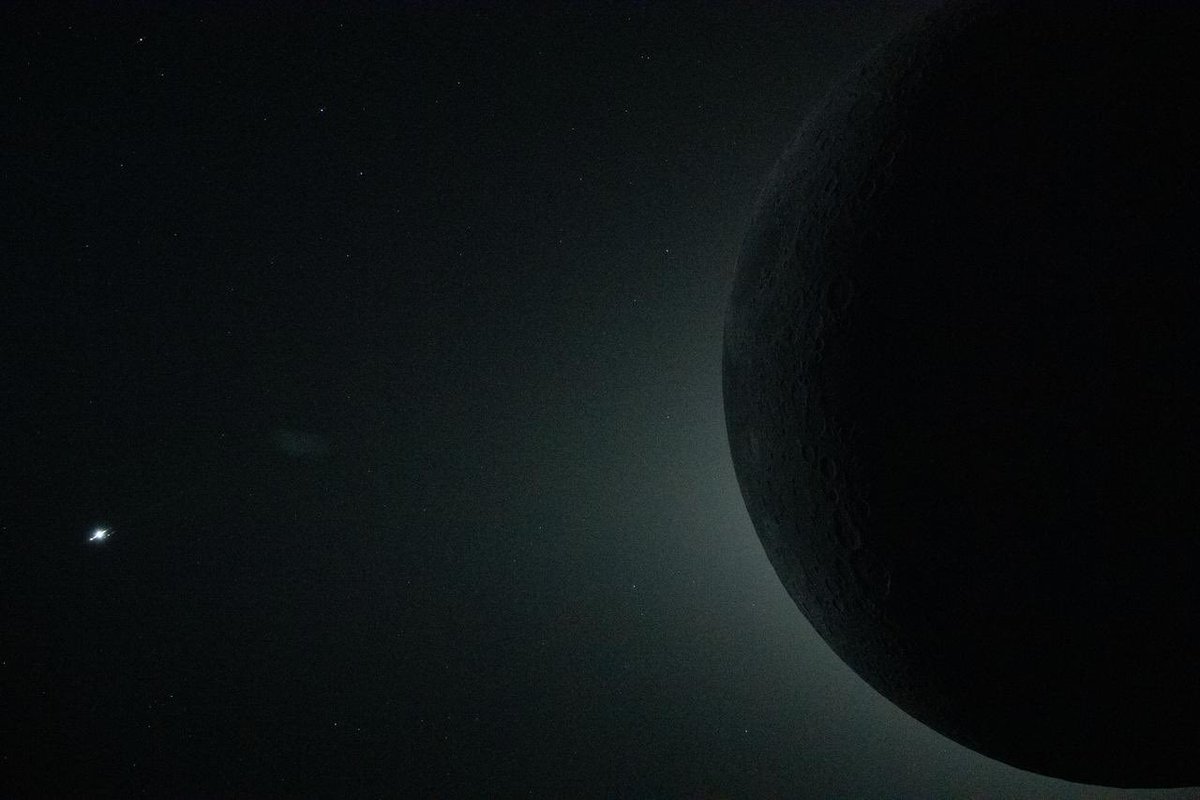
The eclipse from Orion.
On April 6, external cameras attached to the Orion spacecraft's solar array wings captured the Moon backlit by the Sun during a solar eclipse.
Artemis II 🚀🌖
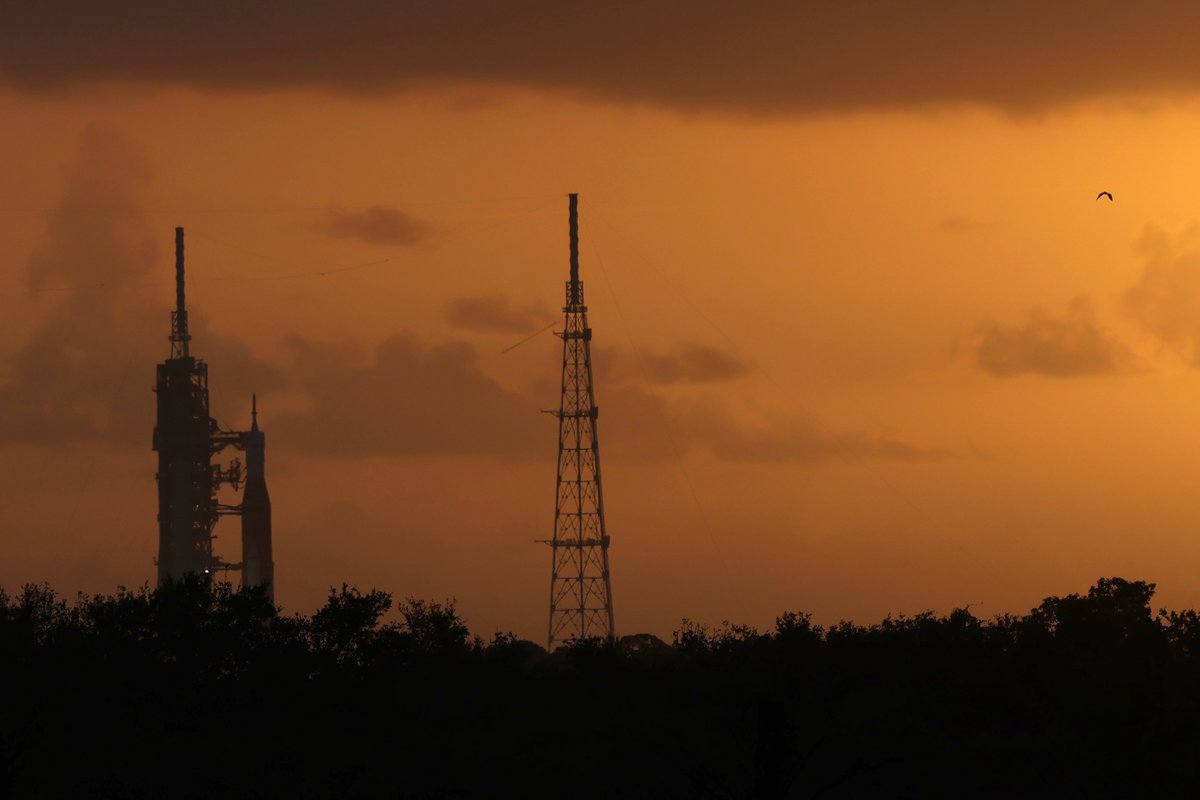
Depending on the launch time (and lighting conditions), the locations within the white range rings may have a chance to catch a glimpse of the moon-bound rocket on its way uphill.
Event Map Here: https://t.co/dakJiTg1oE
https://t.co/4gw8ucXBaF
The launch team at @NASAKennedy are GO to begin filling the Artemis II rocket with fuel.
The official launch broadcast begins at 12:50pm ET (1650 UTC). Liftoff is scheduled for no earlier than 6:24 pm ET (2224 UTC). Tanking coverage can be found here: https://t.co/VVJqQrRz4a
A new inflatable space station called Thunderbird is being developed by Max Space.
It will be launched into orbit using a single Falcon 9 rocket and will expand once in space to create a much larger living and working area.
Designed to support four astronauts, the station aims to provide a more spacious and comfortable environment for missions in low Earth orbit, with a planned launch around 2029.
NASA will host a conference on March 12 to highlight progress toward the Artemis II mission around the Moon, targeted to launch no earlier than April.
This live event will take place following the flight readiness review for the Moonbound mission. https://t.co/9ck0YoZvNb
Vast has secured $500M in funding to advance next-generation space station technologies and infrastructure for America and its allies. https://t.co/m0SqSYWT5F