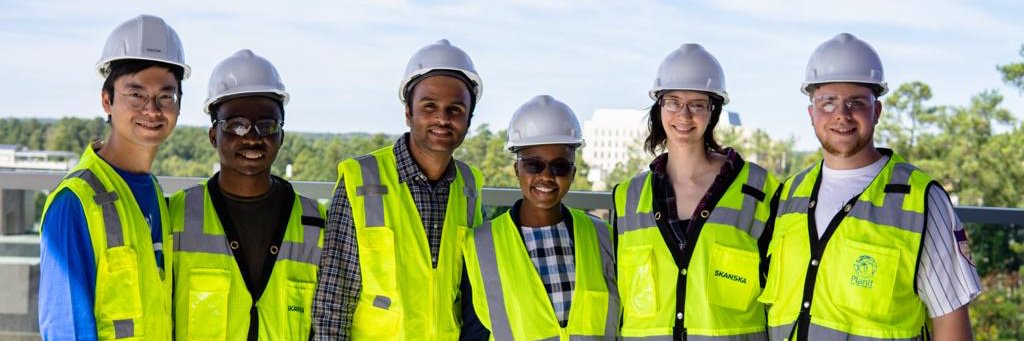
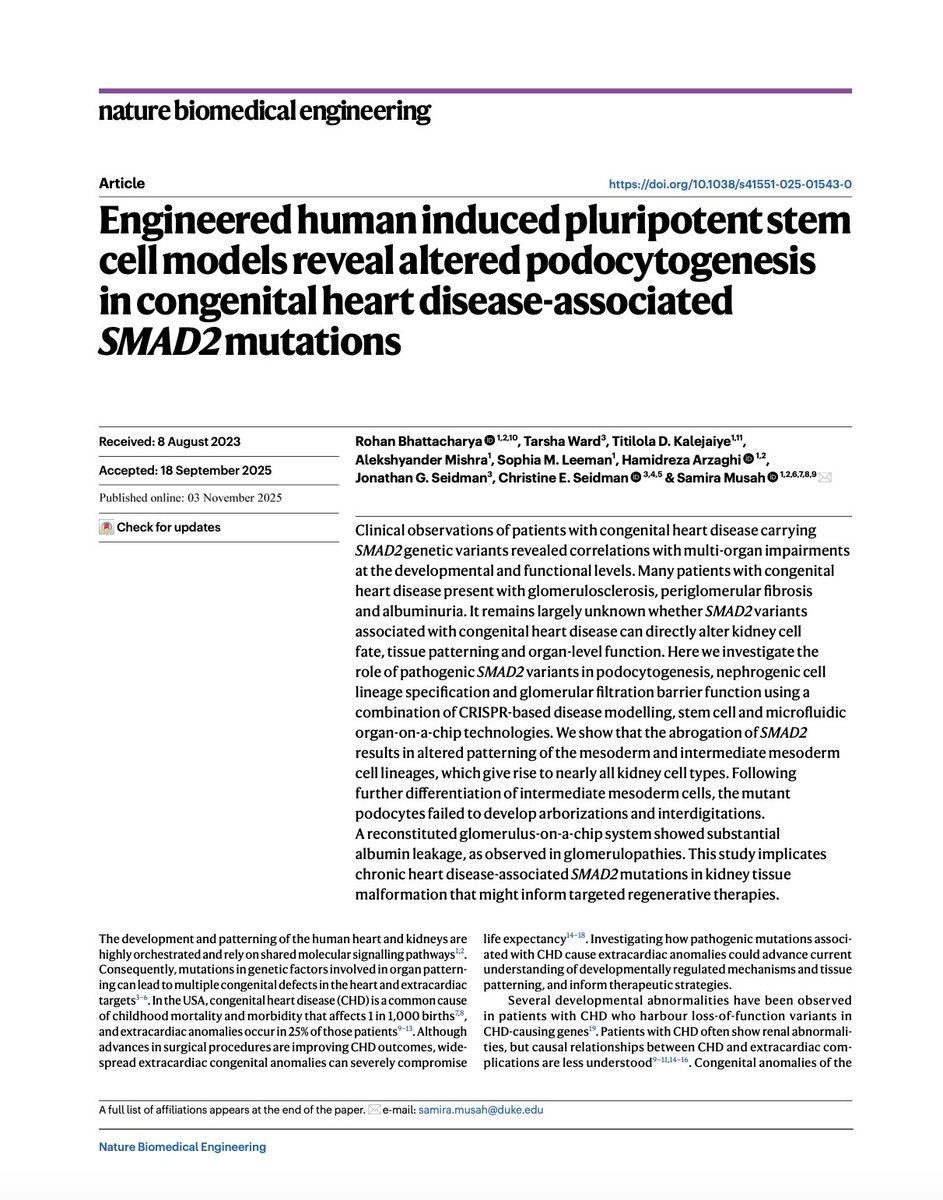
Thrilled to share that a part of my Ph.D. work from @DukeU @DukeCBTE @ProfSamiraMusah Lab is now out in @natBME!
We investigated the impact of CHD-linked SMAD2 variants on kidney development using engineered human iPS cells in a microphysiological system.
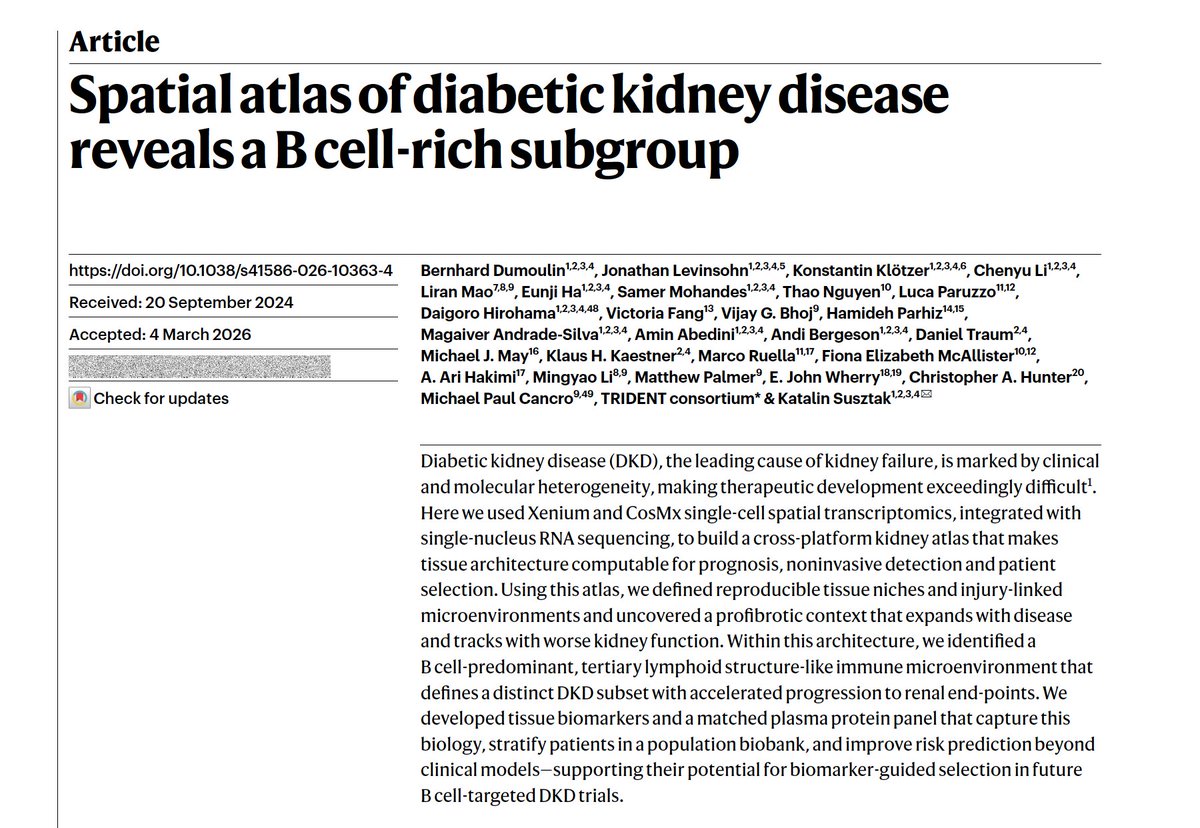
🗞️📸🌟🤩Beautiful work led by @BernhardDumoul1 with the team builds a single cell spatial atlas of human DKD using Xenium + CosMx + snRNA-seq. @Nature This is not incremental. This is a new layer of pathology. Diabetic kidney disease (DKD) is still treated as one disease. That is the problem. Patients look similar clinically but behave very differently. We asked: is there a biologically distinct subgroup we are missing?
https://t.co/Au83tayvR9
Very honored to give the Richard B. Johnston, Jr., MD March of Dimes Prize Lecture today at the SRI meeting in Puerto Rico. Emre Seli presented the award to me. Very appreciative to my lab and to my family.
Honored to be selected as this year’s March of Dimes Prize awardee. Grateful for the incredible work my lab has done over the years. I embraced developmental biology when I started my lab and am excited to see its principles translate to patients. https://t.co/afD2sycH2x.
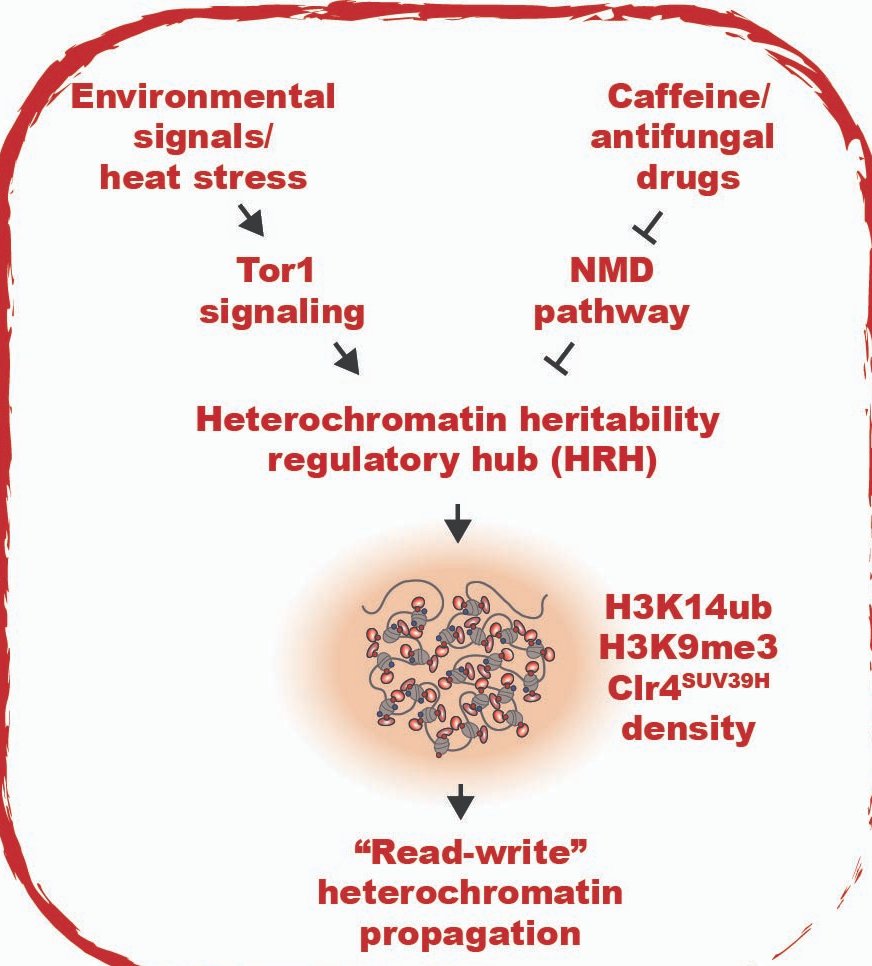
Stress controls epigenetic inheritance!
A histone ubiquitylation-based regulatory hub links stress/environmental signaling to heterochromatin self-propagation and epigenetic inheritance-reshaping how we think about development, drug resistance and cancer👉https://t.co/Wf8y1HjHEX
What protects some people from leukemia?
Thrilled to share work from the @bloodgenes lab, now published in @Science.
We identify an inherited genetic variant that protects stem cells from blood cancers by reducing risk of CHIP.
https://t.co/ExgWIJQe6y
🧵👇 (1/n)
Check out our latest story https://t.co/7wLiJlYDyy! Huge thanks to @GauravA_UK and the @bloodgenes lab for driving this work forward together with us. This was a great team effort with outstanding collaborators @_ruslansoldatov, @AbdelWahablab, and @AlexBickMDPhD.
An excellent piece on our CRATER paper, now in @ScienceMagazine 👇
Thanks to editor Priscilla Kelly and Science magazine for highlighting our work!
In Other Journals | Science https://t.co/VmBd72xvYM
🚨 Just out from our lab in @CircAHA! 🚨 We know APOL1 risk variants (RVs) cause FSGS. But what about Hypertension-Attributed Kidney Disease (H-CKD)? 🤔 H-CKD is distinct: slowly progressing, low albuminuria, and massive vascular damage. Is it just secondary to kidney injury? Or is it a primary vascular defect? We found the answer.🧵👇https://t.co/t6yS0xUCf3
Fasting hijacks proximal tubule circadian control mechanisms to regulate glucose reabsorption via the Nrf1/Sglt2 pathway in mice | @NatureComms https://t.co/LADcHkOOea
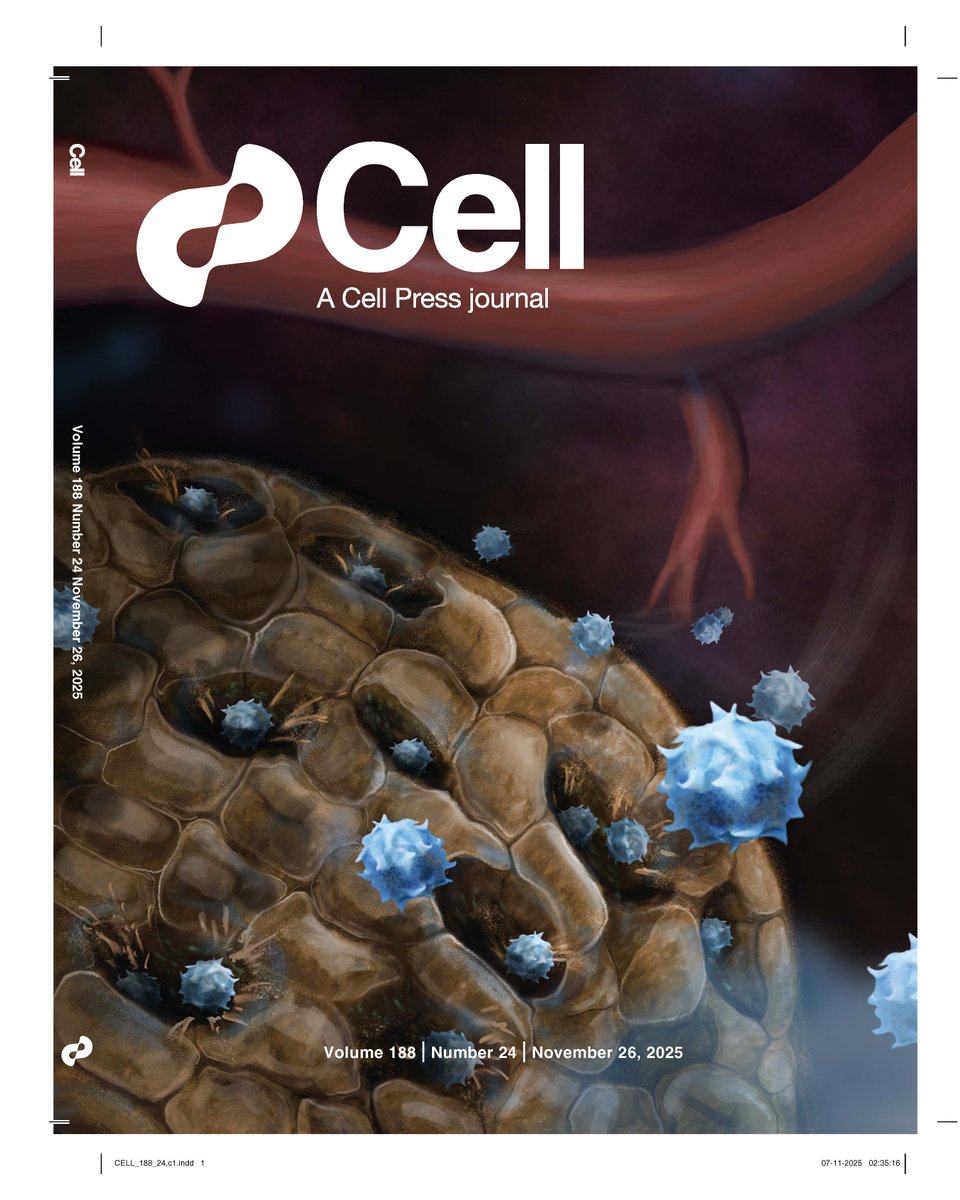
We have the cover of Cell today. Craters on the surface of melanoma serve as an immune hub for CD8+ T cells. A timely highlight as we roll into Thanksgiving.
🚨 #ScienceJobAlert!
@IHB_Research
Our team is excited to welcome new PhD students to the Immuno–Stem Cell Dynamics Lab!
✨ Curiosity, courage, and a passion for discovery are very welcome here.
Take a look and join us on this adventure →
👉 https://t.co/vEWI7kYicm
We have observed a beautifully strange phenomenon of phase separation by human monocytes placed on soft matrix, which do it for survival. We model it by incorporating the Cahn–Hilliard equation with a Turing mechanism of local activation/global inhibition
https://t.co/1AYrcqsP9L
Thrilled to share that a part of my Ph.D. work from @DukeU @DukeCBTE @ProfSamiraMusah Lab is now out in @natBME!
We investigated the impact of CHD-linked SMAD2 variants on kidney development using engineered human iPS cells in a microphysiological system.
Clinically, we propose routine renal and molecular screening in CHD patients with mutations such as SMAD2, as GFR reduction in CHD is strongly associated with mortality.