Introducing NEO’s 25 Degrees of Freedom, tendon-driven hands — nearing or surpassing human-level dexterity, strength, speed, and reliability.
For seventy years, robotics worked around the hand problem. The humanoid bet is the reverse: it lives or dies at the fingertips.
As engineering, product, design, DS, etc. melt into a new kind of role, I was reflecting on what roles might look like in the future. For example, when I look at the Claude Code team I see what I think is five archetypes:
1. Prototyper: comes up with brand new ideas; churns out many ideas, most of which don't ship
2. Builder: quickly turns a prototype/idea into production-grade product/infra
3. Sweeper: cleans up the UI, simplifies the code and system, unships, optimizes performance
4. Grower: takes a product that has been built and iterates on it to improve Product-Market Fit
5. Maintainer: owns a mature system to make it secure, reliable, fast, and efficient as it scales
Many people span across 2 roles, and sometimes 3 roles. I also notice that these roles are not really tied to job function -- eg. across Anthropic, some designers match category 1, some 2, some 3; same for engineers, PM, DS.
A healthy team needs a mix of these, depending on the product:
- A product that is new and pre-PMF needs people that are strong at 1+2+3
- A product that is growing and has found PMF needs 2+3+4 and some 5
- A product that has strong PMF needs 3+4+5 and some 2
Maybe product roles of the future will look more like this, and less like the domain-specific roles of today?
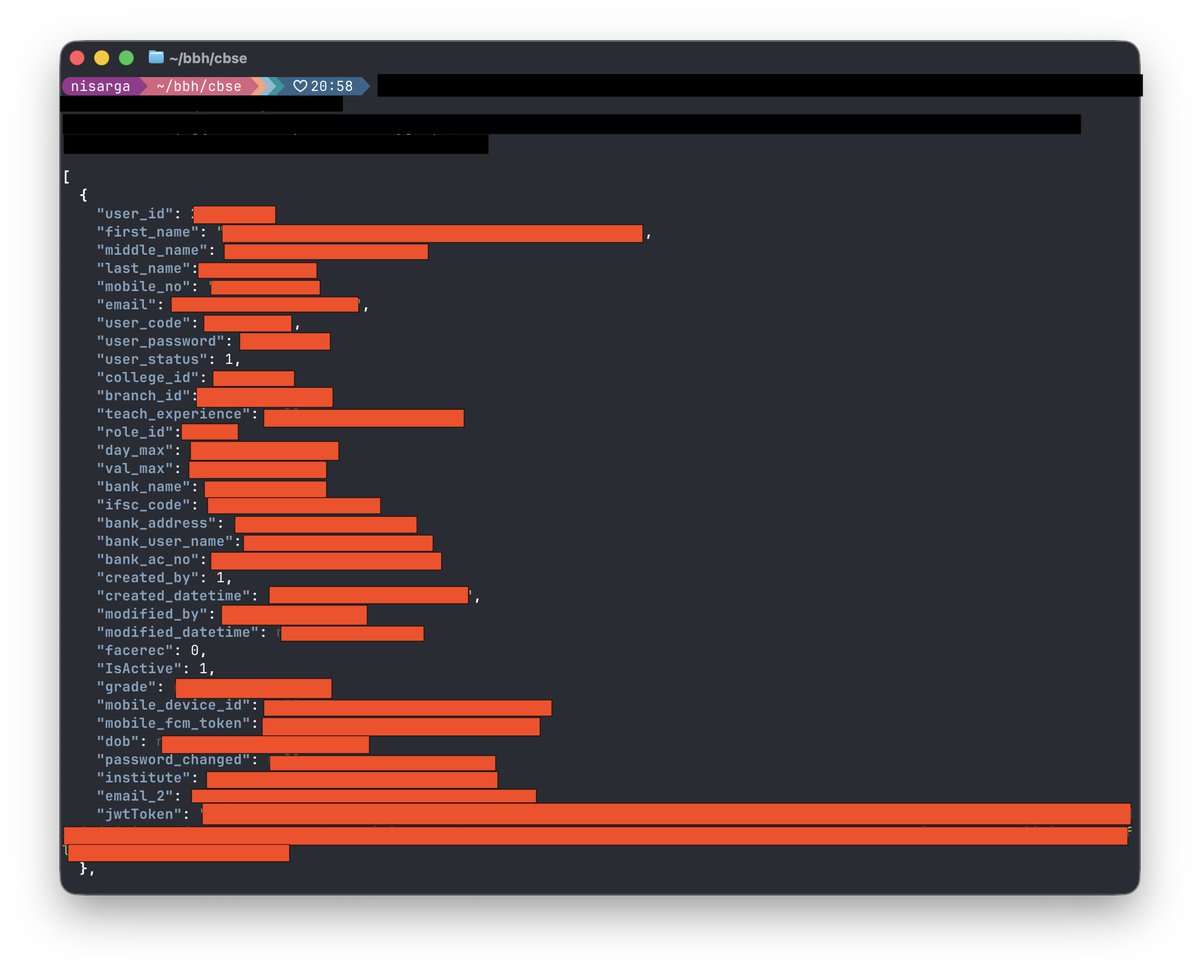
@ni5arga Bro discovered more holes in CBSE’s system than there are in Indian roads after monsoon 💀Next vulnerability drop: ‘How to change your board marks with inspect element and vibes’
CERT-In be like: ‘Sir, patch nahi, feature hai yeh’ Keep cooking king, but also keep a suitcase ready
I had hacked CBSE's OSM (On-Screen Marking Portal) in February and had reported the vulnerabilities to CERT-In, but they were unable to patch most of them.
I've written a detailed blog post about it here: https://t.co/qyT23GkTEJ
"let it cook" is the line Anthropic engineers just repeated all day at Code with Claude London.
Boris Cherny said it in the keynote. Ravi Trivedi said it in the next talk. Katelyn Lesse said it at the panel.
it means: stop micromanaging the prompts. write the routine. let Claude prompt itself.
his framing:
> routines are higher-order prompts.
> the runtime is shipped.
> the prompts are the bottleneck.
what they didn't say on stage: most routines die without 3 specific properties.
i tested 30. 9 made it. the other 21 violated one of the three.
the 9 that survived are in the article.
all verbatim, just copy-paste.
worth more than $300 of "prompt engineering consulting" before you build anything.
@FarzaTV Let’s do it @FarzaTV interface is the bottleneck. I have been using a version of clicky I made as a chrome extension. Helped me save notes across sites and turned it into my second brain. 🧠 can code, write and make content. Teehee.