We went from 0 to 2,200 paying customers in under a year by following @ycombinator's 15 rules:
1/ Do things that don't scale. Get your first 10 customers by hand.
2/ Launch now, not when it's "ready". A mediocre product in front of real users teaches you more in a week than 6 months of polishing in the dark.
3/ Charge from day one. If nobody will pay, you don't have a startup, you have a hobby.
4/ Talk to users every single day. The roadmap you need is sitting in your customers' heads, and they'll hand it to you for free
5/ Always hunt the 90/10 solution. For almost any feature there's a way to capture 90% of the value with 10% of the effort.
6/ There are only two real jobs: write code and talk to users. Everything else (conferences, press, VC coffees, corp dev calls) is fake work.
7/ You pick your customers as much as they pick you. 10 users who love you beat 1,000 who kind of like you.
8/ Growth is an output, not a strategy. Grow before product market fit and all you're buying is churn.
9/ Do less, really well. Pick one or two metrics and judge every task against them.
10/ Know if you're default alive. Paul Graham's question: on current growth and current burn, do you reach profitability before the money runs out?
11/ Don't hire until it hurts. Headcount is not progress, it's burn. Every great startup was embarrassingly small for embarrassingly long.
12/ Momentum is the only real moat in year one. Ship something every week, even something tiny.
13/ Every great startup is badly broken at some point. The game isn't avoiding fires, it's how fast you put them out. Again. And again
14/ Ignore your competitors. Startups die of suicide, not murder. In year one, the only company that can kill yours is your own
15/ Startups rarely die from running out of money. They die because the founders fall out. Brutal honesty with your cofounder is the cheapest insurance you'll ever buy
Good luck !
Dario is wrong.
He knows absolutely nothing about the effects of technological revolutions on the labor market.
Don't listen to him, Sam, Yoshua, Geoff, or me on this topic.
Listen to economists who have spent their career studying this, like @Ph_Aghion , @erikbryn , @DAcemogluMIT , @amcafee , @davidautor
I meet a lot of founders who are worried by the rapid rate of technological change. They shouldn't be. It may feel uncomfortable, but techno-turbulence is net good for startups. They're much more likely to adapt successfully to some big change than incumbents are.
H5N1 bird flu has a mortality rate close to 100% in chicken. When the virus is detected in a chicken farm, all animals are being euthanised to reduce their suffering and limit the risk of spread to other animals and humans.
1/
@AnthropicAI hey! My company Lyst is trying to renew a paid subscription to https://t.co/kwfQIx2rrY , the payment fails and we are struggling to get support. How can we handle this please ?
Nvidia ($960B) is now worth more than:
- Facebook ($665B)
- Tesla ($618B)
- Netflix ($168B)
This is a company that started 30 years ago at Denny's and was for decades only a video game chip maker.
Here's why Nvidia is surging:
I'm speechless.
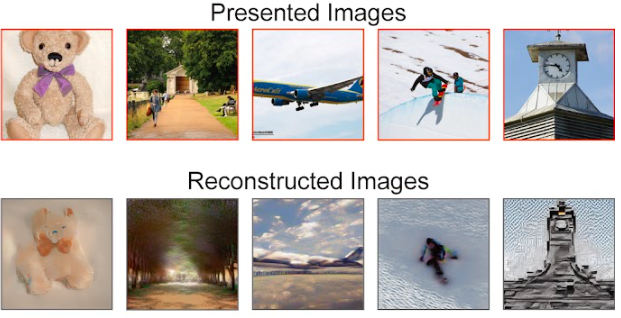
Not peer-reviewed yet but a submitted paper.
The 'presented images' were shown to a group of humans. The 'reconstructed images' were the result of an fMRI output to Stable Diffusion.
In other words, #stablediffusion literally read people's minds.
Source 👇
He blames the NHS, GPs, care workers, Kate Bingham, his scientific advisers, his cabinet colleagues. Yet - guess what - he gets every single big call right.
I read Matt Hancock’s Pandemic Diaries so you didn’t have to. And they’re absolutely nauseating.
https://t.co/I0MPxdxi0S