#ESMO26 is a wrap. A few thoughts.
It is a privilege to be an oncologist. To everyone who took the time to meet with me, lend their expertise or mentor me in some way: thank you. I am grateful. Also, to the patients who contributed their time, hope and lives to allow these studies to happen, thank you. This is what allows progress.
1. ESMO absolutely brought incredible advancements. So did China. This was the first global conference where the USA has clearly been dethroned as the de facto biomedical trial leader (5 of the 7 Presidential Symposium late-breakers focused on new drugs were Chinese developed). Chinese patients will be getting access to the latest biomedical advances, first.
2. The molecular era is here for KRAS. Expect it to come to early lines, in every tumor, fast. Expect sexy combos. (I am personally very excited about Genmab + Incyte's LGR5-EGFR + G12D but also think Verastem’s and RevMed’s G12D’s look great.)
3. Some advances look meaningful but are minor. PD1-VEGF beats PD1, but it wasn't compared to PD1 + VEGF. The benefit looks similar to adding bev (duh).
4. Cellular therapy is finally here for solid tumors. Get your systems ready now, it takes years to truly prepare. The 66% response rate for TezR (SL-28) across all-comer solid tumors blew my mind.
5. ADCs will hit CRC/GI quickly, and in a few years there will be many questions about sequencing. Please please please stop using the same payloads.
6. Medical education is more important than ever with how fast the field is moving. If anyone has advice on how @TheGutOncLab can disseminate information better (like the people at @OpenMedicineHQ and @OncoAlert do), please let me know.
Here's to next year. Already getting ready for @ASCO GI
@TheGutOncLab@Onco_Nexus
RELIGHT: PIII 1L gastric cancer 🇨🇳, now published in JCO.
"Positive", but put it next to CheckMate and it suddenly loses its luster.
Retlirafusp is a PD-L1/TGF-B bispecific. The study randomized 731 patients with HER2-negative gastric/GEJ adenocarcinoma to retlirafusp + CAPOX vs placebo + CAPOX.
OS 16.8 vs 10.4 mo, HR 0.53
PFS 7.6 vs 5.5 mo, HR 0.52
Looking at the Chinese cohort in CheckMate-649, CPS ≥5 cohort (nivo + chemo vs chemo) results are strikingly similar:
OS 15.5 vs 9.6 mo, HR 0.54
PFS 8.5 vs 4.3 mo, HR 0.52
Given a plain PD-1 inhibitor produced essentially the same hazard ratios here it is hard to see what TGF-β is adding.
Chemo alone hasn't been standard for years, and the authors acknowledge the protocol was locked before PD-1 + chemo became SoC in China. RELIGHT shows retlirafusp beats chemo; we already knew that.
Why am I posting about it? Well, it is another striking example that China has woken up to clinical trials and is running laps around the rest of the world in terms of speed, cost and efficiency. Anyone who has watched a trial sit in contracting for months knows reform is overdue (someone please teach me how to efficiently move legal forward).
@OncoAlert@TheGutOncLab@Onco_Nexus
https://t.co/DA800WByJv
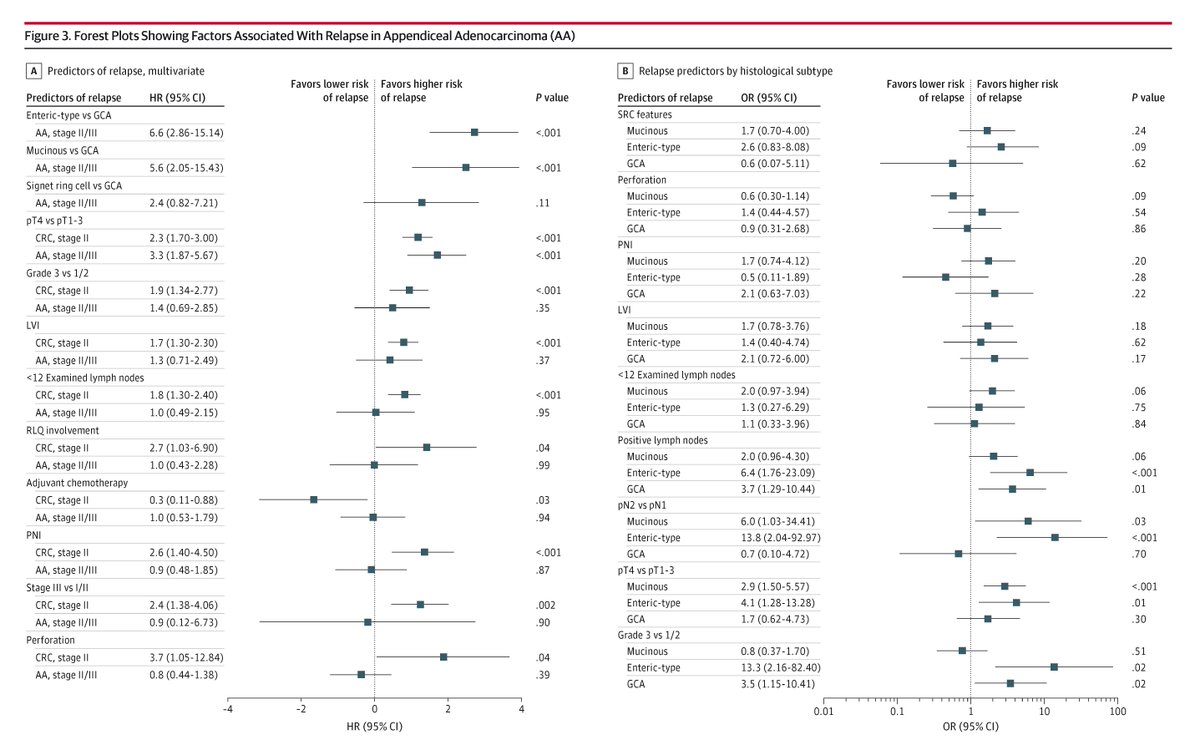
In the largest study to date of localized appendix cancer, researchers found that fewer than 10% of patients experienced recurrence after surgery, and chemotherapy given after surgery was not associated with improved survival: https://t.co/DHJ3mEtqit @jpshen_md#EndCancer
After resection of localized #AppendicealAdenocarcinoma, relapse risk was low overall and varied by histopathologic subtype and molecular features. Adjuvant #Chemotherapy was not associated with improved recurrence-free or overall survival.
https://t.co/n3mV6yqHDa
True pleasure to meet with many established & rising Arab oncologists, researchers, postdocs, or residents especially from Jordan and Lebanon at the King Hussein Cancer Center @KHCFKHCC health exchange forums in #ASCO2026@AUB_Lebanon
#ASCO26
BREAKWATER: Encorafenib + cetuximab + FOLFIRI in 1L BRAF V600E-mutant mCRC
Abstract LBA3503
Presentation: May 31, 2026
BRAF V600E-mutant CRC has always been different.
More aggressive biology. Worse prognosis. Less forgiving clinical course.
For years, the question was whether we could move targeted therapy earlier and make a real dent in outcomes, not just response.
BREAKWATER keeps answering that question.
This cohort evaluated encorafenib + cetuximab with FOLFIRI in the first-line setting for BRAF V600E-mutant mCRC.
Quick hits:
📌 1L BRAF V600E-mutant mCRC
Encorafenib + cetuximab + FOLFIRI vs FOLFIRI ± bevacizumab
🎯 Response
64.4% vs 39.2%
📈 Median PFS
15.2 vs 8.3 months
HR 0.44
📊 Overall survival
HR 0.56
🔥 18-month OS
72.0% vs 54.5%
This is the kind of result that matters because it is not just one endpoint moving.
Response matters in symptomatic disease.
PFS matters in aggressive biology.
OS matters always.
And here, all three are positive.
The practical piece is also important: FOLFIRI gives clinicians flexibility. For patients with neuropathy, prior oxaliplatin exposure, or concern about cumulative oxaliplatin toxicity, this helps support a fluoropyrimidine/irinotecan backbone with EGFR/BRAF targeting.
My take: for BRAF V600E-mutant mCRC, the treatment frame has changed.
This is no longer a disease where we wait for later-line targeted therapy.
The targeted backbone belongs up front.
@TheGutonclab@UGrewalMD@TimothyJBrownMD@OncoAlert@Onco_Nexus@ASCO@NazliDizman@LauraAlderMD@DVAraujoMD@DrBarbiOnc@LauraEsfeller@FunchainMD@YGaritaonaindia@DrSAHaddad@jgong15@iandresmeraz@SakditadMD@RamilaShilpakar@RohitBanwar@lungoncdoc
#ASCO26
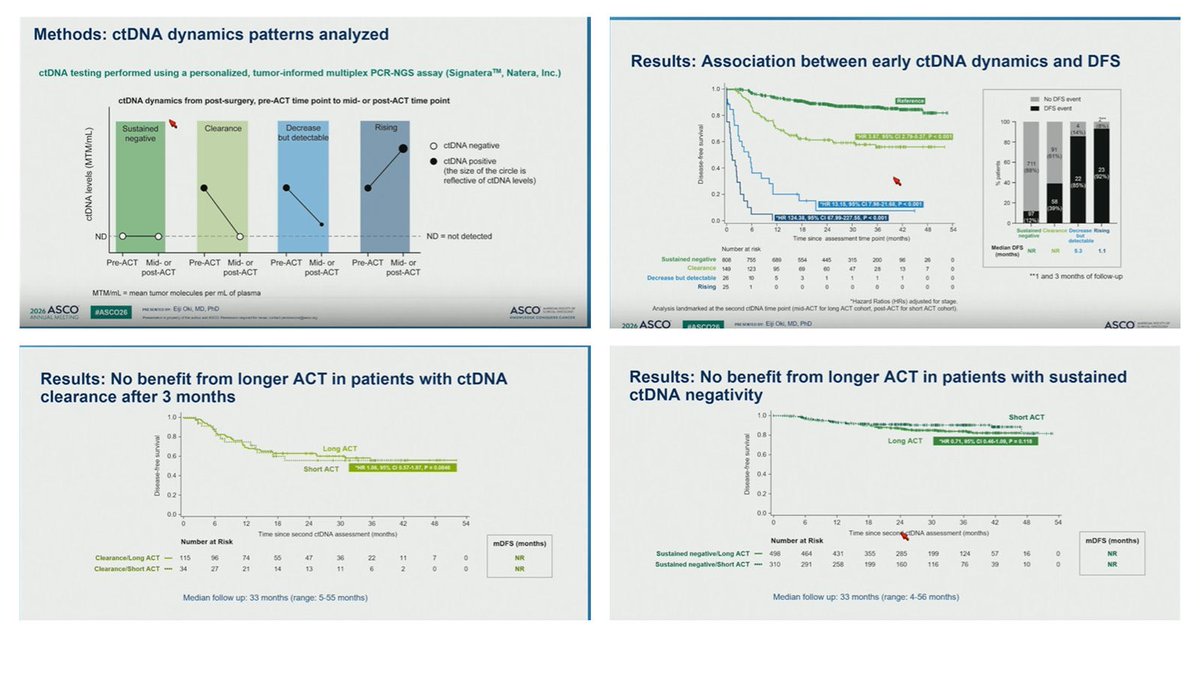
LBA3501: Optimal duration of adjuvant chemotherapy in resected stage I-IV CRC using GALAXY Japan ctDNA dynamics
GALAXY Japan is the longitudinal dataset that keeps on giving.
Now, it gets directly at the question we face all the time in clinic:
How much adjuvant chemotherapy is enough?
GALAXY looked at ctDNA dynamics using a personalized tumor-informed assay from the post-surgery/pre-ACT time point to mid- or post-ACT, grouping patients into sustained negative, clearance, decrease but still detectable, or rising ctDNA.
Quick hits:
📌 ctDNA dynamics were strongly prognostic
Sustained negative did best
Clearance did next best
Decrease but detectable and rising ctDNA did poorly
📈 Median DFS
Sustained negative: NR
Clearance: NR
Decrease but detectable: 5.3 months
Rising: 1.1 months
🧬 Clearance matters
If ctDNA clears, outcomes look much better than if ctDNA remains detectable.
🚨 But detectable is detectable
A falling ctDNA that remains positive is not reassuring.
Rising ctDNA at 3 months is worse.
⏱️ Duration question
Among patients with ctDNA clearance after 3 months, longer ACT did not appear to improve DFS.
✅ Sustained ctDNA-negative patients
Longer ACT also did not appear to improve DFS in patients who stayed ctDNA negative.
This is a major step toward using ctDNA dynamics as a tool during ACT, not just a binary post-op risk marker.
For my practice, ctDNA dynamics are a key piece of information to be used in concert with the complete clinical picture during adjuvant therapy discussions.
The biggest takeaway:
Post-op ctDNA is important.
But the story may matter more than the snapshot.
(Credit to @CathyEngMD who I cribbed this nice side by side image from)
@TheGutonclab@UGrewalMD@TimothyJBrownMD@OncoAlert@Onco_Nexus@ASCO@NazliDizman@LauraAlderMD@DVAraujoMD@DrBarbiOnc@LauraEsfeller@FunchainMD@YGaritaonaindia@DrSAHaddad@jgong15@iandresmeraz@SakditadMD@RamilaShilpakar@RohitBanwar@lungoncdoc
Presented at #ASCO26:
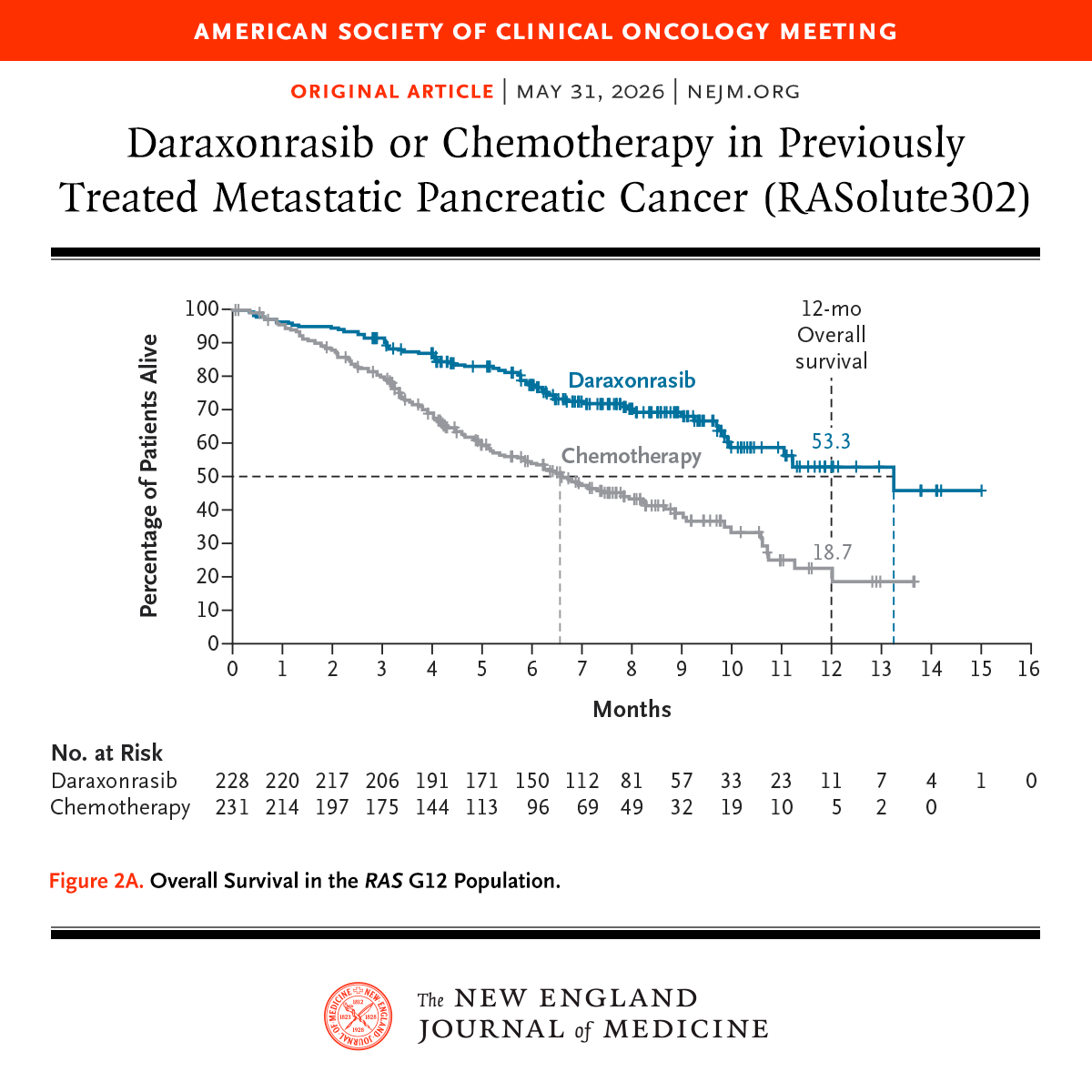
Among patients with previously treated metastatic pancreatic ductal adenocarcinoma, the RAS(ON) inhibitor daraxonrasib led to significantly longer overall survival and progression-free survival than chemotherapy. Full phase 3 RASolute 302 trial results: https://t.co/xwLWBZYRzq
@ASCO
Glad to share our new manuscript with First Co-authoring Dr. Afif Mufarrij under the mentorship of Dr.@AliTaherMD discussing Thalassemia Care in ER @nicolecharbel @Sachaelkoury
A landmark global trial led by AUB’s Dr. Ali Taher and the Chronic Care Center marks a major breakthrough in thalassaemia care. Published in @TheLancet, the study is the first to show an effective oral therapy for both alpha and beta forms of non–transfusion-dependent thalassaemia—placing Lebanon at the forefront of global medical innovation. Read more: https://t.co/oDVn9RMz8A
A landmark global phase 3 clinical trial led by Dr. Ali Taher from AUB and the Chronic Care Center marks a breakthrough in thalassemia care. Published in The Lancet, the study is the first to demonstrate the efficacy of an oral therapy—mitapivat—for both alpha and beta forms of non-transfusion-dependent thalassemia (NTDT), offering new hope for patients worldwide and positioning Lebanon at the forefront of global medical innovation.
https://t.co/S5kiJAxqF1
#AUB #AUBvibes
@AUBMC_Official@AUB_FM@AliTaherMD
Thrilled to share that our global Phase 3 trial of mitapivat in NTDT—where I served as global PI & lead author—has been accepted in The Lancet!
A game changer: the first oral disease-modifying therapy in NTDT. Proud this was led from #Lebanon.
🔗 https://t.co/FVR6ovYWJ9
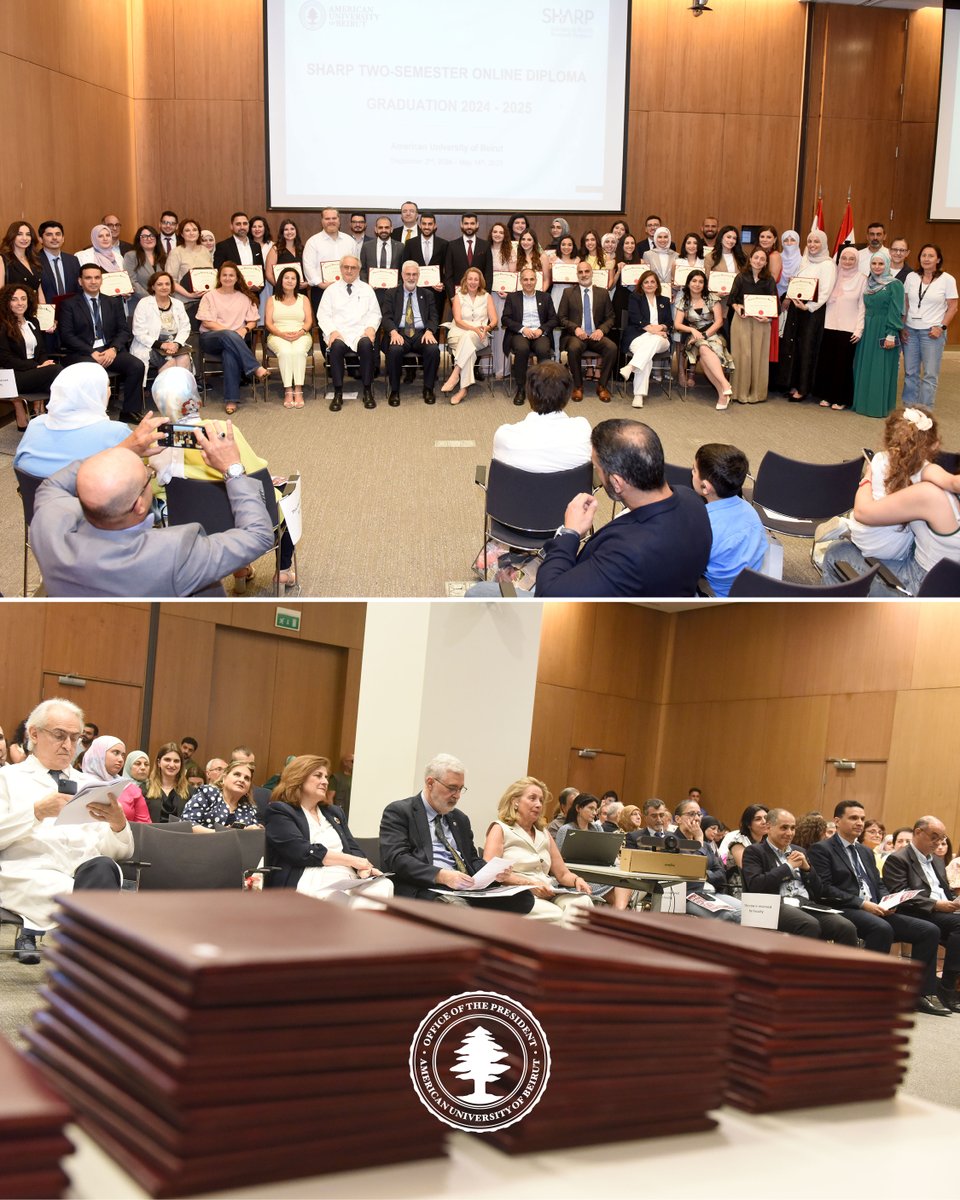
"With graduates from across the region and beyond—SHARP is shaping a new generation of regional and global health leaders. You are part of a connected network transforming evidence into action, across borders and generations."
"We do not practice medicine, carry out research, or teach at a level that is 'good enough for the local standard.' We practice world-class medicine, organize world-class conferences, and have a social impact any university in the world would be proud of."
#AUB President Fadlo R. Khuri at the Sixth Middle East and North Africa Immuno-Oncology Forum (MIOF) Opening Ceremony