An AI agent discovers a quantum algorithm 290 X speedup and the computing cost by 11.8 X, and lowered required memory from 5,650 to 4,338 error-corrected qubits.
https://t.co/etevAdnU5j
@lionel_mora Very interesting … I had thought out connected learning for students while working on 3D Physics simulations… an extended STEM version.
As an educator, my questions is on the answer kids receive.. Is it verified or AI generated with interactive elements ?
After the MWC26 event in Doha, and the Trent there in I decided to write my view over at Substack.
3D digital twin is progressing towards being the crystal ball.
https://t.co/FISp2LxYW3
The field that could get a boot from AI is Fusion Engineering
Al solved mathematical equations and are now solving the magnetic field conjecture for plasma physics.
https://t.co/mkYQKNTMBO
A 185-milligram robot flies freely without a transmission, powering its cone-shaped wings with an electrostrictive actuator. It also stands up to crushing impacts. @UCLAengineering
Read more in Science #Robotics: https://t.co/tevmzlzEdJ
this is insane, a dead fly brain just got a new body
166,700 fruit fly neurons and more than 25 million biological connections are now sitting inside a robotic body that looks almost exactly like the animal they came from
the lab gave those neurons cameras, wings and motors, then let the system figure out what those signals meant without writing normal flight behavior for it
a light moves and the head turns
airflow changes and the wings correct
another fly crosses the camera and the robot starts following it
the creepy part is how little machinery the brain actually needs before old instincts start becoming useful again
nature spent hundreds of millions of years building a nervous system that can react, stabilize and chase movement
someone just gave that nervous system a body made of metal
the original fly is gone
its wiring is still trying to fly
166,700 fruit fly neurons just took over 3 drones, and nobody taught them to fly.
Scientists mapped the full brain of 1 real fly, every neuron and all 25 million connections, and put it online for free.
Someone copied that brain 3 times and plugged each copy into a drone.
No flight code, no gesture presets, no "avoid the chair" rule, just a camera feeding the fly's eyes and neurons turning into throttle.
1 drone hovers, 1 slips past a chair, 1 drops to the floor and holds.
This brain spent 350 million years learning to stay in the air, and now it's back where it belongs.
No GPUs, no training run, no $100B data center, just a brain smaller than a grain of salt.
1 fly gives you 3 pilots, and 1,000 flies give you a swarm.
The fly is dead, but its brain just got a squadron.
A speck in a dish—that’s all the nervous system of the fruit fly Drosophila melanogaster looks like to the naked eye.
But look closely enough, and it resolves into a network of 166,700 nerve cells connected through 124.2 million synapses.
The intricate map—called a connectome—has now been published, marking the end of an ambitious 20-year research project. Learn more: https://t.co/EKsDRQOgAS @NewsfromScience
@threejs The release brought back the memories when Blender introduced eevee… The same fascination in having to visualize the model in real time… and with all the details…
3D car disintegration in Blender + exporting it in the right configurations for three.js was such a complex task
This anatomy visualization with Astra takes the hard part away + such smooth transition & neat interface
Learning needs a remodeling to make it available for all
since you guys loved the exploding tesla..
I used GPT-6 Astra to create a 3D website that pulls apart the male anatomy into 2,234 modeled pieces!
we are in a renaissance of learning
Introducing Atlas:
The world's first multimodal world model that generates image and video frames with pixel-perfect camera control and reconstructs them in 3D.
Model the world, move the camera, and simulate space & time.
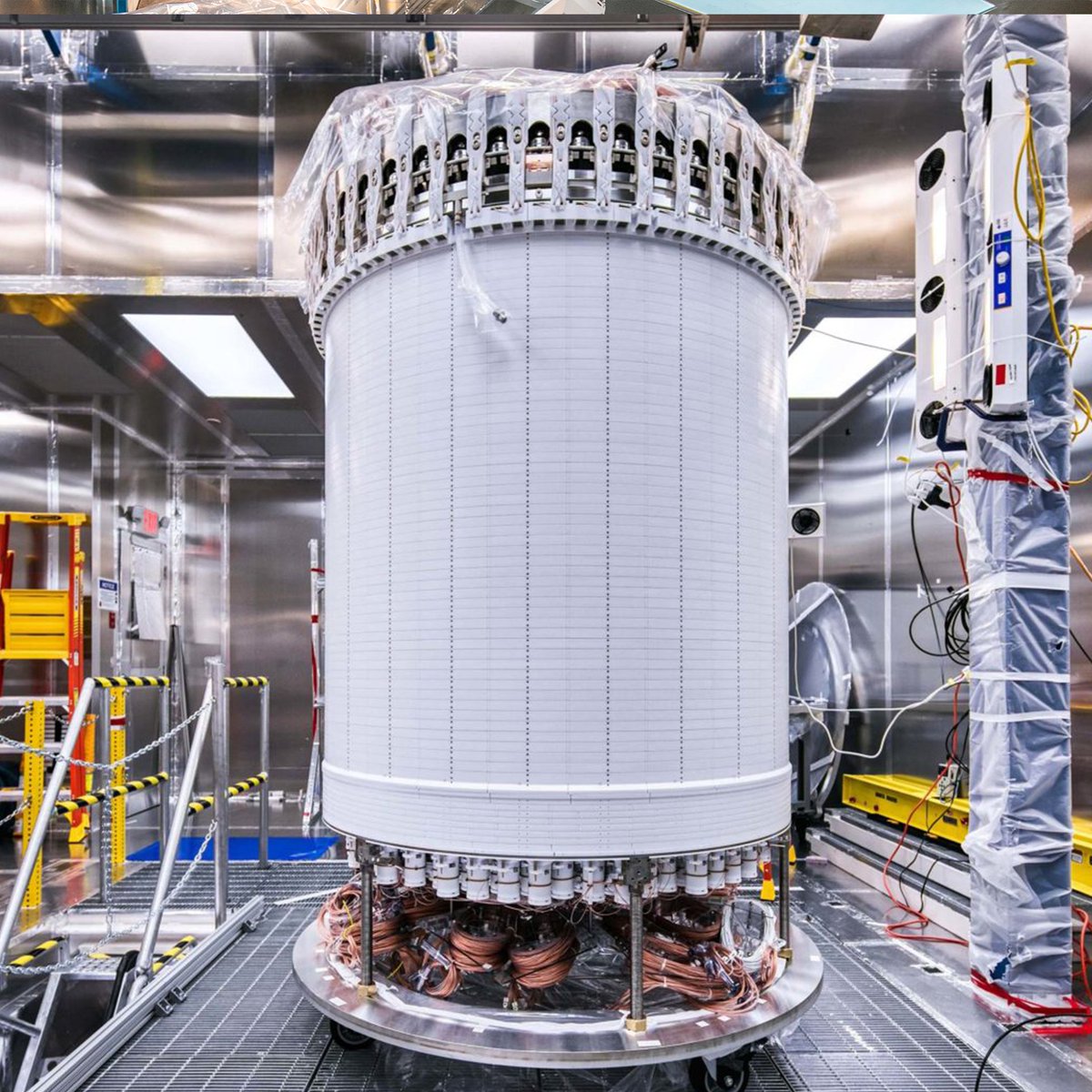
Could this unexpected signal be our first detection of dark matter?
The LUX-ZEPLIN experiment, world-leading dark matter detector, has observed a particle interaction that is the most compelling hint of dark matter reported by the experiment to date: https://t.co/ymDirjHdmA
Only if education could be this interactive ❤️🔥
I've had a looong wish to build something genuinely useful through vibe coding, and I finally did it.
A 3D human anatomy application built with @threejs using GPT 5.6 Sol.
It all started with a single design image that I created using GPT Image 2.0. I then used it to generate every 3D organ image, one by one.
Next, I converted each of those images into 3D models using @tripoai (and no, they didn't sponsor this 😄).
After that, I opened Codex, wrote a master prompt based on the design, and gave it the prompt, the design image, and all the 3D models.
Codex built the first version beautifully, but there was one big problem.
Every single 3D model was nearly 120-150 MB. That obviously wasn't practical for the web and was giving a performance of 16fps.
After a few iterations, Codex optimized each model down to roughly 2–5.5 MB while preserving the visual quality, reducing the total asset size from ~900 MB to just 28.6 MB. And each model loads on demand.
Along the way, Codex also generated those anatomical illustrations showing where each organ sits in the human body, and even created the interactive hotspot markers that explain different parts of every organ. It handled all of that.
The process wasn't exactly one shot, but it also wasn't difficult. You just have to do it step by step.
It genuinely felt like building something that could make learning anatomy much more engaging.
The inspiration came from @DilumSanjaya's 3D animal plant cell project. I remember seeing it and thinking, "I want to build something like this one day."
And I did it :D
Live: https://t.co/gIFgkj8UVB
Code: https://t.co/nijvyWcyxO
This isn't science fiction anymore. 🧲
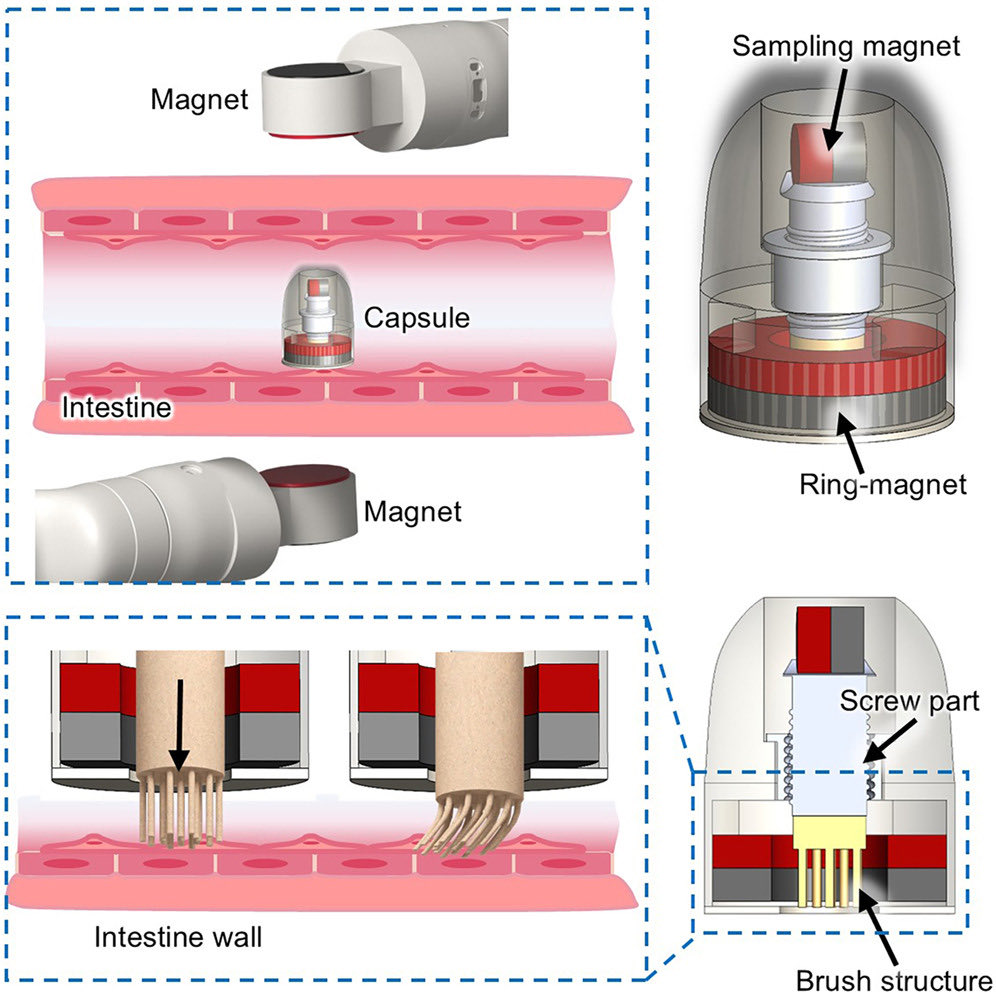
The Chinese University of Hong Kong researchers developed a magnetic slime robot that can be remotely controlled to move, squeeze through tight spaces, and even grasp objects.
One potential application? Removing objects accidentally swallowed inside the human body without traditional surgery.
Soft robotics is opening doors that rigid robots simply can't.
Would you trust a robot made of slime inside your body?
🎥 Media: @newscientist , Li Zhang and The Chinese University of Hong Kong
⚠️ This content is shared for informational purposes only. CTO Robotics Media is a media platform and does not own or develop the technology shown. Credit belongs to the original creators.
#Robotics #SoftRobotics #MedicalRobotics #Engineering #Innovation #FutureTech #Science
Rudolph Arthur Marcus recieved Nobel prize for his groundbreaking contributions to the mathematical and physical description of electron transfer reactions in chemical systems - widely known as Marcus Theory.
😱 Humanoid robots just performed surgery on live animals for the first time ever
At UC San Diego, two humanoid robots successfully removed gallbladders from pigs. In one procedure, a robot assisted a human surgeon. In the second, two robots operated together at the table.
Important note: The robots didn’t make any independent decisions — they were fully teleoperated by real doctors.
But unlike bulky traditional surgical robots, these humanoids weigh just ~30 kg, move freely around the OR, and use the exact same instruments as human surgeons. This is a major milestone.
The next step? Autonomy. Once achieved, these robots could become true surgical assistants, handling routine parts of procedures without constant human control.
Medicine is entering a wild new era. What do you think — exciting or slightly terrifying?