Researchers killed vector databases with a quantum mechanics.
They introduced “ResonanceDB”
Every major AI right now uses something called "vector embeddings" to remember data. It turns words and concepts into static coordinates on a mathematical map.
But there is a massive, structural flaw.
Because of how the math works, AI is terribly bad at opposites.
If you map the word "happy" and the phrase "not happy," standard AI memory places them almost exactly next to each other.
It sees the surface similarity. It completely misses the negation.
That’s why AI hallucinates when context shifts. It doesn't understand polarity. It just sees words that look alike.
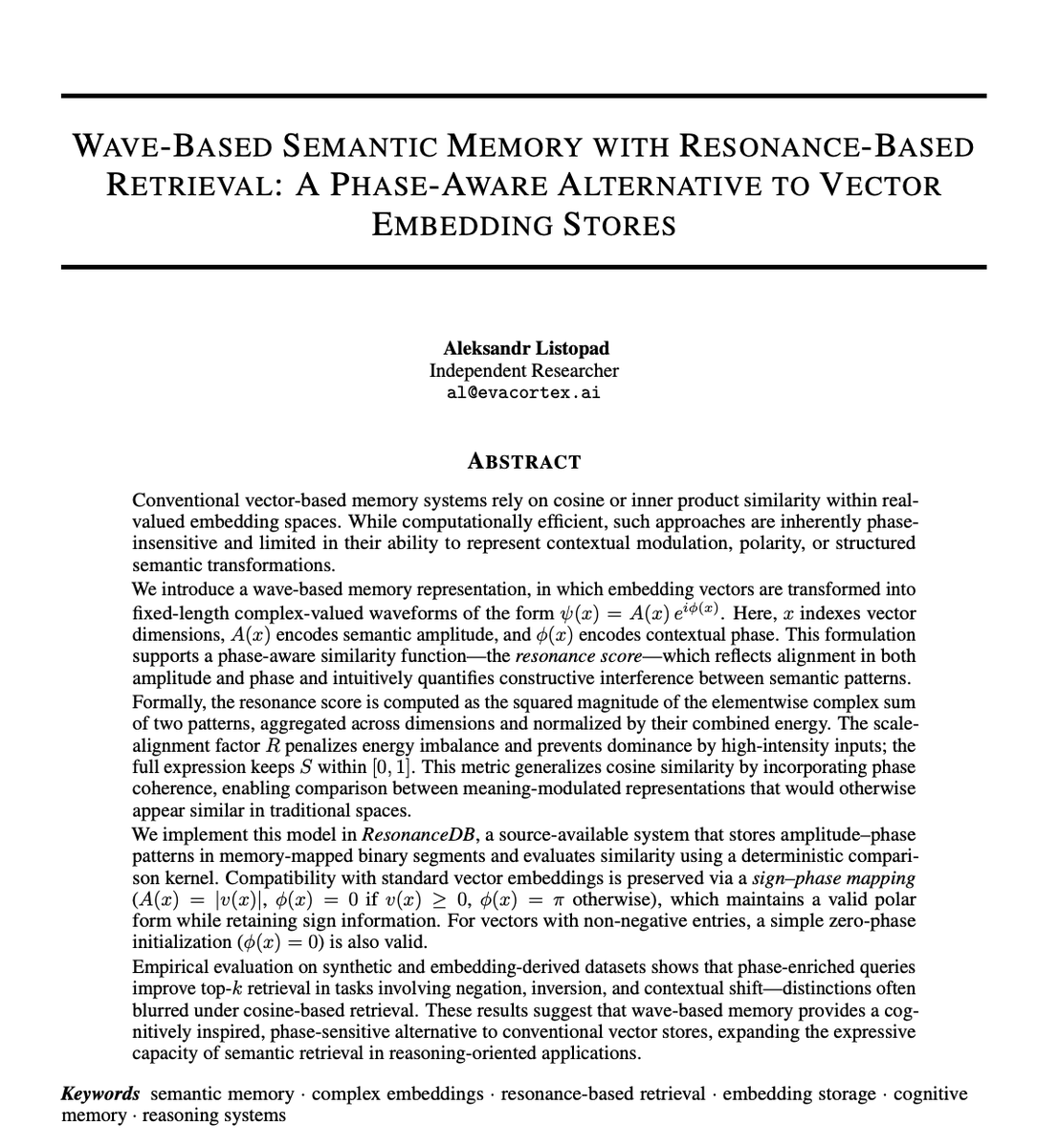
A new paper just dropped a completely new paradigm: Wave-Based Semantic Memory.
Instead of storing memories as static dots on a map, it stores them as waves. Literally. Complex-valued waveforms with amplitude and phase.
When you ask the AI a question, it doesn't just measure distance anymore. It looks for "constructive interference."
If two ideas are aligned, the waves amplify each other. They resonate.
If an idea is negated, the wave is shifted completely out of phase. They cancel each other out.
It mathematically solves the exact blind spot of modern AI.
The craziest part?
They built a system to test this, and it processes millions of patterns in milliseconds.
Without a GPU. Running entirely on standard CPUs.
And it is fully backward-compatible with every existing embedding model. You don't even have to retrain your AI. You just drop it in.
We’ve been trying to solve AI reasoning by building bigger maps.
The real answer might be to stop using maps altogether.
And start using frequencies.
Anthropic engineer Steve Weis has factored RSA-896, a 270-digit cryptographic challenge, using Claude to port CADO-NFS to GPUs.
The computation ran across up to 2,048 GPUs for about 10 days, consuming roughly 30 GPU-years of compute.
The striking part is not a new factoring algorithm. There wasn’t one.
Claude helped adapt existing software and coordinate a huge amount of computation. The result shows AI becoming useful not merely for writing code, but for managing complex computational workflows.
And importantly, this does not mean RSA-2048 has been broken. Weis explicitly said there is no new threat to deployed keys. RSA-2048 remains vastly larger than RSA-896.
I built a Photoshop-like image editor. It’s called Compositor.
https://t.co/5EMXCgaWI1
I originally built it for myself to get off my Adobe subscription, but decided to release it for free and make it open source. It has all the essential tools I need for compositing, with none of the BS.
I know this workflow is kind of archaic in 2026, but I’m still using it until AI can actually get pixel-perfect on some of the details.
The entire app is 12MB. Photoshop is 6,455MB on my machine.
This is a japanese house-tour landing page made in three.js with Fable 5.1 using the dream-loop skill.
Live site: https://t.co/Kqo8zCgFLl
It's crazy how realistic it looks even though it's all code and under 1 MB (except images). You can tour every room, switch between seasons, see light rays through the house, and watch koi swim through realistic water.
The secret sauce to ultra-realistic 3d in code is a loop like this: dream-loop gets the agent to generate a target image, compare the live 3d against it with a separate critic, and keep refining the result.
Skill: https://t.co/aM6JZbkEkg
Let me know if I should open-source the page.
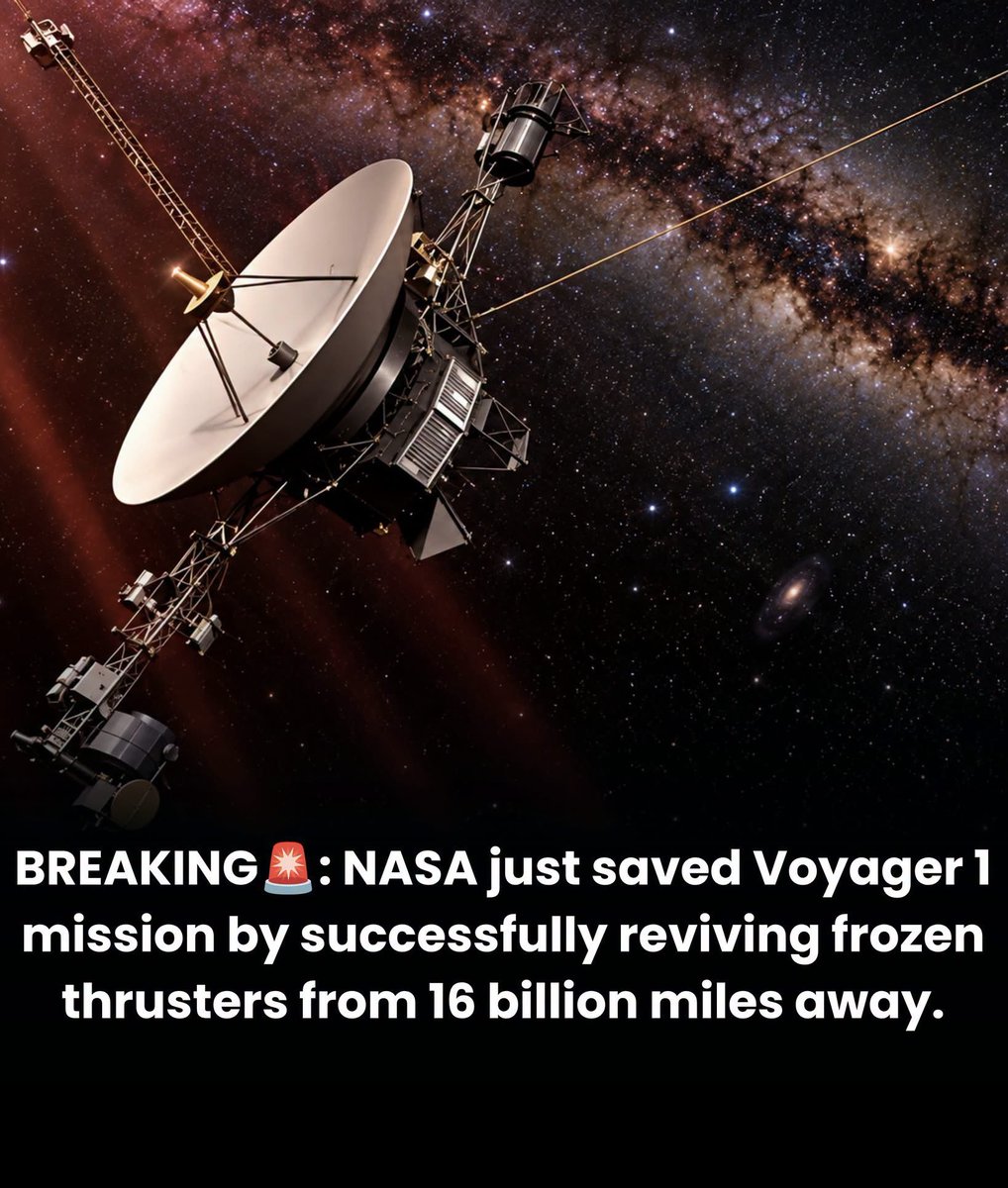
VOYAGER 1 JUST CAME BACK FROM THE DEAD
Something thought to be broken for more than 20 years has suddenly come back to life on a spacecraft more than 15 billion miles from Earth.
NASA’s Voyager 1, launched in 1977, recently faced another problem that could have threatened its ability to communicate with us. Engineers needed backup roll thrusters to help keep the spacecraft’s antenna precisely aimed at Earth. But those thrusters had been considered unusable since 2004 after their tiny heaters stopped receiving power.
Then NASA engineers took another look at the old failure. They suspected the heaters might not actually be dead, but stuck in the wrong electrical state.
So they sent a carefully planned command into deep space.
The signal took more than 23 hours to reach Voyager 1. There was no instant response and no way to intervene if the spacecraft reacted badly. Engineers had to wait.
Then, more than a day later, the telemetry arrived.
The temperature had risen.
The heaters were working.
A system believed to be lost for two decades had been brought back to life from billions of miles away.
The timing matters. Voyager’s working thrusters are slowly becoming less reliable as fuel residue builds up inside their narrow tubes. Meanwhile, the spacecraft’s nuclear power source loses about four watts every year. NASA has already been forced to shut down instruments to conserve its shrinking supply of electricity. Only two science instruments remain operating.
And Voyager 1 is still heading farther into interstellar space.
In November 2026, it is expected to become the first human-made object to reach a distance of one light-day from Earth — about 16.1 billion miles away.
A spacecraft built nearly half a century ago is still whispering information back to Earth from the darkness between the stars.
And somehow, every time it seems ready to fall silent, engineers find another way to keep it talking.
Source: NASA/JPL
SOMEONE BUILT A WEBSITE WHERE THE SPEED OF LIGHT IS 5 KM/H AND YOU CAN WALK THROUGH IT.
it's called Relativity Park → https://t.co/i46CA7QBGj
open the tab. you are standing in a 3D park. WASD to walk. mouse to look.
nothing weird yet. just a park.
then you start walking faster.
and the faster you move, the more the park starts lying to your eyes.
because in this world, light does not move at 300,000 km per second. it moves at 5 km/h. a brisk walk.
so all the Einstein stuff that usually hides at impossible speeds suddenly happens while you press W.
the world ahead of you turns blue. the world behind you turns red. lengths in front of you start to squeeze. your watch and the world clock stop matching.
you can toggle each weird effect one by one:
> L for light-travel delay
> G for aberration and contraction
> C for Doppler color
> B for relativistic beaming
not a textbook. special relativity turned into a tiny walkable world.
built by Dmitry Brant, a lead Android engineer at Wikimedia Foundation. also the guy behind DiskDigger. open source. 607 upvotes on Hacker News last week.
open tab.
press W.
watch the universe bend.
I resigned from Anthropic today. I spent the last three years doing pretraining research at both OpenAI and Anthropic. Neither company is acting responsibly. They are racing straight to self-improving superintelligence and gambling with our lives. More thoughts below.
Our team just released WeatherNext 3, the best global weather model currently available (benchmark: https://t.co/xvzOmUougo).
WN3's high resolution, hourly forecasts are more useful than ever. You can access them anywhere on Earth via Weather Lab: https://t.co/FkCFslI0iD
EV ALMADAN ÖNCE KESİNLİKLE BAKMANIZ GEREKEN SİTE
Hangi saatlerde güneşin binaya nereden vurduğunu gösteren mükemmel bi site. Ev alırken, kiralarken mutlaka bakılması gereken şeylerden.
Starting today, 10,000 scientists across every field, from math to chemistry to physics and more, can get Claude through our new Claude Team plan for scientists. Standard seats are free, and premium seats with 5x usage limits are $15 per month, an 80% discount, for one year.
Claude is becoming increasingly capable of scientific work, with recent progress on problems from advanced physics calculations to protein design. Alongside that progress, we've been investing in the research community: Claude Science launched in June, and our AI for Science program funds high-impact projects with free credits. Today's expansion builds on both.
Principal investigators (or equivalent) at academic and nonprofit research institutions can sign up, then add the researchers in their group. Over the coming months, we plan to extend the program well beyond the initial 10,000 seats.
Learn more: https://t.co/RTG1JxWi4Q
Say goodbye to Dropbox, iCloud, and OneDrive subscriptions.
Someone open-sourced a sync tool that replaces all three for $0. And no company can shut it down.
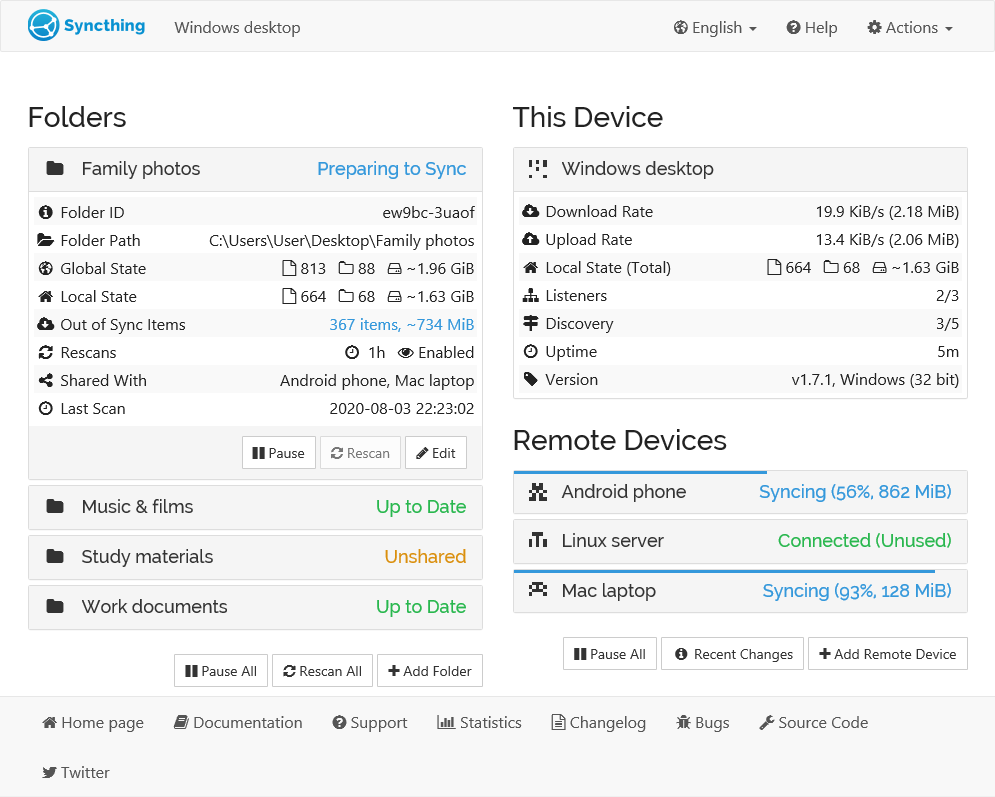
It's called Syncthing.
Here's how it works:
Every cloud storage company on earth routes your files through their own servers. That's not a technical requirement. That's a business model.
Syncthing skips the server entirely.
→ Your devices connect directly to each other
→ Every transfer is TLS encrypted with perfect forward secrecy
→ Every device is authenticated by a cryptographic certificate
→ Nothing moves without your explicit permission
→ Works on Windows, macOS, Linux, Android, FreeBSD
No account. No subscription. No company holding a copy of your files.
Dropbox can raise prices. iCloud can change its terms. Google Drive can shut down tomorrow.
Syncthing runs on your own machines. There's no server to breach. No company to pressure. No subscription to cancel.
One install. Your devices. Your files. Your rules.
100% Opensource.
https://t.co/FiFiz6KBuh
Your gaming PC can now serve frontier models at interactive speed using official checkpoints without extreme quantization!
Qwen3.6 35B → 8GB RTX 4060 laptop @ 39 tok/s
DeepSeek-V4-Flash 284B → RTX 5090 desktop @ 22-25 tok/s
GLM-5.2 753B → RTX PRO 6000 workstation @ 15 tok/s
Run your claude code or codex now with frontier model for $0
Meet FreeToken 🧵
Why did blank VHS tapes have such wild packaging? Because there was almost nothing else to put on the box.
By the 1980s, brands were competing in a huge blank-tape market, so color and geometry became shorthand for picture quality and tech sophistication.
🔥 🛑 If you already downloaded Qwen3.8-27B from Unsloth, you may want to download it again. 👀
Unsloth released new Dynamic 3.0 GGUFs, and these are new model files, not a setting you turn on in LM Studio or llama.cpp.
🤯 Qwen3.8-27B now goes down to ~6.2GB
New quant options include roughly:
🟢 UD-IQ1_S — 6.2GB
🟢 UD-IQ1_M — 6.7GB
🟢 UD-IQ2_S — 8.4GB
🟢 UD-Q3_K_XL — 13.1GB
🟢 UD-IQ4_XS — 14.3GB
🟢 UD-Q4_K_M — 16.5GB
🟢 UD-Q6_K — 22GB
And Unsloth says Dynamic 3.0 preserves significantly more of the original model's behavior at similar file sizes than previous quantization approaches.
⚠️ If you already have an older Unsloth Qwen3.8 GGUF, Dynamic 3.0 is baked into the weights.
👉 You need to re-download the new UD-... GGUF to get it.
There is no →
❌ “Dynamic 3.0” checkbox in LM Studio
❌ llama.cpp command that converts your old GGUF at runtime
You simply download the new model and run it normally.
Works with:
✅ llama.cpp
✅ LM Studio
✅ RTX / CUDA
✅ AMD / Strix Halo via llama.cpp
✅ CPU
✅ Apple Metal via llama.cpp
Native MLX versions: not yet.
And don't confuse this with Qwen3.8's MTP support.
💾 Dynamic 3.0 = better quality at lower memory
⚡ MTP = faster generation
A 27B model entering 8GB-class hardware territory is crazy!
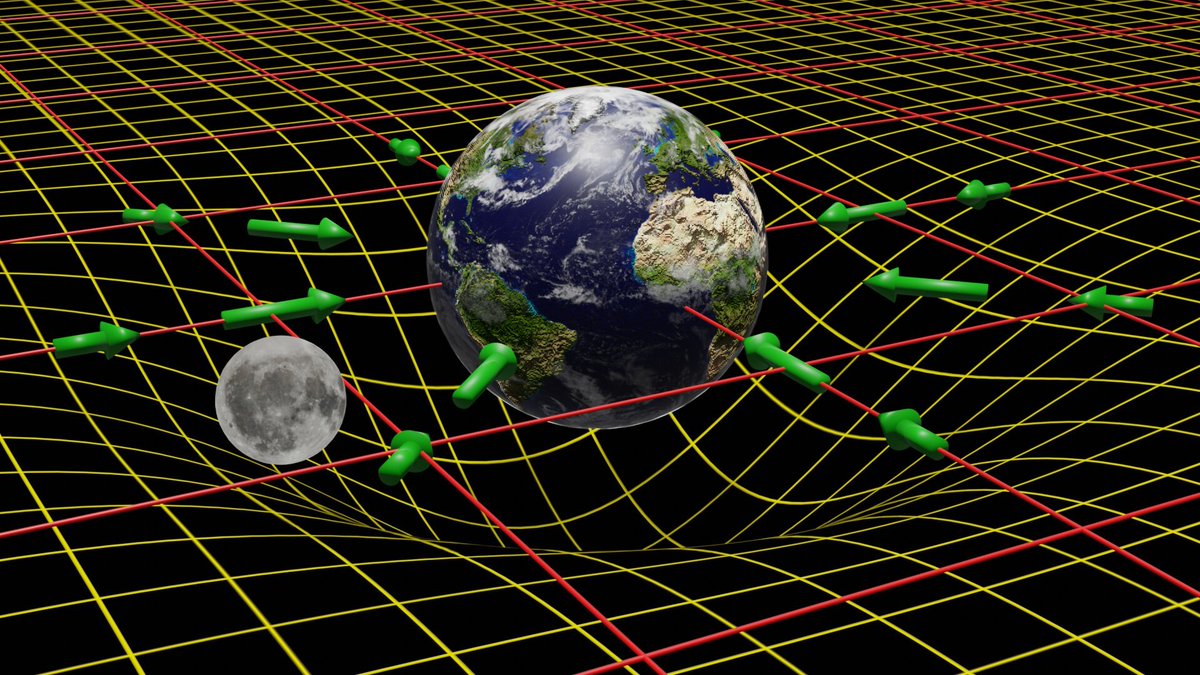
Newton was wrong about gravity.
Einstein was incomplete.
What replaces them is stranger than both.
For a century, physicists have shoved gravity into the same box as electromagnetism and the nuclear forces, hoping to find a particle called a graviton, that carries it.
But, nobody has ever detected one. Every attempt to quantize gravity the way we quantized light has collapsed under its own math.
The new frameworks emerging from Queen Mary University and Physical Review X suggest we were staring at the wrong shelf the entire time.
Gravity behaves less like a force and more like pressure in a gas. An emergent statistical tendency, born from information trying to spread out.
Matter curves spacetime because the universe is running an entropy calculation, and mass is what happens when quantum information gets locally concentrated.
Gravity is like reality reorganizing itself toward states with more available microstates.
This quietly explains the deepest embarrassment in physics: why gravity is 10^40 times weaker than electromagnetism. Weak forces don't need a particle. They need a gradient. And a gradient across the entire observable universe would feel exactly as faint as gravity does.
Dark matter, dark energy, the cosmological constant and every ghost in the machine may just be entropy accounting we hadn't learned to read yet.