Access is probably the most common word in the tokenization debate.
It is also one of the least precise.
Almost every #RWA pitch uses it: democratized access, global access, access to previously exclusive asset classes. It sounds inherently positive, which may be why it is so rarely defined. I wanted to take a closer look at what access actually means.
A few things stood out.
First, access is not one thing. It has at least three layers: access to a token, access to the underlying asset with enforceable rights, and access to economic use. These layers are often treated as equivalent, but they are not. The difference may only become visible when an intermediary defaults, or when an investor tries to sell, finance or use the asset e.g. as collateral.
Second, access means something different across markets. In developed markets, broad access to global equities has existed for decades. The relevant question is therefore not whether the asset can be bought, but whether the tokenized version is actually better than the broker and market infrastructure already available. In markets without functioning local capital-market infrastructure, stable investment products or practical access to international assets, tokenization can create something genuinely new. These two cases require different products and different arguments.
But technical availability alone does not create meaningful participation. Investors also need enforceable rights, a clear reason to invest, trusted distribution and a credible way to exit. The basic technology for issuing, holding and transferring tokenized assets is increasingly mature. The broader infrastructure needed to turn access into sustained participation is still being built.
One point the article explores further is that access runs in both directions. Investors gaining access to assets is the familiar story. Issuers gaining access to capital is the quieter one - and it may ultimately prove to be the larger opportunity.
Access opens the door.
Participation begins when there is a real reason to walk through it.
Full analysis in the article.
#Tokenization #RealWorldAssets #DigitalAssets
@0xlucasson That’s the key point. Financial engineering can improve capital efficiency, but it can’t manufacture market activity. Without genuine demand for the underlying asset, the rest remains theoretical.
The most important question about tokenized stocks is not how fast you can buy them.
It's what you can do with them after you own them.
Today, the honest answer is: not much. Hold, sell, maybe collect dividends. The same static ownership model we've had for decades - now with a token wrapper and a 24/7 clock.
Institutions treat equities very differently. They use them as collateral, finance against them, lend them, work them into balance sheet strategies. The asset is active, not idle.
That gap - between static holding and active utility - is the real opportunity in tokenization. Not speed. Not trading hours.
But here is the catch: utility requires real ownership on programmable rails. A token that only tracks a stock price can't carry voting rights, can't serve as legally sound collateral, can't survive an issuer default. It's synthetic exposure with better marketing. Last week's launches - Robinhood Chain, @OndoFinance , @Securitize , and @The_DTCC 's production trades starting this month - show the market splitting along exactly this line: composability without ownership on one side, ownership without utility on the other.
The endgame is neither. I call it Regulated Composability: the asset remains a fully regulated security - while becoming programmable and usable across applications, with compliance enforced at the infrastructure level.
Tokenization doesn't just digitize equity. It activates it.
Full breakdown in the article.
Quiet building, visible progress.
The consistency and tireless execution behind @ZIGChain really stand out. When the direction is right and the work is done with conviction, success becomes only a matter of time. Full support!
We have been heads-down for a while, and the last two weeks are where some of it surfaced.
With buybacks just a day out, we kept shipping to match the moment. ZIGChain partnered with Fasset, TVL crossed $50M, ORO made the world's most exclusive funds something anyone could ask about, the network hit its ten millionth block, and co-founder @ARafayGadit took the ZIGChain thesis to Point Zero Forum in Zurich.
📰 Headline News
- ZIGChain crossed $50M in TVL: Two-thirds of that is held in stablecoins, with more than $33M in USDC already working across onchain yield products. That's the part worth noting. Stablecoins usually sit idle, and on ZIGChain most of them are put to work.
- ZIGChain x @fasset: A regulated, Shariah-compliant platform serving over a million users across 125 countries, many of them in markets that rarely get this kind of access. The partnership is the real milestone here. It opens a path for real-world yield and investment products to eventually reach users the old system never served.
📝 Governance & Ecosystem
- ORO integrated @KAIO_xyz: BlackRock, Hamilton Lane, Brevan Howard. The thing that kept most people out of these funds was never just the minimum ticket. It was knowing enough to ask the right questions in the first place. ORO (@Ask_ORO), built on ZIGChain and trained on every fund KAIO has tokenized, lets you ask what a fund holds and how it works, and answers in plain language. You can understand them today. Access to them follows.
✅ Milestones
- Block 10,000,000: The network crossed its ten millionth block this fortnight. Each one settles the activity that tokenized real-world assets depend on, and it is quiet proof that the infrastructure under the products just keeps running.
- $50M in TVL, and the makeup is the part worth noting: more than $33M of it is USDC, already working across yield products rather than sitting on the sidelines. This is real capital that chose to come here and compound.
🎙️ Events
- @ARafayGadit at @pointzeroforum in Zurich: Point Zero Forum brought together more than 80 regulators and central banks to work through stablecoins, digital money, and the rules for bringing real assets onchain. Our co-founder spent the week in that room, because the decisions made there will shape how all of onchain finance gets governed.
If you are riding this momentum with us, spread it with an RT. 💙
@ARafayGadit@ZIGChain@Disrupt_com Great to see the tireless energy and execution behind the ZIGChain journey. When the direction is right and the work is done with consistency and conviction, success becomes only a matter of time. You have my full support.
We are hiring.
tokenforge is growing, and we are building out the team behind our platform for regulated digital capital markets.
Three open roles, all 100% remote, full-time:
Product Owner / Lead Developer
Own the technical roadmap and the product backlog. Lead the team, make the architecture decisions, and bridge product, engineering and business.
Sylius Developer, Migration & Architecture
Rebuild our platform on Sylius 2.0 and lead the migration from 1.4. For someone who knows Sylius inside out and enjoys untangling a real codebase.
Sylius Developer, Feature Development
Build new features on Sylius 2.0 and bring proven domain logic into a clean, modern architecture. For someone who values clean architecture over historically grown shortcuts.
Flat hierarchies, short decision paths, real ownership. A short CV is enough: [email protected]
Links to all three roles below 👇
Another factor is who is actually driving the growth.
TVL is largely being pushed by a small number of large investors allocating into RWAs, while many token holders are speculating that rising TVL will automatically translate into higher token prices.
In many cases, the value accrual mechanism between the two is still missing. 👀
@NawaFinance Love this perspective. RWAs feel much stronger when they are not only about access and yield, but also about purpose, fairness and connection to the real economy
@ZIGChain The missing layer is often not technology, but market access: education, liquidity, trust and the right rails to reach the people who actually need the product
RWA tokenization is often framed as a simple story:
Take a real-world asset, put it onchain, unlock liquidity.
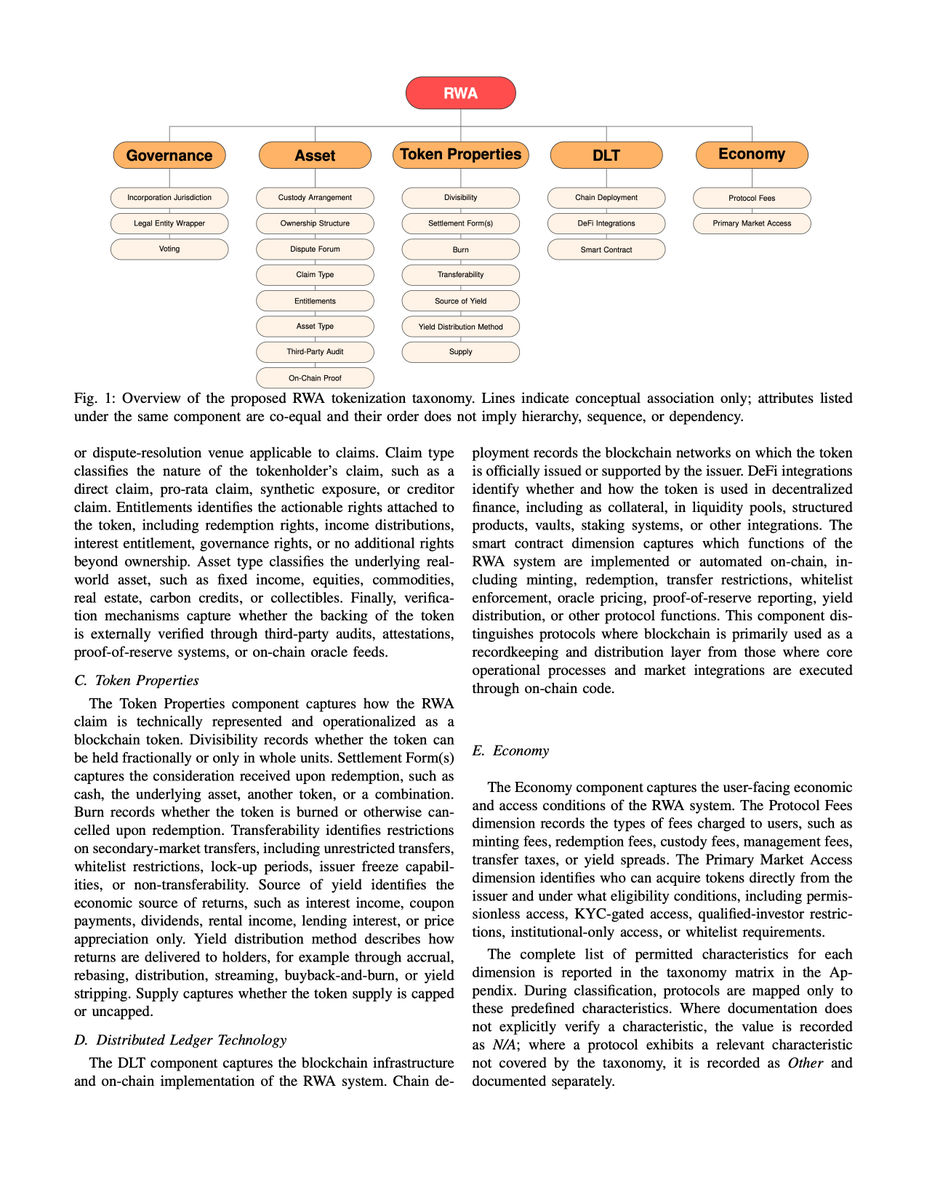
But the deeper you look, the more obvious it becomes that the real question is not just what gets tokenized, but how it is structured.
What legal claim sits behind the token?
Who holds the asset?
How does redemption work?
Which transfer restrictions apply?
How is yield generated and distributed?
And how does the asset connect to DLT infrastructure and broader market access?
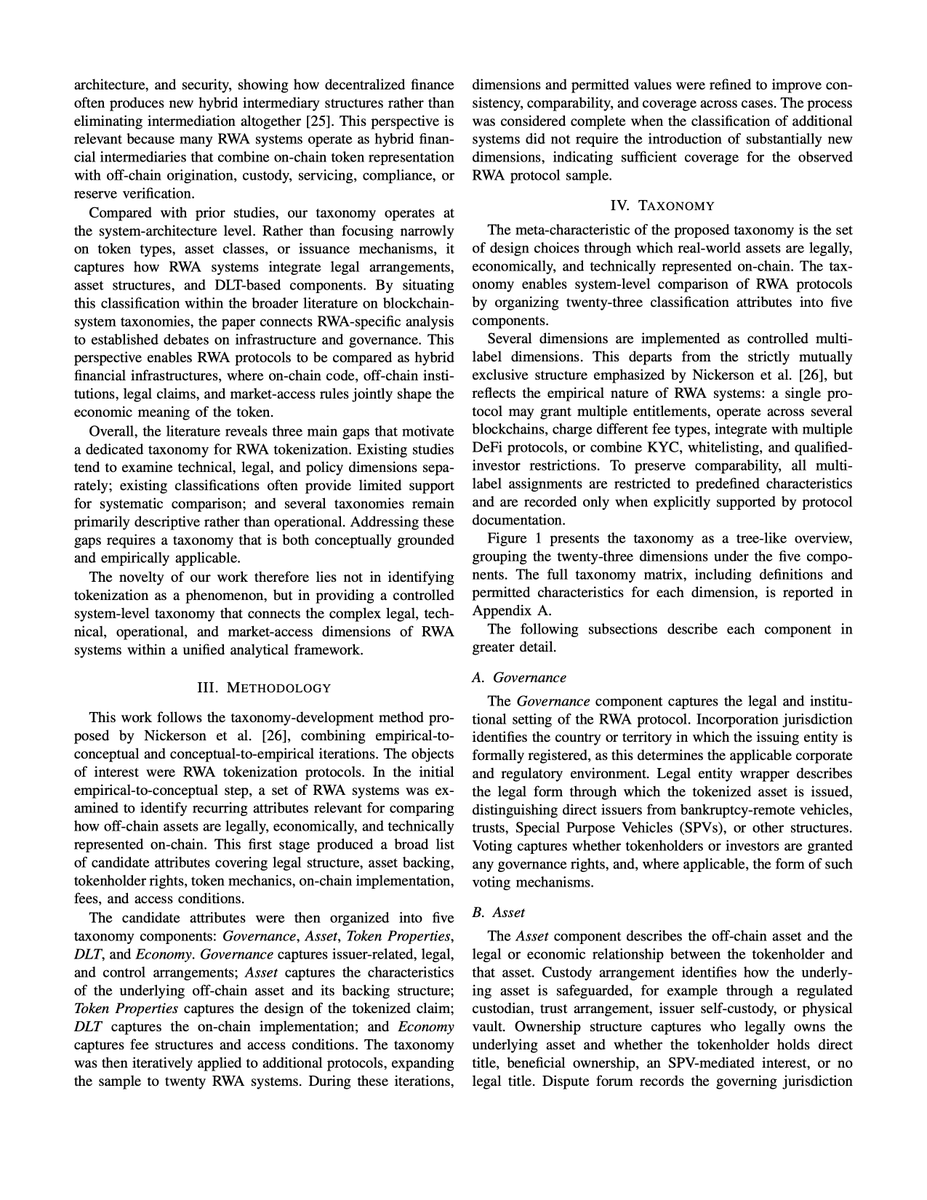
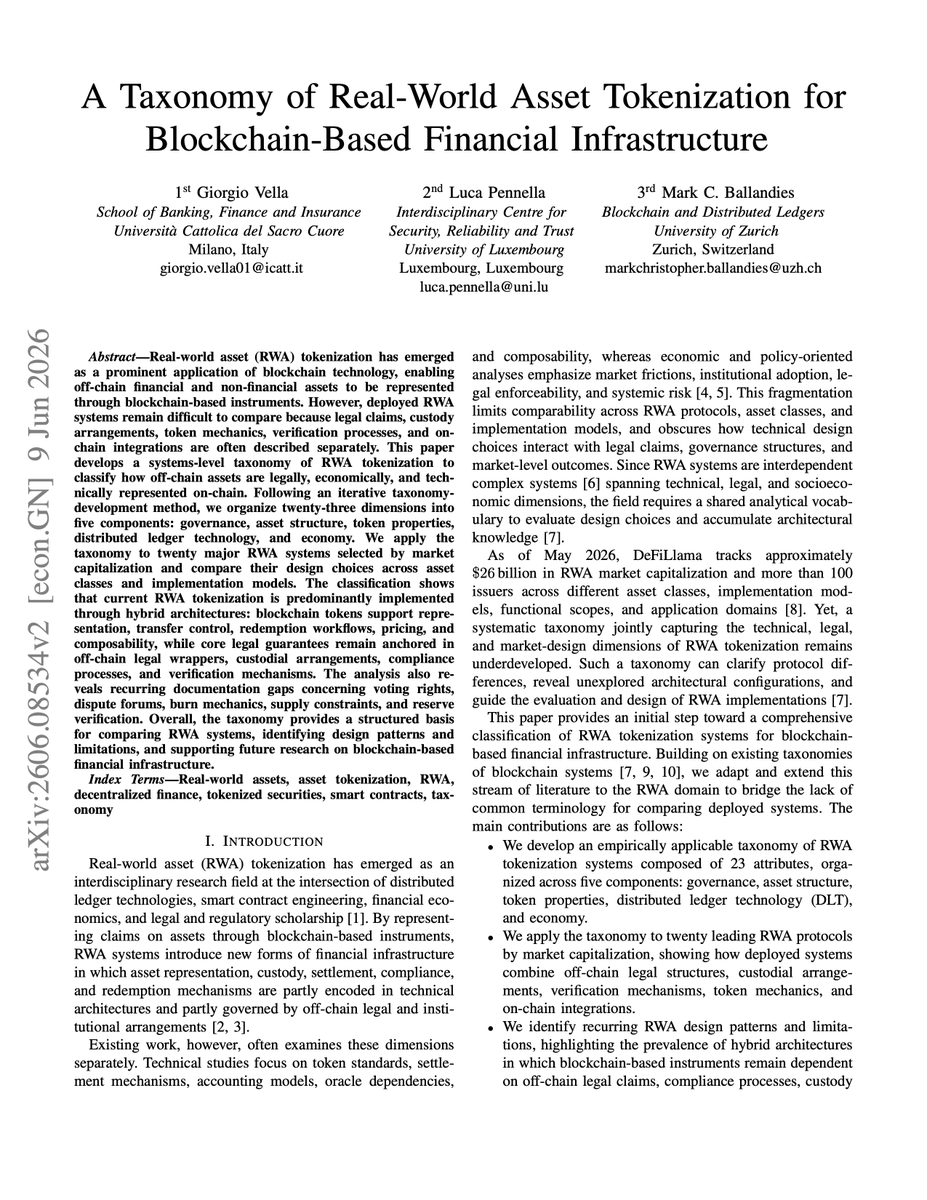
That is what makes this paper useful: it brings structure into a space where many very different models are still grouped under the same #RWA label.
A common taxonomy makes it easier to compare them, assess the trade-offs and build a shared understanding of what RWA tokenization actually means in practice.
As RWAs continue to expand across @ethereum, @solana, @0xPolygon, @avax, @StellarOrg, @ZIGChain and other networks, having a shared framework for evaluating these models becomes increasingly important.
Full link to the paper in the comments.
This is exactly the shift. The market is slowly moving from “what is the narrative?” to “where does real usage, revenue and value accrual actually sit?”
UNI is a good example, but the broader point is even more interesting: once tokenized assets scale, protocols with real liquidity, distribution and fee generation will start being analyzed much more like financial infrastructure than pure crypto bets.
What stays with me about this raise is not the size of 355 Million, but what it says about timing.
Capital at this scale, with crypto-native funds and the largest regulated institutions at the same table, does not move on narrative. It moves when a structural read quietly becomes consensus.
@DeanKD_ (Head of Growth, @RWA_xyz) named that read in "The $400T Future of Tokenised Assets":
"There is a collision of two worldviews. Crypto-native players think in terms of open networks and DeFi composability. Incumbent institutions are coming onchain from the opposite direction, more regulated, more restricted, more focused on upgrading legacy market structure. Both are using the same underlying technology, but solving for very different things. We expect a convergence between these categories."
Canton did not wait for that convergence to arrive. It built for it before the rest of the market agreed it was coming. That is why this capital is here now and not in two years.
Congratulations to @YuvalRooz, @wesarn_real, @ShaulKfir and the entire @digitalasset / @CantonNetwork team. Curious to see where this goes next.
Almost 12 years ago, I left @DRWTrading with @wesarn_real to start @digitalasset. @ShaulKfir joined us shortly after. The name felt right. The idea was simple but audacious: build a global settlement system that is asset agnostic. One that doesn’t eliminate banks, exchanges, and intermediaries, but tears down the barriers keeping people from accessing assets and settling at a fraction of today’s cost. A new financial world, built for the end consumer.
We knew institutional adoption was the path. We just didn’t know how long it would take.
We failed. We made bad decisions. There are things we would have done differently. But we never let go of our North Star, even when people around us were convinced we had no idea what we were doing. That focus, conviction, and most of all, patience, led us to launching @CantonNetwork. And the results speak for themselves.
Today is a new chapter in that story.
I’m proud to announce that @a16zcrypto is leading our latest round, joined by some of the giants of the global financial system, including @ABNAMRO, ADIA, @apolloglobal, @BNPParibasCIB, @Broadridge, @citsecurities, @CMEVentures, @cbventures, Green Wolf Asset Management, @Hanwha_Official, @HSBC, @icapitalnetwork, @LCVentures, @OptiverGlobal, @polychain, @R136Ventures, @SPGlobal, @sbigroup, @smash_capital, @SoFi, @Tradeweb, and @WilliamBlair, and others we’ll be naming shortly. Twelve years ago, I could not have imagined building alongside partners of this caliber.
$CC today processes the highest fees of any institutional blockchain network. And we’re just getting started. What’s coming later this year is just as exciting.
None of this happens without the builders, the ones who show up to weekly tokenomics meetings, dial into operations subcommittees, spend nights and weekends building apps on Canton, and show up on @X to cheer this ecosystem forward. You are not just supporters. You are partners. I’m honored to be on this journey with you.
On a personal note: @a16z hits differently for me. Ben’s book The Hard Thing About Hard Things was one I kept coming back to during the hard stretches. Having his firm lead this round is meaningful in a way that’s hard to put into words. So I’ll let him do it:
“The hard thing isn’t setting a big, audacious goal. The hard thing is spending sleepless nights trying to achieve it. The hard thing isn’t dreaming big. The hard thing is waking up in the middle of the night in a cold sweat when the dream turns into a nightmare. Motivating yourself by watching YouTube shorts or Instagram reels isn’t the hard thing. The hard thing is working every day and being consistent even if you feel like shit. The hard thing isn’t boasting you could achieve anything. The hard thing is working like hell to achieve something. The hard thing isn’t believing in yourself. The hard thing is getting things done when nobody believes in you, even when you doubt yourself. The hard thing isn’t telling yourself that you must achieve the impossible. The hard thing is toiling hard every day for years despite knowing that success is too uncertain.”
https://t.co/heqdne7Thh