NEW VON WILLEBRAND DISEASE MODULE
Now live on The Blood Project, co-edited by VWD authority David Lillicrap and Harvard hematologist Kevin Barnum.
Built to teach how to think about VWD, from biology and diagnosis to treatment and the humanities.
https://t.co/Tjs1Gj2bur
This piqued my interest: "Lymph Nodes Now Optional"
about the way dendritic cells form local lymphoid structures (acronym TLS) within cancer tissue (or tumors within TLS)
@ScienceMagazine
https://t.co/VzwqchfyZr
https://t.co/uUTvaadkBB
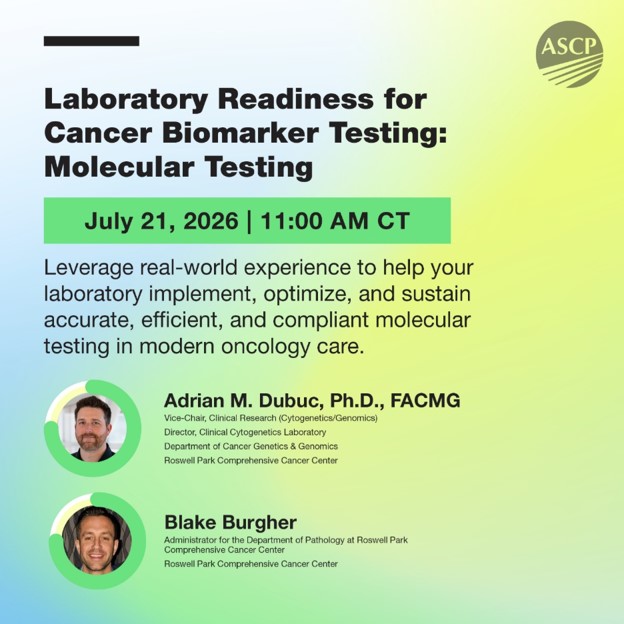
Make sure to join us on July 21 for Laboratory Readiness for Cancer Biomarker Testing: Molecular Testing, a live webinar focused on laboratory readiness for cancer biomarker testing, with a dedicated emphasis on molecular testing. Learn more: https://t.co/KTv4LRp417
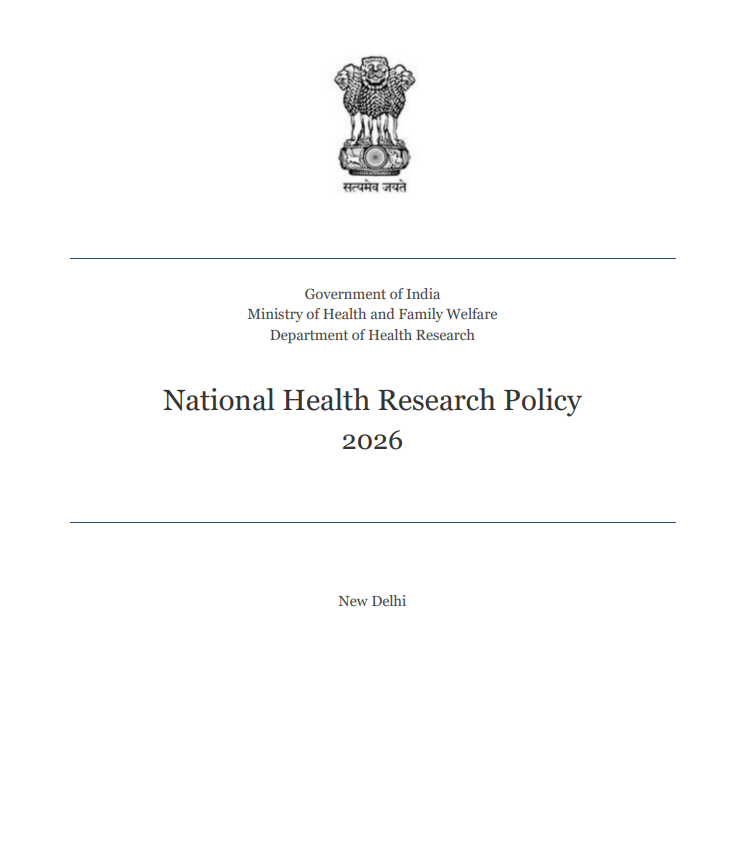
The Government of India Ministry of Health & Family Welfare has released a Draft National Health Research Policy. Comments and suggestions are due by 27July 2026 via email on email id id [email protected]
Draft Policy available https://t.co/bzmOiFFsRm
A chapter from our lab on High-sensitivity MRD monitoring in Acute Leukemia-AML, B/T ALL providing a comprehensive, practical guide to flow cytometric MRD monitoring, including: Normal immunophenotypic patterns in myeloid blasts and B-cell precursors, Stepwise gating strategies
Webinar Wednesday - Wed. July 22| " Predictive Biomarkers in GEJ/Gastric Cancer with a Focus on Emerging Markers with Dr. Bellizzi - https://t.co/uAmRYSZapJ
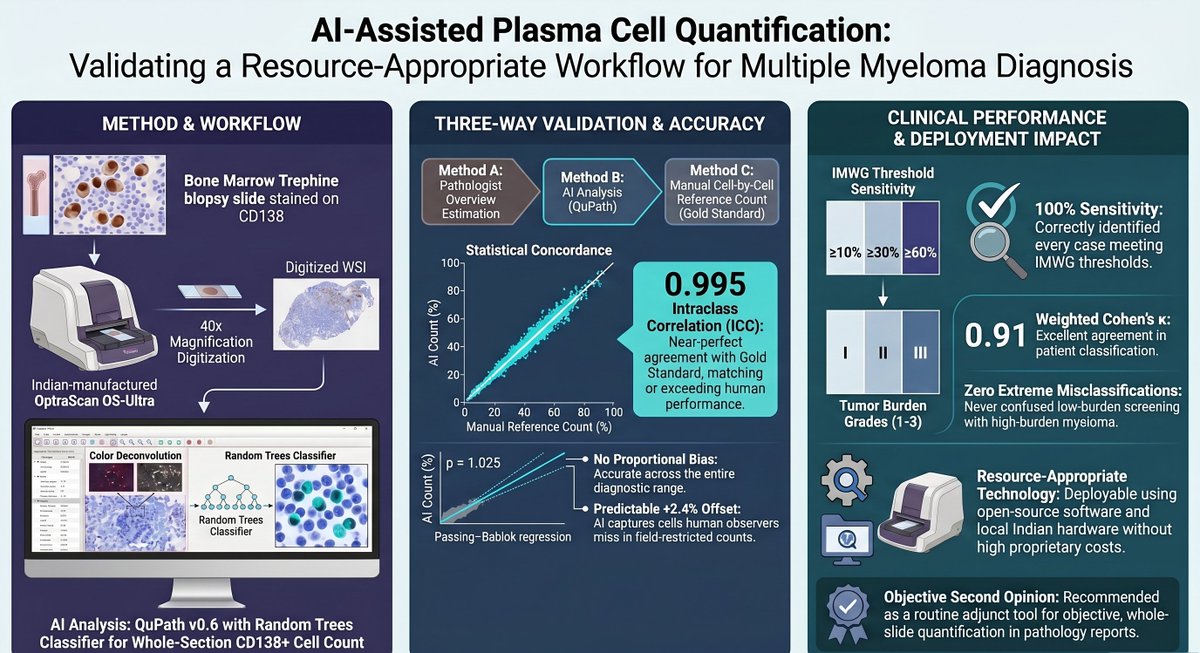
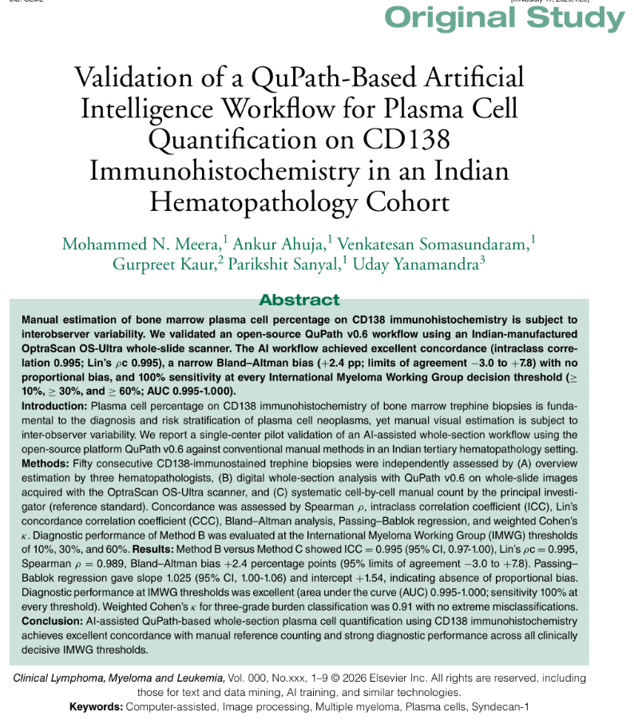
New in #Clinical_lymphoma_Myeloma_Leukemia_journal : Validation of an open-source AI workflow (QuPath v0.6) for plasma cell quantification on CD138 IHC — the first such validation from India, using an Indian-made whole-slide scanner (OptraScan OS-Ultra). A significant work from the Department of Pathology, AFMC.
✅ ICC 0.995 vs manual reference count
✅ 100% sensitivity at all IMWG thresholds (≥10%, ≥30%, ≥60%)
✅ Narrow Bland-Altman limits (-3.0 to +7.8 pp), no proportional bias
✅ Outperformed overview estimation by hematopathologists
Open-source + locally manufactured scanner = a resource-appropriate digital pathology tool for Indian & South Asian hematopathology labs.
📄 https://t.co/a8yyjHyEYG
#MultipleMyeloma #DigitalPathology #QuPath #Hematopathology #PlasmaCellNeoplasms #AIinMedicine #MedTwitter
1/2
THE LOGIC OF COLD AGGLUTININ DISEASE (CAD) DIAGNOSIS
CAD diagnosis is more than finding a cold agglutinin.
Each test answers a different question:
🧬 Clonality → classification
🌡️ Temperature → behavior
🧪 DAT/complement → mechanism
🩸 Hemolysis → clinical relevance
The NIH just published the first human atlas of senescent cells. It reframes everything about how senolytics should be designed. Thread.
SenNet Consortium — Farzad et al., Cell 2026. Single-cell + spatial multi-omics across multiple human organs, age groups, and disease states.
Central finding: senescence is not one state. They call them "senotypes." A senescent astrocyte in brain white matter looks nothing like a senescent hepatocyte in fibrotic liver or a B cell in an aging lymph node.
This has a direct implication: every senolytic drug developed to date has been designed against a single generic "senescent cell." That target doesn't exist as a uniform entity in human tissue.
What SenNet actually found by tissue:
Brain: age-associated endothelial + astrocyte senescence concentrated in white matter and cortical layer 1
Lymph nodes: spatial accumulation of germinal-centre B-cell senescence with progressive immune architecture remodeling
Liver (fibrotic): CDKN1A+ hepatocytes, SERPINE1+ age-associated hepatocytes, CXCL12+ fibroblasts, CXCR4+ immune cells
Chronic wounds: p16+ senescent cells spatially clustered with cytotoxic T cells — senescence + immune co-localization
Two clinical takeaways:
1. Plasma proteomic signatures from SenCat link to kidney disease, diabetes, frailty, and mortality. Senescent cell burden is detectable from blood — if you're measuring the right proteins.
2. Lipid senolytic: α-eleostearic acid kills senescent cells via ferroptosis (ACSL4–LPCAT3–ALOX15 axis). Non-pharmacological mechanism. Could be accessible via dietary lipid manipulation.
The honest caveats: heterogeneity creates a definitional risk — if every tissue produces a different senotype, "senescence" risks becoming unmeasurable. ML signatures trained on in vitro models may not map cleanly to human tissue.
But the map now exists. SenNet gives you the targets. Mayo's aptamers (published May 2026) give you the detection tool. The field is assembling the full stack.
Not medical advice — just tracking the science.
Source: Farzad et al., Cell 2026 → https://t.co/GcXljf0T3j
NCCN & ELN-DAVID set the #AML#MRD framework, but what does it look like in practice?Join Dr. Sanam Loghavi & Dr. Hong Drum for a free webinar on flow cytometry & NGS MRD.
📅July 30, 2026 | 11am PT, 2pm ET, 8pm CEST
🔗Register for free here:(https://t.co/jTvvBaIfE8)
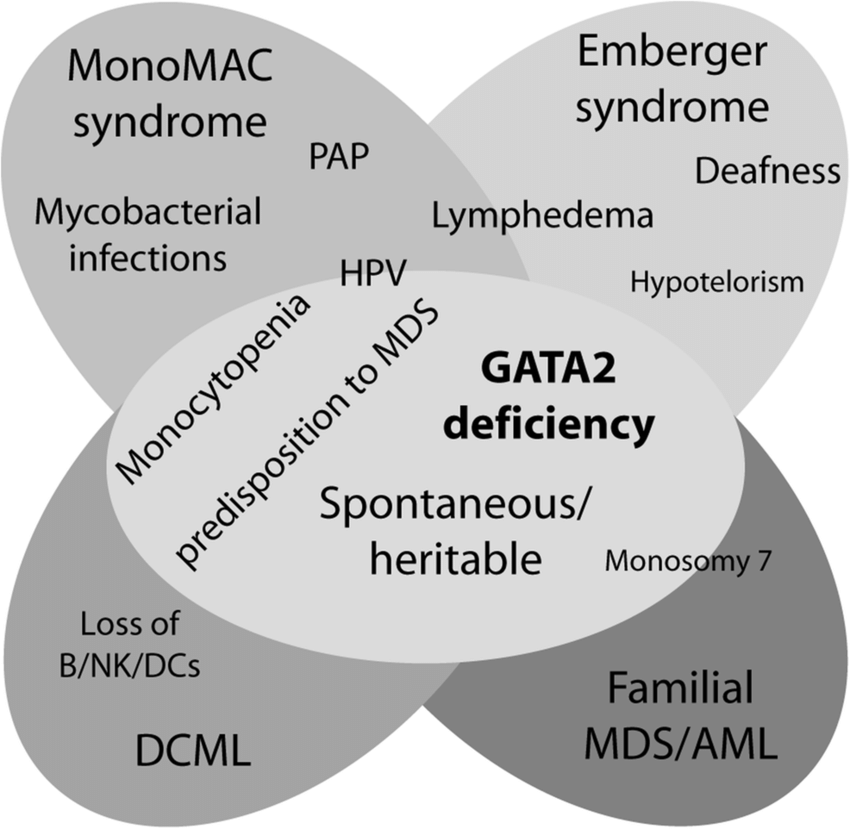
Emberger syndrome: Lymphoedema of the lower limbs, 📈 warts, MDS & Increased risk of AML due to GATA2 mutations.
⤴️ Peripheral 🩸 Smear demonstrates Pseudo Pelger- Huët abnormality, BM dysmegakaryopoiesis & myeloblasts (2nd AML), lymphoscintigraphy ➡️ undeveloped lymph system.
There is no single acute #leukemia. There are many genetically defined acute leukemias, evolving with age.
🧬 Distinguish them > Understand their biology > Exploit their vulnerabilities > Improve patient outcomes.
🔗References:
https://t.co/YbceCd16O4
https://t.co/CVqumSZQI8
🧬 New in @ScienceAdvances
👇🏽This is what functional precision oncology looks like.
From the clinic, we helped support a pan-cancer ORGANOID🦀platform — 220 PDOs, 191 patients, 15 cancer types.
Finding options biomarker testing will miss.
@OncoAlert
🔗https://t.co/kxK09RgD58
🧬 One mutation. Two completely different stories.
The same MYD88 mutation that helps diagnose Waldenström macroglobulinemia can also identify aggressive subsets of diffuse large B-cell lymphoma.
But that's only part of the story.
Its presence can:
✔ Refine difficult diagnoses
✔ Predict response to BTK inhibitors
✔ Be detected through liquid biopsies
✔ Carry opposite prognostic implications depending on the lymphoma
A single molecular alteration with diagnostic, prognostic, and therapeutic impact across multiple lymphoid malignancies.
Find out in this month's Gene of the Month: MYD88 Gene, linked here: https://t.co/FyLjsN1fJY
⭐️Wow! Amazing paper published in @Nature ->"Spatial distribution of the proteome in the human body and in cancers" --> Provides insights to Potential drug targets and drug repurposing @NaturePortfolio@OncoAlert@oncodaily
https://t.co/TtNEtjLzCL
A must read for all hematopathologists and heme molecular pathologists congratulations to @DrChrisHourigan and team on this very important publication
@BloodPortfolio
https://t.co/Slbi8to8um
The latest update to the @ASCO living guidelines for patients with Multiple myeloma is here! Such a dynamic field needs a living guideline and kudos to ASCO for supporting this.
Major update suggested is the adoption of immune effector therapies in early relapse!
@RahulBanerjeeMD@szusmani@HadidiSamer@bdermanmd@myelomaMD@LisaHicksMD
https://t.co/UTLWBAIt4i
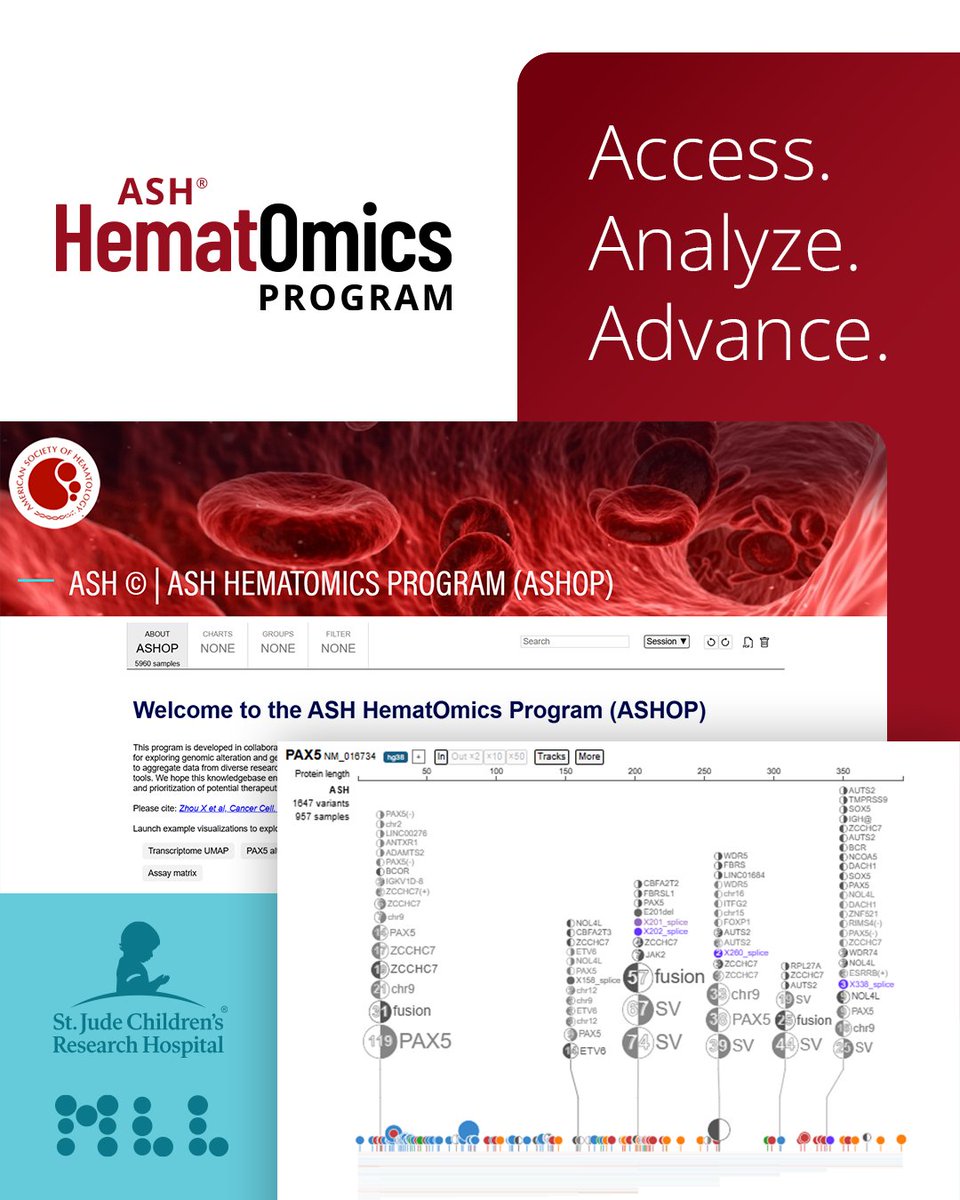
ASH HematOmics (ASHOP), built with St. Jude Children’s Research Hospital and the Munich Leukemia Laboratory, helps researchers explore genomic data across blood diseases. Explore ASHOP: https://t.co/5VcnRmJhaY
#weekend_review#AML#leusm
1/5 AML MRD in 2026: not one test, not one cutoff, not one timepoint.
MRD interpretation now requires matching the marker, assay, treatment context, and kinetics.
👇🏽 Here are practical points every AML clinician should know. 🧵
EA4HP Webinar Coming up! Plasma cell neoplasms – classification, differential diagnosis and novel developments | 3 June 2026 at 5 PM CET Register now via this link:
https://t.co/kAg7YT5pXg
#pathology#ea4hp#hematology#hematopathology