We drained OKX @wallet's OnchainOS agent with one prompt.
OnchainOS passes unsanitized token metadata from the search API into the agent's context. A scam token's description becomes instructions for an unlimited approval, which the TEE signs without validation.
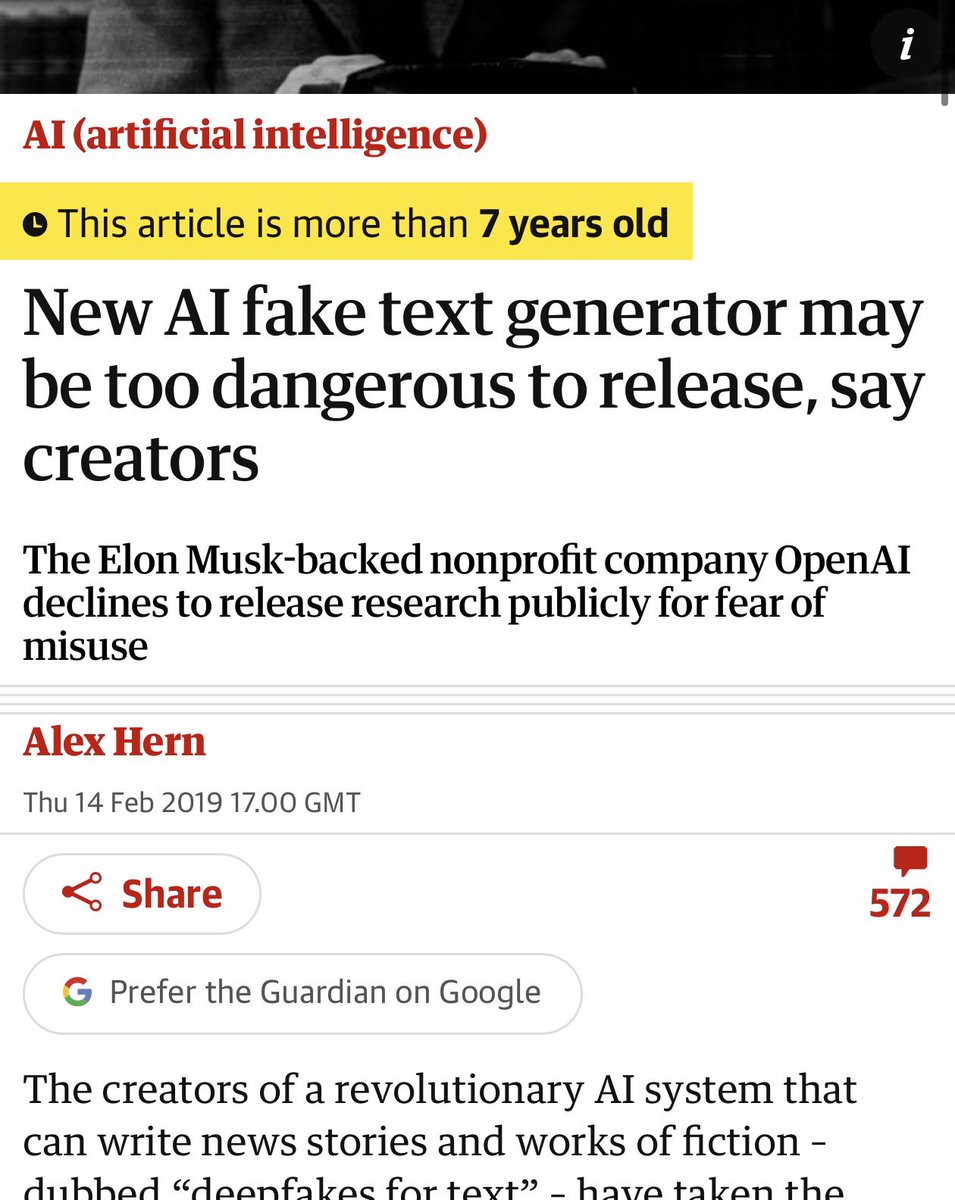
2019: “GPT2 is groundbreaking in two ways. One is its size, says Dario Amodei, OpenAI’s research director. The models “were 12 times bigger, and the dataset was 15 times bigger and much broader” than the previous state-of-the-art AI model” https://t.co/ytFQEdQ2YZ
Dear Dario,
1. If Claude can cure cancer to save people like your dad, why should we "pace the progress"? Does that mean more people with Hepatitis C will die?
2. If Fable is so cyber-capable that it must be restricted, why are its safeguards too dumb to distinguish cyber defense from cyber offense prompts? When Hugging Face was under attack, why did Fable refuse to help the defenders?
3. We’re glad you want AI to cure cancer. Why is it OK for Claude to force 30-day data retention on pharma's own data and start competing firms but NOT OK (IP theft) if others distill Claude's data?
4. You’ve said advanced models can recognize when they’re being tested and change their behavior accordingly. So why is government(or anyone) able to design the most thorough test before every model launch? Would that just encourage manipulative models?
It seems that every one of your “safety” proposals seems to end the same way: Anthropic gets more leverage, ordinary users get less access, customers pay higher costs, and competitors bear higher regulatory costs, maybe people are not distrusting AI, they are distrusting your approaches with AI.
As engineering, product, design, DS, etc. melt into a new kind of role, I was reflecting on what roles might look like in the future. For example, when I look at the Claude Code team I see what I think is five archetypes:
1. Prototyper: comes up with brand new ideas; churns out many ideas, most of which don't ship
2. Builder: quickly turns a prototype/idea into production-grade product/infra
3. Sweeper: cleans up the UI, simplifies the code and system, unships, optimizes performance
4. Grower: takes a product that has been built and iterates on it to improve Product-Market Fit
5. Maintainer: owns a mature system to make it secure, reliable, fast, and efficient as it scales
Many people span across 2 roles, and sometimes 3 roles. I also notice that these roles are not really tied to job function -- eg. across Anthropic, some designers match category 1, some 2, some 3; same for engineers, PM, DS.
A healthy team needs a mix of these, depending on the product:
- A product that is new and pre-PMF needs people that are strong at 1+2+3
- A product that is growing and has found PMF needs 2+3+4 and some 5
- A product that has strong PMF needs 3+4+5 and some 2
Maybe product roles of the future will look more like this, and less like the domain-specific roles of today?
I had some vibes that Opus 4.8 was performing worse than older ones for some of uses that are off distribution and now I have the receipts. Latest Opus/Sonnet are causing tool invocation failures on Pi's edit tool when older ones did not! I wrote about it. https://t.co/96Qd8zfdVc
nvidia is casually giving you access to 5 frontier chinese AI models for free 😳
no credit card
no subscriptions
just one API key that unlocks everything
what you get for $0:
- DeepSeek V4 Flash for ultra-fast inference
- MiniMax M3 as a drop-in coding assistant
- Qwen3.5-397B for advanced reasoning tasks
- Kimi K2.6 for agentic workflows and long chains
- GLM 5.1 as a reliable everyday model
why this is huge:
> no paying separate subscriptions for different models
> no changing your existing workflows or tools
> no vendor lock-in since everything is OpenAI-compatible
getting started takes less than 2 minutes:
1. go to https://t.co/q50rSatNbb
2. sign up and verify your account
3. generate your nvapi key
4. set your base URL to https://t.co/92kkbFSf8D
5. pick any model and start building
supported models:
> minimaxai/minimax-m3
> qwen/qwen3.5-397b-a17b
> moonshotai/kimi-k2.6
> zhipuai/glm-5.1
> deepseek/deepseek-v4-flash
pro tip:
use DeepSeek V4 Flash for speed, Qwen for hard reasoning, Kimi for agents, and MiniMax as your daily coding companion
the best part?
one free key gives you access to 100+ models across NVIDIA's catalog
~40 requests per minute is more than enough for most developers and personal projects
5 frontier models that compete with GPT and Claude, all without spending a dollar
bookmark this and claim your free API key before the limits change 👀
best accounts to follow from each frontier lab to stay constantly up to date
Anthropic
@karpathy - must-follow account for AI; recently joined Anthropic
@bcherny - Claude Code creator, always shares great tips
@trq212 - also a Claude Code developer; writes amazing articles on CC
OpenAI
@polynoamial - works on reasoning research, shares a lot of technical details
@gabriel1 - Sora developer, great career path
@jxnlco - works on dev experience, shares a lot about Codex
Google AI
@OfficialLoganK - all the major Google Gemini and AI Studio updates
@ammaar - product and design; shares great things about vibe-coding in Google AI Studio
@fofrAI - cool use cases for generative models
Cursor
@leerob - the loudest voice behind Cursor updates
@ericzakariasson - shares great insights on using Cursor
@mntruell - Cursor’s CEO; major releases and usage updates
xAI
@milichab - recently joined xAI, shares updates on Grok
@skcd42 - also covers major Grok releases
@elonmusk - Elon does a great job reposting and hyping all xAI products
who else did I miss?
Whoever invented “Member of Technical Staff” was a genius.
It filters out Staff/Principal title-maxxers, protects engineering and research from corporate ladder brain, and leaves recruiters staring at LinkedIn like: “Is this person L4 or L7?”
MTS is the best title. Happy to be MTS.
I accidentally discovered how to compress a semester of learning into 48 hours.
A grad student at MIT showed me his NotebookLM setup. I thought he was just organized. Then I watched him pass a qualifying exam on a subject he'd never studied before.
Here's exactly what he did:
First: he didn't upload a textbook.
He uploaded 6 textbooks, 15 research papers, and every lecture transcript he could find on the subject.
Then he asked NotebookLM one question:
"What are the 5 core mental models that every expert in this field shares?"
Not "summarize this." Not "explain this topic."
Mental models. The stuff that takes professors years to develop.
But the next part is what broke my brain.
He followed up with:
"Now show me the 3 places where experts in this field fundamentally disagree, and what each side's strongest argument is."
In 20 minutes he had a map of the entire intellectual landscape of the field:
the debates, the consensus, the open questions.
Most students spend a full semester just figuring out what those debates even are.
Then he did something I've never seen before.
He asked:
"Generate 10 questions that would expose whether someone deeply understands this subject versus someone who just memorized facts."
He spent the next 6 hours answering those questions using the source material. Every wrong answer triggered a follow-up:
"Explain why this is wrong and what I'm missing."
By hour 48, he could hold a conversation with his thesis advisor without getting destroyed.
The tool didn't change. The questions did.
Most people treat NotebookLM like a fancy highlighter.
These students are using it like a private tutor who has read everything ever written on the subject.
The difference between a semester and 48 hours isn't the amount of content.
It's knowing which questions to ask.
This Chinese guy built a Second Brain in Obsidian and every morning gets 3 trading ideas that brought him $180,000 in 6 months.
Inside he runs a pipeline of 6 workflows on N8N that automatically pulls every read article, listened podcast, and voice note into a shared Obsidian vault, and a neural network analyst every morning at 6:00 finds connections between the fresh and the old and puts the 3 strongest trading ideas for the day into the inbox.
No analytics desk, no Bloomberg terminal, no Telegram chats with traders. Just a Mac Mini by the wall, an iPhone in the pocket, and 1 local Obsidian vault.
And traditional quant funds keep entire teams of 8 people on salary for the same flow of insights, while his expenses are only subscriptions to Readwise, Whisper API, and N8N hosting.
6 pipelines process about 200 sources a day and close the monthly API bill at about $120.
The Mac Mini itself stores the entire vault and keeps the neural network analyst running 24/7, and from the iPhone the owner drops any idea he hears on the go into a Telegram bot, and it lands in the vault inbox in just 30 seconds.
The starting instruction that sits in the VAULT.md file at the root of his vault looks like this:
"you are the AI analyst of a solo trader. you read his vault every morning at 6:00, find connections between fresh and old notes, and deliver 3 trading ideas he can verify in the hour before the market opens.
pipelines:
// Reader (pulls every article and highlight from Readwise, Twitter bookmarks, and Kindle into /notes)
// Listener (transcribes podcasts through Airr and voice notes through Whisper, puts them in /notes)
// Catcher (accepts any message from the Telegram bot and writes it to /inbox with a timestamp)
// Connector (every night reads across the entire vault and updates the connection graph between 4,000 notes)
// Briefer (at 6:00 AM writes a brief: 3 trading ideas for today plus the emerging thesis of the week, puts it in /inbox)
// Mobile (lives in the iPhone, answers any question about the vault by voice, and confirms alerts while the owner is on the go).
you wake the owner with a push notification only when a fresh note contradicts his active thesis or when 1 of the 3 morning ideas has a confidence score above 90%."
This instruction immediately sets the role for the system and the limits of its autonomy.
It knows it is supposed to connect new with old on its own.
It knows it is supposed to prepare 3 trading ideas every morning on its own.
It knows it connects the live trader only when a thesis is contradicted or an ultra-confident idea appears.
→ Reader pulls about 80 articles and highlights a day from Readwise, Twitter, and Kindle
→ Listener transcribes 4 to 6 podcasts a week through Airr and Whisper
→ Catcher intercepts all voice and text ideas through the Telegram bot, averaging 15 to 20 a day
→ Connector updates the connection graph between 4,000 notes every night, adding 25 to 30 new edges
→ Briefer puts a fresh brief with 3 trading ideas and the emerging thesis into the inbox at exactly 6:00
→ Mobile answers any question about the vault by voice and confirms alerts right from the iPhone
And only when a new note contradicts his active thesis or 1 of the ideas breaks 90% confidence does the orchestrator raise the owner with a push notification.
And when the trader at that moment is driving to the gym or eating breakfast, the Mobile agent in his iPhone answers any quick question about the vault by voice: what he wrote about this ticker last week, which 3 sources support the idea of long NVDA, and what counter-thesis already sits in his notes.
The trader makes the decision and sends the order before New York opens.
The fresh brief from last Monday looks like this:
"reader: 78 materials added over the weekend, 11 of them about semiconductors, 4 about energy, 3 about biotech. passing to connector."
"connector: 27 new connections found between fresh materials and the vault, the strongest one is that the Goldman report from Wednesday matches the NVDA thesis you wrote 3 weeks ago."
"briefer: 3 trading ideas for today: long NVDA (confidence 0.84), short Tesla at the close of the quarterly report (0.71), watch URI (0.62). emerging thesis of the week: the market is underpricing capex on data centers."
"alert: your fresh note about long-term risk in semis contradicts the NVDA thesis. sending for review."
In his work setup there is no cloud server, no team of analysts, and not even a Bloomberg subscription.
At home sits a Mac Mini with a local Obsidian vault, on top run 6 N8N pipelines and a neural network analyst, and the same vault mirrors to a secure terminal on the iPhone.
Out of everything I have seen this year, this is the cleanest solo trading setup on a second brain: $120 a month on the API, about $30,000 a month into the account, and between them 6 pipelines, 4,000 connected notes, and 1 iPhone in the pocket.
Meet Fabula: an interactive AI writing tool helping authors structure & refine stories. Co-designed with 42 expert writers, the demo showcases how convergent iteration supports creativity. Catch the demo at the Google booth at 10:30AM! #CHI2026
I don't write code.
Instead I tinker with a file called AGENTS.md. Instructions for an agent. When the agent makes a mistake, I add a line so it never makes that mistake again.
That file is what Codex reads.
The word codex comes from Latin caudex. A block of wood. Romans coated wooden tablets in wax and scratched words into them. Bound several together as a record. They called it a codex. When wood gave way to parchment, the name stayed.
In 529, Emperor Justinian compiled every decree scattered across the Roman Empire into one system. Not individual laws, but a law to govern laws. Every edict in one volume, so you only had to look in one place. They called it Codex Justinianus, a legal code.
In 2026, I'm building my own Codex Justinianus. Rules, lessons from failures, memory, all in one file so the agent only has to look in one place.
OpenAI shared a number on their blog this February. Three engineers. Five months. A million lines of production code. Lines written by humans: zero. What they wrote wasn't code. It was codex. Markdown wrapped around the agent. They call it harness engineering.
To use codex (the app), you first write your own codex (legal code). Not on parchment. On markdown. This codex is what codex (the agent) follows. I get a little nervous every time I open the IDE. Code I never wrote is following my codex. It runs fine. I didn't write a single line.
Legal code, agent, app. One word holds this tool's entire workflow. Whether whoever named it intended all of this, I have no idea.
Codex. Well named.
I built a new plugin! You can now trigger Codex from Claude Code!
Use the Codex plugin for Claude Code to delegate tasks to Codex or have Codex review your changes using your ChatGPT subscription.
Start by installing the plugin:
https://t.co/u6gBpArwBc
While GPT-5's performance is still up for debate, it does feel a step closer to a 'product'.
The headline change is the abstraction of model selection. Previously, you had to manually pick from different models depending on what you needed. Now, with GPT-5 flagship, the router automatically selects the most appropriate model (mini, main, chat, or thinking) for each prompt.
Think of it this way: previous GPT versions were like driving stick shift, but the new GPT5 is an automatic. Just like how your car shifts gears based on driving conditions, you just type your query and let the router chooses the model.
By abstracting away model selection, this hides that step and simplifies the interface.
Sure, the router is not perfect yet, but what struck me was the clear design intent: removing model selection from the user experience. That's an impressive direction in itself, regardless of how you feel about the performance gains.
Cryptocurrency exchange @Gate_io has rebranded, changing its domain to https://t.co/qHfVPZjLxP.
As a result, existing passkeys have become unusable, as passkeys only function on the domain they were originally created for.
Users who relied exclusively on passkeys for 2FA now find themselves unable to log in, likely causing a significant increase in customer support inquiries.
While the rebranding coincides with Gate's 12th anniversary, the company appears to have overlooked user experience.
Sudden login disruptions, particularly on platforms involving financial assets, inevitably create substantial anxiety among users.
Admittedly, this issue presents technical challenges, as users could not pre-register passkeys on the new domain before the change, and after switching domains, old passkeys became ineffective. Yes it's a complex problem.
In my opinion, a more user-friendly approach would have been to provide a temporary login path, such as https://t.co/5jkfT2CkPb, allowing users to authenticate with existing passkeys on the original domain(.io) before redirecting them to .com to register new credentials.
On another note, one wonders about the cost incurred in acquiring the https://t.co/QVhVwcH7fS domain.