Steroids have *compartment-specific* effects in patients with COVID-19 ARDS!
Results highlight importance of studying injured organs directly when possible
@NatureComms with Lucile Neyton, @sciRPatel, @GabiFragiadakis and colleagues
https://t.co/BHQnnkZd9l
I am excited to share that our #IMPACC paper - Integrated longitudinal multi-omics study identifies immune programs associated with acute COVID-19 severity and mortality - was recently published in @jclinicalinvest. https://t.co/uxzRhq3yLL #SystemsBiology#Bioinformatics [1/5]
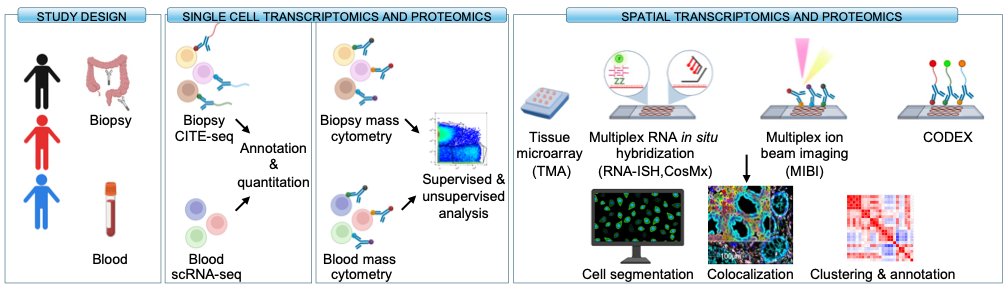
Excited to share our manuscript on single-cell and spatial multi-omics of anti-integrin therapy in ulcerative colitis (UC) https://t.co/QEFgIMVVOe. This work was led by @ElviraMennillo, in collaboration with @alexis_combes, @GabiFragiadaks, and @drAOPisco 1/8
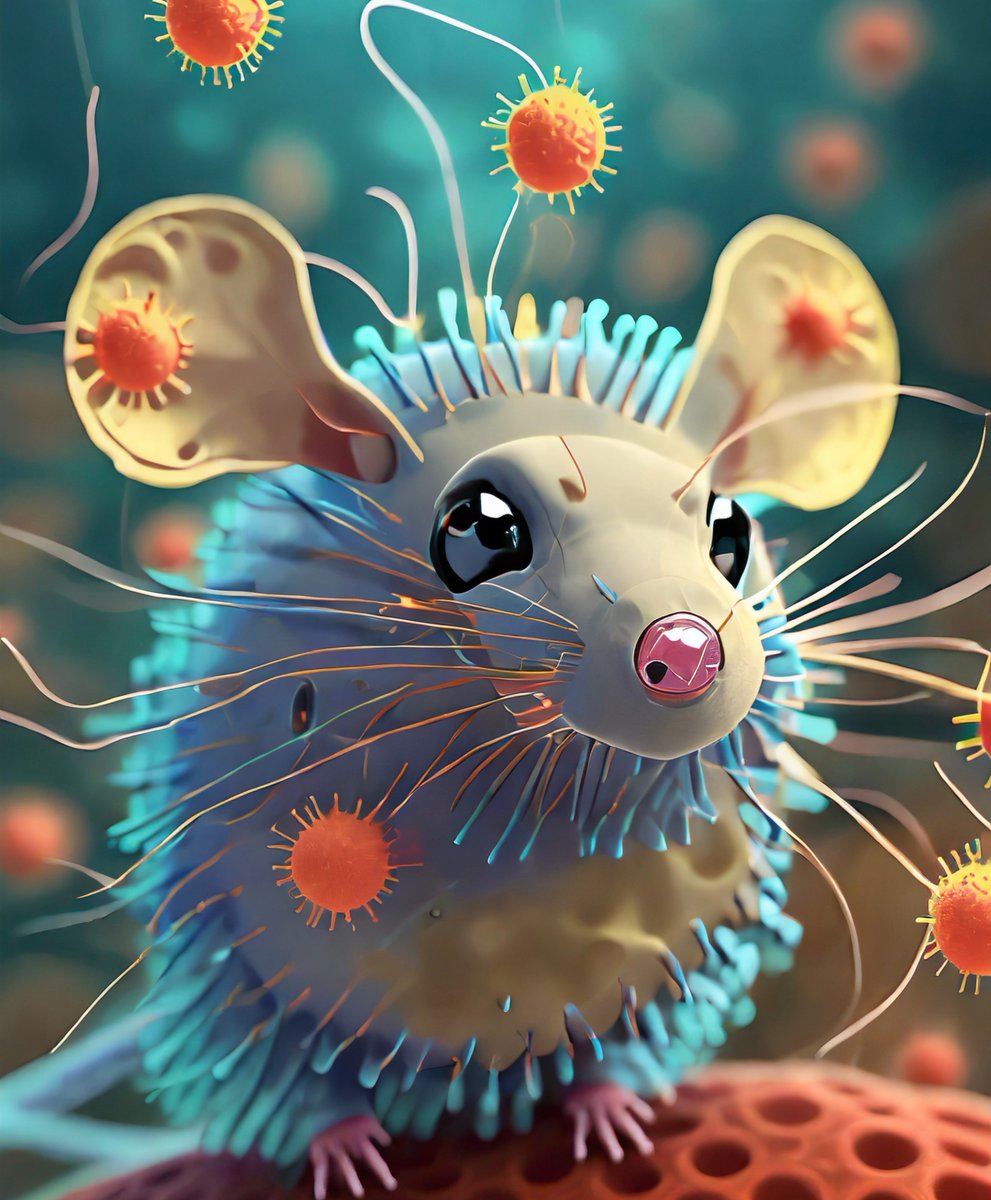
Not at all jumping on the AI rodent band wagon, but delighted to announce the publication of our paper in @MucosalImmunol about why you lose your appetite when you have a cold
https://t.co/HBE0o5IDwP
Including the coolest experiment I have ever done
@NarfGb@SoothSpider I haven't worked with a cross-talk between those two. But this paper talks about NF-kB-controlled transcriptional regulation of miR-146 via NF-kB predicted binding sites in miR-146's promoter. https://t.co/OHBgYXEixH
New research in mice finds that neonatal CD8+ T cells can undergo rapid chromatin remodeling, which supports their innate-like functions.
Read more: https://t.co/1dNPVhPKYk @Cornell@CornellCFI
A new @SciImmunology study describes why a subset of T cells behaves in a way that is more similar to innate immune cells, rather than responding like normal adaptive immune cells.
Learn more: https://t.co/acE3DLXeRj
@WillySanchez_23 That may be possible, but I am not sure if we are equipped to test that with the current data. The human data is expected to be available soon.
@Jeff_Mold @PGTimmune Unfortunately, we don't have TCR data on these samples, but it's an interesting idea. CoNGA seems like a very useful tool! Thanks for sharing.
@Jeff_Mold Just checked, it (cluster A5 in Fig 7E) is not, but the clusters F6 (fetal) and N4 (neonatal) seem IKZF2+KLRC2+. I wonder if the absence of these markers in A5 is due to dropouts in scRNA-seq.
@MoreauGabarain@vipintukur That is a very interesting insight. I have moved on to working on human diseases, but the Rudd lab is interested in following up on these cells in adults, and it would be interesting to see if their counts correlate with the host's ability to produce Abs at population-scale.





![LeyingGuan's tweet photo. I am excited to share that our #IMPACC paper - Integrated longitudinal multi-omics study identifies immune programs associated with acute COVID-19 severity and mortality - was recently published in @jclinicalinvest. https://t.co/uxzRhq3yLL #SystemsBiology #Bioinformatics [1/5] https://t.co/ll5bjoUwb7](https://pbs.twimg.com/media/GMiwcTIXgAAClkP.jpg)