NEW: We are short Nvidia $NVDA. We believe Nvidia has a significant China problem. Please see our full report and disclosures now available on our website, link in bio.
@jukan05 Bill Ackman once said “the press, you know, loves you on the way up and loves you even more to write about you on the way down.”
That downward social comparison makes them feel better about themselves, because they’ve never achieved comparable success themselves.
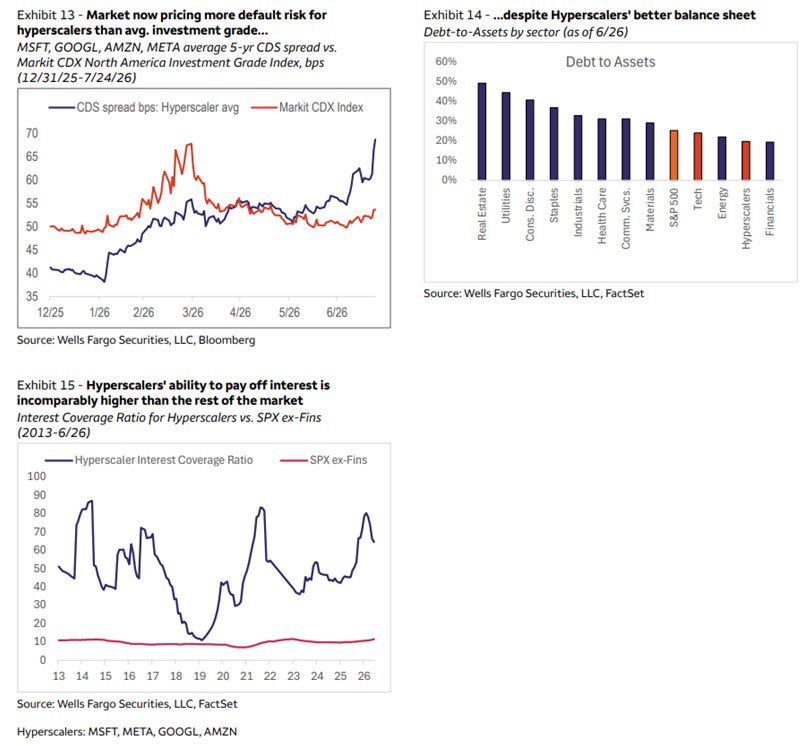
Spending a week with my family and working most of it! Being a few hours ahead of US markets has given me some time to digest a lot of incredible markets discourse on X - there is too much to try and consume about AI but not enough about leverage. We are seeing a classic head hunt of the most levered players in the equity and convert market re AI globally. Hyperscaler and associated credit spreads in IG are wider as they should be (portfolio construction by notional and duration matter in credit because we don’t have the payout that equity does) and debt is being added to compute and power as another constraint on the AI theme. Govt regulation remains a massive wildcard but a longer cycle isn’t necessary a worse one. I would look for the forced sellers of assets trading at or below contract value with counterparties you feel good about that have positive optionality on growth opportunities. Think about the impact on spot and next 1-2 year curves for compute, power, and shell - those who are long and don’t need financing + can term out contracts now are materially advantaged. If this is the whole cycle being elongated and the curve flattened there are a lot of interesting securities to buy from forced sellers. More time for competition and technology to emerge in the intermediate term isn’t necessarily a bad thing for many infrastructure assets. I started my career in the middle of the early 2000s telecom cycle - Nortel, Lucent, Cisco, etc were financing their customers. There have been some very astute comments on this platform from people who understand the AI echosystem far better than I do about Nvidia and Broadcoms business model decision to become the working capital bank of the AI build - bridging the industry to revenue and cash flow. My sense is the focus in credit markets right now is too much on Meta Google Amazon etc and not enough on that business model change which liquifies the compute roll out in the near term and shifts the credit risk to those large semiconductor companies. It’s fun to seeing liquidity having a price again and god forbid IG companies cost of debt having to compete with their cost to equity.
Market is overreacting to hyperscale credit spreads widening from my perspective. TL;DR Spot pricing for renting GPU compute materially above contracted rates implies hyperscalers are underearning while operating cash flow acceleration is an underestimated source of funds for AI capex.
The fact that spot prices for GPU rentals are at least 2x higher than contracted rates is the missing piece from the discussion about hyperscaler credit, which is the only fundamental factor behind this selloff. Multiple private companies are planning on spending at least 2x more per GPU for compute as contracts roll-off and some have spoken about this publicly.
As contracts roll-off, hyperscale growth rates are going to continue to accelerate as their installed bases of compute reprice higher. Hyperscale operating cash flow growth using a mix of estimates and actuals is modeled to accelerate from 31% in the first quarter of 2026 to 50% in the second quarter. This acceleration should continue for the rest of the year and this is not in estimates which incorrectly model a deceleration in the third quarter from my perspective.
Some math. Consensus estimates are probably for 25-35 gigawatts added by hyperscale and neoclouds in CY28 (using a range as standing up datacenters is hard and a lot of the neos plus labs are still private). At 60b per gigawatt, that is 1.5 to 2.2 trillion in capex. Consensus estimates for hyperscale/neo operating cash flow is 1.3 to 1.4 trillion. I think this gets revised up materially as contracts reprice and growth accelerates so the 100b to 700b that would hypothetically need to be plugged by debt goes away. And their credit profiles materially improve. Not to mention the said 100b to 700b would be less than 1 turn of incremental leverage on consensus EBITDA estimates. And obviously the Nvidia and Broadcom “credit wrappers” help improve creditworthiness as well given their FCF profiles.
OpenAI, Cursor/Grok and the various Open Source inference clouds have accelerated materially over the last two months per public data and Anthropic continues to grow insanely fast while likely generating FCF. This - along with the fact that spot prices for GPU rentals are so far ahead of contract - are the missing pieces from the BofA chart on hyperscale FCF vs. semiconductor FCF.
Hyperscalers are underearning and anyone who signed a contract for GPU compute in 2024 and 2025 is overearning. Operating cash flow will be enough to fund capex but as contracts reprice and cloud growth continues to accelerate then spreads likely come in as well.
Would also note that CDS markets are easy to manipulate - was a huge feature of the GFC - short the stock and then buy the CDS. So I would not put attach much signal to CDS.
Net, net I’m not that concerned about the widening spreads in hyperscale credit. The real risk is that bringing power online and energizing all these GPUs is really hard but we are getting better at this every day.
Not every AI interaction is best served with a large frontier model.
There is a long tail of trillion-token use cases, from tagging to search, best served by a sub-10b-parameter model that runs in milliseconds and costs many orders of magnitude less than the frontier. We built Freesolo Flash to make training loops like SFT and RL easy and end-to-end completable through your coding agent.
@IterIntellectus um no. distasteful/poshlost if anything. obvious trash dressing itself up as profound and morally elevated when it’s really just shitty betting with zero substance.