Over the summer, FAI scholars co-organized an open letter urging legislators to enact screening policies that would block bad actors from developing bioweapons.
It's great to see @WHOSTP47 announce new screening requirements for synthetic DNA. A strong step for US biosecurity.
Today, we released the National Policy for Nucleic Acid Synthesis Screening to protect American biotechnology innovation while reducing the risk of misuse.
This policy establishes a new, government-wide screening requirements for synthetic DNA and the equipment used to make it. It will ensure companies selling nucleic acid sequences and synthesis equipment know their customers and prevent the malicious use of these materials and tools.
This policy strengthens our Nation’s biosecurity posture by establishing rigorous U.S. government-wide procurement screening and physical security standards for synthetic biology. It replaces outdated “self-attestation” systems with robust, independent verification. It creates a dynamic, SI-powered screening layer that assesses the biological risk from nucleic acid sequences, allowing the U.S. to anticipate and prevent malicious use and help stop dangerous gain-of-function research.
@NIST will issue rigorous new screening standards and @HHSGov and @USDA will certify synthetic biology providers. Together, these measures will strengthen American biosecurity, safeguard responsible innovation, and establish a global standard for safe and transparent synthetic biology tools and research.
Industry and safety experts agree: we need universal mandatory gene synthesis screening to address the bio-risks created by AI.
Great conversation on AI and bioweapons at today's Washington Post panel with ARI's @sctwea.
No one should be able to order a bioweapon through the mail.
@IFP & @JoinFAI are proud to co-lead an open letter calling for mandatory DNA synthesis screening & recordkeeping.
Signatories include:
- Sam Altman, CEO & Co-Founder, OpenAI
- Dario Amodei, CEO & Co-Founder, Anthropic
- David Baker, Director, Institute for Protein Design; 2024 Nobel Prize in Chemistry recipient
- Patrick Collison, CEO & Co-Founder, Stripe
- Paul Graham, Founder, Y Combinator
- Demis Hassabis, CEO, Google DeepMind; 2024 Nobel Prize in Chemistry recipient
- Emily Leproust, CEO & Co-Founder, Twist Bioscience
- Lawrence Lessig, Roy L. Furman Professor of Law and Leadership, Harvard Law School
- Gerald W. Parker, former Special Assistant to the President for Biosecurity and Pandemic Response
- Mustafa Suleyman, CEO, Microsoft AI
- Alex Tabarrok, Professor of Economics, George Mason University
- Alexandr Wang, Chief AI Officer, Meta; Founder, Scale AI
- Christine E. Wormuth, President & CEO, Nuclear Threat Initiative; 25th Secretary of the Army
Read the letter and see the full list of signatories: https://t.co/BwZiJXw3JT
Many DNA synthesis companies voluntarily screen orders to mitigate biosecurity risks, but no law requires them to do so.
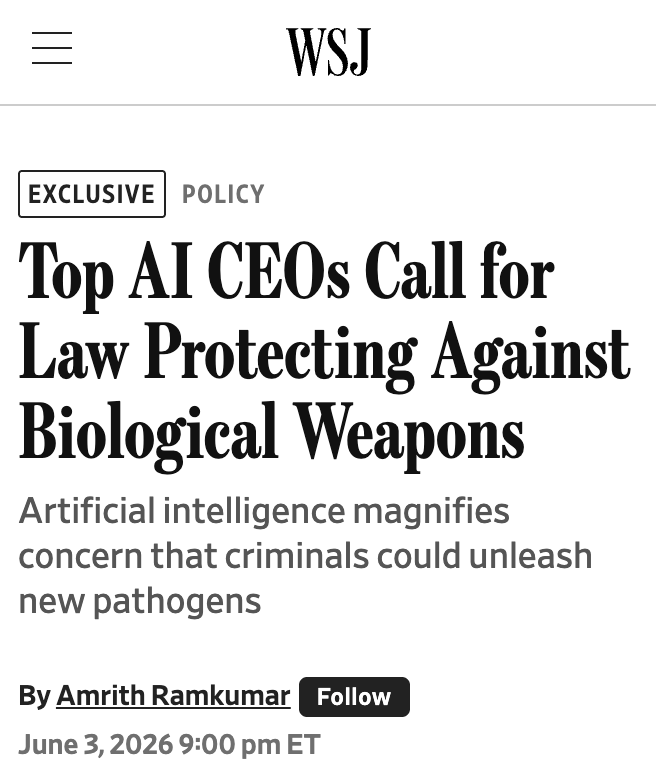
Leaders in AI, biotech, life sciences, national security, and the nucleic acid synthesis industry agree that Congress should act to strengthen safeguards against biological threats.
@deanwball put it well in the WSJ:
“If you’re synthesizing the stuff that yields biological life and viruses, we’re asking you to screen to see whether it is dangerous in some way. That seems like a reasonable thing for society to insist upon.”
LIVE NOW: AI Biosecurity Panel
Tune in as leading experts, including the author of recent research from Microsoft, discuss new biosecurity loopholes in the AI era.
https://t.co/vHJqO2gssP
AI is advancing faster than biosecurity practices.
Next week, join ARI and leading experts, including an author of Microsoft's latest study, to discuss the widening gap between AI’s bio capabilities and security practices.
🗓 Oct 29 | 3–4PM ET
🔗 RSVP: https://t.co/AS2Me49F07
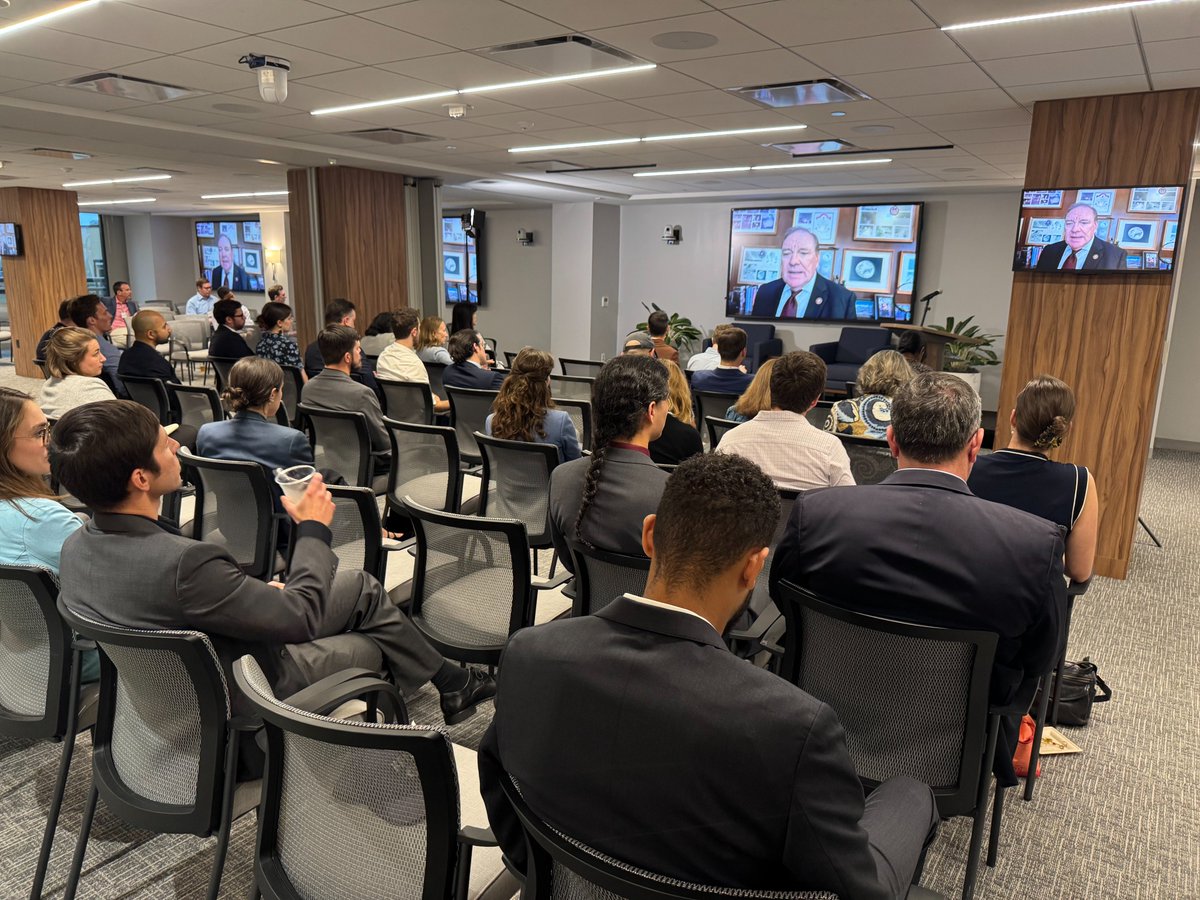
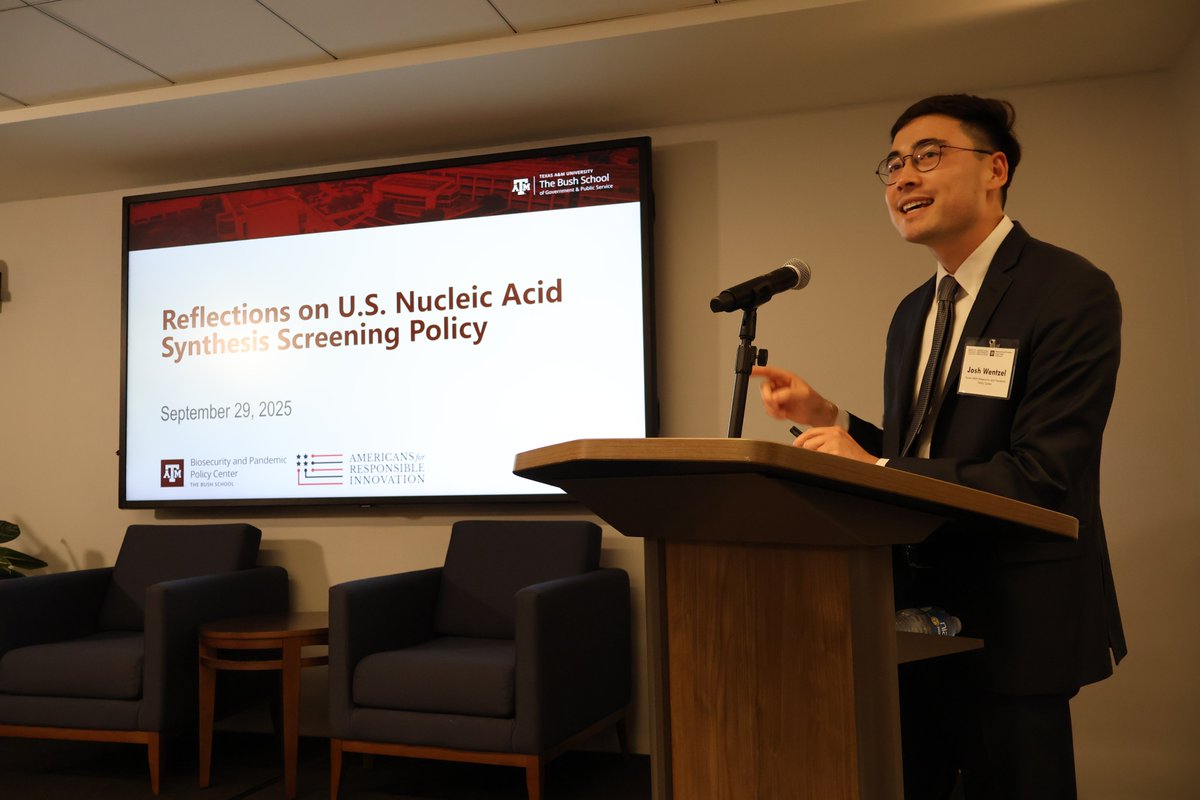
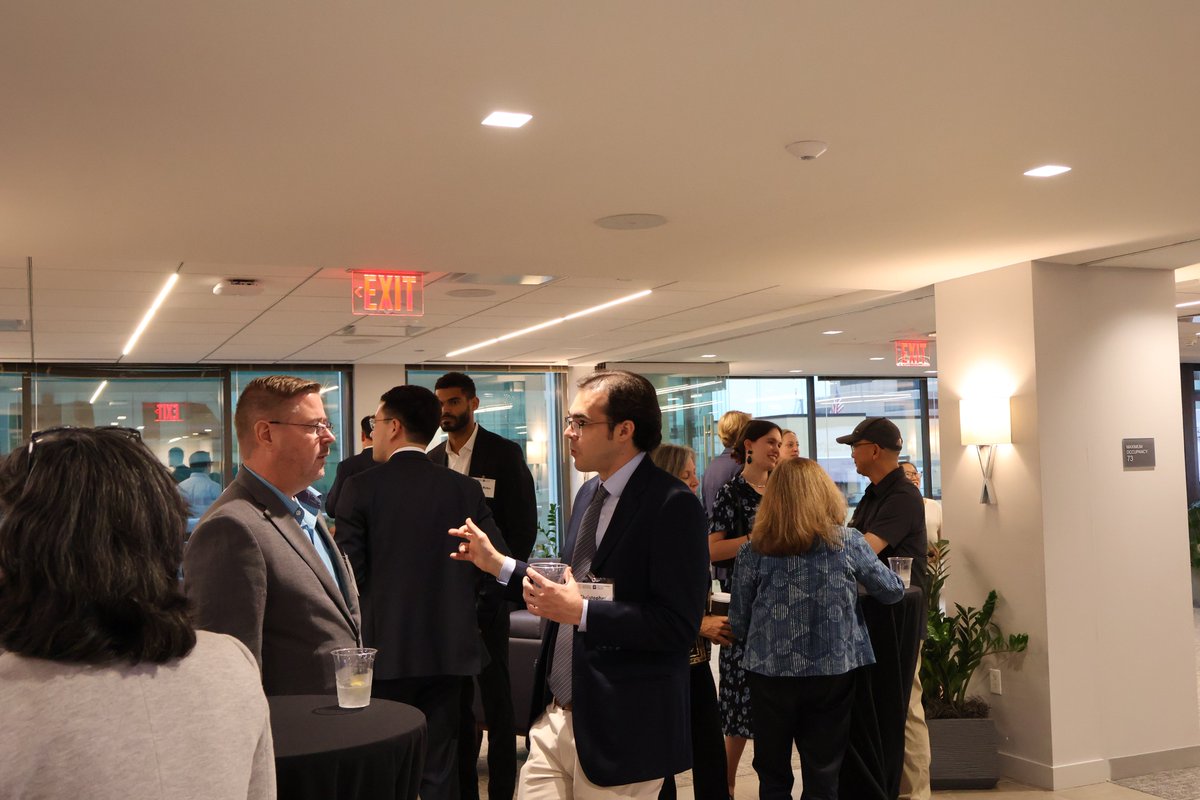
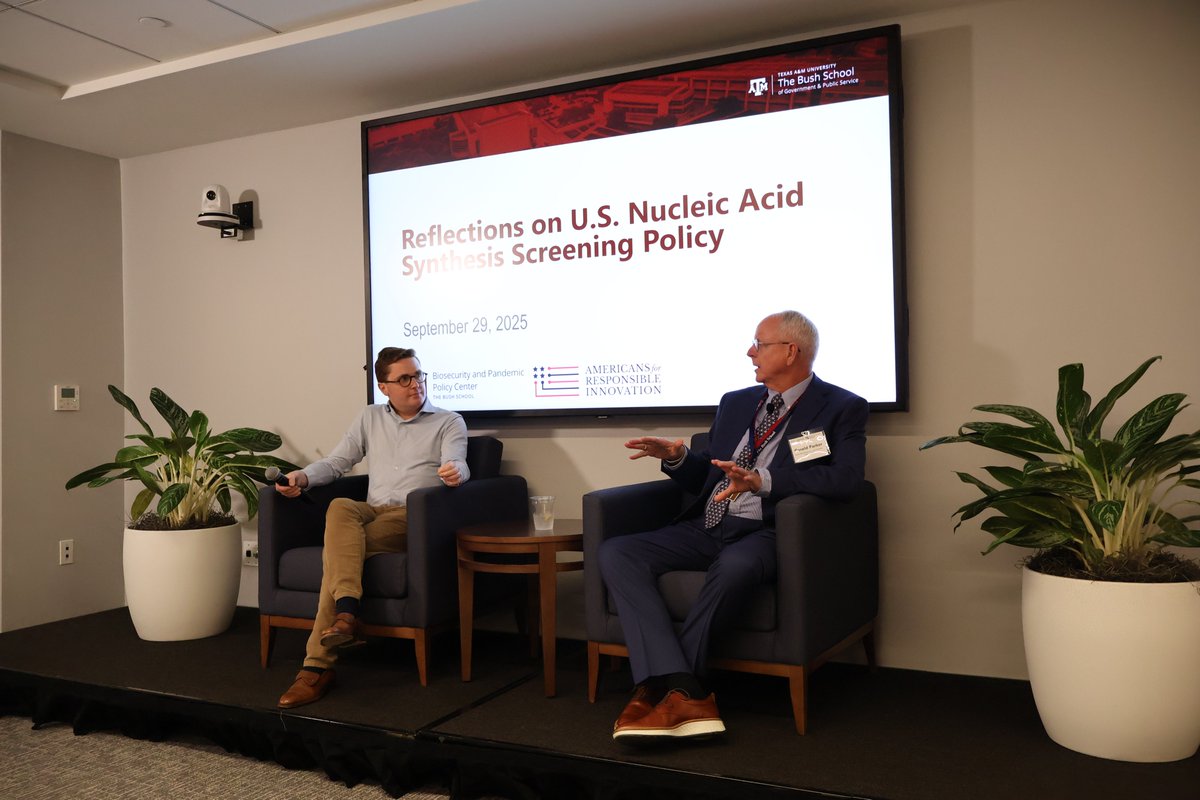
On September 29, we heard from @deanwball, @DrNealDunnFL2, and @DrGerryParker about why screening nucleic acid synthesis orders for sequences of dangerous pathogens is a priority for national security and innovation.
Thanks to @sctwea and @americans4ri for partnering with us!