

Search results for base track
People

Base
@base

Bas 
@Bas

BASF
@BASF

BASED
@based

Bas Westland
@basw

Tracky
@tracky

BASES
@BASES

Tracx
@Tracx

Tracy Casavant Oh, BASc (Chml), MES
@OhCasavant

trad karim
@TradK

Trace of Bass
@the_migglest

Trace Kuhn
@tracek

terrymisu!
@TRAC_

Bob Savage
@track

Trask
@trask

texel.bsky.social
@trawk

brn
@basd

Trace Johnson
@Trace

agam
@tracwk

Bas Koppelman
@bask
Tweets including base track


The biggest buyer isn’t always the most interesting wallet. 👀
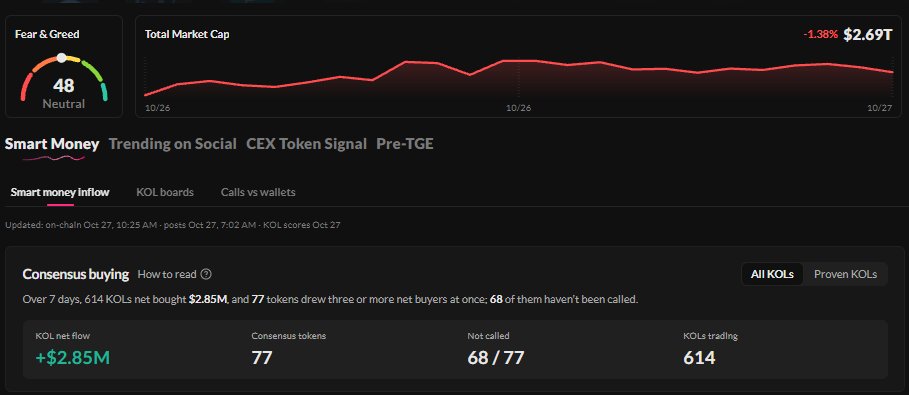
Surf Smart Money data shows 12 KOLs net-buying msUSD on Base, with around $104K in net inflows and no tracked public calls.
What caught my eye was the difference between two buyers.
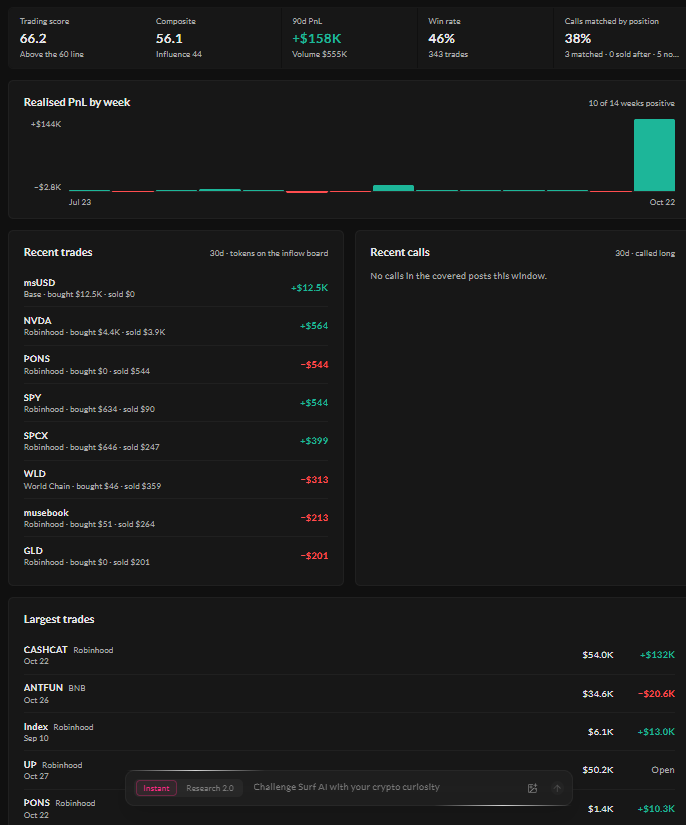
OxPink had the biggest position at $24.5K, while lurks bought $12.5K. But their trading profiles look quite different: lurks has a 66.2 trading score and +$158K in 90-day PnL across 343 trades, while OxPink has a 42.4 score and +$472.
It makes me wonder how much we miss when we only look at who bought the most. The amount matters, but the trader’s track record adds another piece to the picture.
That’s the part of on chain research I find interesting: not just seeing the money move, but looking into who’s behind it....
🔎 Explore the data with @SurfAIHQ ,
↳ https://t.co/oMmUz5AqFq
------------------------------------------
📌 Follow for more:
◆ X: @SurfAIHQ
◆ Website: https://t.co/fkF5DdzMAD



A friend of mine sold his mutual funds in January 2025 because the market looked expensive. He put Rs 8 lakh in a savings account and waited for the dip. The dip came in March.
He said it would go lower. It went lower in April. He said it would go much lower. By June, the index had recovered. By September, it was above where he sold. He is still waiting. The Rs 8 lakh is still in the savings account, earning 3 percent, while inflation runs at 5 percent. He did not buy the dip. The dip bought him.
That is the story of the young Indian investor who confuses patience with paralysis. Buying the dip sounds like a strategy. Most of the time it is just a delay with better branding.
Cash waiting for a correction is still cash. Inflation does not wait
There is a strange comfort in holding cash. It feels safe. It feels liquid.
It feels like you are ready. But a savings account earning 3 percent while inflation runs at 5 percent is not a defensive position.
It is a guaranteed loss of 2 percent every year, before tax. If you are in the 30 percent slab, the real loss is closer to 3 percent. The cash is not waiting for the dip. It is losing value while the dip takes its time.
The Sensex and the Nifty are not the only things that move.
Your rent moves. Your grocery bill moves. Your child's school fee moves. The rupee moves against the dollar, which makes imported goods more expensive.
The money sitting in the savings account is losing purchasing power in every one of those directions.
The dip has to be very deep just to recover the inflation you lost while waiting for it.
The last dip was bought by the person who already had a SIP running
Here is the part that nobody posts on social media. The person who bought the March 2025 dip was not the person who had been waiting with cash on the sidelines.
It was the person whose SIP was already running. The SIP bought units every month, including the month when the market was red. The SIP did not need to time the bottom. It just needed to keep going.
A monthly SIP of Rs 20,000 running through a 15 percent correction buys more units at lower prices. The investor does not have to make a decision. The system makes the decision automatically. The person who was waiting for the dip had to overcome fear, doubt, and the temptation to wait for an even better entry. The SIP had no such problem. It just executed.
A 5 percent fall feels like a signal. A 20 percent fall feels like a mistake
This is the psychology that traps most young investors. A small fall feels like an opportunity. A large fall feels like a warning. The bigger the discount, the less likely you are to buy. The person who said they would buy at 10 percent down is suddenly asking whether the market will fall 30 percent. The person who said they would buy at 20 percent down is convinced that something is broken.
The dip is the moment when the plan is tested. And most plans fail that test. Not because the market is unpredictable, but because the investor is. The fear of catching a falling knife is stronger than the desire to buy at a discount.
Youth who track every headline will not deploy on the day it is red
There is a contradiction in the behaviour of young investors.
They read every market headline. They follow every analyst on social media. They know exactly why the market fell on any given day.
But they do not deploy on the day it falls. The headline creates anxiety. The anxiety creates hesitation. The hesitation creates a wait for clarity. And clarity never arrives.
The investor who buys on a red day is not the one who read the most news. It is the one who had a rule. The rule was not about the headline.
The rule was about the plan. A fixed amount, a fixed date, a fixed allocation. The rule does not need to know why the market is red. It just needs to execute.
Timing the bottom is a second job. Most already have one
Finding the bottom of a market correction is not a hobby.
It is a full-time occupation. Professional fund managers with research teams and data feeds do not consistently get it right.
A young professional with a 9 to 6 job and a weekend side hustle is not going to out-time the market. The attempt to do so is not just futile. It is expensive.
Every month spent waiting is a month of compounding lost.
The person who has a SIP does not need to time the bottom. The SIP is the strategy. The top-up is the bonus. The difference between the two is the difference between a system and a hope.
The rupee and the index can both move while the money sits in a savings account
There is a currency dimension that most young investors ignore.
If the rupee falls 5 percent against the dollar, the value of your savings account does not change in rupee terms. But the cost of everything imported does. Your phone, your laptop, your foreign holiday, your child's overseas education, your imported medicines. The rupee is not a neutral store of value. It is a depreciating one. The index has historically delivered 11 to 13 percent over long periods. The savings account has delivered 3 to 4 percent. The gap is not a small difference. It is the difference between building wealth and preserving the illusion of it.
A plan that only buys on fear never gets funded
A plan that says "I will buy when the market falls" is not a plan. It is a condition.
And the condition is almost never met in the way the investor expects. The market falls, but the investor is scared. The market falls more, but the investor is now convinced it will fall further. The market recovers, and the investor is left with cash that has lost value and a missed opportunity that cannot be recovered.
A plan that says "I will buy Rs 20,000 on the first of every month, and an extra Rs 10,000 if the index falls more than 5 percent in a month" is a plan. It has a base case and a bonus case. The base case runs automatically. The bonus case is a decision, not a dependency. The plan is funded because the base case does not wait for fear.
If you already invest, the dip is a top-up. It is not a permission slip to start later
The dip is not the beginning of the investment journey. It is a moment inside it.
The person who already has a SIP does not need to decide whether to start. They already started. The dip is an opportunity to add more, not an excuse to delay the start.
The person who is waiting for the dip to start has the sequence backwards. They are waiting for the best time to begin, which is a decision that can be postponed indefinitely. The person who has already started is not waiting for anything. They are just following the plan.
A dip is a discount on future returns. It is not a discount on the discipline required to invest. The discipline has to exist before the dip arrives.
The dip rewards the person who was already there.
It punishes the person who was waiting for it.
The market will fall again. It always does. The question is not whether you will buy the dip. The question is whether you will be invested enough to benefit from it. The SIP does not need to time the market. It just needs to be running when the market times itself.
The dip is a top-up. It is not a permission slip. Start the SIP first. Then let the dip be the bonus.
If this made you rethink the way you wait for a correction, follow @WallStreet2Web3 for more data-backed takes on investing, behaviour, and the money habits shaping young India.
#BuyTheDip #SIP #PersonalFinance #Investing #FinancialLiteracy #IndiaInvests #StockMarket #Wallstreet2Web3 #MarketCorrection #TimingTheMarket #WealthBuilding #Compounding

🔷 How to Complete @primus_labs Tasks and Earn XP
🔹 To get started, visit the project website:
🔗https://t.co/U3lEQdGwcK
✅ Step-by-Step Guide:
🔹 First, connect your wallet to the website and install the official Primus browser extension.
🔹 Go to the Tasks section. These tasks involve verifying your accounts and activities across different platforms.
🔹 To complete a task, click Verify or Verify Now.
🔹 The Primus extension will automatically start the verification process.
🔹 For some tasks, you need to be logged into the relevant platform beforehand.
🔹 Once a task is successfully verified, the corresponding XP will be added to your account.
⭐️ How XP and Records Work:
🔸 You can complete the same task multiple times, but the XP reward decreases with each successful verification.
🥇 First verification: 10 XP
🥈 Second verification: 4 XP
🥉 Third verification: 1 XP
📌 Important: Every successful task verification creates 1 Record on your profile, even if you've already completed that task before.
🔹 For example, if you verify the same task three times, you'll earn a total of 15 XP and 3 Records.
🔹 This means repeating tasks can help you increase both your XP and your total Records.
💰 Task Verification Fees:
🔹 On-chain verifications are processed on the Base network.
🔹 Each verification costs approximately $0.08 (8 cents), but the actual fee may vary depending on network gas fees.
🔹 You'll need a small amount of ETH on the Base network to cover these fees.
📌 Important Notes:
▫️ You can track your completed tasks, total Records, and accumulated XP through the project's dashboard.
▫️ Only install the Primus extension from official sources.
▫️ Remember that repeated verifications give fewer XP, but each successful verification still adds a new Record.
✅ Complete tasks, repeat verifications, collect Records, and keep earning XP in the Primus ecosystem!

THE EUGENE DE KOCK STORY
Calling Eugene de Kock a "cold-blooded mass murderer" may give him the unintended status of a maverick criminal policeman who acted alone driven by personal ambition and demons.
It makes him a Moses Sithole or any other individual criminal psycho. It opens a barn door for all other Apartheid perpetrators to escape scot free. But Eugene de Kock was NOT a lone killer.
Eugene de Kock was a regular colonel in the Special Branch Police. He was part of the executive arm of the Apartheid government - the police. He functioned within a police force with a budget, authorizations and approvals and an organogram based on a hierarchy of ranks.
He did not act like a lose cannon. He defied no laws. He acted within his legal mandate as given to him by the Apartheid government and the Commissioner of Police and the Cabinet Security Council .
He did not act alone. He acted with a team of hundreds of dedicated police officers, black and white. They had a clear mandate to protect the Apartheid state and they had clear guidelines when to kill or when not to kill. That's why they sought a sworn affidavit before "verwydering van die samelewing" any black activist.
He reported his activities regularly to his seniors. He was debriefed regularly by senior officers - who held more responsibility than him. He applied for leave and went on approved leave. And came back from lave and received a fresh batch of files on who to track down and k! ll.
@lukhanyocalata
But our approach to "his crimes" was and still is individual-centered and it made every Apartheid real killer out there walk free.
Is it our African way of thinking at fault here? How did it come about that we mishandled the case of Eugene de Kock? How did we not know that even booking out a police vehicle in the then SAP was an organizational matter involving registers, authorizations and approvals, and petrol requisition? And recording of speedometer mileage? And therefore it could involve more than 50 people?
This is the same mistake that the TRC made. They saw Eugene de Kock as a deranged individual. This mistake cost the TRC a lot. They mistook a tree for the entire forest. And the entire forest of generals, constables, typists, politicians and rank and file police escaped scrutiny and accountability in the TRC.
Even Eugene de Kock laments this oversight, this unintentional mistake. But his complaints fell on deaf ears. We had already given him names, Prime Evil, and that was enough. We didn't look elsewhere.
Eugene de Kock seeing this has more than once since 1994 called himself a scapegoat and rightfully so. He was not a sniper. He worked with a team of dedicated operatives and senior officers and politicians and written directives circulated widely in the Apartheid police forces to give Eugene and his team unreserved cooperation.
Did the TRC reveal this? Did they give names of who were in his team? Today our focus is to "catch" someone in the ANC who allowed this to happen. Did this "someone act alone" also? It's the same mistake but now dressed in other robes.
We must remove and control our emotions and do the detached business of cold thinking and analyzing the de Kock story in all its full context.
I am simply not exonerating Eugene de Kock but my view is - to reach the zenith of the tallest investigative pyramid, you should set out the base of the pyramid as large and as wide as possible.
@PresidencyZA
@SpokespersonRSA


@JesseTopaz @base @jessepollak @gmgnai The Base Track finale with 20K in prizes is a solid way to close it out. Curious what gets said about the meme ecosystem too.

Hot take : Everyone is arguing about which AI model is smartest. The engineers getting real results are arguing about something else.
For agent roles outside the San Francisco Bay Area:
Associate: $140,000 to $185,000
Mid-level: $190,000 to $275,000
Senior: $260,000 to $400,000
Staff or lead: $400,000 to $600,000+
The same guide cites Levels fyi data showing a $250,000 median for ML and AI engineers, and $515,000 at the 90th percentile.
In February 2026, LangChain took its coding agent from just outside the top 30 to the top 5 on a major coding benchmark. They didn't switch to a better model. They didn't fine-tune anything. They kept the exact same model and changed only the code around it.
The same month, a small team at OpenAI revealed it had shipped roughly a million lines of production code in about five months, with a rule that humans write zero of it by hand.
Both stories point at the same idea, and it now has a name: harness engineering.
I kept seeing the term and realized I couldn't explain it. So I went to the primary sources: OpenAI's engineering blog, Anthropic's, LangChain's, Stripe's. Here's what it is, why it suddenly matters, how companies use it, how to learn it, and the honest truth about the "million-dollar salary" claims.
What harness engineering actually is
Here's the simplest way I've found to think about it: Agent = Model + Harness.
The model is the brain. It reasons. But on its own it can't remember yesterday, can't run your tests, doesn't know your codebase's rules, and has no idea when it's actually finished. The harness is everything you build around the model to fix that.
If you've used Claude Code, Codex or Cursor, you've used a harness. The file tools, the terminal access, the permission prompts, the loop that keeps the agent going: that's harness.
Harness engineering is the discipline of designing that layer on purpose. Mitchell Hashimoto, the co-creator of Terraform, is widely credited with its core rule: whenever an agent makes a mistake, change the environment so it can never make that mistake again. Add a linter. Add a test. Add a line to the instructions file.
It's the third chapter of a short history:
Prompt engineering: how you word the request
Context engineering: what information the model sees
Harness engineering: what the model can do, how its work gets checked, and what "done" means
Why it suddenly matters
The short answer: the same model can score very differently depending on the harness around it. That turns the harness from plumbing into a competitive advantage.
Exhibit A: LangChain's 13.7-point jump
On February 17, 2026, LangChain published how it improved its coding agent on Terminal-Bench 2.0. The model, GPT-5.2-Codex, stayed fixed the whole time. Only the harness changed.
Before: 52.8%, just outside the top 30
After: 66.5%, inside the top 5
What they changed is a masterclass in the craft:
Forced self-checking. A step that stops the agent before it exits and makes it verify its work against the spec.
Loop detection. If the agent edits the same file too many times, it's nudged to rethink its approach.
Environment mapping. On startup, the agent maps its working directory and finds available tools.
Smarter thinking budgets. Maximum reasoning everywhere actually scored worse (53.9%) because tasks timed out. High reasoning scored 63.6%. Their final setup used maximum effort for planning and checking, and high effort for building.
That last point is my favorite. More thinking isn't always better. Knowing where to spend it is the skill.
Exhibit B: why agents fail on long jobs
In November 2025, Anthropic's engineering team described what happened when they asked an agent to build a clone of https://t.co/mxkJAgNuDf over many sessions. Two failures kept showing up:
The agent tried to build everything at once, ran out of memory mid-task, and left half-built features behind.
Later sessions saw existing progress and declared the project finished too early.
Their fix was pure harness. A first session writes a list of over 200 features, all marked as failing. Every later session reads a progress log, picks one unfinished feature, tests it end to end like a real user, commits, and updates the log. The agent can only flip a feature to "passing." It can't rewrite the list to make the job look easier.
The bigger shift
Models keep getting better and cheaper, and every company can rent the same ones. What they can't rent is a harness tuned to their own codebase, tests, rules and risks. That's why I think the harness, not the model, is becoming the moat.
How companies are actually using it
OpenAI: a million lines, zero written by hand
OpenAI popularized the phrase in a February 11, 2026 engineering post by Ryan Lopopolo. A small team built an internal product where every line of code was written by Codex agents.
Team: 3 engineers at first, growing to 7
Time: about five months, starting late August 2025
Output: roughly 1 million lines and about 1,500 merged pull requests, around 3.5 per engineer per day
Speed: the team estimates about one-tenth the time hand-writing would have taken
The harness tricks are the real lesson:
A short, roughly 100-line AGENTS.md that works as a map, pointing to deeper docs. A giant instruction file was tried first and failed.
Custom linters whose error messages tell the agent how to fix the problem.
Agents review each other's pull requests. Human review is optional.
A recurring "doc-gardening" agent fixes stale docs. It replaced a manual Friday cleanup that had eaten about 20% of the team's week.
Single agent runs have worked for more than six hours, often overnight.
Stripe: 1,300+ agent pull requests a week
Stripe's agents, called Minions, now produce more than 1,300 pull requests a week, up from 1,000 in earlier trials, according to InfoQ in March 2026. The code they produce has no human-written lines, but every change is reviewed by a person.
Built on an internal fork of Block's open-source Goose agent
"Blueprints" mix fixed, predictable steps with flexible agent loops, and end in a pull request
CI, automated tests and static analysis run before any human looks
Best at well-defined work: config changes, dependency upgrades, small refactors
This is running on code that handles more than $1 trillion in yearly payments. Harness engineering is no longer a toy.
Anthropic: separate the worker from the judge
After the long-running agent work above, Anthropic's team went further, as InfoQ reported in April 2026. They split work across three agents: one plans, one builds, one evaluates. The evaluator clicks through the live app in a browser and scores it, because agents tend to overrate their own work. Runs take 5 to 15 rounds of feedback and can last up to four hours.
LangChain: the harness as a product
LangChain's 13.7-point benchmark gain came from tools anyone can study: tracing every run, then using agents to analyze the failures and turn them into harness fixes. The improvement loop itself is automated.
The pattern across all four
Make "done" checkable. Tests, feature lists, evaluators.
Write the rules into the repo, not into someone's head.
Turn every failure into a permanent fix in the environment.
Keep humans for judgment, not typing.
The money: can this really pay a million dollars?
Yes, at the very top. No, not typically. Here's the honest picture.
First, a reality check: "harness engineer" is rarely a job title yet. The work lives inside roles called AI engineer, agent engineer, applied AI engineer, or, at the frontier labs, "Member of Technical Staff." So salary data for the exact phrase is thin, and anyone quoting confident numbers for it is guessing.
What the broader AI agent market pays (US, total compensation)
From recruiting firm KORE1's September 2026 guide, for agent roles outside the San Francisco Bay Area:
Associate: $140,000 to $185,000
Mid-level: $190,000 to $275,000
Senior: $260,000 to $400,000
Staff or lead: $400,000 to $600,000+
The same guide cites https://t.co/cFU7SGCA4x data showing a $250,000 median for ML and AI engineers, and $515,000 at the 90th percentile.
Where the million-dollar packages actually are
They exist, but they're concentrated at frontier AI labs:
https://t.co/cFU7SGCA4x lists reported Anthropic Member of Technical Staff packages ranging from about $945,000 to $1.65 million+ a year. It notes it needs more submissions before showing a full breakdown, so treat this as a small sample.
US visa filings analyzed by Business Insider showed two Anthropic technical roles with base salaries alone of about $1.38 million and $1.12 million, before stock or bonuses.
What actually gets you there
Not the title. It's the leverage. A team of seven at OpenAI produced a million lines in five months. If you can build the system that lets a handful of engineers ship like a much larger team, you're worth a large multiple of one engineer's output. That's the economic logic behind the top packages.
My honest read: harness skills can push you into the top AI engineering bands. Seven figures is the tail of that distribution, mostly at a few labs, usually for senior people with a track record.
A roadmap to learn it, with projects
This is the path I'd follow, built from what the companies above actually do. The pace is a suggestion for someone who already codes. Every stage ends with something you can show.
Foundations (weeks 1 to 3)Learn: Python or TypeScript, git, writing tests, the command line, calling an LLM API, and tool calling.
Project: build a tiny agent from scratch. About 200 lines. It can read files, run shell commands and edit code in a loop. Building one yourself is how you learn what a harness is.
Use real harnesses (weeks 4 to 6)Learn: Claude Code, Codex, or open-source agents like Goose. Write an AGENTS.md or CLAUDE.md for a real repo, kept short, as a map.
Project: a "mistake log." Every time the agent gets something wrong, write down the fix you added to the environment so it can't happen again. Twenty entries teaches more than any course.
Verification (weeks 7 to 9)Learn: test suites, linters whose errors explain the fix, a must-check-before-finishing step, and a separate evaluator agent.
Project: measure the difference. Pick 20 small tasks. Run the agent without a verification step, then with one. Report the pass rate both ways.
Long-running work (weeks 10 to 12)Learn: Anthropic's pattern of a feature list in JSON, a progress file, git checkpoints and a startup script.
Project: an app built across 10+ agent sessions, where no single session could finish it alone.
Observability and evals (weeks 13 to 15)Learn: tracing every agent run, and public benchmarks like Terminal-Bench and SWE-bench.
Project: your own LangChain-style experiment. Run a benchmark subset, change one harness piece at a time, and chart what moved the score.
Guardrails and production (week 16 onward)Learn: sandboxed containers, permissions, cost budgets, human approval gates, and defenses against prompt injection.
Project: a mini "Minion." It turns a GitHub issue into a tested pull request inside a sandbox, ready for a human to review.
The capstone: publish what you built, with real before-and-after numbers. In this field, a public result with a measured improvement is worth more than any certificate.
The bottom line
The model gets the headlines. The harness gets the results. Right now, the people who can make AI agents reliable, measurable and safe are rare, and companies are paying accordingly. That window won't stay open forever. But if you start building today, you'll be early.


@Preshzinobabe @gmgnai The pressure in these trading competitions really does reveal insights into traders' strategies. I'm curious to see how the $2K cap influences their decisions on the Base track.

#𝗔𝗖𝗨𝗧𝗔𝗔𝗦 | 𝗤𝟮 ��𝗬𝟮𝟳 𝗥𝗲𝘀𝘂𝗹𝘁𝘀
⚡ 𝗠𝗮𝗿𝗴𝗶𝗻 𝗿𝘂𝗻𝘀 𝘄𝗲𝗹𝗹 𝗮𝗵𝗲𝗮𝗱 𝗼𝗳 𝗴𝘂𝗶𝗱𝗮𝗻𝗰𝗲 𝗮𝘀 𝗿𝗲𝘃𝗲𝗻𝘂𝗲 𝗴𝗿𝗼𝘄𝘀 𝟰𝟮.𝟳%
Revenue: 𝗥𝘀 𝟰𝟯𝟲.𝟵𝟮 𝗖𝗿 | +𝟰𝟮.𝟳% 𝗬𝗼𝗬
PAT to owners: 𝗥𝘀 𝟭𝟮𝟱.𝟭𝟳 𝗖𝗿 | +𝟳𝟯.𝟯% 𝗬𝗼𝗬
EBITDA margin: 𝟰𝟬.𝟮𝟳% | ~+𝟵𝟭𝟬 𝗯𝗽𝘀 𝗬𝗼𝗬
𝗞𝗲𝘆 𝗱𝗿𝗶𝘃𝗲𝗿: → 𝗘𝗕𝗜𝗧𝗗𝗔 𝘂𝗽 𝟴𝟰.𝟲% 𝗬𝗼𝗬 𝘁𝗼 𝗥𝘀 𝟭𝟳𝟱.𝟵𝟳 𝗖𝗿, with margin well above the FY26 level of 35.87% that management set as the FY27 guide. Gross margin expanded ~640 bps YoY to 62.14% as the COGS ratio fell to 37.86% from 44.24%. Revenue rose 32.5% QoQ. H1 revenue growth of 49.31% leaves only ~9.89% H2 growth needed to meet the 25% FY27 guide.
𝗞𝗲𝘆 𝘄𝗮𝘁𝗰𝗵: → 𝗦𝘂𝗯𝘀𝗶𝗱𝗶𝗮𝗿𝗶𝗲𝘀 𝘄𝗲𝗿𝗲 𝗮 𝗥𝘀 𝟭𝟯.𝟳𝟮 𝗖𝗿 𝗱𝗿𝗮𝗴 𝗮𝘁 𝗣𝗕𝗧 𝗹𝗲𝘃𝗲𝗹, reflecting spend at the pre-revenue Korea JV. The Gongju semiconductor-materials plant was under trial runs at end-September, on track for H2 FY27 commercial production. H1 employee costs annualise to ~Rs 163.26 Cr, above the ~Rs 150 Cr FY27 guide. H1 capex of Rs 123.92 Cr ran above the guided envelope.
𝗔𝗱𝗱𝗶𝘁𝗶𝗼𝗻𝗮𝗹 𝗽𝗼𝗶𝗻𝘁𝘀:
• H1 CFO of Rs 215.92 Cr was 1.09x PAT, with FCF of Rs 92.00 Cr; net cash rose to Rs 300.95 Cr.
• Other income fell 48.2% YoY to Rs 5.10 Cr against an FX-gain-driven base.
𝗢𝘃𝗲𝗿𝗮𝗹𝗹 𝗩𝗶𝗲𝘄: 🟢 Positive
Growth, margin plus cash conversion all line up; the Korea JV ramp is the next lever to track.
#ACUTAAS #Q2FY27 #Earnings


@Somnath98558066 @imYash07 I see fly out to the Center fielder, groundout to 3rd base and warning track shot at best. It would genuinely be easy for a guy like Mike trout to dominate cricket in those small ass fields you have where a home run’s like 240 feet.


@NERVAcademy @NERVKatsuragiM My recommendations are Ikari for Bravo base, and Nagisa for Charlie base. And they both should be bumped to Lt, and fast track to captain.

WHAT IF THE SAME CUSTOMER COMPLAINT NEVER HAD TO HAPPEN TWICE? 🔁
A customer reports a problem.
Your support team answers.
The customer gets a solution.
Case closed?
NOT SO FAST.
What if 20 other customers are about to experience the SAME problem?
And what if the real cause isn't the customer, the support team, or even the product?
What if it's a broken process somewhere else in your business?
Here's something interesting.
On September 9, 2026, xAI published a guide explaining how Grok Bot supports its customer-service operations.
Among the documented uses:
✅ Monitoring customer feedback after software updates.
✅ Reproducing reported software bugs.
✅ Investigating reasons customers may cancel.
✅ Preparing reports that help teams understand problems.
Source: xAI, "Grok Bot for Support."
https://t.co/CUMjPme8ba
THE BIG OPPORTUNITY?
Don't just answer the complaint.
Use the complaint to discover what needs improving.
Then repair the actual problem.
Today, we're teaching our Grok Bot SEO team to turn customer feedback, support questions, and project results into improvements across the entire business.
Meet your BUSINESS IMPROVEMENT ENGINE. ⚙️
━━━━━━━━━━━━━━━━
💡 STEP 1: STOP CONFUSING THE SYMPTOM WITH THE CAUSE
Imagine a digital marketing agency.
Three customers complain that their booking calendars aren't showing the correct appointment times.
Your support Bot helps each customer fix their calendar.
Problem solved?
Not necessarily.
Now imagine the Bot investigates further.
It discovers that the onboarding form never asked customers to confirm their business time zone.
THAT'S THE LIGHTBULB MOMENT.
The real problem wasn't three calendars.
It was ONE missing step in the setup process.
Now the Bot can help:
✅ Add time-zone confirmation to the intake form.
✅ Update the calendar setup instructions.
✅ Check other affected calendars.
✅ Add a verification test before delivery.
✅ Update the support knowledge base.
✅ Prevent the same mistake on future projects.
One root cause. Multiple improvements.
And fewer avoidable support requests.
This is a hypothetical example, but the problem-solving method is useful across nearly every business.
━━━━━━━━━━━━━━━━
🧠 STEP 2: FIND THE ROOT CAUSE
A root cause is an underlying problem responsible for an unwanted result.
One useful method is called the 5 WHYS.
You ask WHY something happened.
Then examine the answer.
And keep asking until you uncover a cause you can actually address.
Example:
PROBLEM: Customers receive incorrect booking times.
❓ Why?
The calendar uses the wrong time zone.
❓ Why?
The setup process used an incorrect default.
❓ Why?
Nobody verified the customer's time zone.
❓ Why?
The onboarding checklist didn't require confirmation.
❓ Why?
The original setup SOP never included that requirement.
POSSIBLE ROOT CAUSE: An incomplete setup procedure.
Now your Bot has something actionable.
Update the procedure.
Correct affected settings.
Test the new process.
And verify the results.
Real problems sometimes have several causes.
Your Bot should follow evidence instead of forcing every investigation into exactly five questions.
━━━━━━━━━━━━━━━━
🚨 STEP 3: SEPARATE URGENT PROBLEMS FROM ORDINARY IMPROVEMENTS
Not every issue can wait for a weekly review.
🔴 URGENT
Examples:
• Exposed customer information.
• Payment failures.
• Serious security problems.
• Major booking failures.
• Business-critical outages.
Flag the responsible person immediately.
Follow the approved incident process.
Don't delay necessary help while preparing a detailed report.
🟡 IMPORTANT
Examples:
• Repeated onboarding delays.
• Confusing checkout instructions.
• Missing customer information.
• Frequent support questions.
Investigate and prepare a practical correction.
🟢 IMPROVEMENT OPPORTUNITY
Examples:
• A clearer FAQ.
• Better website instructions.
• More useful customer training.
• A simpler intake form.
Batch related improvements into an efficient work session.
The goal isn't to create MORE tasks.
It's to solve the problems that matter most.
━━━━━━━━━━━━━━━━
🔎 STEP 4: FIND PROBLEMS CUSTOMERS HAVEN'T REPORTED
Here's another opportunity.
Some customers never complain.
They just leave.
A customer might abandon a confusing form.
Stop using a purchased product.
Cancel a subscription.
Or never finish the onboarding process.
So your Bots should examine more than support messages.
Useful evidence can include:
📩 Support questions.
📝 Customer feedback.
📊 Website behavior.
📅 Missed project milestones.
💳 Refunds and cancellations.
🧪 Failed tests.
🔁 Repeat support requests.
📈 Product usage, when available.
🚩 Incomplete customer onboarding.
A complaint tells you something went wrong.
A pattern may reveal WHERE your business needs to improve.
━━━━━━━━━━━━━━━━
🤖 STEP 5: ASSIGN THE WORK TO YOUR EXISTING GROK BOT TEAM
Open your SEO Operations group from post #14.
No new Bot required.
👑 SEO LEAD
Coordinates the investigation.
Chooses priorities.
Tracks completed improvements.
💬 BUYER VOICE
Analyzes customer concerns.
Identifies unclear messaging.
Prepares improved explanations.
📊 KEYWORD & DATA
Analyzes available evidence.
Finds recurring patterns.
Measures whether improvements work.
🛠️ WEBSITE & CONTENT
Fixes approved website issues.
Updates forms, instructions, and knowledge-base content.
GBP & LOCAL / AUTHORITY & LINKS
Join only when the problem concerns their specialty.
One coordinated investigation.
Specific assignments.
No unnecessary Bot conversations.
━━━━━━━━━━━━━━━━
📋 STEP 6: COPY THIS MASTER PROMPT INTO YOUR GROK BOT TEAM
📌 COPY FROM HERE:
"@SEO Lead, coordinate a CONTINUOUS BUSINESS IMPROVEMENT CAMPAIGN for [BUSINESS NAME].
Website: [WEBSITE URL]
Business type: [BUSINESS MODEL]
Primary offer: [APPROVED OFFER]
Customer support platform: [PLATFORM]
CRM: [PLATFORM]
Project management system: [PLATFORM / UNKNOWN]
Primary goal: Identify recurring problems, investigate their causes, implement useful approved improvements, and measure whether those problems decrease.
Reuse our existing:
• SEO Business Brief.
• Customer Success & Retention Playbook.
• Customer support knowledge base.
• SOP library.
• Customer feedback records.
• Project delivery reports.
• Search-to-Sale Scoreboard.
• Website improvement logs.
Work only with authorized accounts and data.
Use existing evidence before starting additional research.
🔎 1. COLLECT RECENT BUSINESS FEEDBACK
Review the previous 30 days of available business records.
Inspect relevant:
• Customer support tickets.
• Support emails.
• Customer feedback.
• Relevant reviews.
• Project delays.
• Reported software failures.
• Customer onboarding records.
• Refund and cancellation reasons.
• Customer training questions.
• Relevant website analytics.
• Failed automation reports.
• Unresolved project issues.
Use only authorized sources.
For each issue, record:
• Short description.
• Date.
• Source.
• Affected product or process.
• Customer impact.
• Current status.
• Supporting record or link.
• Whether it happened before.
Keep private customer information inside authorized systems.
Use anonymized summaries in general reports where possible.
If records are missing, mark them unavailable.
📊 2. BUILD A PROBLEM PATTERN REPORT
Group related issues.
Example categories:
A. Website and checkout problems.
B. Lead capture failures.
C. Booking problems.
D. Customer onboarding confusion.
E. Product or service delivery issues.
F. Technical support problems.
G. Payment or billing questions.
H. Customer communication problems.
I. Product usability issues.
J. Repeated project delays.
For each group, identify:
• Number of verified incidents.
• Number of distinct affected customers, if known.
• Date range.
• Business area involved.
• Severity.
• Current resolution status.
• Evidence of recurrence.
Separate unrelated problems that merely use similar words.
Do not invent incident counts or customer sentiment.
🚨 3. IDENTIFY URGENT RISKS
Flag problems involving:
• Customer privacy.
• Account security.
• Payment failures.
• Important service outages.
• Serious contract or compliance issues.
• Significant unresolved customer harm.
Use the approved incident-response procedure.
Notify the responsible person through authorized channels when necessary.
Prepare a concise summary showing:
• What is known.
• Who or what is affected.
• Immediate containment options.
• What requires a decision.
• What remains uncertain.
Do not make unauthorized financial, security, contractual, or external communication decisions.
🧠 4. INVESTIGATE THE ROOT CAUSES
Select up to FIVE high-priority recurring problems.
For each, determine:
What happened?
What was expected to happen?
What evidence confirms the difference?
When did it begin?
Which systems or processes were involved?
What could have caused it?
Can the issue be reproduced safely?
Is there an underlying process weakness?
Are other customers or projects affected?
What change could prevent recurrence?
Use the 5 Whys method where useful.
Examine multiple possible causes when necessary.
Distinguish:
CONFIRMED CAUSE.
LIKELY CAUSE.
UNKNOWN CAUSE.
Do not blame customers or employees without reliable evidence.
For software bugs, record reproducible steps and suitable test evidence.
Never reproduce a risky failure in a live customer system when a safe test environment is available.
💡 5. CONNECT EACH CAUSE TO A LASTING IMPROVEMENT
For each supported cause, identify whether we should improve:
• Website instructions.
• Customer onboarding.
• Forms.
• Product descriptions.
• Service delivery.
• Internal SOPs.
• Support knowledge-base answers.
• Chatbot instructions.
• Email automation.
• Booking systems.
• Software configuration.
• Quality-control testing.
• Customer training.
• Customer communication.
Identify ALL relevant business areas.
Don't fix only the first visible symptom.
Recommend the smallest set of changes that meaningfully addresses the underlying problem.
📦 6. CREATE AN IMPROVEMENT ACTION REGISTER
An action register is a list of improvements with clear ownership and status.
For each task, record:
• Problem ID.
• Root cause.
• Supporting evidence.
• Required change.
• Business area.
• Assigned specialist.
• Expected customer benefit.
• Estimated effort.
• Cost, if applicable.
• Risk.
• Dependencies.
• Approval needed.
• Verification test.
• Review date.
• Current status.
Use:
NOT STARTED.
IN PROGRESS.
NEEDS APPROVAL.
BLOCKED.
COMPLETED & VERIFIED.
Avoid creating duplicate tasks for the same problem.
🎯 7. PRIORITIZE BY CUSTOMER IMPACT AND BUSINESS VALUE
Evaluate improvements using:
• Severity of the problem.
• Number of customers affected.
• Frequency.
• Likely future impact.
• Cost of continued failures.
• Difficulty of repair.
• Strength of evidence.
• Implementation risk.
Rank the best opportunities.
Select a practical batch of THREE TO FIVE improvements, or more when related changes can be completed efficiently.
Do not treat a rare but serious security failure as low priority merely because it affects few customers.
Use our previous 80/20 analysis where relevant.
🛠️ 8. PREPARE THE ACTUAL FIXES
Assign the selected tasks to the appropriate existing specialists.
Create the actual replacement materials.
Examples:
• Corrected website copy.
• Revised onboarding questions.
• Updated SOP instructions.
• New verification checkpoints.
• Improved support replies.
• Corrected FAQ answers.
• Better customer training.
• Revised form fields.
• Updated workflow conditions.
• Safer automation rules.
• Relevant software corrections.
Prepare real implementation steps.
Don't stop at vague recommendations such as 'improve communication.'
Specify WHAT should change, WHERE, and HOW success will be checked.
📚 9. UPDATE OUR KNOWLEDGE BASE
For every approved process change, identify the related knowledge documents.
Update relevant:
• FAQs.
• Product documentation.
• Customer instructions.
• Internal troubleshooting guides.
• Chatbot answer sources.
• Project setup guides.
• SOPs.
Record:
• Previous information.
• Corrected information.
• Supporting source.
• Effective date.
• Responsible owner.
• Related issues.
Prevent old instructions from remaining active in other documents.
Where supported, mark outdated content as superseded rather than silently deleting important history.
🤖 10. IMPROVE OUR EXISTING BOT SKILLS
Review whether a failure resulted from:
• Incomplete instructions.
• Outdated business information.
• Missing verification.
• Weak exception handling.
• Incorrect source selection.
• Excessive assumptions.
• Missing approval boundaries.
• An unreliable workflow.
Update the relevant existing Skill.
For each modification, specify:
• Original problem.
• Updated rule.
• Correct source of truth.
• Expected behavior.
• Required approval.
• Failure handling.
• Test case.
• Completion criteria.
Do not create a new Skill when updating an existing one is sufficient.
🧪 11. TEST THE IMPROVEMENTS BEFORE IMPLEMENTATION
For each proposed fix:
A. Reproduce the original problem when safe and feasible.
B. Record the initial failure.
C. Apply the proposed correction in an appropriate test environment.
D. Repeat the original scenario.
E. Test related functions.
F. Test relevant customer permissions.
G. Verify the expected result.
H. Record evidence.
Test normal behavior AND important exceptions.
For example:
If we fix booking time zones, test different supported time zones, daylight saving changes, and booking confirmations.
Do not declare success because the Bot changed a setting.
Verify that the change actually works.
🔐 12. PRESENT ONE APPROVAL PACKAGE
Prepare a combined change summary.
Include:
• Problems addressed.
• Confirmed root causes.
• Proposed changes.
• Affected accounts or pages.
• Original settings or copy.
• Replacement settings or copy.
• Costs.
• Risks.
• Test results.
• Rollback plan.
A rollback plan describes how to restore a working earlier version if a change fails.
Request owner approval for live changes involving production systems, customer communication, security settings, money, contracts, publication, or deletion.
Preserve relevant existing configurations.
🚀 13. IMPLEMENT THE APPROVED REPAIRS
Use authorized business accounts and available tools.
Apply approved changes in efficient batches.
Where possible:
• Fix the original system.
• Update related SOPs.
• Update the knowledge base.
• Correct relevant customer instructions.
• Update affected Bot Skills.
• Check connected automations.
• Verify related website or service functions.
Record the exact changes and affected assets.
If a change fails, stop the affected work and use the approved recovery procedure.
Report blocked tasks with their actual causes.
Do not present unfinished work as completed.
✅ 14. VERIFY THE BUSINESS-WIDE RESULT
After implementation, verify:
• The original problem is corrected.
• The relevant customer workflow functions.
• Connected systems still work.
• Documentation matches the new process.
• Related Bots use the corrected knowledge.
• Old automation paths no longer recreate the error.
• Customer data remains protected.
• The agreed business offer is unchanged unless separately approved.
Record:
VERIFIED.
PARTIALLY VERIFIED.
FAILED.
NOT TESTABLE.
Include supporting evidence.
📈 15. MEASURE WHETHER THE PROBLEM RETURNS
Establish a baseline from available historical records.
Track the same issue after implementation.
Useful measurements may include:
• Repeat complaints.
• Reopened tickets.
• Failed bookings.
• Onboarding delays.
• Support requests per active customer.
• Project errors.
• Refunds associated with the issue.
• Successful task completion.
• Customer effort feedback.
• Support time required.
Compare appropriate periods.
Account for changes in customer volume.
If five problems occurred among 20 customers previously and two among 100 afterward, report the rates as well as the counts.
Do not claim the new process caused an improvement merely because the numbers changed.
Investigate other possible explanations.
❤️ 16. CLOSE THE CUSTOMER FEEDBACK LOOP
When customers have reported an issue, identify which affected cases need follow-up.
Prepare an accurate response explaining:
• What was resolved.
• What action the customer should take, if any.
• Whether additional help is available.
• Any limitations still remaining.
If the underlying issue hasn't been fixed, do not claim otherwise.
Request approval before sending customer communications.
Do not share private details of other customers.
Where appropriate, invite honest feedback about whether the solution worked.
🔁 17. RECHECK RECURRING PROBLEMS
Create a focused recurring review.
Use existing platform alerts for urgent failures.
For ordinary improvements, propose one weekly Grok Bot Routine.
Example:
'Every Friday at 9 AM, review the previous seven days of authorized customer feedback, support issues, project errors, and completed fixes.
Identify NEW recurring problems.
Check whether previously repaired problems have returned.
Update the improvement register.
Recommend up to five actions.
Report only meaningful changes and issues requiring decisions.
Do not modify production systems, send customer messages, or create new paid services without approval.'
Use the approved local time zone.
Avoid frequent broad account scans.
💰 18. MEASURE BUSINESS EFFICIENCY
Where data supports it, estimate:
• Staff time saved.
• Repeated support work avoided.
• Reduced project rework.
• Faster onboarding.
• Fewer delivery errors.
• Lower direct support costs.
• Improved customer retention.
• Verified financial effects.
Separate measured savings from estimates.
Count additional maintenance or implementation costs.
Do not convert every minute saved into revenue automatically.
📁 19. CREATE THE BUSINESS IMPROVEMENT REPORT
Deliver:
CONTINUOUS BUSINESS IMPROVEMENT REPORT - [BUSINESS NAME]
Include:
Reporting period.
Evidence sources.
Issue pattern summary.
Urgent risks.
Root-cause findings.
Prioritized improvements.
Assigned specialists.
Changes approved.
Changes completed.
Test results.
Knowledge-base updates.
Updated SOPs.
Updated Bot Skills.
Customer follow-up needs.
Before-and-after measurements.
Estimated business value.
Remaining problems.
Next recommended actions.
Implementation links and change log.
Owner decisions required.
Create a one-page executive summary.
Keep supporting evidence accessible without exposing unnecessary customer information.
🏁 20. SAVE THE IMPROVEMENT SYSTEM
After the workflow has been tested successfully, save it as a reusable Skill:
BUSINESS IMPROVEMENT ENGINE.
Include:
• Source systems.
• Issue grouping rules.
• Root-cause process.
• Priority rules.
• Specialist assignments.
• Approval boundaries.
• Testing requirements.
• Change logging.
• Performance measurements.
• Failure handling.
• Reporting format.
Assign one existing Bot to own the recurring review.
Use native software alerts for urgent issues.
Use a low-frequency Grok Bot Routine for ordinary reviews.
Deliver one combined report.
Complete all authorized work.
Stop after the assignment is complete."
✅ END OF PROMPT.
━━━━━━━━━━━━━━━━
🚀 STEP 7: SEE HOW THIS CREATES IMPROVEMENTS THROUGHOUT A BUSINESS
Remember our booking-calendar example?
Imagine the team finds one incomplete onboarding requirement.
The original problem affects customers trying to book appointments.
But the correction reaches several areas.
🌐 WEBSITE
Improve the booking explanation.
📋 ONBOARDING
Add the missing time-zone confirmation.
⚙️ OPERATIONS
Update the setup SOP.
🤖 CUSTOMER SUPPORT
Correct the chatbot's answers and troubleshooting guide.
🧪 QUALITY CONTROL
Test calendar settings before delivery.
📚 KNOWLEDGE BASE
Update the official instructions.
📊 REPORTING
Monitor whether similar booking problems continue.
The business doesn't merely become better at handling complaints.
It becomes better at preventing the cause.
━━━━━━━━━━━━━━━━
💰 STEP 8: DON'T OVERLOOK THE FINANCIAL BENEFIT
Repeated problems cost more than customer goodwill.
They may require:
• Additional support time.
• Repeated customer emails.
• Extra software troubleshooting.
• Project rework.
• Refunds.
• Delayed deliveries.
• Lost customers.
Imagine one recurring issue takes 20 minutes of support work and happens 30 times.
That's 10 hours spent responding to the same problem.
If one verified correction prevents most future occurrences, the business can redirect that time toward useful work.
But remember: Time saved is not automatically money earned.
Your Bot should measure real costs and avoid inventing profits.
━━━━━━━━━━━━━━━━
🏢 STEP 9: MAKE THIS REUSABLE FOR DIGITAL MARKETING AGENCIES
For an agency, this improvement process can become part of every completed client project.
When one client discovers a genuine process weakness, your team can check whether the same weakness exists in other authorized projects.
For example:
A confusing onboarding question might affect several clients.
Correct the shared template.
Test it.
Then prepare any necessary client-specific updates.
One lesson can improve many future projects.
But don't treat separate client accounts as one shared database.
Protect each client's records, permissions, and business information.
━━━━━━━━━━━━━━━━
💡 THE TAKEAWAY
A good customer support system answers questions.
A better system solves problems.
An excellent business improvement system helps prevent those problems from happening again.
Your Grok Bot team can:
🔎 Find recurring issues.
🧠 Investigate their root causes.
🎯 Prioritize important repairs.
🛠️ Prepare and implement approved changes.
🧪 Test the fixes.
📚 Update business knowledge and SOPs.
📊 Measure what improves.
🔁 Learn from new feedback.
Don't keep paying to solve the same problem.
Fix the source.
Teach the system.
Verify the result.
And make the entire business more useful to the next customer.
NEXT: Turn your Grok Bot team into a business operations chief of staff that tracks deadlines, outstanding promises, unfinished work, and important decisions before they fall through the cracks. 🗂️
30/36


@Sir_Qeelson @base @jessepollak GGC Season 1 finale is exciting with $20K and a London pass on the Base Track at stake always somehow effectively.

@I_laceyy how many wallet tags do you track on base

In less than 1 month @base delivered :
1. @base Meme Summit ( for bringing the OG Meme communities in front door)
2. @gmgnai Global Championship ( Base Track )
3. Trenchers Grant ( for those heroes & independent creators who always participated , pushed and revived trenches on @base )
So - It's never been late to start trenching, Don't fade @base 🟦


Introducing the Trencher Grant Program
Get up to $5,000 for leading a community or creating content about Base culture
Learn more ↓