Search results for incorrect api
People

API 
@API

closed.
@incorrectjk

(in)correct gl🏳️🌈🏳️⚧️🍉
@incorrectgl

incorrect steven universe
@incorrectsu

APIC
@APIC

Incorrect Warrior Nun
@incorrectwn

APIL
@APIL

incorrect enhypen
@incorrectha

incorrect yeonbin!
@incorrectyb

incorrect genshin
@incorrectGI

jaeyong text
@incorrectjt

incorrect taz quotes
@incorrectaz

incorrect 1d quotes
@incorrect1d

Incorrect Hyunghyuk
@incorrecthh

Incorrect Levihan
@incorrectLH

apiz
@apiz

incorrect triple h
@incorrect3h

Politically Incorrect
@incorrectGR

incorrecta Republicana
@IncorrectaR

Desastre 🖤
@IncorrectaL
Tweets including incorrect api

🎯 Al/ML Engineer Interview — Scenario-Based Questions
Round by Round
If you're preparing for Al/ML, GenAl or Al Engineer roles, these are the companies where recent candidate reports show strong focus on RAG, Al Agents, LLMs, evaluation and system design
Round 1 - Python + Problem Solving
Your Python pipeline processes 10 million records and is extremely slow. How would you identify and fix the bottleneck?
An API returns duplicate records randomly. How would you write a Python solution to deduplicate the data efficiently?
Your ML preprocessing code works locally but crashes with a large production dataset. How would you debug it?
You need to process a dataset that doesn't fit into memory. What approach would you use?
Your inference API suddenly starts taking 3 seconds instead of 300 ms. How would you investigate the issue?
Round 2 - ML + Statistics
Your fraud model has 99% accuracy, but the business says it's missing too many fraudulent transactions. What would you change?
Your model performs extremely well on training data but poorly in production. How would you identify the cause?
Two models have similar accuracy, but one has significantly better recall. Which metrics would you consider before choosing one?
Your model's performance drops after deployment.
How would you determine whether it's data drift, concept drift or a pipeline issue?
5- You have very little labelled data. How would you build and evaluate an ML model?
Round 3 - LLM + RAG + Al Agents
1- Your RAG application retrieves the correct document but generates an incorrect answer. How would you determine whether the problem is retrieval or generation?
Your Al Agent repeatedly calls the same tool and enters a loop. How would you prevent and recover from it?
Your RAG system works perfectly on 100 test questions but fails after deployment. How would you build a proper evaluation strategy?
Your company wants an internal Al assistant using confidential documents. How would you design the RAG architecture and security controls?
An Al Agent needs access to CRM, SQL database and external APls. How would you design the tool layer using MCP or APIs?
Round 4 - Al/ML System Design
Design a production-scale RAG system for millions of documents and thousands of concurrent users.
Design an Al Agent that can research a topic, call multiple tools, verify information and generate a final report.
Your LLM provider suddenly becomes unavailable. How would you design model failover?
Your Al application has good quality but extremely high latency and inference cost. What would you optimize?
Your Al system is deployed to production. What would you monitor?
#AI #MachineLearning #GenAl #AlAgents

@EvanOtero @GoogleAI @cartesia @OfficialLoganK @OpenRouter @GoogleAIStudio The API at 12pm IST says I need to wait 17 hours. Few minutes later as soon as PST date changes at 12:30pm it started working again. The API error is incorrect.
The PST reset was mentioned somewhere in the docs so through of giving it a try.


3/
Primus does not exist on the issuer's ledger.
It does not confirm the entity.
It does not confirm whether the API might provide wrong data regarding the balance.
Thus, incorrect feed is still just the incorrect feed.

https://t.co/T3XRvtTrxL

𝐖𝐈𝐍𝐤𝐋𝐢𝐧𝐤 𝐏𝐫𝐨𝐯𝐢𝐝𝐞𝐬 𝐓𝐡𝐞 𝐕𝐞𝐫𝐢𝐟𝐢𝐞𝐝 𝐃𝐚𝐭𝐚 𝐅𝐨𝐮𝐧𝐝𝐚𝐭𝐢𝐨𝐧 𝐓𝐡𝐚𝐭 𝐒𝐦𝐚𝐫𝐭 𝐂𝐨𝐧𝐭𝐫𝐚𝐜𝐭𝐬 𝐃𝐞𝐩𝐞𝐧𝐝 𝐎𝐧
Every blockchain is designed to execute code with precision.
What it cannot do on its own is determine whether the information it receives reflects what is happening outside the network.
A lending protocol cannot verify a market price.
An insurance contract cannot confirm a real-world event.
An AI-powered application cannot confidently automate decisions without dependable external inputs.
That is the role oracle infrastructure fills.
Within the TRON ecosystem, WINkLink serves as the bridge that delivers verified external data to on-chain applications, allowing smart contracts to operate with greater confidence in the information they consume.
1️⃣ Connecting Two Independent Worlds
Blockchain networks are intentionally isolated to preserve security and determinism.
The outside world is constantly changing.
Markets move every second.
APIs update continuously.
Real-world events unfold without regard for blockchain consensus.
WINkLink connects these two environments by collecting, validating, and delivering external information in a format smart contracts can securely use.
Without that connection, blockchain applications remain limited to data already recorded on-chain.
2️⃣ Reliable Automation Begins With Reliable Data
Automation is only as dependable as the information that triggers it.
Before a smart contract executes, external data should be:
▫️ Collected from appropriate sources
▫️ Aggregated for consistency
▫️ Validated for accuracy
▫️ Delivered in a trusted format
By performing this role, oracle infrastructure helps reduce the risk of incorrect or manipulated inputs influencing on-chain decisions.
The objective is not to change how smart contracts execute.
It is to improve the quality of the information they execute against.
3️⃣ Supporting More Than Price Feeds
Oracle networks are often associated with asset prices, but their role extends much further.
WINkLink provides infrastructure that supports:
▫️ Verified price data
▫️ External API connectivity
▫️ Real-world event confirmation
▫️ Verifiable random functions (VRF)
▫️ Structured off-chain data for decentralized applications
These services expand the range of applications that can be built on TRON while maintaining deterministic execution.
4️⃣ A Critical Layer for Intelligent Applications
As AI becomes increasingly integrated with blockchain, access to trusted information becomes even more important.
AI systems can analyze patterns and generate recommendations.
Smart contracts can execute predefined rules.
Oracle infrastructure provides the verified external context that links those capabilities together.
Viewed together, these technologies form complementary layers:
▫️ Oracle infrastructure verifies and delivers external data.
▫️ Blockchain executes transparent, immutable logic.
Each layer strengthens the others.
Blockchain performance is often measured by throughput and transaction speed.
Equally important is the reliability of the data flowing through the network.
As TRON continues to expand across DeFi, real-world assets, cross-chain applications, and AI-powered services, dependable oracle infrastructure becomes an increasingly important part of the ecosystem’s foundation.
Because decentralized systems are only as trustworthy as the information they act upon.
WINkLink helps provide that foundation by ensuring smart contracts don’t simply execute quickly—they execute using verified data that reflects the world beyond the blockchain.
@WinkLink_Oracle @justinsuntron
#TRONEcoStar


Your coding agent said your API key was wrong.
It wasn’t you.
OpenAI Codex went down Friday for ~56 minutes across Web, API, CLI, and VS Code.
What people saw:
• `401 Unauthorized: Incorrect API key provided`
• Even on the ChatGPT-login path (their `sk-svcac…` key, not yours)
• Status page said outage; API-key login still worked for some
Before you regenerate keys or reinstall: open the status page and match it to the error.

https://t.co/kWsNmuJACA

@TheNDubbs @DreadBong0 Incorrect the value of each licence is locked away in $QNT, API calls and transaction costs still apply. Developers require licences, delegates lock quant and rewards are paid in $QNT.

Reviewing new LLMs like a guy auditioning for a BBC off peak magazine show nobody watches.
New Claude is much better at instruction following that new GPT. Really a bit surprised about that. Historically Anthropic models were always desperate liars but despite Opause 5.5 introducing the occasional bug in the very area it's working in, I haven't had to yell at it or burn a session and start over yet. In fact now I'm very afraid to start over because every session you'd meet the well meaning idiot again, getting somewhere for a few thousand tokens then sit waiting for it to all go wrong again. This one holds its drink better. It still occasionally looks right through me like a disinterested girlfriend at the end of a relationship, even with the harness whispering in its ear.
Sol inexplicably seems to wander outside the task. It does more or less do the task but it's not a pleasant experience. It got to the repo too big to comprehend stage a lot faster than I expected and feels dangerously sloshy. Quite stupid and will probably kill you. For the price on API (I used a bit) Sol is not worth it at all, even Luna is in can I have a word in my office territory. On subs, caps are too low unless you want a single instance robot that does what Luna does and for even the sub money you might as well use a CHINA model (and you should).
Muse 1.3 is keen little run around to nip to the shops and do the school run but it's no fun and dumb as a bag of rocks. Even at contributor prices it leaves me feeling like a piece of shit because the only thing I trust it to do is rename files and why the fuck am I paying for that? I'm the problem obviously.
In summary god only knows how long Anthropic can afford to keep this up honestly. Make hay comrades.
PS: People that think Claude is better at writing are boring idiots. It's still horrendous and whether a consequence of watermarking or not, it happily produces grammatically incorrect prose every so often. It's happened often enough that we'll all learn to eyeball unproofed copy in a matter of days.

@_NathanCalvin @JeffLadish @binarybits Yes this language was incorrect, we updated it last night and thanks for flagging!
AFAIK, all communication to other models was likely either the agents trying to emulate the grader prompt or to test perms on API keys they obtained.

A smart contract can be perfectly programmed and still be limited by what it knows.
Blockchains are excellent at recording and executing onchain state. But they cannot naturally look beyond their own environment to discover a market price, confirm an external event, read an API, or observe changing real-world conditions.
That is where oracle infrastructure becomes a critical part of the stack.
𝐓𝐮𝐫𝐧𝐢𝐧𝐠 𝐄𝐱𝐭𝐞𝐫𝐧𝐚𝐥 𝐃𝐚𝐭𝐚 𝐈𝐧𝐭𝐨 𝐀𝐜𝐭𝐢𝐨𝐧𝐚𝐛𝐥𝐞 𝐈𝐧𝐩𝐮𝐭𝐬
WINkLink helps connect blockchain applications with external information so smart contracts can use data beyond what exists natively onchain.
The broader flow looks like:
𝐄𝐱𝐭𝐞𝐫𝐧𝐚𝐥 𝐃𝐚𝐭𝐚 → 𝐎𝐫𝐚𝐜𝐥𝐞 𝐋𝐚𝐲𝐞𝐫 → 𝐎𝐧𝐜𝐡𝐚𝐢𝐧 𝐈𝐧𝐩𝐮𝐭 → 𝐒𝐦𝐚𝐫𝐭 𝐂𝐨𝐧𝐭𝐫𝐚𝐜𝐭
This connection allows blockchain logic to respond to information it could not independently observe.
𝐖𝐡𝐞𝐧 𝐃𝐚𝐭𝐚 𝐁𝐞𝐜𝐨𝐦𝐞𝐬 𝐏𝐚𝐫𝐭 𝐎𝐟 𝐓𝐡𝐞 𝐃𝐞𝐜𝐢𝐬𝐢𝐨𝐧
Consider a DeFi protocol using an asset price to determine whether a position meets its liquidation conditions.
The contract may execute exactly as designed.
But its outcome still depends on the information supplied to it.
That creates a fundamental infrastructure lesson:
𝐏𝐞𝐫𝐟𝐞𝐜𝐭 𝐄𝐱𝐞𝐜𝐮𝐭𝐢𝐨𝐧 𝐂𝐚𝐧𝐧𝐨𝐭 𝐂𝐨𝐫𝐫𝐞𝐜𝐭 𝐀𝐧 𝐈𝐧𝐜𝐨𝐫𝐫𝐞𝐜𝐭 𝐈𝐧𝐩𝐮𝐭.
And the need for external information extends beyond DeFi.
Insurance applications, gaming, prediction markets, automated systems, and other blockchain applications can all require information from outside the chain.
𝐓𝐡𝐞 𝐌𝐢𝐬𝐬𝐢𝐧𝐠 𝐋𝐚𝐲𝐞𝐫 𝐈𝐬 𝐂𝐨𝐧𝐭𝐞𝐱𝐭
Blockchain provides settlement.
Smart contracts provide programmable execution.
Oracle infrastructure helps supply the external context those contracts need.
As Web3 applications interact with increasingly complex environments, connecting onchain logic to reliable external information becomes increasingly important.
@WinkLink_Oracle @justinsuntron #TRONEcoStar
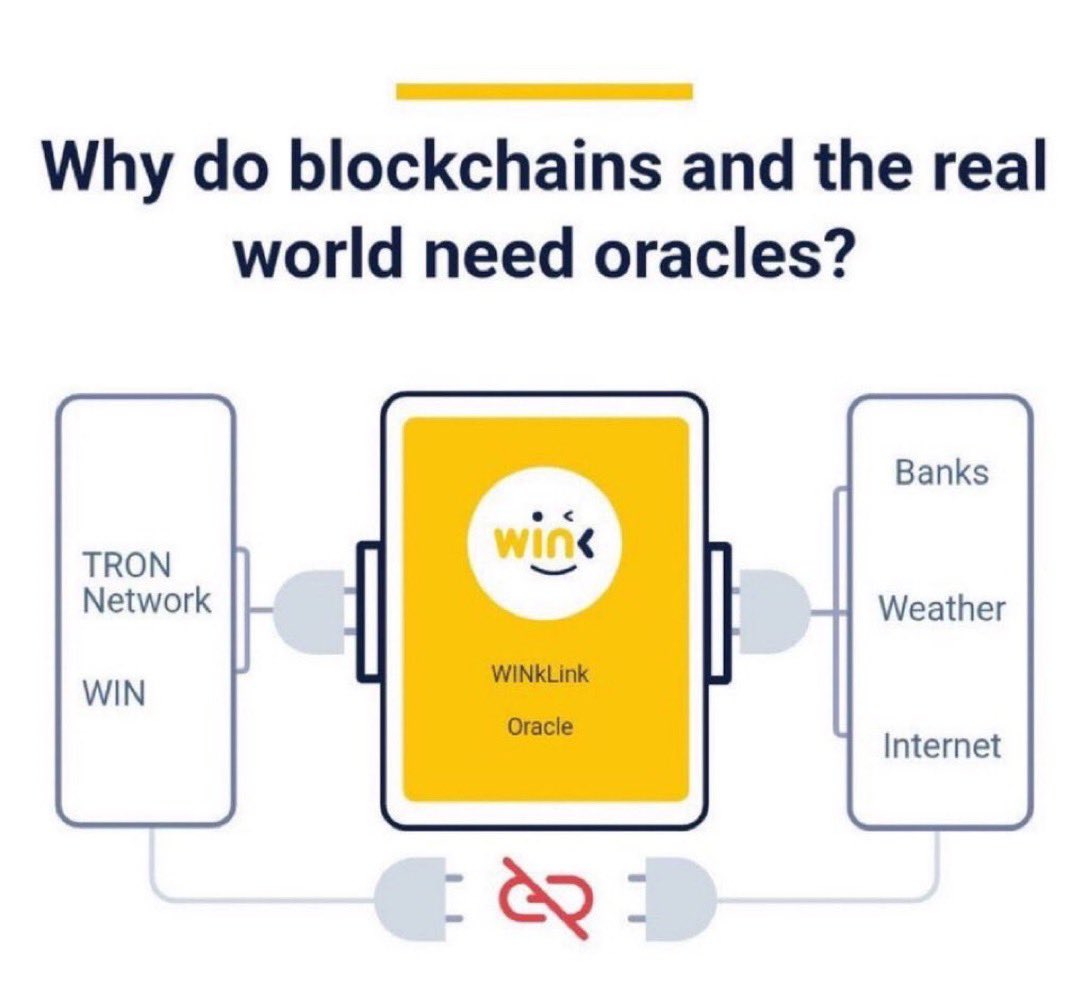

𝗪𝗜𝗡𝗸𝗟𝗶𝗻𝗸 𝗜𝘀 𝗕𝘂𝗶𝗹𝗱𝗶𝗻𝗴 𝗧𝗵𝗲 𝗕𝗿𝗶𝗱𝗴𝗲 𝗕𝗲𝘁𝘄𝗲𝗲𝗻 𝗢𝗻-𝗖𝗵𝗮𝗶𝗻 𝗟𝗼𝗴𝗶𝗰 𝗔𝗻𝗱 𝗢𝗳𝗳-𝗖𝗵𝗮𝗶𝗻 𝗗𝗮𝘁𝗮
Blockchains are designed to be predictable.
A smart contract receives defined inputs, applies predefined logic, and produces an on-chain result.
But that predictability creates a boundary.
A smart contract cannot independently browse an API, retrieve a market price, or determine whether an external event has occurred.
It needs an infrastructure layer that can bring relevant information across that boundary.
That is where oracle networks fit.
𝗧𝗵𝗲 𝗗𝗮𝘁𝗮 𝗣𝗮𝘁𝗵 𝗠𝗮𝘁𝘁𝗲𝗿𝘀
WINkLink provides oracle infrastructure for connecting external information with blockchain applications.
The basic process can be understood as:
External Sources → Oracle Nodes → Data Aggregation → On-Chain Delivery → Smart Contract
Using multiple sources and oracle infrastructure can reduce dependence on a single external input.
WINkLink’s supplied architecture also includes Off-Chain Reporting, where data gathered by oracle nodes can be aggregated before being delivered on-chain.
The result is an information pathway that allows smart contracts to work with data originating outside the blockchain.
𝗪𝗵𝗲𝗿𝗲 𝗧𝗵𝗶𝘀 𝗕𝗲𝗰𝗼𝗺𝗲𝘀 𝗨𝘀𝗲𝗳𝘂𝗹
Many decentralized applications depend on external information.
DeFi protocols may require market data.
Automated contracts may depend on external conditions.
Tokenized assets may need reference information.
Applications interacting with real-world events may need corresponding off-chain inputs.
In each case, the contract itself still performs the final deterministic execution.
The oracle layer helps supply the information required for that execution.
𝗧𝗵𝗲 𝗜𝗻𝗳𝗼𝗿𝗺𝗮𝘁𝗶𝗼𝗻 𝗟𝗮𝘆𝗲𝗿 𝗜𝘀 𝗖𝗿𝗶𝘁𝗶𝗰𝗮𝗹
As Web3 applications become more automated, the quality of their inputs becomes increasingly important.
A sophisticated smart contract cannot compensate for an incorrect input.
That is why oracle infrastructure is more than a convenient data feed.
It is part of the connectivity layer that allows blockchain systems to interact with information beyond their native environment.
WINkLink helps provide that connection for applications across the TRON ecosystem.
Blockchain handles deterministic execution.
Oracle infrastructure helps bring external information into that environment.
And that connection is what allows decentralized applications to operate beyond the limits of purely on-chain data.
🔗 https://t.co/YUJUAWdSkv
@WinkLink_Oracle @justinsuntron
#TRON #TRONEcoStar

https://t.co/KK608q9TPl

https://t.co/OARMQkdlLB


No u only reset for account with following error not eveyone, multi account users know this well 🤔
unexpected status 401 Unauthorized: Incorrect API key provided: s***c*
https://t.co/hntNk6zkMX

o yes… we’re back in action and we’ll reset usage limits for all paid users across codex and ChatGPT work
sorry about the brief disruption!
(and yes we have a special spare codex when things are down to help us out)

𝗔 𝗕𝗟𝗢𝗖𝗞𝗖𝗛𝗔𝗜𝗡 𝗖𝗔𝗡 𝗥𝗨𝗡 𝗧𝗛𝗘 𝗖𝗢𝗗𝗘. 𝗕𝗨𝗧 𝗜𝗧 𝗡𝗘𝗘𝗗𝗦 𝗗𝗔𝗧𝗔 𝗧𝗢 𝗞𝗡𝗢𝗪 𝗪𝗛𝗔𝗧 𝗧𝗢 𝗥𝗨𝗡.
Smart contracts are designed to be deterministic.
Give them the right inputs and they can execute predefined logic without relying on a central operator.
But there is a fundamental limitation:
They cannot naturally observe the world outside the blockchain.
A lending protocol may need an asset price.
A prediction market may need the outcome of an external event.
A game may need verifiable randomness.
An automated application may need information from an external API.
The logic can live entirely on-chain, but the information it depends on often does not.
That is the problem oracle infrastructure is designed to solve.
𝗪𝗜𝗡𝗞𝗟𝗜𝗡𝗞 𝗖𝗢𝗡𝗡𝗘𝗖𝗧𝗦 𝗧𝗛𝗘 𝗢𝗡-𝗖𝗛𝗔𝗜𝗡 𝗪𝗢𝗥𝗟𝗗 𝗪𝗜𝗧𝗛 𝗧𝗛𝗘 𝗜𝗡𝗙𝗢𝗥𝗠𝗔𝗧𝗜𝗢𝗡 𝗢𝗨𝗧𝗦𝗜𝗗𝗘 𝗜𝗧
Think about the flow:
External Information → Oracle Layer → Blockchain → Smart Contract → Automated Action
WINkLink provides infrastructure for bringing external data into supported blockchain applications, giving developers a way to build systems that can respond to information beyond the chain.
That creates an entirely different design space for decentralized applications.
𝗧𝗛𝗘 𝗗𝗔𝗧𝗔 𝗜𝗦 𝗣𝗔𝗥𝗧 𝗢𝗙 𝗧𝗛𝗘 𝗦𝗘𝗖𝗨𝗥𝗜𝗧𝗬 𝗠𝗢𝗗𝗘𝗟
Smart contracts can be written perfectly and still produce an incorrect result if their external inputs are unreliable.
That makes data quality a fundamental part of application design.
WINkLink's oracle infrastructure can aggregate information across sources and oracle nodes before delivering it to on-chain applications.
The objective is to reduce dependence on a single external source and provide a more resilient pathway for external information to reach smart contracts.
For DeFi, this can matter when applications depend on accurate market data.
For gaming, randomness needs to be verifiable.
For automation, external conditions need to be communicated reliably.
Different applications.
Same underlying requirement:
𝗥𝗘𝗟𝗜𝗔𝗕𝗟𝗘 𝗜𝗡𝗣𝗨𝗧𝗦.
𝗙𝗥𝗢𝗠 𝗕𝗟𝗢𝗖𝗞𝗖𝗛𝗔𝗜𝗡 𝗟𝗢𝗚𝗜𝗖 𝗧𝗢 𝗥𝗘𝗔𝗟-𝗪𝗢𝗥𝗟𝗗 𝗨𝗧𝗜𝗟𝗜𝗧𝗬
This connection becomes increasingly important as Web3 expands beyond basic token transfers.
➢ DeFi can react to market information.
➜ Stablecoin applications can interact with broader financial infrastructure.
➱ GameFi can use verifiable randomness and external information.
➠ AI applications can incorporate external data into automated workflows.
➢ Enterprise applications can connect smart contracts with approved external information.
The blockchain remains the execution layer.
The oracle becomes the bridge that supplies the context.
𝗧𝗛𝗜𝗦 𝗜𝗦 𝗜𝗡𝗙𝗥𝗔𝗦𝗧𝗥𝗨𝗖𝗧𝗨𝗥𝗘 𝗨𝗦𝗘𝗥𝗦 𝗥𝗔𝗥𝗘𝗟𝗬 𝗦𝗘𝗘
When a DeFi position is valued, users see the result.
When a game generates an outcome, users see the result.
When an automated contract executes, users see the transaction.
What they may not see is the data infrastructure working underneath those experiences.
That is often how critical infrastructure works.
You notice it when it fails, but when it works properly, it simply becomes part of the experience.
𝗧𝗛𝗘 𝗡𝗘𝗫𝗧 𝗪𝗘𝗕𝟯 𝗘𝗥𝗔 𝗪𝗜𝗟𝗟 𝗡𝗘𝗘𝗗 𝗠𝗢𝗥𝗘 𝗧𝗛𝗔𝗡 𝗦𝗠𝗔𝗥𝗧 𝗖𝗢𝗡𝗧𝗥𝗔𝗖𝗧𝗦
It will need smart contracts that can operate with meaningful external context.
That means reliable data.
That means infrastructure connecting external information to on-chain logic.
And that means oracle networks becoming an increasingly important part of the decentralized application stack.
WINkLink represents that connection within the TRON ecosystem, helping developers build applications that don't have to remain isolated from the information their logic depends on.
𝗖𝗢𝗗𝗘 𝗣𝗥𝗢𝗩𝗜𝗗𝗘𝗦 𝗧𝗛𝗘 𝗥𝗨𝗟𝗘𝗦.
𝗧𝗛𝗘 𝗕𝗟𝗢𝗖𝗞𝗖𝗛𝗔𝗜𝗡 𝗣𝗥𝗢𝗩𝗜𝗗𝗘𝗦 𝗧𝗛𝗘 𝗘𝗫𝗘𝗖𝗨𝗧𝗜𝗢𝗡.
𝗪𝗜𝗡𝗞𝗟𝗜𝗡𝗞 𝗛𝗘𝗟𝗣𝗦 𝗕𝗥𝗜𝗡𝗚 𝗧𝗛𝗘 𝗪𝗢𝗥𝗟𝗗 𝗢𝗨𝗧𝗦𝗜𝗗𝗘 𝗧𝗛𝗘 𝗖𝗛𝗔𝗜𝗡 𝗜𝗡𝗧𝗢 𝗧𝗛𝗔𝗧 𝗟𝗢𝗚𝗜𝗖.
@WinkLink_Oracle @justinsuntron
#TRONEcoStar

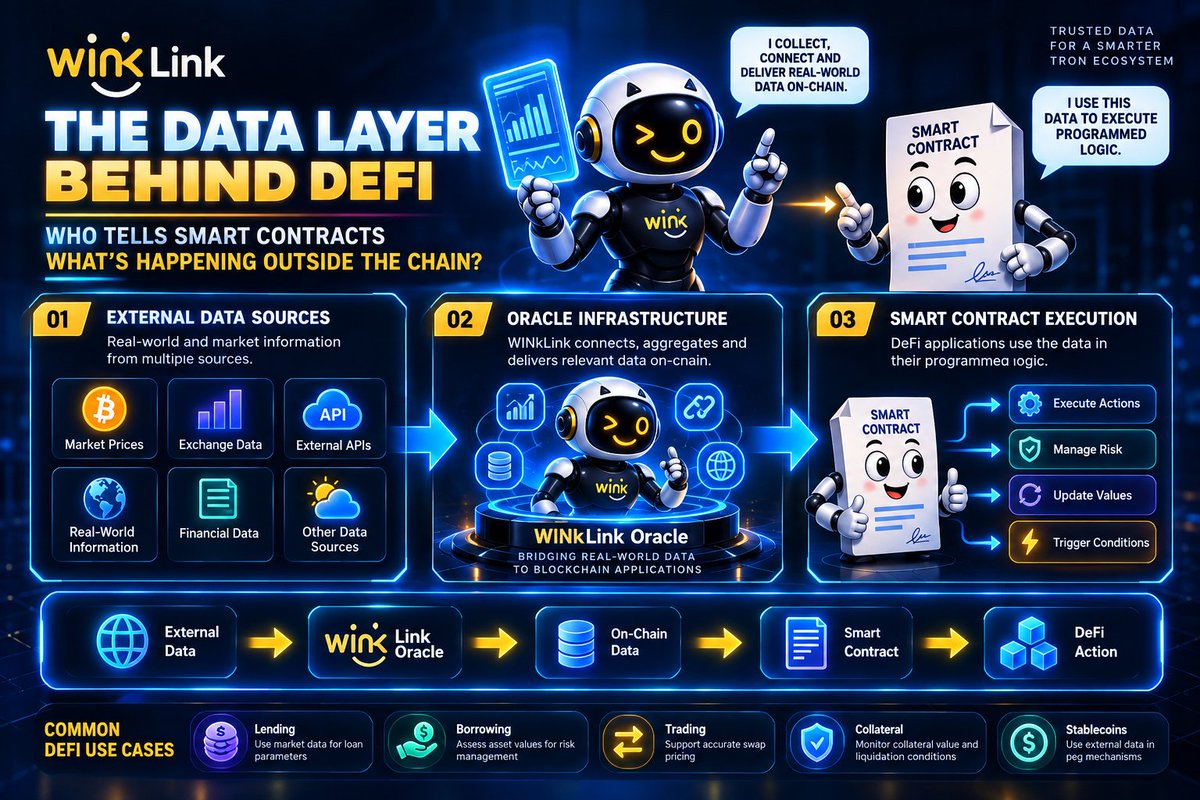
𝗧𝗛𝗘 𝗗𝗔𝗧𝗔 𝗟𝗔𝗬𝗘𝗥 𝗜𝗦 𝗢𝗡𝗘 𝗢𝗙 𝗗𝗘𝗙𝗜’𝗦 𝗠𝗢𝗦𝗧 𝗜𝗠𝗣𝗢𝗥𝗧𝗔𝗡𝗧 𝗣𝗜𝗘𝗖𝗘𝗦
When people discuss decentralized finance, they usually focus on the visible applications:
➜ Lending
➜ Staking
➜ Yield strategies
➜ Stablecoins
➜ Decentralized exchanges
But underneath many of these applications is another critical component that receives far less attention:
𝗢𝗿𝗮𝗰𝗹𝗲 𝗶𝗻𝗳𝗿𝗮𝘀𝘁𝗿𝘂𝗰𝘁𝘂𝗿𝗲.
Smart contracts can execute predefined instructions automatically, but they cannot independently access information from external markets, APIs, websites, or real-world events.
They need a way to bring that information into the blockchain environment.
That is where #WINkLink becomes relevant.
1/ 𝗖𝗢𝗡𝗡𝗘𝗖𝗧𝗜𝗡𝗚 𝗧𝗛𝗘 𝗕𝗟𝗢𝗖𝗞𝗖𝗛𝗔𝗜𝗡 𝗪𝗜𝗧𝗛 𝗘𝗫𝗧𝗘𝗥𝗡𝗔𝗟 𝗗𝗔𝗧𝗔
WINkLink provides oracle infrastructure that connects blockchain applications with information originating outside the chain.
Depending on the application, that information can include:
🔹 Market prices
🔹 External API data
🔹 Verifiable randomness
🔹 Real-world information
🔹 Other application-specific external data
The basic architecture is:
𝗘𝘅𝘁𝗲𝗿𝗻𝗮𝗹 𝗗𝗮𝘁𝗮 → 𝗢𝗿𝗮𝗰𝗹𝗲 𝗟𝗮𝘆𝗲𝗿 → 𝗢𝗻-𝗖𝗵𝗮𝗶𝗻 𝗗𝗮𝘁𝗮 → 𝗦𝗺𝗮𝗿𝘁 𝗖𝗼𝗻𝘁𝗿𝗮𝗰𝘁 → 𝗔𝗰𝘁𝗶𝗼𝗻
Without this connection, many smart contracts would have no direct way to respond to external conditions.
⸻
2/ 𝗪𝗛𝗬 𝗣𝗥𝗜𝗖𝗘 𝗗𝗔𝗧𝗔 𝗠𝗔𝗧𝗧𝗘𝗥𝗦
Consider a DeFi lending protocol.
A user deposits an asset as collateral and borrows another asset against it.
At some point, the protocol needs to determine:
“What is this collateral worth right now?”
That information can influence risk calculations and liquidation conditions.
If the input is stale, inaccurate, or manipulated, the protocol may make decisions based on an incorrect representation of market conditions.
The same principle extends across many DeFi applications.
⸻
3/ 𝗧𝗛𝗘 𝗗𝗔𝗧𝗔 𝗣𝗥𝗢𝗕𝗟𝗘𝗠 𝗜𝗦 𝗪𝗜𝗗𝗘𝗥 𝗧𝗛𝗔𝗡 𝗟𝗘𝗡𝗗𝗜𝗡𝗚
Oracle infrastructure can support applications that depend on information beyond the blockchain itself.
For example:
DEXs can use market information within their application logic.
Stablecoin protocols can require external asset valuations.
Prediction markets can depend on information about external outcomes.
Insurance applications can require data about real-world events.
Automated protocols can respond to predefined external conditions.
The underlying requirement is similar:
The application needs information that does not naturally originate on-chain.
⸻
4/ 𝗗𝗜𝗦𝗧𝗥𝗜𝗕𝗨𝗧𝗜𝗡𝗚 𝗧𝗛𝗘 𝗗𝗔𝗧𝗔 𝗦𝗢𝗨𝗥𝗖𝗘 𝗠𝗔𝗧𝗧𝗘𝗥𝗦
Relying entirely on one external source can create a concentrated dependency.
Oracle architectures can instead use multiple sources and data providers, depending on the particular feed and implementation.
The objective is to make external data delivery more robust and reduce dependence on a single point of failure.
That gives developers an important infrastructure layer between external information and on-chain execution.
⸻
5/ 𝗪𝗛𝗔𝗧 𝗧𝗛𝗜𝗦 𝗘𝗡𝗔𝗕𝗟𝗘𝗦
A capable oracle infrastructure layer can provide several important building blocks:
🔹 𝗣𝗿𝗶𝗰𝗲 𝗙𝗲𝗲𝗱𝘀
Market information for lending, borrowing, trading, collateral valuation, and other financial applications.
🔹 𝗘𝘅𝘁𝗲𝗿𝗻𝗮𝗹 𝗔𝗣𝗜 𝗖𝗢𝗡𝗡𝗘𝗖𝗧𝗜𝗩𝗜𝗧𝗬
A way for blockchain applications to interact with information originating from external APIs.
🔹 𝗩𝗲𝗿𝗶𝗳𝗶𝗮𝗯𝗹𝗲 𝗥𝗮𝗻𝗱𝗼𝗺𝗻𝗲𝘀𝘀
Useful for applications such as games, NFTs, distributions, and other systems requiring unpredictable outcomes.
🔹 𝗘𝘅𝘁𝗲𝗿𝗻𝗮𝗹 𝗗𝗮𝘁𝗮 𝗗𝗲𝗹𝗶𝘃𝗲𝗿𝘆
Helping applications incorporate information that smart contracts cannot natively retrieve themselves.
⸻
6/ 𝗗𝗔𝗧𝗔 𝗤𝗨𝗔𝗟𝗜𝗧𝗬 𝗔𝗡𝗗 𝗘𝗫𝗘𝗖𝗨𝗧𝗜𝗢𝗡 𝗔𝗥𝗘 𝗖𝗢𝗡𝗡𝗘𝗖𝗧𝗘𝗗
A smart contract can execute its programmed rules perfectly.
But perfect execution of incorrect or outdated information can still produce an undesirable result.
That is why the infrastructure stack matters:
𝗢𝗿𝗮𝗰𝗹𝗲 → 𝗗𝗮𝘁𝗮 𝗖𝗼𝗻𝗻𝗲𝗰𝘁𝗶𝘃𝗶𝘁𝘆
𝗦𝗺𝗮𝗿𝘁 𝗖𝗼𝗻𝘁𝗿𝗮𝗰𝘁 → 𝗗𝗲𝘁𝗲𝗿𝗺𝗶𝗻𝗶𝘀𝘁𝗶𝗰 𝗘𝘅𝗲𝗰𝘂𝘁𝗶𝗼𝗻
𝗗𝗲𝗙𝗶 𝗣𝗿𝗼𝘁𝗼𝗰𝗼𝗹 → 𝗔𝗽𝗽𝗹𝗶𝗰𝗮𝘁𝗶𝗼𝗻 𝗨𝘁𝗶𝗹𝗶𝘁𝘆
Each layer has a different responsibility.
⸻
7/ 𝗧𝗛𝗘 𝗕𝗜𝗚𝗚𝗘𝗥 𝗣𝗜𝗖𝗧𝗨𝗥𝗘
As DeFi becomes more sophisticated, applications increasingly depend on information beyond the blockchain.
That means infrastructure is not separate from innovation.
It is what allows innovation to interact with the world outside the chain.
The broader flow looks like this:
𝗘𝗫𝗧𝗘𝗥𝗡𝗔𝗟 𝗪𝗢𝗥𝗟𝗗
↓
𝗗𝗔𝗧𝗔 𝗦𝗢𝗨𝗥𝗖𝗘𝗦
↓
𝗪𝗜𝗡𝗸𝗟𝗜𝗡𝗞 𝗢𝗥𝗔𝗖𝗟𝗘 𝗜𝗡𝗙𝗥𝗔𝗦𝗧𝗥𝗨𝗖𝗧𝗨𝗥𝗘
↓
𝗢𝗡-𝗖𝗛𝗔𝗜𝗡 𝗗𝗔𝗧𝗔
↓
𝗦𝗠𝗔𝗥𝗧 𝗖𝗢𝗡𝗧𝗥𝗔𝗖𝗧𝗦
↓
𝗗𝗘𝗙𝗜 𝗔𝗖𝗧𝗜𝗢𝗡𝗦
DeFi may be built around smart contracts, but smart contracts need information to respond to conditions beyond their native environment.
Better data connectivity → Better-informed applications → More capable on-chain systems.
That is why oracle infrastructure remains an important part of the evolving DeFi stack.
@justinsuntron @WinkLink_Oracle
#WINkLink #Oracle #DeFi #TRON #TRONEcoStar #Web3 #Blockchain

Open AI gives you more control. Closed AI gives you more convenience.
Neither is automatically better.
I broke down the real differences: privacy, cost, customization, security, vendor dependence, and which one actually fits your use case.
Full article ↓ https://t.co/92bQvIcp6s

𝐖𝐈𝐍𝐤𝐋𝐢𝐧𝐤 𝐈𝐬 𝐓𝐡𝐞 𝐃𝐚𝐭𝐚 𝐁𝐫𝐢𝐝𝐠𝐞 𝐁𝐞𝐭𝐰𝐞𝐞𝐧 𝐓𝐑𝐎𝐍 𝐀𝐧𝐝 𝐓𝐡𝐞 𝐑𝐞𝐚𝐥 𝐖𝐨𝐫𝐥𝐝
Smart contracts are powerful because they execute predefined logic automatically.
But they cannot independently observe what happens outside the blockchain.
They can’t check a market price, verify an external event, or retrieve information from an API without an external data connection.
That’s where WINkLink becomes important.
🔹 𝐂𝐨𝐧𝐧𝐞𝐜𝐭𝐢𝐧𝐠 𝐃𝐚𝐭𝐚 𝐓𝐨 𝐎𝐧-𝐂𝐡𝐚𝐢𝐧 𝐋𝐨𝐠𝐢𝐜
WINkLink provides oracle infrastructure that connects external information with smart contracts on TRON.
The basic flow is:
Real-World Data → WINkLink → On-Chain Execution
Consider a DeFi lending protocol.
The smart contract can calculate collateral values and enforce liquidation rules, but it first needs reliable asset price information.
The oracle provides that missing input.
🔹 𝐖𝐡𝐲 𝐃𝐚𝐭𝐚 𝐐𝐮𝐚𝐥𝐢𝐭𝐲 𝐌𝐚𝐭𝐭𝐞𝐫𝐬
External data can influence:
➝ Collateral valuation
➝ Borrowing capacity
➝ Liquidation conditions
➝ Automated settlements
➝ Protocol-defined actions
If the input is unreliable, automated execution can produce an incorrect result.
That makes dependable data infrastructure a foundational part of DeFi.
🔹 𝐁𝐞𝐲𝐨𝐧𝐝 𝐅𝐢𝐧𝐚𝐧𝐜𝐞
The oracle requirement extends beyond DeFi.
GameFi can need external results.
Payment systems can depend on off-chain conditions.
Event-driven applications can require verified information before executing.
As decentralized applications become more sophisticated, their need to interact with external information grows.
Blockchain provides the execution layer.
External systems provide real-world information.
WINkLink connects the two.
That simple connection can become a critical piece of infrastructure for applications that need blockchain logic to respond to the world beyond the chain.
@WinkLink_Oracle @justinsuntron
#TRONEcoStar