New article by @CarolinKilian, Fleur Braddick & Jürgen Rehm raises teh question: Are public health interests sufficiently protected by the regulations for alcohol classified as 'for personal use’ in Europe?https://t.co/ZMSlgDdjVt
Interesting new study: non-alcoholic beverages seem to help male risky drinkers reduce consumption more than female risky drinkers: https://t.co/F5UYiWy08a
Dr. @hans_kluge, Director of @WHO_Europe & Dr Elisabete Weiderpass (@IARC_DIR) Director of @IARCWHO have issued a timely joint statement on the link between #alcohol & #cancer to the @EUparliament ahead of today's vote on NCD-report
Read full story here👉https://t.co/NoyxArAthT
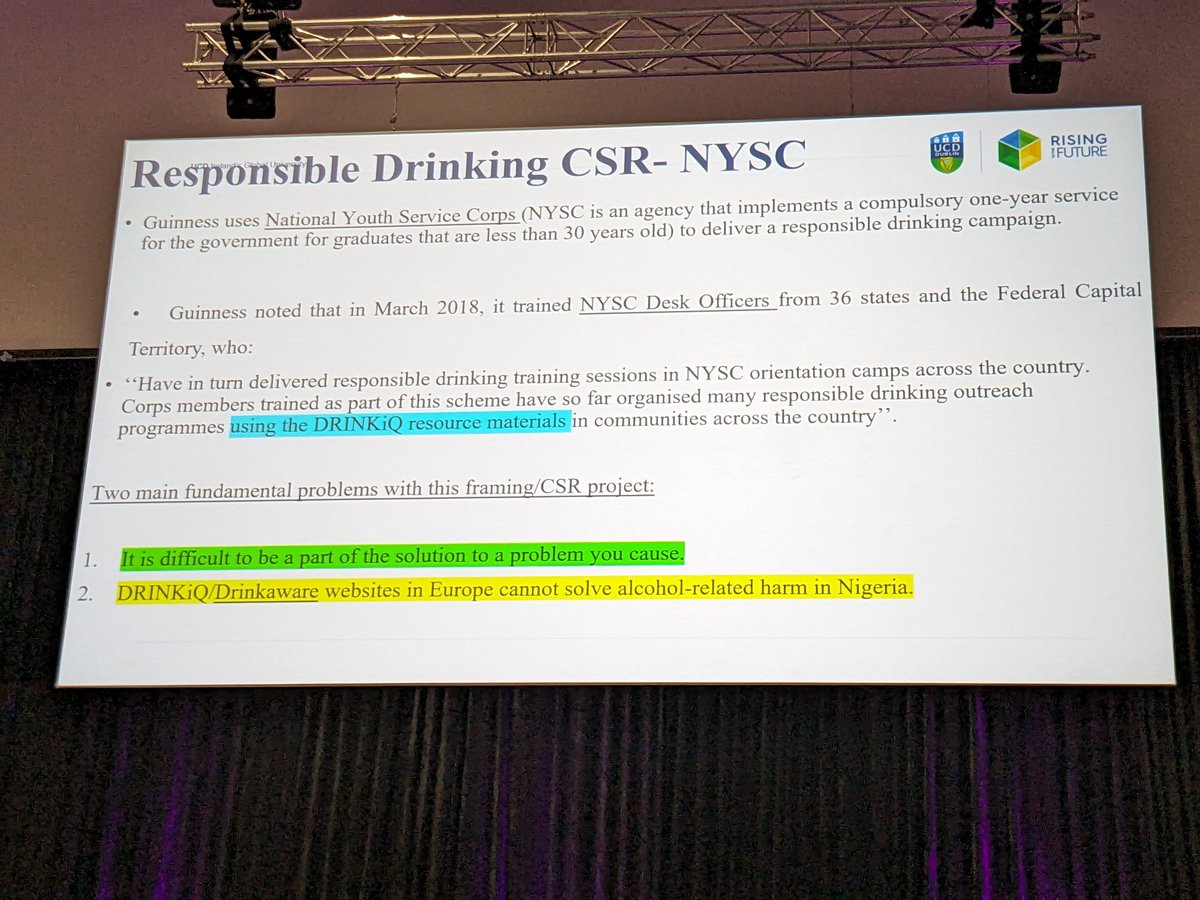
"It is difficult to be a part of the solution to the problem you cause."
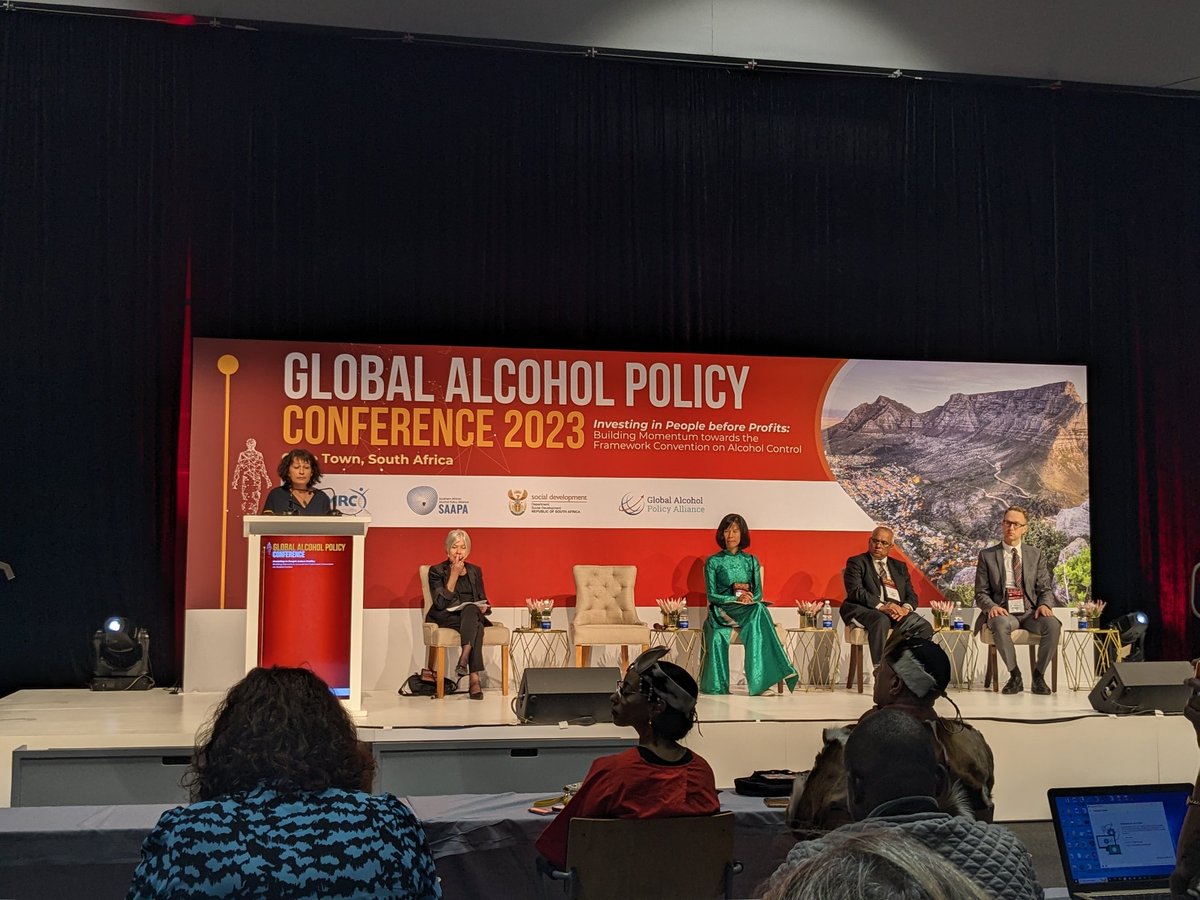
Emeka Dumbili discusses alcohol industry CSR projects in Nigeria, at @Conf2023Global@favourfredy
The same could be said for activities in the UK by groups such as Drinkaware, The Portman Group, & SWA.
Prof Antonia Lyons of @AucklandUni discusses the dangers of digital alcohol marketing and personalisation, as it enables "moments of vulnerability in real time" by identifying "when people are most susceptible to alcohol products". @Conf2023Global
There's still time to register for our webinar on how the closure of pubs and bars during the pandemic affected alcohol-related violent incidents.
💻 Mon 18 September at 15:00 BST💻
Register here: https://t.co/upNbpP3LGZ
Our new FAR SEAS findings from the Polish pilot study are out! Showing that changing risky behaviors (alcohol consumption and sex without contraception) to prevent alcohol exposed pregnancies through different professionals at the local level is feasible: https://t.co/1tO7QTIaei
@InstAlcStud congratulations!!
(only one small point: please equalise the volume across the videos, especially for the experts who are too quiet to hear without adjusting the level)
We're pleased to have launched a new film series!
It will include 9 films explaining the world of alcohol harm, research, and policy.
Our first, 'Big Alcohol: Explained', discusses how the multinational industry influences policy and damages the economy
https://t.co/05DRvJ9TB4
So proud that Marie Lawless @BallymunLDATF represented ICAAN today in Barcelona @WHO_Europe event on moving from policy to action. What a week! @NeufeldM @ericcarlin2
Is the buzz around no- and low-alcohol products reflected in purchases?
A 2021 study found that only 0.34% of survey respondents reported consuming no-alcohol beer.
The UK Government's focus on pushing such drinks cannot replace alcohol control policies
https://t.co/dKGkhMbnZL
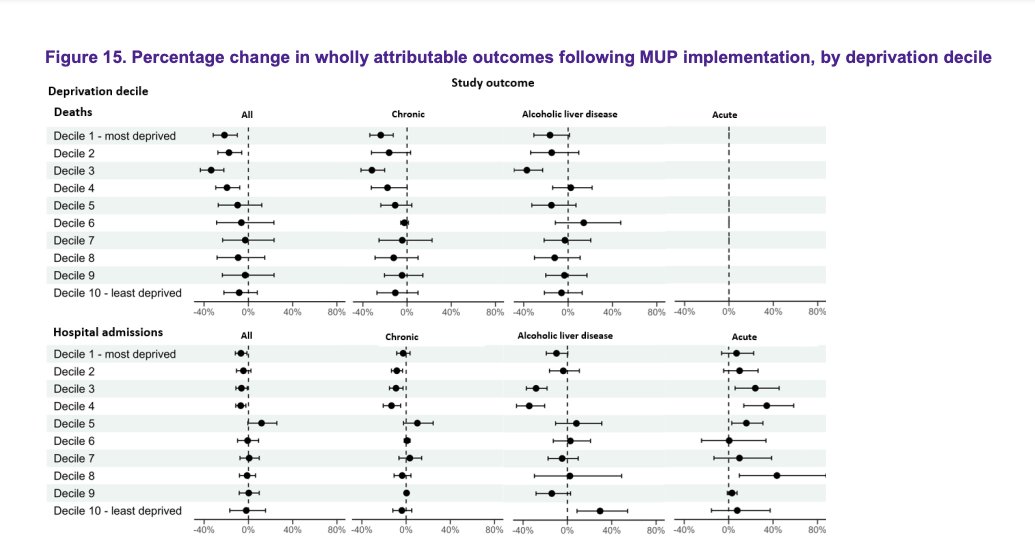
Minimum unit pricing is a progressive policy as it reduces deaths among the most deprived in society the most.
The UK government continuing to ignore it leads to a reinforcing of health inequality.
@P_H_S_Official: https://t.co/iTuNNyLy4Q
Why is there 'no safe level of alcohol'?
Alcohol is a Group 1 carcinogen, along with asbestos, radiation and tobacco, and there is no available evidence that shows a threshold at which the carcinogenic effects of alcohol “switch on”. @WHO_Europe
See: https://t.co/0SKzQDlt0o
Alcohol adversely impacts 13 of 17 Sustainable Development Goals
- It pushes people into poverty
- Uses up water in drought-risk areas
- Contributes to human rights abuses
- And exacerbates the climate crisis
Control measures can help reduce this impact
https://t.co/9lWKT77Tbg
Buying alcohol has become an easy job in Tamil Nadu, as the first-ever automatic booze vending machines have been installed in the state.
Under the initiative of the Tamil Nadu State Marketing Corporation Ltd. (TASMAC), automatic liquor dispensing machines have been installed at four government-owned outlets located inside Chennai malls.
These machines are automated and make buying liquor a high-tech one. For payments, provisions of both online and cash are available. Only MRP pricing will be charged by the automated device.
This has been brought up in order to reduce overcharging at counters which have been regularly complained of, according to TASMAC.
For functionality, the moment a customer touches the device, a menu appears, which allows them to select the alcohol they desire and the bottle is dispensed by the device prior to the payment.
Reportedly, this is being done as a trial project, and it has not been clarified by the government how it will be put into practice elsewhere.
However, the opposition in the state has raised their concerns in this connection where they express how securely the device prevents individuals under the age of 18 from purchasing.
Replying to this, a spokesperson from the state administration stated that the vending machines will be manned by salespeople to prevent use by minors.
According to Tamil Nadu Excise Minister V Senthil Balaji, he said "As you noticed, is this store open to anyone under the age of 21? From midday till 10 p.m., the store is open. Only under the direct supervision of the store manager or employees is the machine accessible. Private businesses have deployed these devices,”
The alcohol industry relies on harmful drinking for its profits; drinking that kills people.
Even if it did explain what 'responsible drinking' means, it doesn't want people drinking within the guidelines, as this would cost the industry £billions.
https://t.co/mctVreXWay