Nice @JAMA_current high-level summary of advances in technology & benchmarking that enable accurate clinical sequencing in many genomic regions and sources of remaining bias by @GoogleAI's Ryan Poplin @MarkDePristo@NIST's Justin Zook https://t.co/WejyprReZ8 1/n
1/n We are excited to make this preprint available about our new small variant benchmarks for the @PGorg Ashkenazi trio (@NIST RM 8392), enabling benchmarking in many difficult-to-map regions, segmental duplications, and genes with pseudogenes or highly homologous genes.
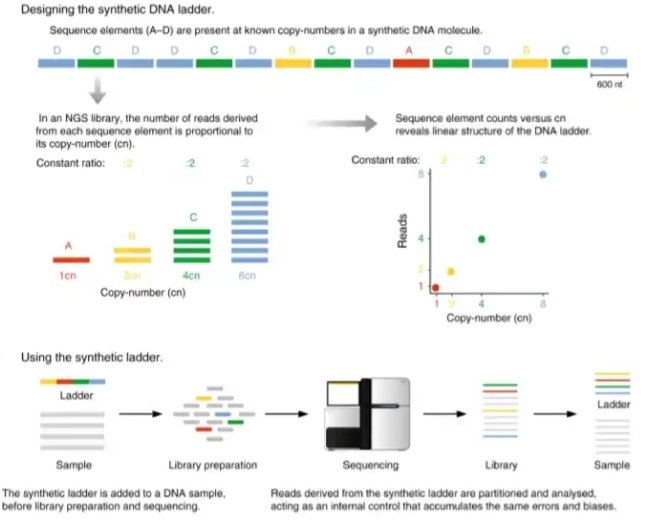
Single molecule spike-in control for NGS studies that can be equivalently and independently synthesized by individual laboratories to provide a common metric by which genomes can be measured. https://t.co/MCiG72tFoN @sequ_in
New synthetic DNA ladders for measuring quantitative features in NGS libraries - now shipping within all Human genome and metagenome sequin mixtures https://t.co/un2ZAba7AJ
Primer detectives: labs in academia and at companies talk about methods issues--and hurdles--behind #coronavirus testing. Story by @metricausa.
https://t.co/7jyZOl6FOJ
For other molecular geeks, Abbott (ex-Alere) rapid test uses isothermal Nicking Enzyme Amplification Reaction (NEAR) - nickase+strand displacing polymerase that has reverse transcriptase activity https://t.co/SucgMv3QJq
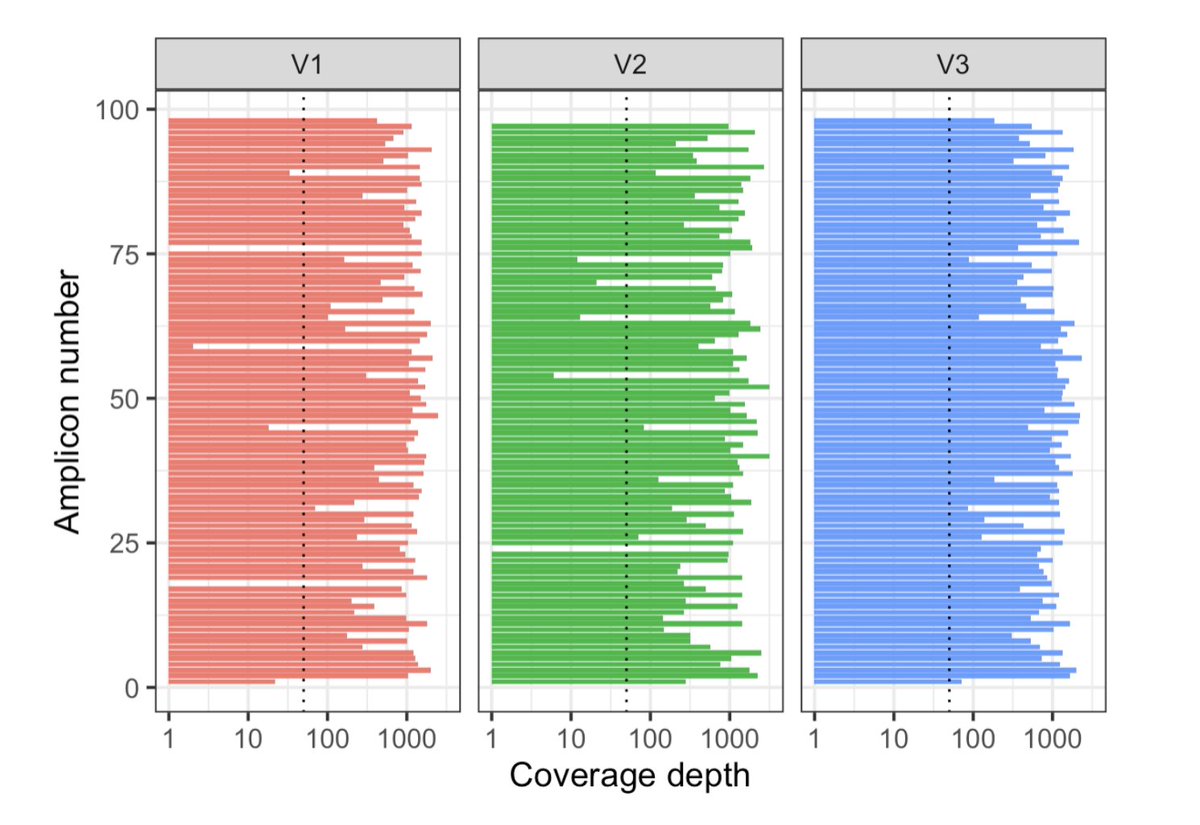
We are (finally!) releasing V3 of our amplicon protocol today for hCoV-2019, which fixes a few remaining issues with amplicon dropouts.
Please head over to our new forum for further details:
https://t.co/Kc1qEg8Bu4
PDF version: https://t.co/z2lb7MF7x7
Want to see how good your variant calls are in a variety of repetitive genome contexts in GRCh37 and GRCh38? We just released v2.0 of the stratification bed files from @GA4GH & @GenomeInABottle at https://t.co/yiaz49Fe4h and follow best practices in https://t.co/C2XZuTIhXZ
The prospective clinical MSKCC NGS cohort is now >50,000 samples sequenced. Thanks to the hundreds of physicians, laboratory technicians, data scientists, nurses and support staff @sloan_kettering who have made this initiative possible. A few thoughts on what we have learned.
@NatureProtocols@GarvanInstitute This includes detailed example NA12878 dataset with sequins. The data is useful forbenchmarking the detection of wide range of genomic features (SNVs, indels, structutal variants, microsatellites, translocations, viral, difficult or ACMG genes etc)
#FreeAccessProtocol this week: Using sequins, synthetic DNA spike-in controls, to improve the accuracy of human genome sequencing. https://t.co/sXiftM9uBY @GarvanInstitute@sequ_in
Step-by-step protocol for using sequins with NGS gene panels + tumor / matched normal. Useful tips and practical advice. Calculate Sn, Pn etc. for somatic mutations and more. #genomics https://t.co/fgJkoTLPeZ