On November 18, 1883, America lived through the same noon twice, because the railroads decided the country could no longer run on thousands of local clocks.
The law caught up 35 years later.
Finance is at the same moment now. Read the full story below. https://t.co/DUTNw1xdNa
Hong Kong has long been where capital moves between Asia and the world. Digital assets are the next chapter.
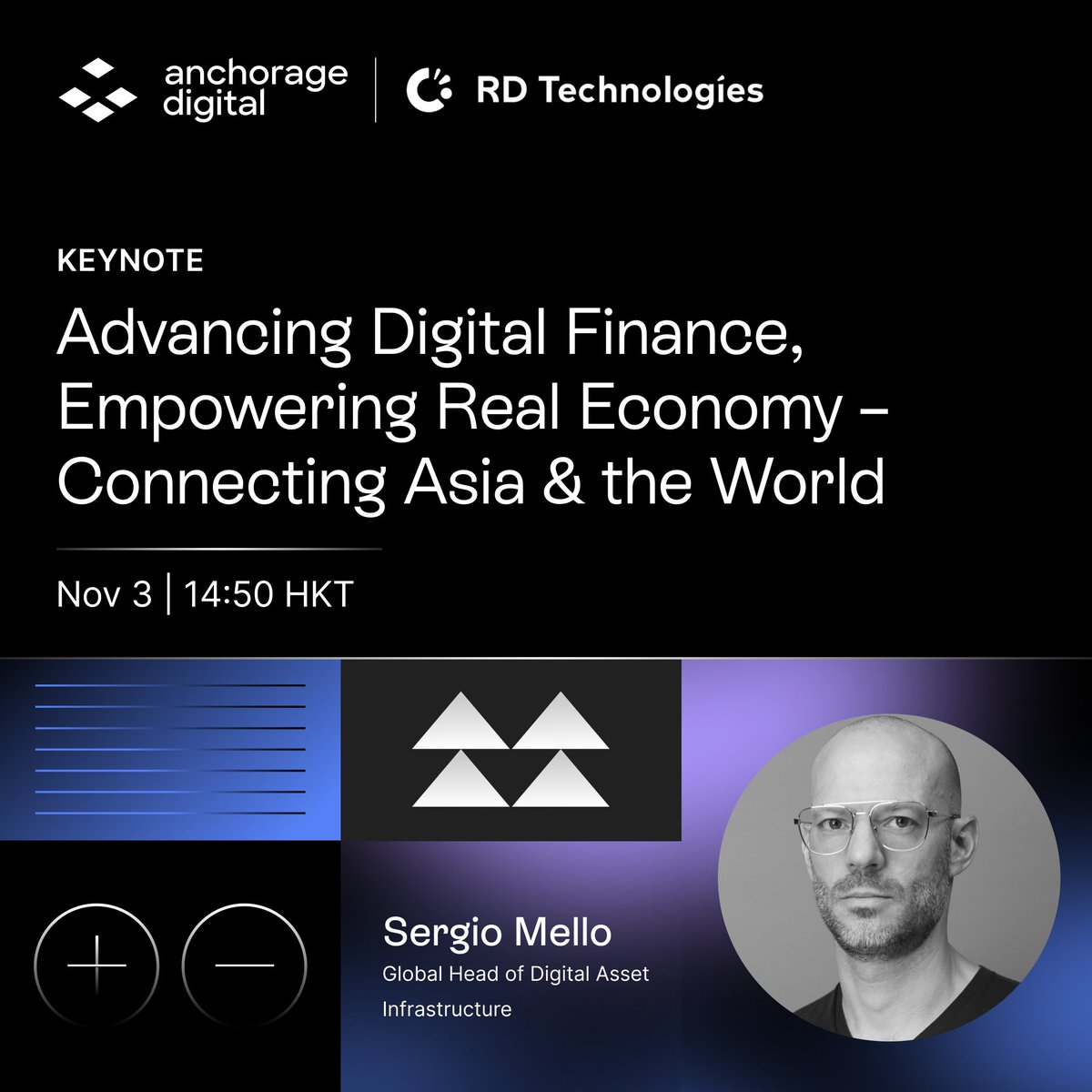
@sergiofly keynotes on Nov 3 with @RD_Technologies and @hashkeygroup on building the compliant rails that make it work.
RSVP to join: https://t.co/rrUCbvy4Vn
Advancing Digital Finance · Empowering Real Economy · Connecting Asia & the World
Today, @RD_Technologies co-hosted this industry gathering in #HongKong with @Anchorage & @HashKeyGroup .
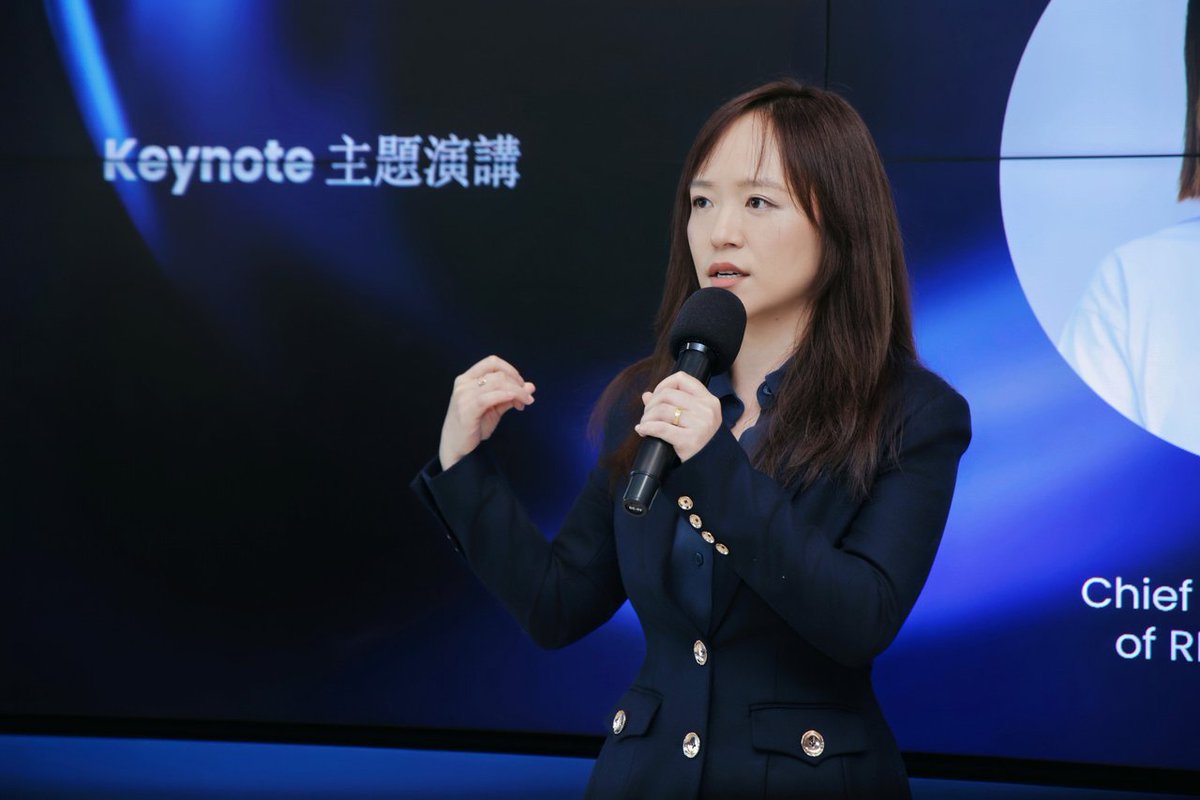
Opening remarks by Dr. Xiao Feng, keynotes and panel discussion from @thisisRita_Liu , @sergiofly , Rachel Qiu and Charisma explored round-the-clock settlement, new generation enterprise accounts and compliant financial infrastructure.
Thank you to our speakers, partners and guests for advancing the conversation on connecting traditional finance with digital assets.
Institutional leaders from across the digital finance ecosystem will convene in Hong Kong to ask one question: how do digital assets reach the real economy?
Join @sergiofly for his keynote in Hong Kong on Nov 3 alongside @rd_technologies and @HashKeyGroup to lay out how compliant infrastructure is the connector.
RSVP: https://t.co/ytu6MwEKYu
On the Binance situation: we're aware, we're in touch with our clients, and we’re unaffected.
All assets held in custody at Anchorage Digital Bank and Anchorage Digital Singapore remain segregated, secure, and fully under our control.
We’re working with the industry to prevent further movements of stolen assets.
Retail stablecoin adoption came bottom up. Institutional adoption is coming top down.
@sergiofly at @gftn_official Tbilisi: "Every global bank we talk to has a plan for tokenized money, and the next wave is interbank settlement and cross border nostro accounts moving in stablecoins."
President Trump fundamentally transformed the future of finance with the signing of the GENIUS Act last year.
Today, U.S. Treasury’s @USOCC took a critical step toward implementing this historic legislation with the release of a final rule that delivers a federal framework for payment stablecoins that further cements American dominance in digital assets.
One of the biggest barriers to digital asset adoption may be trying to solve everything at once.
@sergiofly, Global Head of Digital Asset Infrastructure at @Anchorage, recommends starting with focused use cases like dollar settlements and hybrid stablecoin dollars.
Removing complexity could be one of the keys to unlocking more adoption.
The GENIUS Act and OCC rules put the regulatory foundation in place. The next one to two years are the window for banks to set their position in digital assets.
Join Anchorage Digital's @sergiofly and @bcg during @money2020 to hear what the playbook says about stablecoins, tokenized deposits, and where to partner.
RSVP: https://t.co/qouXIYXj5d
Tuesday, October 20th: 12:30 – 1:30PM PDT
BCG Meeting Room | Room MR2201B, Level 2
En el marco del desarrollo de la Conferencia Venezuela: Crecimiento y Desarrollo @sergiofly plantea que: “Cuando existe una oportunidad para que el valor se mueva sin restricciones, este encuentra naturalmente el mejor camino, como un río que fluye hacia el valle. De igual manera, la necesidad de acceder a dólares y protegerse frente a la hiperinflación no es exclusiva de Venezuela; es una realidad presente en muchos países del Sur Global, como Argentina, varias naciones del África subsahariana, Oriente Medio y Asia Central.”
Most banks should partner for core digital asset capabilities like key custody, wallet management, and smart contracts, rather than build them.
That is one of the clearest findings in our stablecoin and tokenization report with @BCG. Hear the full playbook at @Money2020 with Anchorage Digital's
@sergiofly.
RSVP: https://t.co/oeoXXpmqr7
Tuesday, October 20th: 12:30 – 1:30PM PDT
BCG Meeting Room | Room MR2201B, Level 2
I got hacked at 3:59 AM without clicking anything. My voicemail handed the attacker my Telegram login code.
Here is exactly how it worked, so it doesn't happen to you.
3:54 AM. My phone rings about ten times in a row, No Caller ID. That was not harassment. It was the attack: keep my line busy.
Meanwhile, the attacker asks Telegram to log in with my number and picks "send the code by phone call". My line is busy, so Telegram's robot call lands on my voicemail and reads the code out loud to it.
Carrier voicemail can often be reached remotely, with a default PIN or a spoofed caller ID. He listens to the message. At 3:59 he is in.
Fortunately, the attack was noisy. The calls woke me up. At 4 AM I only wanted to go back to sleep, but I had the presence of mind to check my notifications. Telegram was showing a new login from a device I didn't know. That check is what saved me: I ended his session within minutes. If I had rolled over, the next day would have been a mess.
In those few minutes he had already typed /balance, then /start on every old wallet bot he could find in my chats. He was hunting for funds tied to my Telegram. The bots were long dead and nothing was lost. He still had time to set his own 2FA password on my account.
What would have stopped it:
Telegram two-step verification, with a recovery email. With a password on the account, the code alone is useless.
Your voicemail. Change the PIN, block remote access, or turn it off (##002# cancels call forwarding on most carriers).
Same for WhatsApp and any service that can send a code by voice call.
No seeds, keys or passwords in Saved Messages. Ever.
A burst of masked calls at night is a signal, not a nuisance. Check your notifications and your active sessions.
I have been building in crypto for more than ten years and I had never thought about my voicemail. Check yours today.