Today in @NEJM we show that cefazolin should be the preferred agent for MSSA bacteremia
https://t.co/BCVDzDfUqL
We also show in @TheLancet that penicillin should be preferred to anti-staphyloccal penicilins for PSSA
https://t.co/X3JSm7NxJG
@snap_trial@RIMUHC1
Original research suggests that despite lower perceived understanding of Bayesian trials and skepticism about elements of their validity, no substantive differences were found in intensivist physician acceptance of Bayesian trial results compared with frequentist trial results.
Read more in #journal_CHESTCritCare: https://t.co/nDseCWwkTn
#MedEd #JournalCHEST #CriticalCare #CritCare
📄 #ArtículodelaSemana | 🧬Os dejamos este estudio multicéntrico caso/control publicado en @OFIDJournal sobre el impacto clínico del uso de #filmarray de #neumonía 🫁 en #UCI 🏥
👉🏼Desescalada antibiótica más temprana⏰
👉🏼Mayor impacto con equipo #PROA
🔗https://t.co/8wmvaZgVB6
You can’t expect a one-size-fits-all to work for heterogeneous pathophysiology. Please stop looking for a single approach, just analyze your interfaces and act accordingly. Enough already of this protocol management where we pretend hemodynamic derangement is always the same.
Karma police arrest this man
He talks in maths. He buzzes like a fridge.
He’s like a detuned radio.
Karma police arrest this girl
Her Hitler Hairdo is making me feel ill!
High-output heart failure associated with arteriovenous fistula remains an underrecognized, albeit well-described, clinical entity. This is a nice case with illustrative images - doi: 10.1016/j.jaccas.2026.107193. PMID: 41770183
#POCUS#Nephpearls
For medical information, general AI frontier models (Google, OpenAI, Anthropic) outperformed specialized @EvidenceOpen and @UpToDate as assessed by 12 US clinicians, randomized and blinded to which model and extensive testing/benchmarks. This was not anticipated. @NatureMedicine
https://t.co/KCH1ADfQWz
Presented at #CCR26:
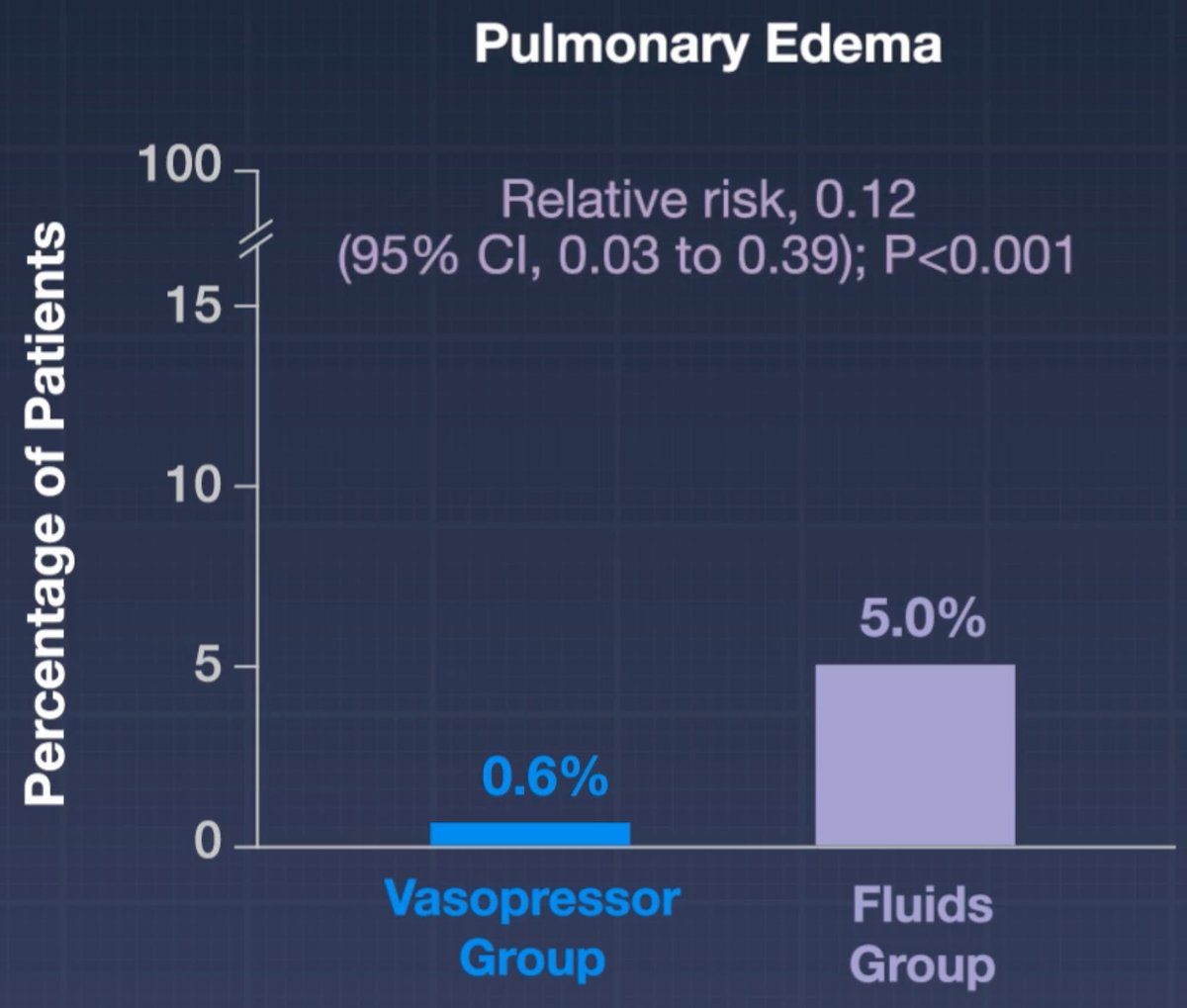
Among adults with septic shock, the use of restricted fluids and early vasopressors did not result in more days alive and out of the hospital through day 90 than the use of liberal fluids and later vasopressors. Full ARISE FLUIDS trial results: https://t.co/GsimTBtR7c
@CritCareReviews
ARISE-FLUIDS has arrived and it's awesome 🥳
For over a decade, the Surviving Sepsis Guidelines recommended that septic patients get at least 30 cc/kg fluid. In the United States, these guidelines were weaponized into performance metrics, pressuring clinicians to prescribe arbitrary volumes to every patient.
Evidence-based clinicians have LONG known that this guideline lacked evidentiary support. For example, I've attached a picture of a blog I wrote about this back in 2017. Despite the lack of evidentiary support and some evidence of harm, the Surviving Sepsis Guidelines INSISTED on perpetually recommending 30 cc/kg fluid resuscitation.
We finally have a prospective RCT demonstrating that mandating early administration of 30 cc/kg fluid (as compared to early vasopressors) doesn't help and may actually cause harm.
It's important to note that all of the hard endpoints in this trial were neutral (e.g., mortality, days free of organ support).
I still think that 30 cc/kg fluid is a pretty reasonable volume of fluid for *most* patients. But the study does suggest that giving too much fluid may promote edema - so we should be *thoughtful* about this intervention rather than mandating it for every septic patient.
Based on the subgroup analysis, the fluid-conservative strategy may have helped the subgroup of pneumonia patients the most. This is statistically nonsignificant but aligns with my expectation. ARDSy patients often don't respond well to fluid. (In contrast, I really doubt that a liter of fluids in either direction matters for most urosepsis patients.)
This is a great example of the over-reach of guidelines and protocoled medicine. People get all upset about practice variation, so sometimes they try to stomp it out using guidelines and protocols. But these guidelines are highly fallible, so what may occur is that you standardize care in a way that harms everyone equally. 🤦♂️
ASN Kidney News June 2026 Finally, an RCT in Hyponatremia Management: A “HIT” or a Miss?
Samiddhi Weerasiri @Nephro_Sparks
https://t.co/PqjCSksrxe @asnpublications
Lo que todo internista debe(ría) saber sobre IA, con dos bloques prácticos, uno de ML/DL clínica y otro de Generativa/Agentica. Alianza UPTC, ACMI, AIPocrates y OxLER.
Pereira mañana sábado en la AM
Inscríbete en:
https://t.co/zYFzm1HxUK










![LastManStand85's tweet photo. EULAR/ACR Classification Criteria for Anti-Synthetase Syndrome [2025]
✅ Definite total score >5.5 + atleast 1 clinical domain + anti-ARS ab mandatory
❓Probable >5 + atleast 1 clinical domian, anti-ARS ab not mandatory
#Rheumatology #MedTwitter https://t.co/tlOOR5PskG](https://pbs.twimg.com/media/HKNe2XVWwAAMyIu.jpg)


